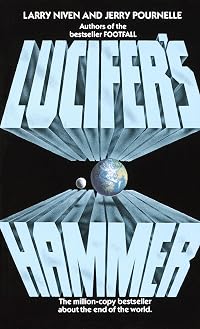
Lucifer's Hammer
by Larry Niven, Jerry Pournelle
On This Page
Description
As the great Hamner-Brown comet, dubbed Lucifer's Hammer by the press, approaches Earth, various business executives, politicians, criminals, journalists, and scientists await the impending cataclysm and its general and personal effects with decidedly differing feelings.Tags
Recommendations










Member Recommendations
Member Reviews
The dream team of Niven and Pournelle are back with another thick, broad-scope, end of the world novel. They go back to the basics this time; there are no aliens, space travel, or galactic empires. Lucifer's Hammer is a simple asteroid disaster story, with the narrative split into roughly equal thirds.
The first two hundred pages focuses on our ensemble cast prior to the asteroid hitting earth, as scientists assure the public that it has a near zero chance of coming anywhere close to Earth. Tensions rise as that number climbs over the weeks, with a lot of characters running for the hills, but a solid majority sticking to their nine-to-five grinds until the very end. The second portion is the shortest, detailing how each of characters show more survives (or dies) during the ensuring apocalypse scenario. The final third follows two large communities that coalesce in the weeks after the disaster, seeking to find high ground above the inland lakes that is both defensible and low enough to avoid the coming brutal winters of the imminent ice age.
Unfortunately, Lucifer's Hammer is not dreamy at all. This is my least favorite of their shared works, in no small part because what they do best is missing completely: aliens. Both Footfall and The Mote In God's Eye are highlighted and buoyed by creative, well-developed alien species. Here we're stuck in the human realm, a place where Niven and Pournelle often become mired in their own decrepit viewpoints. And lets talk about those characters for a moment, because there are an egregious amount of them. There are simply too many to develop effectively, and I often found myself confused (especially toward the end) trying to keep track of them all. This confusion is worsened by some unforced errors in naming, with some primary characters named Harvey, Harry, and (Al) Hardy.
We spend the first several hundred pages getting to know these characters, but end up with not much to show for it, making for an opening that is both dull and gratuitous with detail. I've read enough bourbon-swilling and lustful adultery from these two, thanks. The middle portion during the disaster itself is probably the best, though the mass of characters gets in the way because the dream team insists we see every moment through every group’s eyes, meaning that what should be exciting and momentous grows tedious after it’s repeated for the tenth time. I will say that one of the strengths of Lucifer's Hammer is it's ability to show how quickly things can go bad, and by "bad" I mean grotesquely horrific. This book is not afraid of detailing the morbid realities of an apocalypse.
In my reading, the main thematic viewpoint is a borderline deification of science and technology. In N&P's minds, modern society takes for granted so many luxuries that function as the crux between where we are now, and a feudal peasant society that includes human sacrifices for sun gods. They have a decisively pessimistic view on innate human nature, seeing humans as scared sheep, quick to revert to safety and close mindedness when faced with challenges beyond their comprehension. It's also full of their classic soapboxing about conservative complaints from the era, including: NASA not getting enough funding, Ralph Nader's consumer protection policies, hippie communes, environmentalism, anti-nuclear power policies, you name it. This drags the entire book down even further. It's reactionary, silly, and obtuse. Most of these points get hit hardest in the final third of the novel, which left me with a horrid taste in my mouth.
The post-Hammerfall world is divided into the civilized valley, run by a senator, who works mainly within the framework of necessary socialism (though there is the required griping about how they can't wait to get back to some form of capitalism). The one black person in this community, a former astronaut, literally says that he's "seen enough equality" in his lifetime. They happily take up slavery as a necessary evil as they pat themselves on the back for leading society towards technological advancement. Then there's the seething mass of Luddite, religious, ethnic, militarized, and communistic cannibals who spread through communities and absorb them through violence and acceptance of their cannibalistic rituals. It started to feel like a satire at points, though I'm sure that it wasn't intended to be, knowing their real life politics.
What else is there to say? This is basically all of the bad from the dream team without much of the good. I didn't enjoy Seveneves, but it does this disaster plot much better. Hell, even Niven and Pournelle did it better a few years later with Footfall, which I discovered was the book they initially wanted to write, at least until the publisher told them to nix the alien part of the plot. Thankfully they were able to correct that error, but sadly I am unable to correct the error of reading all six hundred pages of this. show less
The first two hundred pages focuses on our ensemble cast prior to the asteroid hitting earth, as scientists assure the public that it has a near zero chance of coming anywhere close to Earth. Tensions rise as that number climbs over the weeks, with a lot of characters running for the hills, but a solid majority sticking to their nine-to-five grinds until the very end. The second portion is the shortest, detailing how each of characters show more survives (or dies) during the ensuring apocalypse scenario. The final third follows two large communities that coalesce in the weeks after the disaster, seeking to find high ground above the inland lakes that is both defensible and low enough to avoid the coming brutal winters of the imminent ice age.
Unfortunately, Lucifer's Hammer is not dreamy at all. This is my least favorite of their shared works, in no small part because what they do best is missing completely: aliens. Both Footfall and The Mote In God's Eye are highlighted and buoyed by creative, well-developed alien species. Here we're stuck in the human realm, a place where Niven and Pournelle often become mired in their own decrepit viewpoints. And lets talk about those characters for a moment, because there are an egregious amount of them. There are simply too many to develop effectively, and I often found myself confused (especially toward the end) trying to keep track of them all. This confusion is worsened by some unforced errors in naming, with some primary characters named Harvey, Harry, and (Al) Hardy.
We spend the first several hundred pages getting to know these characters, but end up with not much to show for it, making for an opening that is both dull and gratuitous with detail. I've read enough bourbon-swilling and lustful adultery from these two, thanks. The middle portion during the disaster itself is probably the best, though the mass of characters gets in the way because the dream team insists we see every moment through every group’s eyes, meaning that what should be exciting and momentous grows tedious after it’s repeated for the tenth time. I will say that one of the strengths of Lucifer's Hammer is it's ability to show how quickly things can go bad, and by "bad" I mean grotesquely horrific. This book is not afraid of detailing the morbid realities of an apocalypse.
In my reading, the main thematic viewpoint is a borderline deification of science and technology. In N&P's minds, modern society takes for granted so many luxuries that function as the crux between where we are now, and a feudal peasant society that includes human sacrifices for sun gods. They have a decisively pessimistic view on innate human nature, seeing humans as scared sheep, quick to revert to safety and close mindedness when faced with challenges beyond their comprehension. It's also full of their classic soapboxing about conservative complaints from the era, including: NASA not getting enough funding, Ralph Nader's consumer protection policies, hippie communes, environmentalism, anti-nuclear power policies, you name it. This drags the entire book down even further. It's reactionary, silly, and obtuse. Most of these points get hit hardest in the final third of the novel, which left me with a horrid taste in my mouth.
The post-Hammerfall world is divided into the civilized valley, run by a senator, who works mainly within the framework of necessary socialism (though there is the required griping about how they can't wait to get back to some form of capitalism). The one black person in this community, a former astronaut, literally says that he's "seen enough equality" in his lifetime. They happily take up slavery as a necessary evil as they pat themselves on the back for leading society towards technological advancement. Then there's the seething mass of Luddite, religious, ethnic, militarized, and communistic cannibals who spread through communities and absorb them through violence and acceptance of their cannibalistic rituals. It started to feel like a satire at points, though I'm sure that it wasn't intended to be, knowing their real life politics.
What else is there to say? This is basically all of the bad from the dream team without much of the good. I didn't enjoy Seveneves, but it does this disaster plot much better. Hell, even Niven and Pournelle did it better a few years later with Footfall, which I discovered was the book they initially wanted to write, at least until the publisher told them to nix the alien part of the plot. Thankfully they were able to correct that error, but sadly I am unable to correct the error of reading all six hundred pages of this. show less
I'd heard this was a classic of the post-apocalyptic genre, so was pleased to finally nab a copy second hand.
The book starts with the discovery of a comet and revolves around the humdrum lives of a bunch of LA locals, tending toward the wealthy socialite class. At first predicted to narrowly miss earth, the comet's odds of hitting escalate steadily the closer it gets to Earth.
The build up to Hammerfall is suitably suspenseful and the impact itself seems to be handled realistically from a scientific point of view. Now our intertwined point-of-view characters must escape the collapse of society, floods and tsunamis to find safety in a world in which the thin veneer of civilisation has been suddenly torn away.
Personally I'm not sure that show more the immediate reversion of society to violence, rape and cannibalism in the wake of Hammerfall is realistic. When real-life disasters hit people seem to band together for a short time at least. On the other hand, the formation of the cannibal cult coalition seem to parallel the formation of ISIS in a land that has lost all semblance of power structure remarkably well.
My criticisms are similar to other reviewers. The approach to race and gender is ham-fisted. Hammerfall wipes out women's lib (as one character gleefully observes) and women are simply trophies who seek out the strongest male to protect them, and sex appears to be the only tool available to them. Outside the relative civilisation of our protagonists' valley a life of rape or sex-slavery awaits. There's a range of characters who are given point of view in this book but only two are women and neither are the unlucky sort, say for example the girl scouts who have been turned into sex slaves. I guess that while this book is a darker take on the apocalypse, the authors didn't want to go quite that dark.
And that is one point of difference in this book. It's a dark take on the apocalypse that includes that part that most post-apocolyptic works conveniently skip: the End, with all its death and horror and messiness. The characters face some hard moral choices: do they sentence people who do not conform to their new society (teetering on the brink of collapse) to death, do they use horrid chemical weapons against the attacking cannibal army, do they re-introduce slavery?
Unfortunately, all to often they seem to lean on the side of ruthlessness. On one hand, it demonstrates the harshness of the new world, but on the other it feels too much like the authors have an unsavoury agenda to push.
My favourite character was the diabetic scientist who decided in the face of the apocalypse to save books and knowledge for the survivors.
A worthwhile take on the end of the world with its scientific believability and dark themes, but marred by outdated ideas and strange authorial agendas. show less
The book starts with the discovery of a comet and revolves around the humdrum lives of a bunch of LA locals, tending toward the wealthy socialite class. At first predicted to narrowly miss earth, the comet's odds of hitting escalate steadily the closer it gets to Earth.
The build up to Hammerfall is suitably suspenseful and the impact itself seems to be handled realistically from a scientific point of view. Now our intertwined point-of-view characters must escape the collapse of society, floods and tsunamis to find safety in a world in which the thin veneer of civilisation has been suddenly torn away.
Personally I'm not sure that show more the immediate reversion of society to violence, rape and cannibalism in the wake of Hammerfall is realistic. When real-life disasters hit people seem to band together for a short time at least. On the other hand, the formation of the cannibal cult coalition seem to parallel the formation of ISIS in a land that has lost all semblance of power structure remarkably well.
My criticisms are similar to other reviewers. The approach to race and gender is ham-fisted. Hammerfall wipes out women's lib (as one character gleefully observes) and women are simply trophies who seek out the strongest male to protect them, and sex appears to be the only tool available to them. Outside the relative civilisation of our protagonists' valley a life of rape or sex-slavery awaits. There's a range of characters who are given point of view in this book but only two are women and neither are the unlucky sort, say for example the girl scouts who have been turned into sex slaves. I guess that while this book is a darker take on the apocalypse, the authors didn't want to go quite that dark.
And that is one point of difference in this book. It's a dark take on the apocalypse that includes that part that most post-apocolyptic works conveniently skip: the End, with all its death and horror and messiness. The characters face some hard moral choices: do they sentence people who do not conform to their new society (teetering on the brink of collapse) to death, do they use horrid chemical weapons against the attacking cannibal army, do they re-introduce slavery?
Unfortunately, all to often they seem to lean on the side of ruthlessness. On one hand, it demonstrates the harshness of the new world, but on the other it feels too much like the authors have an unsavoury agenda to push.
My favourite character was the diabetic scientist who decided in the face of the apocalypse to save books and knowledge for the survivors.
A worthwhile take on the end of the world with its scientific believability and dark themes, but marred by outdated ideas and strange authorial agendas. show less
Wow, it is a long time since I read this. You can't cross the same river twice. But it is still a 600 page apocalyptic epic, covering just before, during, and the first year or so after a comet wipes out nearly all life on earth.
There are bits to love, bits to hate, bits to just boggle at, and lots of bits you can't put down.
The book has a huge cast of characters. The main hero(in that the book ends up with him Getting the Princess and Leading the Survivors) was never all that interesting to me. A kind of cheerful every-man who made movies, he made a number of weak willed mistakes,(being financially overextended, cheating on his wife, going completely catatonic when she was murdered) , in a way that just made me gently uninvested in his show more happiness.
Some of Niven/Pournelle's women are completely awesome though. Which is not that the book doesn't have the usual problems of old sci-fi and women (some very gratuitous sexual assault scenes, lots of the point of civilisation is to protect young women, lots of gender role stuff, women broadly sleeping their way into advantage, men can fall over in earthquakes, but women fall over and their skirts ride up suggestively around their hips) but Eileen is awesome, with her driving along the railway line and organising the entire Stronghold, Marie Vance is also excellent, with her hiking boots her cynical but clear thinking scheming to end up with a man of power, and her solitary almost crazy bravery standing against the entire army, and even Maureen, who exists mostly to be the Senitor's Daughter and the Prize for the Winner TM with flowing red hair is pretty interesting, dealing with her own depression and trying to work out her role in the new world.
I must say, this book has far too many characters whose names begin with H. It's unhelpful. Harvey, Hardy, Hamner, two people called Harry, other letters are also available...
You have to love Dan Forrester, even if he is a complete stereotype of a precocious academic, physically weak but full of learning, as he throws every last ounce of energy he has into saving civilisation, whether by saving a library of knowledge or reinventing weapons of mass destruction.
I think it is fair to say this book is pretty racist, or at least it is writing about a country with some very racist attitudes many of which are presented as we go along. Scenes like 'should we let people in who are fleeing the floods', 'they'll be city n*ggers, whining about equality' feel very very ugly now. The fact that over 90% of the black characters we meet in the book are thieves, murderers and cannibals doesn't help either, nor the fact that the 'we must smash everything up and eat people' army gang is also the 'we want to rebuild an equal world and not just the oppressive status quo from the beforetimes' people.
And oh, this book is depressingly convinced mankind gravitates towards war, and surprisingly myopic in who the good guys are. Straight after the comet strike, Russia and China throw a huge pile of nukes at each other. Everyone of any interest post-Hammerfall has a gun and is ready to use it. And of course, the set pieces at the end of the book are giant battles man against man, where the only way to save civilisation is to turn all the fertilizer into poison gas and use it against other 'less civilised' people again. I mean, yes, the people they are fighting are Actual Cannibals who are going to kill them and eat them, but it is still pretty depressing. And there is no real nuance of the awkward tension between the good guys doing 'these kids have shacked up in this ranch and probably killed the owners and won't join us and share their food, so we are going to attack them and capture them and hang them all' and the cannibals doing 'these rich people have shacked up in a valley while all of the city people starve'... show less
There are bits to love, bits to hate, bits to just boggle at, and lots of bits you can't put down.
The book has a huge cast of characters. The main hero
Some of Niven/Pournelle's women are completely awesome though. Which is not that the book doesn't have the usual problems of old sci-fi and women (some very gratuitous sexual assault scenes, lots of the point of civilisation is to protect young women, lots of gender role stuff, women broadly sleeping their way into advantage, men can fall over in earthquakes, but women fall over and their skirts ride up suggestively around their hips) but Eileen is awesome, with her driving along the railway line and organising the entire Stronghold, Marie Vance is also excellent, with her hiking boots her cynical but clear thinking scheming to end up with a man of power, and her solitary almost crazy bravery standing against the entire army, and even Maureen, who exists mostly to be the Senitor's Daughter and the Prize for the Winner TM with flowing red hair is pretty interesting, dealing with her own depression and trying to work out her role in the new world.
I must say, this book has far too many characters whose names begin with H. It's unhelpful. Harvey, Hardy, Hamner, two people called Harry, other letters are also available...
You have to love Dan Forrester, even if he is a complete stereotype of a precocious academic, physically weak but full of learning, as he throws every last ounce of energy he has into saving civilisation, whether by saving a library of knowledge or reinventing weapons of mass destruction.
I think it is fair to say this book is pretty racist, or at least it is writing about a country with some very racist attitudes many of which are presented as we go along. Scenes like 'should we let people in who are fleeing the floods', 'they'll be city n*ggers, whining about equality' feel very very ugly now. The fact that over 90% of the black characters we meet in the book are thieves, murderers and cannibals doesn't help either, nor the fact that the 'we must smash everything up and eat people' army gang is also the 'we want to rebuild an equal world and not just the oppressive status quo from the beforetimes' people.
And oh, this book is depressingly convinced mankind gravitates towards war, and surprisingly myopic in who the good guys are. Straight after the comet strike, Russia and China throw a huge pile of nukes at each other. Everyone of any interest post-Hammerfall has a gun and is ready to use it. And of course, the set pieces at the end of the book are giant battles man against man, where the only way to save civilisation is to turn all the fertilizer into poison gas and use it against other 'less civilised' people again. I mean, yes, the people they are fighting are Actual Cannibals who are going to kill them and eat them, but it is still pretty depressing. And there is no real nuance of the awkward tension between the good guys doing 'these kids have shacked up in this ranch and probably killed the owners and won't join us and share their food, so we are going to attack them and capture them and hang them all' and the cannibals doing 'these rich people have shacked up in a valley while all of the city people starve'... show less
I try to make it a point to finish any book I start (a corollary of that being that I usually read one book at a time so I can't trick myself into not finishing a book while telling myself I've not given up on it, I'm just reading the other book more). The only two exceptions to this rule in the modern era of my reading that I can recall are Greg Bear's [b:Eternity|116122|Eternity|Greg Bear|http://ecx.images-amazon.com/images/I/51VaIjfFhUL._SL75_.jpg|1933075], which I thought read like unmitigated dross compared to its predecessor, and Niven and Pournelle's [b:Footfall|452995|Footfall|Larry Niven|http://photo.goodreads.com/books/1190024076s/452995.jpg|1913289], which I started reading having confused it for Bear's [b:The Forge of show more God|2433635|The Forge of God|Greg Bear|http://photo.goodreads.com/books/1266819849s/2433635.jpg|2235106]. Hmm, this is starting to look like some soap-opera ménage à trois, but anyway. A couple of weeks ago I spotted Lucifer's Hammer in my local charity book shop's bargain bucket. I recalled that Footfall's blurb said nice things about this book, and I'm always willing to give authors a second chance when that chance is part of a three-for-a-pound deal, so I grabbed this book and gave it a try.
I'm happy to say I found the book much better than Footfall — I finished it for one. The gist of the story is that a comet gives the Earth a glancing blow. The story is split roughly into three acts that deal with how people react to the comet's approach, then with the immediate aftermath of the strike, and finally with how they strive for long-term survival. The first act is basically a few hundred pages of introducing characters. Almost no one believes the comet will strike, because the scientists assure everybody it won't. The book was written in the mid 1970s and it seems awfully quaint that NASA doesn't think the comet will hit Earth, right up to the moment it does. As those familiar with 99942 Apophis know, these days we can figure out where these space-rocks will be in twenty years time, whereas in the book they seem to struggle with twenty minutes. This uncertainty is, I suppose, a plot device to ensure that people are caught mostly unawares when the comet strikes. This makes the last two thirds of the book much more interesting because the frantic efforts to survive do feel much more touch-and-go, however it does mean the first third of the book can drag a little.
The middle third is perhaps where the book excels. Civilisation goes to shreds within minutes of the comet striking. Some of the barbarianism committed literally moments after the first, distant strikes seem a little over the top. Would people really resort to murder within a couple of minutes of a comet strike some distance away, before it was even clear how bad things were? The authors think so. A lot of characters who were carefully introduced in the first third die off-page, and many more suddenly reappear much later in the book. As the story progresses all the surviving main characters end up together in the same sheltered valley, four of them literally dropping out of the sky and usefully landing in the fields alongside this valley. The struggle to survive the coming harsh winter begins. A lot of effort is put into convincing the reader how difficult surviving the coming cold weather will be. There's not enough food, not enough medicine, no more refugees can possibly be taken in, they're almost out of toilet paper, things are getting bad.
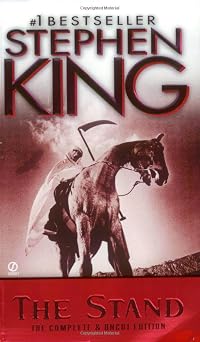
And then the book decides to turn into [b:The Stand|9668571|The Stand|Stephen King|http://photo.goodreads.com/books/1289334155s/9668571.jpg|1742269]. Because surviving a comet strike and scraping through an impact winter aren't difficult enough, the authors throw a bunch of cannibals at our heroes. Oh, and the cannibals are a mixture of black street criminals, right wing Christian nut jobs, and the US army. The imminent Battle Between Good And Evil dominates the end of the book. After the good guy's not-very-convincing victory there's a rather rushed dénouement, with an off-page much-more-convincing victory, and a return to civilisation with electric cars and communist prison camps and the usual perks of Californian life. Oh, and a cringeworthy horror-movie-esque closing where the comet reaches the Oort cloud then starts to swing back towards the solar system. (Lucifer's Hammer 2 coming to your bookshops next summer. If you're reading other science fiction then Stop! It's Hammertime!)
The book, then, is a mixed bag. Niven and Pournelle are one of the exceptions to my finish-every-book rule. But, like the saying goes, the exceptions are in the pudding. This book is like a pudding, a hot fudge sundae if you will. Throw several million cubic metres of hot fudge sundae at a large rocky planet and some of it will stick, and some of it won't.
It's nice to read a book that dispels the Hollywood notion that every asteroid must either wipe us out or be blown up by some gruff deep-sea oil drillers. However, if you really want to read about post-apocalyptic battles betwixt Good and Evil then you really shouldn't be looking any further than The Stand. As far as science-fiction goes, I dare say there are better comet strike books out there, but while I'm looking for them, you could certainly do worse than this book. show less
I'm happy to say I found the book much better than Footfall — I finished it for one. The gist of the story is that a comet gives the Earth a glancing blow. The story is split roughly into three acts that deal with how people react to the comet's approach, then with the immediate aftermath of the strike, and finally with how they strive for long-term survival. The first act is basically a few hundred pages of introducing characters. Almost no one believes the comet will strike, because the scientists assure everybody it won't. The book was written in the mid 1970s and it seems awfully quaint that NASA doesn't think the comet will hit Earth, right up to the moment it does. As those familiar with 99942 Apophis know, these days we can figure out where these space-rocks will be in twenty years time, whereas in the book they seem to struggle with twenty minutes. This uncertainty is, I suppose, a plot device to ensure that people are caught mostly unawares when the comet strikes. This makes the last two thirds of the book much more interesting because the frantic efforts to survive do feel much more touch-and-go, however it does mean the first third of the book can drag a little.
The middle third is perhaps where the book excels. Civilisation goes to shreds within minutes of the comet striking. Some of the barbarianism committed literally moments after the first, distant strikes seem a little over the top. Would people really resort to murder within a couple of minutes of a comet strike some distance away, before it was even clear how bad things were? The authors think so. A lot of characters who were carefully introduced in the first third die off-page, and many more suddenly reappear much later in the book. As the story progresses all the surviving main characters end up together in the same sheltered valley, four of them literally dropping out of the sky and usefully landing in the fields alongside this valley. The struggle to survive the coming harsh winter begins. A lot of effort is put into convincing the reader how difficult surviving the coming cold weather will be. There's not enough food, not enough medicine, no more refugees can possibly be taken in, they're almost out of toilet paper, things are getting bad.
And then the book decides to turn into [b:The Stand|9668571|The Stand|Stephen King|http://photo.goodreads.com/books/1289334155s/9668571.jpg|1742269]. Because surviving a comet strike and scraping through an impact winter aren't difficult enough, the authors throw a bunch of cannibals at our heroes. Oh, and the cannibals are a mixture of black street criminals, right wing Christian nut jobs, and the US army. The imminent Battle Between Good And Evil dominates the end of the book. After the good guy's not-very-convincing victory there's a rather rushed dénouement, with an off-page much-more-convincing victory, and a return to civilisation with electric cars and communist prison camps and the usual perks of Californian life. Oh, and a cringeworthy horror-movie-esque closing where the comet reaches the Oort cloud then starts to swing back towards the solar system. (Lucifer's Hammer 2 coming to your bookshops next summer. If you're reading other science fiction then Stop! It's Hammertime!)
The book, then, is a mixed bag. Niven and Pournelle are one of the exceptions to my finish-every-book rule. But, like the saying goes, the exceptions are in the pudding. This book is like a pudding, a hot fudge sundae if you will. Throw several million cubic metres of hot fudge sundae at a large rocky planet and some of it will stick, and some of it won't.
It's nice to read a book that dispels the Hollywood notion that every asteroid must either wipe us out or be blown up by some gruff deep-sea oil drillers. However, if you really want to read about post-apocalyptic battles betwixt Good and Evil then you really shouldn't be looking any further than The Stand. As far as science-fiction goes, I dare say there are better comet strike books out there, but while I'm looking for them, you could certainly do worse than this book. show less
The Hammer disregards all pleas not to 'hurt 'em.'
_____
There should be a name for the particular type of book that is exemplified by some popular novels published between the late 1950s and the early 1980s. It's very distinctive, but hard to describe. Some characteristics include: an insistence on referring to men by their last names only, flat characterization which tends to adhere to sterotypical gender roles, a focus on jobs/career as being a key part of identity, and a predominance of loveless relationships and adulterous affairs. It's more than just that, though - I really have never managed to quite put my finger on it. But it doesn't take long to recognize. After a few pages, I was like, "Oh, it's one of those." (I also thought, show more throughout reading it, that it was published in 1970, not 1977 - maybe I saw a bit of misinformation, but it feels VERY dated and regressive.)
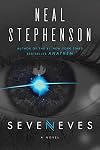
Still, this started out in the three-star range, and stayed there for about the first 40% of the book. For that section, I was strongly reminded of Neal Stephenson's 'Seveneves,' to the point where I suspected (and still suspect) that Stephenson read this book - and wanted to do it better. (Stephenson succeeded, if that was the goal.) Of course, the difference is that in Seveneves, we're getting hit by moon bits and in Lucifer's Hammer, by comet bits, but the setup is very similar: We see the discovery of the phenomenon, the media reaction, and start glimpsing the effects on the daily lives of a wide range of people, including politicians, experts, and average joes. There's also the crew up in Skylab. There's a huge cast of characters, which meant for me, in this book, that I didn't feel emotionally invested in any of them, and for a while, the book dragged a bit. (The way the many characters were handled reminded me a bit of Kim Stanley Robinson's 'Mars' books - but those are better-written (sensing a trend here?))
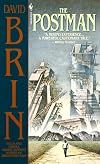
When the comet hits and disaster strikes, things picked up a bit. (How could that not be exciting?) Unlike 'Seveneves', we get a more typical 'aftermath.' The book focuses on rural California, and a group of ranchers that pull together for survival, initially joined by their dedicated mailman, who insists on continuing his route. (Did this influence David Brin's 'The Postman'? If so, again, Brin did it better.) As the small details of survival go on, the book becomes very similar to Pat Frank's 1959 'Alas Babylon,' in the way it focuses on a small group in an isolated rural location, and the ins-and-outs of how they keep alive. It got a bit tedious - and quite sexist (repeated mentions of man's 'natural instinct' to 'protect the female' coming out, and how 'women's lib' is now defunct), with a few dashes of racism. I'm also a lot more inclined to be forgiving of certain attitudes in a 1959 book than in a 1977 book. Throughout this part of the book, my opinion dropped down to two stars.
Around 80%, Niven and Pournelle pull out all the stops. It's like they figured, "If they've read this far, they're not going to stop now, so we can go all out and pull no punches with what we really think." This final part of the book is almost like a satire of right-wing attitudes - except that it's painfully clear that it's in earnest. I guess that it's a fascinating glimpse into everything that those of a certain mindset really fear?
(Talking about the end here, so - hiding... but really, I'd recommend reading this spoiler instead of the book):
The finale is a drawn-out, multi-part big Showdown Battle - the opposing sides are: on one side, of course, our brave American ranchers. The ranchers are White and Conservative, although joined by one Exceptional Black Man who literally says, at one point, disparaging equal-rights activists "I have all the equality I've ever wanted." There are also the two Russians who exist to mention how superior the US is to Russia in oh so many ways, and the reformed hippies who have realized that communes are a bad idea. Oh, at the very end, out of the blue appear some previously-unmentioned Noble Indian warriors. Oh, and don't forget that a point is made that "men and women are still different" and due to tough times, kids have to grow up fast - which means that boys fight & teen girls are now fair game for middle-aged men. Politicians and military men (who are all physically large; that point is made repeatedly) feature prominently.
Opposing our Brave Heroes is a diverse rampaging army made up of (I kid you not): Trade Unionists (damn commies!), Environmentalists, Black Panthers, Back to Nature types (including Hippies and proponents of organic farming), and assorted City Folk, who are led by a raving preacher who forces them into bloody cannibalistic rituals. (!!!) I mean, it seems like it HAS to be a joke...? But then it's just not very funny...
To top it all off, there's a Great Battle to Save the Nuclear Plant from the Mixed-Race Horde. Bear in mind, the reason to save the power plant is not because destroying the plant could result in a nuclear meltdown which would render the entire area uninhabitable. Noooo... this is a VERY SAFE nuclear plant, and that could never happen due to all the Safety Features. No, it becomes a symbol of the Light and Hope of All Future Technology-Based Civilization, which is driven home in a luridly purple death scene, in case the readers missed it.
So, woo-hoo! The battle is won. It is pointed out repeatedly that one should not regard ones' enemies as human; they're just ants. Technology will be rebuilt, but until it is, it's gonna be "A Man's World." People will work hard in a manly way, accompanied by their strong yet womanly women. They will be cooperative, but not in a communist way. Justice will be harsh. And as the cherry on top of this fantasy, slavery is reinstated. (Yes, really!) Woo-hoo!
And... down to one star.
Read for post-apocalyptic book club. I guess I'm glad I read it, just because I've seen it around nearly my whole life - even physically picked it up in the library on a couple of occasions - but never read it until now. But, hoo-boy, this was quite something. And not a good something. show less
The Hammer disregards all pleas not to 'hurt 'em.'
_____
There should be a name for the particular type of book that is exemplified by some popular novels published between the late 1950s and the early 1980s. It's very distinctive, but hard to describe. Some characteristics include: an insistence on referring to men by their last names only, flat characterization which tends to adhere to sterotypical gender roles, a focus on jobs/career as being a key part of identity, and a predominance of loveless relationships and adulterous affairs. It's more than just that, though - I really have never managed to quite put my finger on it. But it doesn't take long to recognize. After a few pages, I was like, "Oh, it's one of those." (I also thought, show more throughout reading it, that it was published in 1970, not 1977 - maybe I saw a bit of misinformation, but it feels VERY dated and regressive.)
Still, this started out in the three-star range, and stayed there for about the first 40% of the book. For that section, I was strongly reminded of Neal Stephenson's 'Seveneves,' to the point where I suspected (and still suspect) that Stephenson read this book - and wanted to do it better. (Stephenson succeeded, if that was the goal.) Of course, the difference is that in Seveneves, we're getting hit by moon bits and in Lucifer's Hammer, by comet bits, but the setup is very similar: We see the discovery of the phenomenon, the media reaction, and start glimpsing the effects on the daily lives of a wide range of people, including politicians, experts, and average joes. There's also the crew up in Skylab. There's a huge cast of characters, which meant for me, in this book, that I didn't feel emotionally invested in any of them, and for a while, the book dragged a bit. (The way the many characters were handled reminded me a bit of Kim Stanley Robinson's 'Mars' books - but those are better-written (sensing a trend here?))
When the comet hits and disaster strikes, things picked up a bit. (How could that not be exciting?) Unlike 'Seveneves', we get a more typical 'aftermath.' The book focuses on rural California, and a group of ranchers that pull together for survival, initially joined by their dedicated mailman, who insists on continuing his route. (Did this influence David Brin's 'The Postman'? If so, again, Brin did it better.) As the small details of survival go on, the book becomes very similar to Pat Frank's 1959 'Alas Babylon,' in the way it focuses on a small group in an isolated rural location, and the ins-and-outs of how they keep alive. It got a bit tedious - and quite sexist (repeated mentions of man's 'natural instinct' to 'protect the female' coming out, and how 'women's lib' is now defunct), with a few dashes of racism. I'm also a lot more inclined to be forgiving of certain attitudes in a 1959 book than in a 1977 book. Throughout this part of the book, my opinion dropped down to two stars.
Around 80%, Niven and Pournelle pull out all the stops. It's like they figured, "If they've read this far, they're not going to stop now, so we can go all out and pull no punches with what we really think." This final part of the book is almost like a satire of right-wing attitudes - except that it's painfully clear that it's in earnest. I guess that it's a fascinating glimpse into everything that those of a certain mindset really fear?
(Talking about the end here, so - hiding... but really, I'd recommend reading this spoiler instead of the book):
The finale is a drawn-out, multi-part big Showdown Battle - the opposing sides are: on one side, of course, our brave American ranchers. The ranchers are White and Conservative, although joined by one Exceptional Black Man who literally says, at one point, disparaging equal-rights activists "I have all the equality I've ever wanted." There are also the two Russians who exist to mention how superior the US is to Russia in oh so many ways, and the reformed hippies who have realized that communes are a bad idea. Oh, at the very end, out of the blue appear some previously-unmentioned Noble Indian warriors. Oh, and don't forget that a point is made that "men and women are still different" and due to tough times, kids have to grow up fast - which means that boys fight & teen girls are now fair game for middle-aged men. Politicians and military men (who are all physically large; that point is made repeatedly) feature prominently.
Opposing our Brave Heroes is a diverse rampaging army made up of (I kid you not): Trade Unionists (damn commies!), Environmentalists, Black Panthers, Back to Nature types (including Hippies and proponents of organic farming), and assorted City Folk, who are led by a raving preacher who forces them into bloody cannibalistic rituals. (!!!) I mean, it seems like it HAS to be a joke...? But then it's just not very funny...
To top it all off, there's a Great Battle to Save the Nuclear Plant from the Mixed-Race Horde. Bear in mind, the reason to save the power plant is not because destroying the plant could result in a nuclear meltdown which would render the entire area uninhabitable. Noooo... this is a VERY SAFE nuclear plant, and that could never happen due to all the Safety Features. No, it becomes a symbol of the Light and Hope of All Future Technology-Based Civilization, which is driven home in a luridly purple death scene, in case the readers missed it.
So, woo-hoo! The battle is won. It is pointed out repeatedly that one should not regard ones' enemies as human; they're just ants. Technology will be rebuilt, but until it is, it's gonna be "A Man's World." People will work hard in a manly way, accompanied by their strong yet womanly women. They will be cooperative, but not in a communist way. Justice will be harsh. And as the cherry on top of this fantasy, slavery is reinstated. (Yes, really!) Woo-hoo!
And... down to one star.
Read for post-apocalyptic book club. I guess I'm glad I read it, just because I've seen it around nearly my whole life - even physically picked it up in the library on a couple of occasions - but never read it until now. But, hoo-boy, this was quite something. And not a good something. show less
I just knocked this one off my top one-hundred novels of all time, but I did it with a heavy heart.
Memories of a novel sometimes simply don't live up to a re-read.
On the other hand, there are quite a few things about it that are still freaking fantastic, such as the science and the emotional impact of the comet strike. Most of the first third of the novel focused on the 70's modern society, with all the strange views common of that time, but that wasn't the most striking feature. I was humbled by the way they could turn so many flawed and normal people into an epic scene of pathos when they died.
I even had to set down the novel because the tears prevented me from reading through the meteor crashes or the tidal waves or the mud falling show more from the sky for weeks.
You know all those stupid apocalypse movies of the 90's? Yeah, this novel STILL does it better.
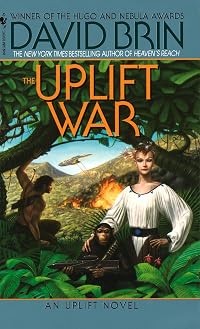
The rest of the novel was all about sheer survival for those who were left, and I was pleasantly reminded of Brin's [b:The Postman|889284|The Postman|David Brin|https://d.gr-assets.com/books/1348914032s/889284.jpg|924908] that outdid this novel for the post-apocalypse rebuilding, but props should always be given to those who did it first.
"Give my children the lightning!"
It's a good rallying call. It's the future, scaled down to the bare minimum after trawling the dirt and praying to make it through one winter. It's a far cry from Heinlein's eggs or Clarke's magic. It's realistic, or some might say, pessimistic.
But what else can we say about this great-grandaddy of all dystopian futures? It's still a damn sight better than most that have come after, even considering the racism, possible return to slavery, the cannibalism, and the wholesale slaughter by mustard gas, not even mentioning the whole nuclear war between Russian and China.
I carried Dan Forrester in my heart ever since I read this the first time. He was the most tragic and glorious character of anyone. A second read doesn't really change my opinion.
I did carry one caveat, though. He should have saved [b:Dune|234225|Dune (Dune Chronicles, #1)|Frank Herbert|https://d.gr-assets.com/books/1434908555s/234225.jpg|3634639]. Stories are just as important as scientific texts. I can only pray that later generations would carry it forward after conquering California and finding any intact libraries. Of course, this was written only a handful of years after Dune, so the authors hadn't realized the weight of the public's imagination by that time... but they did when it came to the commune filled with LoTR characters. :)
Niven and Pournelle really outdid themselves with this one. I went on to read the rest of Niven after plowing through this novel, but I never did read any of Pournelle's solo work. I still think that this novel was the best that either had written, even if I can't honestly say anything about Jerry's work.
Still a fantastic novel, regardless of it's faults. Anyone interested in dystopias really needs to read this one. show less
Memories of a novel sometimes simply don't live up to a re-read.
On the other hand, there are quite a few things about it that are still freaking fantastic, such as the science and the emotional impact of the comet strike. Most of the first third of the novel focused on the 70's modern society, with all the strange views common of that time, but that wasn't the most striking feature. I was humbled by the way they could turn so many flawed and normal people into an epic scene of pathos when they died.
I even had to set down the novel because the tears prevented me from reading through the meteor crashes or the tidal waves or the mud falling show more from the sky for weeks.
You know all those stupid apocalypse movies of the 90's? Yeah, this novel STILL does it better.
The rest of the novel was all about sheer survival for those who were left, and I was pleasantly reminded of Brin's [b:The Postman|889284|The Postman|David Brin|https://d.gr-assets.com/books/1348914032s/889284.jpg|924908] that outdid this novel for the post-apocalypse rebuilding, but props should always be given to those who did it first.
"Give my children the lightning!"
It's a good rallying call. It's the future, scaled down to the bare minimum after trawling the dirt and praying to make it through one winter. It's a far cry from Heinlein's eggs or Clarke's magic. It's realistic, or some might say, pessimistic.
But what else can we say about this great-grandaddy of all dystopian futures? It's still a damn sight better than most that have come after, even considering the racism, possible return to slavery, the cannibalism, and the wholesale slaughter by mustard gas, not even mentioning the whole nuclear war between Russian and China.
I carried Dan Forrester in my heart ever since I read this the first time. He was the most tragic and glorious character of anyone. A second read doesn't really change my opinion.
I did carry one caveat, though. He should have saved [b:Dune|234225|Dune (Dune Chronicles, #1)|Frank Herbert|https://d.gr-assets.com/books/1434908555s/234225.jpg|3634639]. Stories are just as important as scientific texts. I can only pray that later generations would carry it forward after conquering California and finding any intact libraries. Of course, this was written only a handful of years after Dune, so the authors hadn't realized the weight of the public's imagination by that time... but they did when it came to the commune filled with LoTR characters. :)
Niven and Pournelle really outdid themselves with this one. I went on to read the rest of Niven after plowing through this novel, but I never did read any of Pournelle's solo work. I still think that this novel was the best that either had written, even if I can't honestly say anything about Jerry's work.
Still a fantastic novel, regardless of it's faults. Anyone interested in dystopias really needs to read this one. show less
Members
- Recently Added By
Published Reviews
ThingScore 75
"Good, solid science, a gigantic but well developed and coordinated cast of characters, and about a megaton of suspenseful excitement."
added by sturlington
Lists

Best Science Fiction Novels
816 works; 430 members

Best Post-Apocalyptic Stories
143 works; 88 members

Best Dystopias
280 works; 271 members

Recommended Apocalyptic Novels
53 works; 24 members

NPRs your picks: top 100 Sci-Fi/Fantasy books
297 works; 80 members

Dystopian and Apocalyptic Literature
350 works; 74 members

Libertarian Books
102 works; 18 members

Apocalypse Must-Reads
10 works; 1 member

Speculative Fiction to Read
706 works; 32 members
Books We Love to Reread
688 works; 296 members

Books Read in 2024
4,623 works; 126 members

It Came From the Skies!
7 works; 3 members

Books Read in 2019
4,052 works; 108 members

Blue Pyramid 1,276 Best Books of All Time
1,248 works; 32 members

BingoDOG - Books With Natural Disasters: Fiction
39 works; 11 members

1970s
657 works; 23 members

2025 Reading List
51 works; 2 members
Talk Discussions
Past Discussions
teotwawki, scientist with diabetes saves technology texts in Name that Book (February 2016)
Author Information

332+ Works 98,259 Members
Larry Niven received his B.A. in mathematics in 1962. His first novel, World of Ptavvs (1966), was a success and launched his career. Niven has won five Hugos and one Nebula award, testimony that his colleagues in the science fiction world respect his work. Perhaps Niven's most well-known creation is Ringworld, a distant planet that may be taken show more as a metaphor for Earth, as it was once great but has since fallen into decay. (Bowker Author Biography) show less

148+ Works 40,477 Members
Jerry Eugene Pournelle was born in Shreveport, Louisiana on August 7, 1933. During the Korean War, he served in the U. S. Army. He received a B.S. in psychology in 1955, an M.S. in psychology in 1958, and a Ph.D. in political science in 1964 from the University of Washington. He worked for Boeing and NASA where he worked on the Mercury, Gemini, show more and Apollo missions. He also advised the federal government on military matters and space exploration. He wrote science fiction and helped popularize the military science fiction genre. His first novel, Red Heroin, was published in 1969 under the pen name Wade Curtis. His other novels published under his own name included Janissaries, Starswarm, and The Mercenary. He also wrote novels with Larry Niven including Oath of Fealty, The Mote in God's Eye, Lucifer's Hammer, Inferno, Escape from Hell, and Footfall. Pournelle was widely credited as the first major author to write a published novel entirely on a computer. He wrote a witty advice columns for computer users in Byte magazine. He received the John W. Campbell Award for Best New Writer of 1973. He died of heart failure on September 8, 2017 at the age of 84. (Bowker Author Biography) show less
Some Editions
Awards and Honors
Awards
Notable Lists
Series
Belongs to Publisher Series
Work Relationships
Common Knowledge
- Canonical title
- Lucifer's Hammer
- Original title
- Lucifer's Hammer
- Original publication date
- 1977-01
- People/Characters
- Tim Hamner; Harvey Randall; Arthur Jellison (Senator); Henry Armitage; Alim Nassor; John Baker (show all 9); Rick Delanty; Maureen Jellison; Dan Forrester
- Important places
- Los Angeles, California, USA; Springville, California, USA; Southern California, USA
- Dedication
- To Neil Armstrong and Buz Aldrin, the first men to walk on another world; to Michael Collins, who waited; and to those who died trying, Gus Grissom, Roger Chaffee, Ed White, Georgi Dobrovolsky, Viktor Patsayev, Nikolai Volkov... (show all), and all the others.
- First words
- Before the sun burned, before the planets formed, there were chaos and the comets. (Prologue)
The blue Mercedes turned into the big circular drive of the Beverly Hills mansion at precisely five after six.
Tim Hamner stood at the top of a low hill. (Epilogue) - Quotations
- He squinted against the brilliance. It flared and he closed his eyes. That was a reflex; wave reflections were a common thing out here. The flare died against his closed eyelids, and he looked out to sea. Wave coming? ... (show all)
He saw a fiery clould lift beyond the horizon. He studied it, squinting, making himself believe…
“Big wave coming.” He called, and rose to his knees.
Corey called, “Where?”
“You’ll see it,” Gil called confidently. He turned his board and paddled out to sea, bending almost until his cheek touched the board, using long, deep sweeps of his long arms. He was scared shitless, but nobody would ever know it. “Wait for me!” Jeanine called. Gil continued paddling. Others followed, but only the strongest could keep up. Corey pulled abreast of him. “I saw the fireball!” he shouted. He panted with effort. “It’s Lucifer’s Hammer! Tidal wave!” Gil said nothing. Talk was discouraged out here, but the others jabbered among themselves, and Gill paddled even faster, leaving them. A man ought to be alone during a thing like this. He was beginning to grasp the fact of death. Rain came, and he paddled on. He glanced back to see the houses and bluff receding, going uphill, leaving an enormous stretch of new beach, gleaming wet. Lightening flared along the hills above Malibu. The hills had changed. The orderly buildings of Santa Monica had tumbled into heaps. The horizon went up. Death. Inevitable. If death was inevitable, what was left? Style, only style. Gil went on paddling, riding the receding waters until motion was gone. He was a long way out now. He turned his board and waited. Others caught up and turned, spread across hundreds of yards in the rainy waters. If they spoke, Gil couldn’t hear them. There was a terrifying rumble behind him. Gil waited a moment longer, then paddled like mad, sure deep strokes, doing it well and truly. He was sliding downhill, down the big green wall, and the water was lifting hard beneath him, so that he rested on knees and elbows with the blood pouring into his face, bugging his eyes, starting a nosebleed. The pressure was enormous, unbearable, then it eased. With the speed he’d gained he turned the board, scooting down and sideways along the nearly vertical wall, balancing on knees… He stood up. He needed more angle, more. If he could reach the peak of the wave he’d be out of it, he could actually live through this! Ride it out, ride it out, and do it well… Other boards had turned too. He saw them ahead of him, above and below on the green wall. Corey had turned the wrong way. He shot beneath Gil’s feet, moving faster than hell and looking terrified. They swept toward the bluff. They were higher than the bluff. The beach house and the Santa Monica pier with its carousel and all the yachts anchored nearby slid beneath the waters. Then they were looking down on streets and cars. Gil had a momentary glimpse of a bearded man kneeling with others; then the waters swept on past. The base of the wall was churning chaos, white foam and swirling debris and thrashing bodies and tumbling cars. Below him now was Santa Monica Boulevard. The wave swept over the Mall, adding the wreckage of shops and shoppers and potted trees and bicycles to the crashing foam below. As the wave engulfed each low building he braced himself for the shock, squatting low. The board slammed against his feet, and he nearly lost it; he saw Tommy Schumacher engulfed, gone, his board bounding high and whirling crazily. Only two boards left now. The wave’s frothing peak was far, far above him; the churning base was much too close. His legs shrieked in the agony of exhaustion. One board left ahead of him, ahead and below. Who? It didn’t matter; he saw it dip into chaos, gone. Gil risked a quick look back; nobody there. He was alone on the ultimate wave. Oh, God, if he lived to tell this tale, what a movie it would make! Bigger than The Endless Summer, bigger that The Towering Inferno: a surfing movie with ten million in special effects! If only his legs would hold! He already had a world record, he must be at least a mile inland, no one had ever ridden a wave for a mile! But the frothing, purling peak was miles overhead and the Barrington Apartments, thirty stories tall, was coming at him like a flyswatter. - Last words
- (Click to show. Warning: May contain spoilers.)The asteroid and a score of comets pulled free of the black giant and began their long fall into the maelstrom. (Epilogue)
(Click to show. Warning: May contain spoilers.)Nothing lasts forever.
(Click to show. Warning: May contain spoilers.)"Give them the lightning again." - Blurbers
- Herbert, Frank
- Original language
- English
- Canonical DDC/MDS
- 813.54
- Canonical LCC
- PS3564.I9
Classifications
Statistics
- Members
- 4,706
- Popularity
- 3,048
- Reviews
- 79
- Rating
- (3.89)
- Languages
- 6 — Czech, Dutch, English, German, Hebrew, Spanish
- Media
- Paper, Audiobook, Ebook
- ISBNs
- 23
- ASINs
- 21