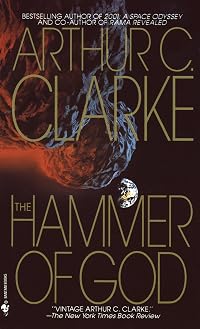
The Hammer of God
by Arthur C. Clarke
On This Page
Description
From one of the bestselling science fiction authors of all time comes this heart-stopping far future novel of an asteroid on a collision course with Earth. A century into the future, technology has solved most of the problems that have plagued our time. However, a new problem is on the horizon-one greater than humanity has ever faced. A massive asteroid is racing toward the earth, and its impact could destroy all life on the planet. Immediately after the asteroid-named "Kali" after the Hindu show more goddess of chaos and destruction-is discovered, the world's greatest scientists begin their search for a way to prevent disaster. In the meantime, Cpt. Robert Singh, aboard the starship Goliath, may be the only person who can stop the asteroid. But this heroic role may demand the ultimate sacrifice. show lessTags
Recommendations









Member Recommendations
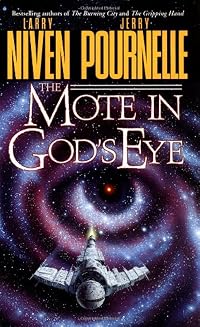
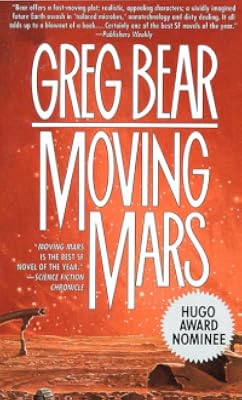
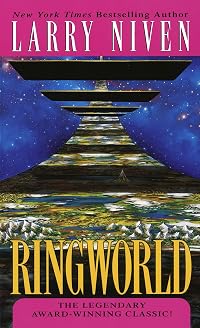
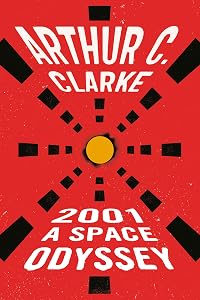
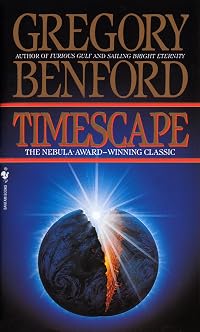
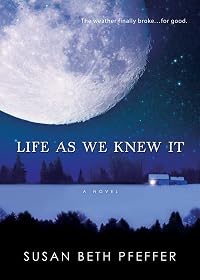
sturlington Also about a meteor impact.
Member Reviews
1.5/5
I'm going to put as much effort into this review as Clarke did into making The Hammer of God an engaging story with compelling characters and a tension filled plot. Apparently this is the germinal seed for the movie Deep Impact, and at least tangentially for Armageddon as well, though I'm hard pressed to see the similarities outside of the main premise: That an asteroid is about to hit Earth and kill everyone, so a group of humans are tasked with diverting it from its trajectory.
Reading The Hammer of God is more akin to reading non-fiction about the history of space exploration, optics, astronomy and other related fields than a fictitious novel. The characters and the plot, both laughable surface level, serve only as a thin veneer show more on top of a hypothetical exploration of how to prevent a disastrous asteroid strike. Clarke focuses a lot of energy on extrapolating future technology and science, and how that might affect our relationship to the universe, but couldn't be bothered to write a 'story'. I know that this was initially written as a short story for Time magazine, with that specific purpose in mind, but in no way did it need expanding.
Dry to the bone, lackluster, and pointless. The worst Clarke that I've read so far by a considerable margin. Rendezvous with Rama was similarly dry, but at least there was a mystery that held my attention. show less
I'm going to put as much effort into this review as Clarke did into making The Hammer of God an engaging story with compelling characters and a tension filled plot. Apparently this is the germinal seed for the movie Deep Impact, and at least tangentially for Armageddon as well, though I'm hard pressed to see the similarities outside of the main premise: That an asteroid is about to hit Earth and kill everyone, so a group of humans are tasked with diverting it from its trajectory.
Reading The Hammer of God is more akin to reading non-fiction about the history of space exploration, optics, astronomy and other related fields than a fictitious novel. The characters and the plot, both laughable surface level, serve only as a thin veneer show more on top of a hypothetical exploration of how to prevent a disastrous asteroid strike. Clarke focuses a lot of energy on extrapolating future technology and science, and how that might affect our relationship to the universe, but couldn't be bothered to write a 'story'. I know that this was initially written as a short story for Time magazine, with that specific purpose in mind, but in no way did it need expanding.
Dry to the bone, lackluster, and pointless. The worst Clarke that I've read so far by a considerable margin. Rendezvous with Rama was similarly dry, but at least there was a mystery that held my attention. show less
This late work by the author deals with an SF cliche, an asteroid on track to crash into Earth and wipe out most life. I have to say that this was not my favourite example of that sub-genre. While Clarke writes with his usual fluency and hard science background, I felt that the whole was less than the sum of its (often very good) parts. The main character Robert Singh had a significant backstory, though I found the to-ing and fro-ing within his timeline a little confusing. There was just not enough plot, and not until the last quarter or so did the threat of worldwide destruction really come through. So, all in all, a little disappointing, though a quick read at under 200 pages.
Kali is an asteroid of epic proportions on a crash course with Earth, and it spells disaster for all the planet's inhabitants. Robert Singh and his small crew are tasked with diverting the asteroids path, but in order to get there in time they must travel light, and it's difficult to say whether such a small craft can move such a large rock before it's too late.
The book was originally a short story for a magazine, and it certainly feels that way when you're reading it. The core of the story is solid, and the end of the novel is particularly good, but it meanders about aimlessly far too often and feels like Clark is really reaching in an attempt to fill out the novel.
It would have made a fantastic novella though.
The book was originally a short story for a magazine, and it certainly feels that way when you're reading it. The core of the story is solid, and the end of the novel is particularly good, but it meanders about aimlessly far too often and feels like Clark is really reaching in an attempt to fill out the novel.
It would have made a fantastic novella though.
Read for post-apocalyptic book club.
Last month, we read "Lucifer's Hammer" (https://www.goodreads.com/review/show/1672770288), so in keeping with the hammer/comet-impact theme, we decided to compare and contrast. (This one is FAR better.)
When I was around 13, Arthur C. Clarke was my very favorite author. I read and re-read everything by him in the public library. However, by the time this book came out, in 1993, he'd kind of fallen off my radar. It wasn't so much that my tastes had changed as that my life was a bit chaotic at the time (not apocalypse-level chaotic, but enough that I wasn't really tracking authors...)
The first thing that struck me on reading this was, "Oh, yes, THIS is why I liked Clarke so much!" I just really enjoy his show more writing style. He might not have the deepest characterization (like many sci-fi authors of his era) but his writing is just very engaging - full of interesting ideas and striking images while managing to stay consistently accessible.
However, I can't say that this book is Clarke's peak. It was expanded from a magazine article, and it shows. It's barely a novel, really. It has absolutely zero plot tension. As a matter of fact, I'm not sure I've ever read a more relaxed-feeling, chatty lead-up to an apocalypse. The end of the world is louring, and Clarke is just like, "Let me go on a tangent and tell you something interesting that I was just thinking about." Actually, the whole book kind of feels like sitting down to dinner with an elderly Clarke and letting him just ramble on to you about whatever comes into his head. Now, that's not a bad thing - I would've jumped at such an opportunity!!! But.
The situation here is that a comet is approaching the earth. As it comes closer, it begins to look more and more likely that it will hit. Captain Robert Singh of the Goliath is the head of a space mission that will attempt to divert or deflect the extraterrestrial missile from our path. As I said, along the way there are plenty of tangents. I actually think my favorite part of the book might've been the bit about running a foot race on Mars - on its own it would've made an exceedingly fine short story. Does it really even belong where it is in this book? Not sure.
Overall - a good book, but not a great one. show less
Last month, we read "Lucifer's Hammer" (https://www.goodreads.com/review/show/1672770288), so in keeping with the hammer/comet-impact theme, we decided to compare and contrast. (This one is FAR better.)
When I was around 13, Arthur C. Clarke was my very favorite author. I read and re-read everything by him in the public library. However, by the time this book came out, in 1993, he'd kind of fallen off my radar. It wasn't so much that my tastes had changed as that my life was a bit chaotic at the time (not apocalypse-level chaotic, but enough that I wasn't really tracking authors...)
The first thing that struck me on reading this was, "Oh, yes, THIS is why I liked Clarke so much!" I just really enjoy his show more writing style. He might not have the deepest characterization (like many sci-fi authors of his era) but his writing is just very engaging - full of interesting ideas and striking images while managing to stay consistently accessible.
However, I can't say that this book is Clarke's peak. It was expanded from a magazine article, and it shows. It's barely a novel, really. It has absolutely zero plot tension. As a matter of fact, I'm not sure I've ever read a more relaxed-feeling, chatty lead-up to an apocalypse. The end of the world is louring, and Clarke is just like, "Let me go on a tangent and tell you something interesting that I was just thinking about." Actually, the whole book kind of feels like sitting down to dinner with an elderly Clarke and letting him just ramble on to you about whatever comes into his head. Now, that's not a bad thing - I would've jumped at such an opportunity!!! But.
The situation here is that a comet is approaching the earth. As it comes closer, it begins to look more and more likely that it will hit. Captain Robert Singh of the Goliath is the head of a space mission that will attempt to divert or deflect the extraterrestrial missile from our path. As I said, along the way there are plenty of tangents. I actually think my favorite part of the book might've been the bit about running a foot race on Mars - on its own it would've made an exceedingly fine short story. Does it really even belong where it is in this book? Not sure.
Overall - a good book, but not a great one. show less
Read for post-apocalyptic book club.
Last month, we read "Lucifer's Hammer" (https://www.goodreads.com/review/show/1672770288), so in keeping with the hammer/comet-impact theme, we decided to compare and contrast. (This one is FAR better.)
When I was around 13, Arthur C. Clarke was my very favorite author. I read and re-read everything by him in the public library. However, by the time this book came out, in 1993, he'd kind of fallen off my radar. It wasn't so much that my tastes had changed as that my life was a bit chaotic at the time (not apocalypse-level chaotic, but enough that I wasn't really tracking authors...)
The first thing that struck me on reading this was, "Oh, yes, THIS is why I liked Clarke so much!" I just really enjoy his show more writing style. He might not have the deepest characterization (like many sci-fi authors of his era) but his writing is just very engaging - full of interesting ideas and striking images while managing to stay consistently accessible.
However, I can't say that this book is Clarke's peak. It was expanded from a magazine article, and it shows. It's barely a novel, really. It has absolutely zero plot tension. As a matter of fact, I'm not sure I've ever read a more relaxed-feeling, chatty lead-up to an apocalypse. The end of the world is louring, and Clarke is just like, "Let me go on a tangent and tell you something interesting that I was just thinking about." Actually, the whole book kind of feels like sitting down to dinner with an elderly Clarke and letting him just ramble on to you about whatever comes into his head. Now, that's not a bad thing - I would've jumped at such an opportunity!!! But.
The situation here is that a comet is approaching the earth. As it comes closer, it begins to look more and more likely that it will hit. Captain Robert Singh of the Goliath is the head of a space mission that will attempt to divert or deflect the extraterrestrial missile from our path. As I said, along the way there are plenty of tangents. I actually think my favorite part of the book might've been the bit about running a foot race on Mars - on its own it would've made an exceedingly fine short story. Does it really even belong where it is in this book? Not sure.
Overall - a good book, but not a great one. show less
Last month, we read "Lucifer's Hammer" (https://www.goodreads.com/review/show/1672770288), so in keeping with the hammer/comet-impact theme, we decided to compare and contrast. (This one is FAR better.)
When I was around 13, Arthur C. Clarke was my very favorite author. I read and re-read everything by him in the public library. However, by the time this book came out, in 1993, he'd kind of fallen off my radar. It wasn't so much that my tastes had changed as that my life was a bit chaotic at the time (not apocalypse-level chaotic, but enough that I wasn't really tracking authors...)
The first thing that struck me on reading this was, "Oh, yes, THIS is why I liked Clarke so much!" I just really enjoy his show more writing style. He might not have the deepest characterization (like many sci-fi authors of his era) but his writing is just very engaging - full of interesting ideas and striking images while managing to stay consistently accessible.
However, I can't say that this book is Clarke's peak. It was expanded from a magazine article, and it shows. It's barely a novel, really. It has absolutely zero plot tension. As a matter of fact, I'm not sure I've ever read a more relaxed-feeling, chatty lead-up to an apocalypse. The end of the world is louring, and Clarke is just like, "Let me go on a tangent and tell you something interesting that I was just thinking about." Actually, the whole book kind of feels like sitting down to dinner with an elderly Clarke and letting him just ramble on to you about whatever comes into his head. Now, that's not a bad thing - I would've jumped at such an opportunity!!! But.
The situation here is that a comet is approaching the earth. As it comes closer, it begins to look more and more likely that it will hit. Captain Robert Singh of the Goliath is the head of a space mission that will attempt to divert or deflect the extraterrestrial missile from our path. As I said, along the way there are plenty of tangents. I actually think my favorite part of the book might've been the bit about running a foot race on Mars - on its own it would've made an exceedingly fine short story. Does it really even belong where it is in this book? Not sure.
Overall - a good book, but not a great one. show less
My reaction to reading this novel in 1998. Spoilers follow.
I liked this expansion of the short story of the same name. Its origins as a tale commissioned by Time magazine to explore life in the “new millennium” explains Clarke’s narrative strategy. Rather than the multi character strategy of Larry Niven and Jerry Pournelle’s Lucifer’s Hammer (one of the Big Rock Hits the Earth novels Clarke mentions in his afterword) Clarke does a charming, old-fashioned (in a 70s or 60s kind of way), implausible travelogue of a world of plenty, mobile homes in the truest sense, tamed tigers, instant knowledge about everything, guilt-free and common bisexual couplings and threesomes and foursomes, and space travel.
The writing is breezy and show more very skillful – much like Clarke’s chatty autobiography Astounding Days – and suspenseful with an informative afterword about the scientific facts behind the tale. The plot of the comet being split in two, the Goliath sacrificing itself to save Earth, the large chunk missing earth and the smaller chunk hitting were all suspenseful and show up in the movie Deep Impact. Time said the novel was part of the source for the movie. However, Clarke was uncredited. show less
I liked this expansion of the short story of the same name. Its origins as a tale commissioned by Time magazine to explore life in the “new millennium” explains Clarke’s narrative strategy. Rather than the multi character strategy of Larry Niven and Jerry Pournelle’s Lucifer’s Hammer (one of the Big Rock Hits the Earth novels Clarke mentions in his afterword) Clarke does a charming, old-fashioned (in a 70s or 60s kind of way), implausible travelogue of a world of plenty, mobile homes in the truest sense, tamed tigers, instant knowledge about everything, guilt-free and common bisexual couplings and threesomes and foursomes, and space travel.
The writing is breezy and show more very skillful – much like Clarke’s chatty autobiography Astounding Days – and suspenseful with an informative afterword about the scientific facts behind the tale. The plot of the comet being split in two, the Goliath sacrificing itself to save Earth, the large chunk missing earth and the smaller chunk hitting were all suspenseful and show up in the movie Deep Impact. Time said the novel was part of the source for the movie. However, Clarke was uncredited. show less
This was my first Clarke book, and though I'm generally pretty unenthusiastic about death-comet-hurtling-towards-Earth stories, this one was surprisingly good. Clarke is clearly an idea guy; much of the story is about the various technologies that have emerged over the next couple hundred years, with only smaller parts devoted to the trials of the characters. Usually this sort of thing would turn me off, which probably says a lot for the talent of Clarke. I read this book over the course of about 30 hours, including a lengthy flight, where I rarely can read for very long at a stretch. So that's saying something. Certainly worth picking up if you're a fan of SF.
Members
- Recently Added By
Lists

The Novels of Arthur C. Clarke
21 works; 2 members

Books Read in 2014
2,344 works; 86 members
Author Information

846+ Works 130,500 Members
Arthur C. Clarke was born in Minehead, Somerset, England, on December 16, 1917. During World War II, he served as a radar specialist in the RAF. His first published piece of fiction was Rescue Party and appeared in Astounding Science, May 1946. He graduated from King's College in London with honors in physics and mathematics, and worked in show more scientific research before turning his attention to writing fiction. His first book, Prelude to Space, was published in 1951. He is best known for his book 2001: A Space Odyssey, which was later turned into a highly successful and controversial film under the direction of Stanley Kubrick. His other works include Childhood's End, Rendezvous with Rama, The Garden of Rama, The Snows of Olympus, 2010: A Space Odyssey II, 2062: Odyssey III, and 3001: The Final Odyssey. During his lifetime, he received at least three Hugo Awards and two Nebula Awards. He died of heart failure on March 19, 2008 at the age of 90. (Bowker Author Biography) show less
Some Editions
Series
Belongs to Publisher Series
Work Relationships
Is contained in
Has the adaptation
Common Knowledge
- Canonical title*
- Le marteau de Dieu
- Original title
- The Hammer of God
- Original publication date
- 1993-07
- People/Characters
- Robert Singh
- Important places
- Goliath (spaceship)
- Epigraph
- All the events in the past happened at the times and places stated; all those set in the future are possible.
And one is certain.
Sooner or later, we will meet Kali. - First words
- It was the size of a small house, weighed nine thousand tons, and was moving at fifty thousand kilometres an hour.
- Quotations
- The cosmic iceberg came in from the direction of the Sun, so no one saw its approach until the sky exploded. Seconds later, the shock wave flattened two thousand square kilometres of pine forest, and the loudest sound since t... (show all)he eruption of Krakatoa began to circle the world.
Had the cometary fragment been delayed a mere two hours on its age-long journey, the ten-megaton blast would have obliterated Moscow and changed the course of history.
The date was 30 June 1908.
It came in vertically, punching a hole ten kilometres wide through the atmosphere, generating temperatures so high that the air itself started to burn. When it hit the ground, rock turned to liquid and spread outwards in moun... (show all)tainous waves, not freezing until it had formed a crater two hundred kilometres across.
That was only the beginning of disaster; now the real tragedy began.
Nitric oxides rained from the air, turning the sea to acid. Clouds of soot from incinerated forests darkened the sky, hiding the sun for months. Worldwide, the temperature dropped precipitously, killing off most of the plants and animals that had survived the initial cataclysm. Though some species would linger on for millenia, the reign of the great reptiles was finally over.
The clock of evolution had been reset; the countdown to man had begun. - Last words
- (Click to show. Warning: May contain spoilers.)There was still plenty of time for it to change its mind again.
- Original language
- English
*Some information comes from Common Knowledge in other languages. Click "Edit" for more information.
Classifications
Statistics
- Members
- 1,776
- Popularity
- 12,395
- Reviews
- 32
- Rating
- (3.33)
- Languages
- 11 — Czech, English, Finnish, French, German, Hungarian, Japanese, Farsi/Persian, Portuguese, Spanish, Swedish
- Media
- Paper, Ebook
- ISBNs
- 36
- ASINs
- 7