On This Page
Description
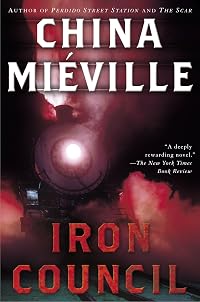
Following Perdido Street Station and The Scar, acclaimed author China Miéville returns with his hugely anticipated Del Rey hardcover debut. With a fresh and fantastical band of characters, he carries us back to the decadent squalor of New Crobuzon--this time, decades later. It is a time of wars and revolutions, conflict and intrigue. New Crobuzon is being ripped apart from without and within. War with the shadowy city-state of Tesh and rioting on the streets at home are pushing the teeming show more city to the brink. A mysterious masked figure spurs strange rebellion, while treachery and violence incubate in unexpected places. In desperation, a small group of renegades escapes from the city and crosses strange and alien continents in the search for a lost hope. In the blood and violence of New Crobuzon's most dangerous hour, there are whispers. It is the time of the iron council. . . . The bold originality that broke Miéville out as a new force of the genre is here once more in Iron Council: the voluminous, lyrical novel that is destined to seal his reputation as perhaps the edgiest mythmaker of the day. show lessTags
Recommendations
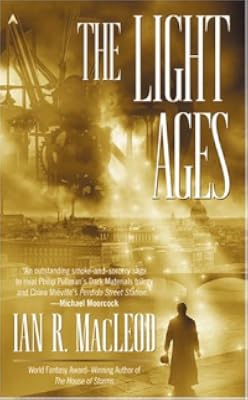
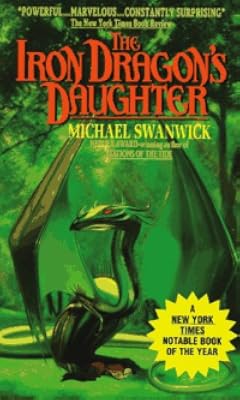
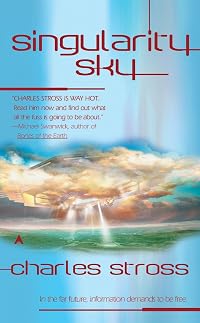

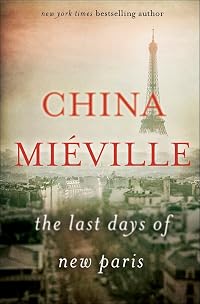
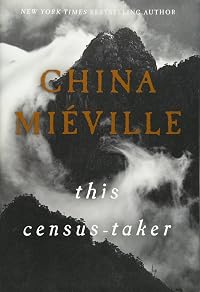
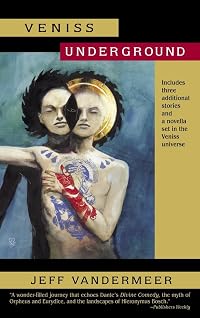
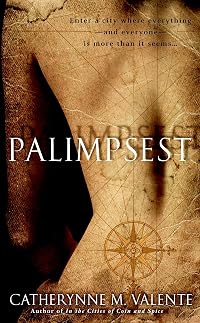
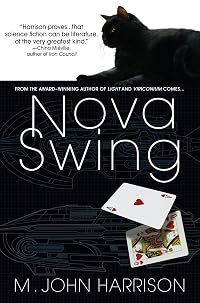
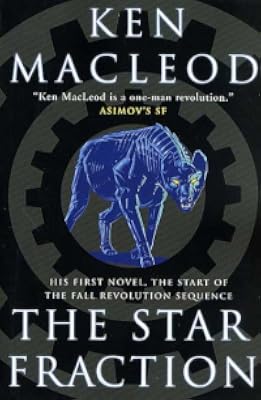
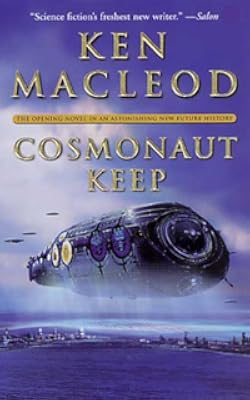
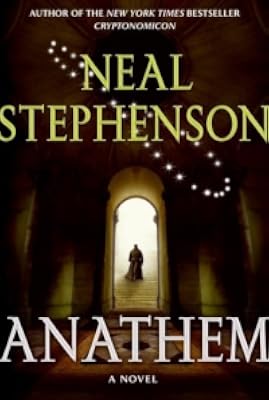
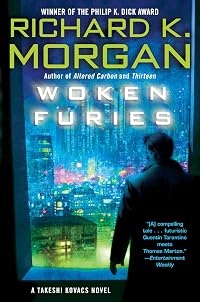
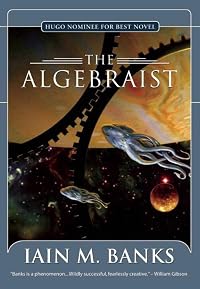
Member Recommendations
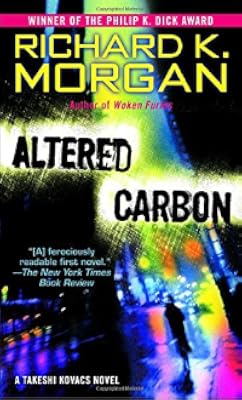
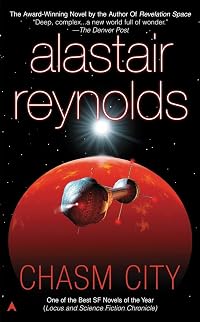
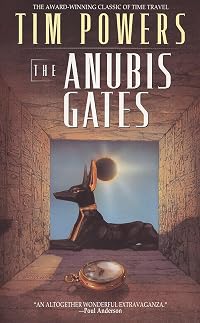
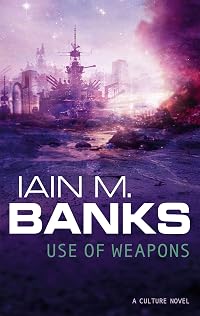
bunnygirl Mostly for a bit of shared (and horrific) symbolism
Longshanks Two somewhat-westerns featuring political unrest and gorgeously unusual aesthetics, neither book reducible to mere fantastic wish-fulfillment.
Member Reviews
This is the book I enjoyed the most from the New Crobuzon trilogy.
In addition to uninhibited flow of imagination so characteristic of Miéville we get quite a bit more social commentary than in the first two books of the series. The barely visible hand pulling the strings of the strange city finally gets the attention it must get. Oppression and corruption typically result in some sort of internal protest, unless you live in a certain tsar-dom.
The sort of protest this book describes is as weird as the world where it takes place. Prostitutes and rail workers strike and, to avoid the certainty of a bloody retribution from the powers that be, escape on a train. On the train that builds the railway, they escape together with the railway show more and become a myth, a legend, the Iron Council.
If you enjoy the strange adventures of the characters in Perdido Street Station and The Scar, the sudden twists and runaway subplots - you will find more of that in Iron Council. Yet the final book of the series offers you more than exciting quests of unusually gifted individuals, it is primarily about the struggle of the oppressed multitudes for social justice and dignity. show less
In addition to uninhibited flow of imagination so characteristic of Miéville we get quite a bit more social commentary than in the first two books of the series. The barely visible hand pulling the strings of the strange city finally gets the attention it must get. Oppression and corruption typically result in some sort of internal protest, unless you live in a certain tsar-dom.
The sort of protest this book describes is as weird as the world where it takes place. Prostitutes and rail workers strike and, to avoid the certainty of a bloody retribution from the powers that be, escape on a train. On the train that builds the railway, they escape together with the railway show more and become a myth, a legend, the Iron Council.
If you enjoy the strange adventures of the characters in Perdido Street Station and The Scar, the sudden twists and runaway subplots - you will find more of that in Iron Council. Yet the final book of the series offers you more than exciting quests of unusually gifted individuals, it is primarily about the struggle of the oppressed multitudes for social justice and dignity. show less
Miéville is a brilliant writer and has an imagination and scope of vision that is unique in contemporary writing. He takes Tolkien's love of place and creatures to spectacular, dizzying levels. Also, his command of the sentence and the unusual rhythm is distinctive and delicious. Pick any page and there is something so fresh and striking that you are tempted to read it again and again. Here, for example, one piece of description:
I've seen a thousand places like this along highway construction routes or near towns: lumberyards, gravel pits. Yet this description is so sharp and striking that I will see them through Miéville's eyes from now on. He is as good with his myriad creatures, especially the "Remade" that are at the heart of this book, humans who have been punished with surgeries that make them into monsters. Just a little after this description, Miéville writes:
So why didn't I give this virtuoso writing five stars? To the degree Miéville is a genius with his landscape and creatures, he is essentially uninterested in his characters. They are all flat, the same, with virtually no complexity or growth. The precision and imagination of Miéville's world is without a core of caring and interest for the creatures that inhabit it. What does it feel like to be that creature with the fox head snapping at you day and night? Miéville passes right by to the next amazing, inventive thing. A woman who is a "guttered pillar" -- what does she thinks about the world, how did she get there, what does she want? Nothing, since we pass her by like some pole on the highway. Ultimately, this is fireworks -- amazing, awe-inspiring, fantastic -- without any emotional core. show less
This was a quagmire once, where mud would wrestle you in as vigorous as the constrictors. Stone hauled from the foothills rises in blocks, lapped by the thick water. They are bulwarks that hold in gravel and earth. Dry land is cut out. A road of matter has been excised, a swath of tamaracks, mangroves, runtshow more
grasses and the debris of spatterdock. It is a ribbon of flattened earth a score of yards wide and endlessly long, sweeping backward through the wet thickets, purged of trees, tended by haulers and hewers as far as Judah can see.
I've seen a thousand places like this along highway construction routes or near towns: lumberyards, gravel pits. Yet this description is so sharp and striking that I will see them through Miéville's eyes from now on. He is as good with his myriad creatures, especially the "Remade" that are at the heart of this book, humans who have been punished with surgeries that make them into monsters. Just a little after this description, Miéville writes:
On the roadbed there is a man whose front pullulates with scrawny arms, each from a corpse or an amputation. Chained to him a taller man, his face stoic, a fox stitch embedded in his chest from where it snarls and bites at him in permanent terror. Here a crawling man spiral-shelled in iron and venting smoke. Here a woman working, because there are women among the Remade, a woman become a guttered pillar, her organic parts like afterthoughts. A man -- or is it a woman? -- whose flesh moves with tides, with eructations like an octopus. People with their faces relocated, bodies made of iron and rubber cables, and steam engine arms, and animal arms, and arms that are body-length pistons on which the Remade walk, their legs replaced with monkey paws so they reach outfrom below their own waists.
So why didn't I give this virtuoso writing five stars? To the degree Miéville is a genius with his landscape and creatures, he is essentially uninterested in his characters. They are all flat, the same, with virtually no complexity or growth. The precision and imagination of Miéville's world is without a core of caring and interest for the creatures that inhabit it. What does it feel like to be that creature with the fox head snapping at you day and night? Miéville passes right by to the next amazing, inventive thing. A woman who is a "guttered pillar" -- what does she thinks about the world, how did she get there, what does she want? Nothing, since we pass her by like some pole on the highway. Ultimately, this is fireworks -- amazing, awe-inspiring, fantastic -- without any emotional core. show less
Embassytown and The City & The City appear to be the books that are giving Mieville his reptuation as the Literary Saint of Speculative Fiction, but before reading those I wanted to finish off his Bas-Lag trilogy. His previous outings – Perdido Street Station and The Scar – both displayed tremendous worldbuilding and a capacious imagination, but fell short in areas like plot, characters and dialogue, and demonstrated Mieville’s irritating love of flowery prose.
Iron Council is Mieville’s most overtly political book, and he’s never been a writer to shy away from politics. It opens with a group of characters searching for the legendary Iron Council across the hostile landscapes of Bas-Lag, and then throws the reader into a show more flashback to show how the Iron Council was formed. A wealthy industrialist from New Crobuzon is sending out railways across the continent, in a long and relatively enjoyable section of the book that’s a sort of crazy fantasy Wild West. After some strikes and demonstrations, the workers revolt and steal one of the trains, tearing up the tracks behind them and laying them down again ahead, to create a perpetually moving train, a free and equal society called the Iron Council. The story jumps around in space and time, linking back with events in New Crobuzon, where many decades of secret rebellion have culminated in open warfare against the tyrannical government.
As I said, it’s Mieville’s most political book, but I think it’s for precisely this reason that it fails. I remember thinking in the early sections that his ability for prose had developed (taking clear inspiration from Cormac McCarthy) but later in the book it shifted from descriptions of the landscape and bizarre creatures, and became solely dedicated to building a sense of drama and importance about the characters and events. There’s not even any of the simple slice of life stuff we saw in Perdido Street Station and even The Scar. Everything the characters say and do is weighted down with attempted emotional anguish. People are rising up against cruel governments or struggling with their misgivings about doing so or arguing about what’s best for the people they’re trying to protect. I could pick almost any random line of dialogue out of this book and see it being acted out by a grizzled-jaw American hunk narrowing his eyes, looking into the distance and intoning something cheesy like, "People need somethin' to believe in." I never cared. I’ve read three of Mieville’s books now, and found not a sympathetic or memorable character in any of them, so I frankly don't give a fuck if they all have to live underneath a dictatorial regime.
You can tell that this is the book he really wanted to write, that he couldn’t wait to write about an open struggle against an evil government, but he lost control of himself and got too swept up in it. He forgot that not everybody else is going to be as invested in that as he is. I liked Iron Council even less than the previous two Bas-Lag books, because those were about characters just trying to get by and handle their own business, people who got swept up in events rather than orchestrated them. Iron Council is weighed down by its political baggage and sense of self-importance. I can understand what Mieville was trying to do here, and it’s nice to see some left-wing content in an inherently conservative genre, but I found Iron Counvil was one of those books where I was wearily counting how many pages were left until I was done with it.
I’ll still check out The City & The City at some point, but if I don’t like that, I may give up on Mieville and forget about Embassytown. show less
Iron Council is Mieville’s most overtly political book, and he’s never been a writer to shy away from politics. It opens with a group of characters searching for the legendary Iron Council across the hostile landscapes of Bas-Lag, and then throws the reader into a show more flashback to show how the Iron Council was formed. A wealthy industrialist from New Crobuzon is sending out railways across the continent, in a long and relatively enjoyable section of the book that’s a sort of crazy fantasy Wild West. After some strikes and demonstrations, the workers revolt and steal one of the trains, tearing up the tracks behind them and laying them down again ahead, to create a perpetually moving train, a free and equal society called the Iron Council. The story jumps around in space and time, linking back with events in New Crobuzon, where many decades of secret rebellion have culminated in open warfare against the tyrannical government.
As I said, it’s Mieville’s most political book, but I think it’s for precisely this reason that it fails. I remember thinking in the early sections that his ability for prose had developed (taking clear inspiration from Cormac McCarthy) but later in the book it shifted from descriptions of the landscape and bizarre creatures, and became solely dedicated to building a sense of drama and importance about the characters and events. There’s not even any of the simple slice of life stuff we saw in Perdido Street Station and even The Scar. Everything the characters say and do is weighted down with attempted emotional anguish. People are rising up against cruel governments or struggling with their misgivings about doing so or arguing about what’s best for the people they’re trying to protect. I could pick almost any random line of dialogue out of this book and see it being acted out by a grizzled-jaw American hunk narrowing his eyes, looking into the distance and intoning something cheesy like, "People need somethin' to believe in." I never cared. I’ve read three of Mieville’s books now, and found not a sympathetic or memorable character in any of them, so I frankly don't give a fuck if they all have to live underneath a dictatorial regime.
You can tell that this is the book he really wanted to write, that he couldn’t wait to write about an open struggle against an evil government, but he lost control of himself and got too swept up in it. He forgot that not everybody else is going to be as invested in that as he is. I liked Iron Council even less than the previous two Bas-Lag books, because those were about characters just trying to get by and handle their own business, people who got swept up in events rather than orchestrated them. Iron Council is weighed down by its political baggage and sense of self-importance. I can understand what Mieville was trying to do here, and it’s nice to see some left-wing content in an inherently conservative genre, but I found Iron Counvil was one of those books where I was wearily counting how many pages were left until I was done with it.
I’ll still check out The City & The City at some point, but if I don’t like that, I may give up on Mieville and forget about Embassytown. show less
‘El Consejo de Hierro’ es una novela ambientada en el fantástico mundo de Bas-lag, donde también transcurrían esas obras maestras que son ‘La estación de la Calle Perdido’ y ‘La cicatriz’. No cabe duda de que China Miéville es un escritor único, del que a duras penas puede ser comparado con ningún otro. Su visión de la fantasía, de naturaleza New Weird, oscura y pesadillesca, se aleja de todo lo conocido hasta el momento.
En ‘El Consejo de Hierro’, de nuevo volvemos a Nueva Crobuzon, esa ciudad más allá de la imaginación donde cohabitan la taumaturgia, las razas alienígenas, los rehechos, los constructos, etc., bajo un gobierno corrupto. La novela se divide en tres hilos narrativos, y resulta imposible show more abarcar todo lo que acontece a lo largo de la historia. Cutter ha huido de Nueva Crobuzon junto con varios compañeros, en busca de un antiguo amigo. Miéville empieza fuerte el libro, con un principio plagado de criaturas y amenazas mágicas, todo ello con un claro aire de western. Otro personaje importante es Ori, un joven de Nueva Crobuzon que cada vez se encuentra más involucrado en un grupo extremista que lucha contra el gobierno vigente. Y por último está Judah Low, que se nos da a conocer a través de un largo flash-back, que nos sirve a su vez para saber del mítico Consejo de Hierro.
La lectura de esta novela es un descubrimiento tras otro, y es que China Miéville posee un sentido de la imaginación prodigioso. Elementales de la naturaleza, gólems, seres vivos rehechos con partes mecánicas como castigo por sus crímenes, razas alienígenas a cual más extraña, taumaturgia cohabitando con ciencia y tecnología. Pero Miéville no se queda en lo fantástico, sería muy fácil quedarse en lo puramente aventurero, él va más allá, y nos muestra el conflicto político entre la ciudad y sus milicianos, y los grupos rebeldes, o la realidad existente ante la homosexualidad y la unión entre diferentes razas.
Imaginativo, desmesurado, China Miéville es el gran escritor de literatura fantástica del momento, que se reinventa en cada novela. show less
En ‘El Consejo de Hierro’, de nuevo volvemos a Nueva Crobuzon, esa ciudad más allá de la imaginación donde cohabitan la taumaturgia, las razas alienígenas, los rehechos, los constructos, etc., bajo un gobierno corrupto. La novela se divide en tres hilos narrativos, y resulta imposible show more abarcar todo lo que acontece a lo largo de la historia. Cutter ha huido de Nueva Crobuzon junto con varios compañeros, en busca de un antiguo amigo. Miéville empieza fuerte el libro, con un principio plagado de criaturas y amenazas mágicas, todo ello con un claro aire de western. Otro personaje importante es Ori, un joven de Nueva Crobuzon que cada vez se encuentra más involucrado en un grupo extremista que lucha contra el gobierno vigente. Y por último está Judah Low, que se nos da a conocer a través de un largo flash-back, que nos sirve a su vez para saber del mítico Consejo de Hierro.
La lectura de esta novela es un descubrimiento tras otro, y es que China Miéville posee un sentido de la imaginación prodigioso. Elementales de la naturaleza, gólems, seres vivos rehechos con partes mecánicas como castigo por sus crímenes, razas alienígenas a cual más extraña, taumaturgia cohabitando con ciencia y tecnología. Pero Miéville no se queda en lo fantástico, sería muy fácil quedarse en lo puramente aventurero, él va más allá, y nos muestra el conflicto político entre la ciudad y sus milicianos, y los grupos rebeldes, o la realidad existente ante la homosexualidad y la unión entre diferentes razas.
Imaginativo, desmesurado, China Miéville es el gran escritor de literatura fantástica del momento, que se reinventa en cada novela. show less
The third book set in Miéville's bizarre world of Bas-Lag, which sees the city of New Cobruzon experiencing a difficult time of war, unrest, and insurrection. It's a good story, but as always it's the world itself that truly captures the imagination, with its casual strangeness, its horrors and wonders. I think Miéville is as good at this particular kind of slightly surreal world-building as anyone ever has been. He seems to have an excellent instinctive sense of how much to explain and how much to leave mysterious, and he blends the familiar and the uncanny together as seamlessly as a recurring dream.
I suspect this may be a minority opinion, but I think I may like this book the best of the three. Unlike Perdido Street Station or The show more Scar, it never dragged for me, even for a moment. And while I can imagine that some might find the ending unsatisfying, I thought it felt very, very right. show less
I suspect this may be a minority opinion, but I think I may like this book the best of the three. Unlike Perdido Street Station or The show more Scar, it never dragged for me, even for a moment. And while I can imagine that some might find the ending unsatisfying, I thought it felt very, very right. show less
This is an extremely hard book to pigeonhole, so I won't bother doing it except to say it has the kitchen sink, too.
So much happens for what ought to be a tale of exploration before building a railroad, the building, the freeing of the enslaved biomonstrosities called the Remade from their long toils, to building of a diverse and growing society. Never mind that there's also the opening, middle, and end of the civil war to end all civil wars in New Crobuzon and along the rails.
I didn't expect it to turn so political, but it did, and Miéville's leanings are not only clear, but amazingly complex and muddy at the same time. Grey area? You bet. Delightfully so, and I'm rooting for all the characters and also the characters that are the show more City and the Iron Council, as well. So much character, so much love.
It may be impossible to tackle just how amazingly imaginative the world-building is, but I'll give you a taste of so many golems, flesh trees, Inchmen (omg how amazingly disgusting), the spirals that bring about the grand murder, the cactus men, the insect women, the Victorians, and so many other truly odd and strange people that fill this land and insane spacetime mash of a universe that is, by its own reckoning, still a work in progress.
I think we could all spend a couple of decades pouring over these books building no more than a slight working knowledge of the place and its people, and I rather wish I could visit, no matter how freaking dangerous it would be for me. Maybe I'll hire a Tesh priest and thaumaturge myself into some sort of immortal to make my tourism a bit safer. (But only a small bit safer.)
What a world!
I think I liked the characters and the overall tale of this novel better than both of the others preceding it, or perhaps I was less waylaid by the complexity and the eye-popping wonderful that meets me on every page because I've *been* through the learning curve of the previous two novels. Either way, it was absolutely amazing.
Few works of fiction can boast this much sheer density of unpackable information, and the fact that we've got a working story with memorable characters is freaking amazing. :)
Everyone ought to have a working knowledge of this landscape, even if they can never be called an expert. (No, not even the author. I think he must have channeled all this from another dimension.)
:) show less
So much happens for what ought to be a tale of exploration before building a railroad, the building, the freeing of the enslaved biomonstrosities called the Remade from their long toils, to building of a diverse and growing society. Never mind that there's also the opening, middle, and end of the civil war to end all civil wars in New Crobuzon and along the rails.
I didn't expect it to turn so political, but it did, and Miéville's leanings are not only clear, but amazingly complex and muddy at the same time. Grey area? You bet. Delightfully so, and I'm rooting for all the characters and also the characters that are the show more City and the Iron Council, as well. So much character, so much love.
It may be impossible to tackle just how amazingly imaginative the world-building is, but I'll give you a taste of so many golems, flesh trees, Inchmen (omg how amazingly disgusting), the spirals that bring about the grand murder, the cactus men, the insect women, the Victorians, and so many other truly odd and strange people that fill this land and insane spacetime mash of a universe that is, by its own reckoning, still a work in progress.
I think we could all spend a couple of decades pouring over these books building no more than a slight working knowledge of the place and its people, and I rather wish I could visit, no matter how freaking dangerous it would be for me. Maybe I'll hire a Tesh priest and thaumaturge myself into some sort of immortal to make my tourism a bit safer. (But only a small bit safer.)
What a world!
I think I liked the characters and the overall tale of this novel better than both of the others preceding it, or perhaps I was less waylaid by the complexity and the eye-popping wonderful that meets me on every page because I've *been* through the learning curve of the previous two novels. Either way, it was absolutely amazing.
Few works of fiction can boast this much sheer density of unpackable information, and the fact that we've got a working story with memorable characters is freaking amazing. :)
Everyone ought to have a working knowledge of this landscape, even if they can never be called an expert. (No, not even the author. I think he must have channeled all this from another dimension.)
:) show less
This is the third of Mieville’;s books to be set in the wonderful world of New Crobuzon, and so far my favourite of this ‘verse. I enjoyed Perdido Street Station, admired more than liked The Scar, but Iron Council surpasses both of them. I was a little doubtful at first, not really getting the character of Cutter. But once the story began it sucked me in.
The ‘verse Mieville has created is simply fantastic, in both sense of the word. A variety of characters, races, and peoples all battle for the reader’s attention, and just when you want to read more about some one in particular another comes along to steal your attention.
There are three main storylines. Cutter and his wanderings as he attempts to track down Judah Lowe. Then show more there is Ori, back in the city of New Crobuzon and his desire for revolution, for a better world. The third strand is set in the past, and centres on the character of Judah Lowe and the origin of the legendary Iron Council.
Mieville is a socialist, and there is quite a bit of politics in this book. The social reform the people of the Collective yearn for. The strikes that helped bring about the creation of the Iron Council. And while it is impossible to ignore this political aspect, nowhere does Mieville’s political belief turn into a sermon or a rant. The characters live, and die, they act as characters, not as proponents of a particular theory.
There are no real bad guys in this book. Sure, there are the authorities and the railroad managers, but they are more in the background. Few of them are actual characters that appear in the book. Instead it is the realities of life that create the situations that the other characters must react to. For just as there are no bad guys, there are no good guys. There are simply characters, acting according to what goes on about them.
Utterly original, with its Remade, flesh elementals, Cactae people and Khepri women among many many more, Iron Council makes for a great read. You’ll never look at a train in the same way again. And the ending! well. I’ll let you find out for yourself. show less
The ‘verse Mieville has created is simply fantastic, in both sense of the word. A variety of characters, races, and peoples all battle for the reader’s attention, and just when you want to read more about some one in particular another comes along to steal your attention.
There are three main storylines. Cutter and his wanderings as he attempts to track down Judah Lowe. Then show more there is Ori, back in the city of New Crobuzon and his desire for revolution, for a better world. The third strand is set in the past, and centres on the character of Judah Lowe and the origin of the legendary Iron Council.
Mieville is a socialist, and there is quite a bit of politics in this book. The social reform the people of the Collective yearn for. The strikes that helped bring about the creation of the Iron Council. And while it is impossible to ignore this political aspect, nowhere does Mieville’s political belief turn into a sermon or a rant. The characters live, and die, they act as characters, not as proponents of a particular theory.
There are no real bad guys in this book. Sure, there are the authorities and the railroad managers, but they are more in the background. Few of them are actual characters that appear in the book. Instead it is the realities of life that create the situations that the other characters must react to. For just as there are no bad guys, there are no good guys. There are simply characters, acting according to what goes on about them.
Utterly original, with its Remade, flesh elementals, Cactae people and Khepri women among many many more, Iron Council makes for a great read. You’ll never look at a train in the same way again. And the ending! well. I’ll let you find out for yourself. show less
Members
- Recently Added By
Published Reviews
ThingScore 100
Aside from his high-end prose style, Miéville’s characters, with their conceits and weaknesses abraded as moral choices play themselves out, secure their author’s place among the top-flight novelists of today.
added by paradoxosalpha
Lists

Favorite Literary Love Stories
182 works; 101 members

Exploration of alternative economical systems
40 works; 3 members

Arthur C. Clarke Award Winners and Shortlisted Books
219 works; 14 members

Books Read in 2023
5,638 works; 147 members

Unread books
1,063 works; 87 members

Strange Westerns
11 works; 4 members

New Weird Fiction
69 works; 12 members

Best public-transport fiction
72 works; 17 members
Author Information

111+ Works 51,032 Members
China Miéville was born in Norwich, England on September 6, 1972. He received a B.A. in social anthropology from the University of Cambridge in 1994, and a Masters' degree with distinction and Ph.D in international relations from the London School of Economics, the latter in 2001. He has also held a Frank Knox fellowship at Harvard University. show more His first novel, King Rat, was nominated for both an International Horror Guild and a Bram Stoker award. His other works include Perdido Street Station, The Scar, Iron Council, Un Lun Dun, The City and the City, Embassytown, and Three Moments of an Explosion: Stories. He has won numerous awards for his works including three Arthur C. Clarke Awards, two British Fantasy Awards, the British Science Fiction Award, and the 2008 Locus Award for Best Young Adult Book. He also published a book on Marxism and international law called Between Equal Rights: A Marxist Theory of International Law. He teaches creative writing at Warwick University. (Bowker Author Biography) show less
Some Editions
Awards and Honors
Awards
Distinctions
Series

Belongs to Publisher Series
Work Relationships
Common Knowledge
- Canonical title
- Iron Council
- Original title
- Iron Council
- Original publication date
- 2004
- People/Characters
- Judah Low; Ori; Cutter; The Weaver; Spiral Jacobs; Drogon (show all 12); Ann-Hari; Toro; Qurabin; Weather Wrightby; Elsie; Pomeroy
- Important places
- Bas-Lag; New Crobuzon; Tesh
- Epigraph
- Erect portable moving monuments on the platforms of trains.
Velimir Khlebnikov, Proposals - Dedication
- To Jemima, my sister
- First words
- In years gone, women and men are cutting a line across the dirtland and dragging history with them.
- Last words
- (Click to show. Warning: May contain spoilers.)They are always coming.
- Blurbers
- Gaiman, Neil
- Original language
- English
Classifications
Statistics
- Members
- 3,744
- Popularity
- 4,303
- Reviews
- 87
- Rating
- (3.62)
- Languages
- 11 — Czech, English, French, German, Hungarian, Italian, Polish, Romanian, Spanish, Turkish, Ukrainian
- Media
- Paper, Audiobook, Ebook
- ISBNs
- 31
- UPCs
- 1
- ASINs
- 11