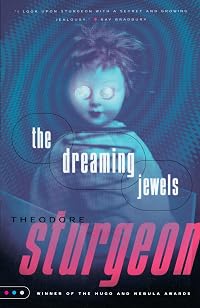
The Dreaming Jewels
by Theodore Sturgeon
On This Page
Description
Eight-year-old Horty Bluett has never known love. His adoptive parents are violent; his classmates are cruel. So he runs away from home and joins a carnival. Performing alongside the fireaters, snakemen and "little people," Horty is finally accepted. But he is not safe. When he loses three fingers in an accident and they grow back, it becomes clear that Horty is not like other boys-and this "difference" is something that some people might want to use. Now Horty knows that his difference is a show more risk not only to his own life, but to the lives of the outcasts who have provided him with a place to call home. show lessTags
Recommendations



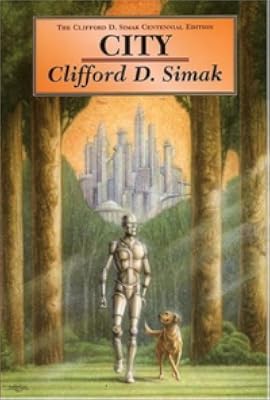
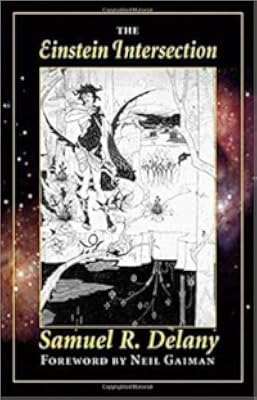


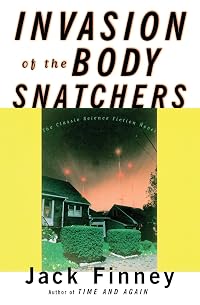
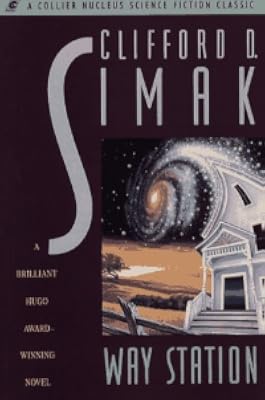










Member Recommendations
SomeGuyInVirginia Carny
Member Reviews
A taut magical realism story with solid SF under-pinnings. Horty is a young orphan who, abused by his step-father, runs away and gets picked up by a strange group of carnies. Impersonating a girl midget, he lives for several years on the road with the carnival. But there is something different about Horty - and about the Maneater, the sinister figure who runs the carnival...
Sturgeon weaves a wonderfully realized tale of humans who are enthralled and endowed with super-human talents by the hidden powers of an ancient species - The Dreaming Jewels.
First published in 1950, this is one of the better stories I have read from that era. For character development alone, it stands head & shoulders above much of the 'Golden Age' material of the show more time. If you happen upon a copy of this out of print gem - grab it before the next person does! show less
Sturgeon weaves a wonderfully realized tale of humans who are enthralled and endowed with super-human talents by the hidden powers of an ancient species - The Dreaming Jewels.
First published in 1950, this is one of the better stories I have read from that era. For character development alone, it stands head & shoulders above much of the 'Golden Age' material of the show more time. If you happen upon a copy of this out of print gem - grab it before the next person does! show less
The Dreaming Jewels (also published elsewhere as The Synthetic Man) was Sturgeon's first novel. Written circa 1950, it is also set in mid-20th-century America, with an emerging substratum of non-human strangeness. "Yet--how many men walked the earth who were not men at all; how many trees, how many rabbits, flowers, amoebae, sea-worms, red-woods, eels and eagles grew and flowered, swam and hunted and stood among their prototypes with none knowing that they were an alien dream, having, apart from the dream, no history?" (181)
The comparisons I found myself making for this story were not to other pieces of science fiction, but rather to the horror genre. Without even engaging any extraterrestrial scenario, Sturgeon manages to evoke a show more cosmic indifference more effectively than H.P. Lovecraft ever did. And, by way of further contrast, he succeeds in making his characters both more detestable and admirable than any Lovecraftian people. Sturgeon had had plenty of experience in his short fiction at drawing vivid personalities, and it shows in this novel.
There is one element of the plot in the closing pages that I was not able to quite reason out: a happy twist for which I can imagine a justification, but which the text doesn't seem to square away as well as a reader might desire. The prose throughout is graceful and efficient, and The Dreaming Jewels is a speedy, pleasurable read. show less
The comparisons I found myself making for this story were not to other pieces of science fiction, but rather to the horror genre. Without even engaging any extraterrestrial scenario, Sturgeon manages to evoke a show more cosmic indifference more effectively than H.P. Lovecraft ever did. And, by way of further contrast, he succeeds in making his characters both more detestable and admirable than any Lovecraftian people. Sturgeon had had plenty of experience in his short fiction at drawing vivid personalities, and it shows in this novel.
There is one element of the plot in the closing pages that I was not able to quite reason out: a happy twist for which I can imagine a justification, but which the text doesn't seem to square away as well as a reader might desire. The prose throughout is graceful and efficient, and The Dreaming Jewels is a speedy, pleasurable read. show less
Although it definitely falls into the science fiction category by the very end (perhaps a little clumsily at its first entry early in the book), 'The Dreaming Jewels' (also called 'The Synthetic Man') might just as easily be regarded as a masterpiece of weird fiction for much of its length.
Science fiction has an unfortunate problem in that, whenever it is published (1950 in this case), its content is likely to become fantasy within a relatively short period of time whereas weird fiction tends to be emotionally timeless even when it is set in Gothic castles or crumbling churchyards.
The setting amongst 'carny' folk is classically weird while its science theme of a world eternally present in ours but oblivious to our human concerns, show more producing 'monsters' simply by accident, is on the very edge of being Lovecraftian.
It certainly avoids the credibility issues of most pulp scifi. The science may not be plausible but it is not implausible just because we have progressed to something else but only because it is Fortean (Charles gets name-checked towards the end of the book). We are in the weird.
Because the science is Fortean rather than Darwinian, a 'weird' alternative notion of evolution is suggested. Although God is never mentioned, what we might put down to the callousness of God can here be put down to the callousness and disregard for us of the totally alien.
At any one point, key characters may be human or inhuman but of human origin or the creation of non-humans or self-created (there are even shades of Frankenstein as Mary Shelley originally conceived the monster). The book is an undoubted tour de force but its genius is worn lightly.
It has two characters who represent evil, one the cruel, corrupt, exploitative Judge Bluett (of which no spoilers here) and the other being the 'Maneater' who seeks to do evil out of simple hatred for humanity with twists and turns in his presentation that keep the reader guessing.
To say more of these types of evil might result in accusations of offering spoilers but let us say that Sturgeon is clever at separating the alien from the inhuman and recognising that corruption and evil are not the prerogative of any species any more than is the good and the kind.
This is what sets this book apart - its humanity in exploring what it is to be human and inhuman and postulating a situation where the apparently inhuman can be more true to what we believe it is to be human at its best than can be the human at its worst.
Early in the book, Sturgeon gives us a haunting picture of the mistreated child and of the cruelty of the social as well as of the kindness of the individual. He is of that school that sees goodness lying in what we do as individuals and not inherent in the world or society.
He is also arguing for nurture rather than nature as the driver of the good. If the aliens are intrinsically morally neutral what an alien or human becomes derives from circumstances, kindness and cruelty even if there is also intrinsic warped evil also to be found from nature.
Perhaps Sturgeon's nature is indifferent, cruel and evil or filled with potential for the good and the potential for good unfolds as a process whereas evil is just an event repeated remorselessly - as the Maneater repeats his delivery of cruelties around America.
The central location is a travelling carnival - the tool of Maneater but also the home to the aberrations created by the Fortean aliens or by nature. It enables Maneater to perform his obsessive small evils and manipulations but also is a refuge for the good and weak who society rejects.
Part of his art lies in 'humanising' the carny folk who, of course, would be regarded as more alien and monstrous to readers in mid-twentieth century America than in our more enlightened age (or so we would hope). The carny folk add another layer of complexity to the alien-human dynamic.
There is yet further layer of complexity that can easily be missed - the subtle references to erotic transgression expressed through gender bending shape shifting and even what might be considered 'age play' and even a strong implication of the sado-masochistic.
And yet these peculiar aspects of the story are presented so naturally that they cease to be tainted with the 'monstrous' (as they certainly would be in 1950 and in some respects would be today) and become part of a language of love. There is nothing exploitative here in the use of such ideas.
Simple humanity is present but marginal - working away to survive as best it can in a world with hidden dangers of which it can know little and, generally, kind if ignorant, wanting to do its best and terrified when the world of monsters appears unasked-for.
In the end, it is good 'people' that matter. The callous indifference of the universe really does not matter if the good continue to do good and fight corruption and evil. You may not be able to do much about the universe but you can stop and undo wrongs whatever you are.
It is as if Sturgeon is expressing a love-hate relationship with his own species. His skill at giving us a deeply emotional content to a genre novel (a rare accomplishment) is remarkable - we come to feel for characters independent of their status as human or inhuman.
What comes across most is that Sturgeon cares about people and the good without having any illusions about them. There is a happy ending of sorts but only amidst tragic waste. Evil may not triumph but it is a close run thing. And species remain separate in their destinies. show less
Science fiction has an unfortunate problem in that, whenever it is published (1950 in this case), its content is likely to become fantasy within a relatively short period of time whereas weird fiction tends to be emotionally timeless even when it is set in Gothic castles or crumbling churchyards.
The setting amongst 'carny' folk is classically weird while its science theme of a world eternally present in ours but oblivious to our human concerns, show more producing 'monsters' simply by accident, is on the very edge of being Lovecraftian.
It certainly avoids the credibility issues of most pulp scifi. The science may not be plausible but it is not implausible just because we have progressed to something else but only because it is Fortean (Charles gets name-checked towards the end of the book). We are in the weird.
Because the science is Fortean rather than Darwinian, a 'weird' alternative notion of evolution is suggested. Although God is never mentioned, what we might put down to the callousness of God can here be put down to the callousness and disregard for us of the totally alien.
At any one point, key characters may be human or inhuman but of human origin or the creation of non-humans or self-created (there are even shades of Frankenstein as Mary Shelley originally conceived the monster). The book is an undoubted tour de force but its genius is worn lightly.
It has two characters who represent evil, one the cruel, corrupt, exploitative Judge Bluett (of which no spoilers here) and the other being the 'Maneater' who seeks to do evil out of simple hatred for humanity with twists and turns in his presentation that keep the reader guessing.
To say more of these types of evil might result in accusations of offering spoilers but let us say that Sturgeon is clever at separating the alien from the inhuman and recognising that corruption and evil are not the prerogative of any species any more than is the good and the kind.
This is what sets this book apart - its humanity in exploring what it is to be human and inhuman and postulating a situation where the apparently inhuman can be more true to what we believe it is to be human at its best than can be the human at its worst.
Early in the book, Sturgeon gives us a haunting picture of the mistreated child and of the cruelty of the social as well as of the kindness of the individual. He is of that school that sees goodness lying in what we do as individuals and not inherent in the world or society.
He is also arguing for nurture rather than nature as the driver of the good. If the aliens are intrinsically morally neutral what an alien or human becomes derives from circumstances, kindness and cruelty even if there is also intrinsic warped evil also to be found from nature.
Perhaps Sturgeon's nature is indifferent, cruel and evil or filled with potential for the good and the potential for good unfolds as a process whereas evil is just an event repeated remorselessly - as the Maneater repeats his delivery of cruelties around America.
The central location is a travelling carnival - the tool of Maneater but also the home to the aberrations created by the Fortean aliens or by nature. It enables Maneater to perform his obsessive small evils and manipulations but also is a refuge for the good and weak who society rejects.
Part of his art lies in 'humanising' the carny folk who, of course, would be regarded as more alien and monstrous to readers in mid-twentieth century America than in our more enlightened age (or so we would hope). The carny folk add another layer of complexity to the alien-human dynamic.
There is yet further layer of complexity that can easily be missed - the subtle references to erotic transgression expressed through gender bending shape shifting and even what might be considered 'age play' and even a strong implication of the sado-masochistic.
And yet these peculiar aspects of the story are presented so naturally that they cease to be tainted with the 'monstrous' (as they certainly would be in 1950 and in some respects would be today) and become part of a language of love. There is nothing exploitative here in the use of such ideas.
Simple humanity is present but marginal - working away to survive as best it can in a world with hidden dangers of which it can know little and, generally, kind if ignorant, wanting to do its best and terrified when the world of monsters appears unasked-for.
In the end, it is good 'people' that matter. The callous indifference of the universe really does not matter if the good continue to do good and fight corruption and evil. You may not be able to do much about the universe but you can stop and undo wrongs whatever you are.
It is as if Sturgeon is expressing a love-hate relationship with his own species. His skill at giving us a deeply emotional content to a genre novel (a rare accomplishment) is remarkable - we come to feel for characters independent of their status as human or inhuman.
What comes across most is that Sturgeon cares about people and the good without having any illusions about them. There is a happy ending of sorts but only amidst tragic waste. Evil may not triumph but it is a close run thing. And species remain separate in their destinies. show less
A precursor to More Than Human, I actually prefer The Dreaming Jewels. I find its direct good-versus-evil storyline more satisfying than the disjointed fix-up of More Than Human. Sure, the latter is more polished, but to me the characters in The Dreaming Jewels are more alive. Would probably be classed as Young Adult today, but don't let that dissuade you. Good fun and, as always, quality writing.
C'è una forma di vita aliena che ha invaso la terra, ma nessuno se n'è accorto, a parte un medico pazzo e mefistofelico.
Nessuno se n'è accorto perché questa forma di vita non agisce, non interferisce, se non producendo dei "sogni", sogni che sono creature, duplicati imperfetti delle creature del mondo.
Qualcuno di loro viene collezionato, come fenomeno da baraccone, nell'orribile circo del medico, e in questo circo un giorno arriva un bambino che fugge da un patrigno crudele, e che viene accolto da Zena, bellissima nana.
Zena cresce il bambino, che dimostra di possedere memoria eidetica, secondo i dettami della migliore umanità, finché non dovrà fuggire, perché il medico si è accorto che ha delle qualità insolite.
Ma chi è show more veramente l'umano, e chi il mostro nella battaglia finale tra il bambino ormai cresciuto, Zena e il medico?
Bisogna guardare al di là delle apparenze. show less
Nessuno se n'è accorto perché questa forma di vita non agisce, non interferisce, se non producendo dei "sogni", sogni che sono creature, duplicati imperfetti delle creature del mondo.
Qualcuno di loro viene collezionato, come fenomeno da baraccone, nell'orribile circo del medico, e in questo circo un giorno arriva un bambino che fugge da un patrigno crudele, e che viene accolto da Zena, bellissima nana.
Zena cresce il bambino, che dimostra di possedere memoria eidetica, secondo i dettami della migliore umanità, finché non dovrà fuggire, perché il medico si è accorto che ha delle qualità insolite.
Ma chi è show more veramente l'umano, e chi il mostro nella battaglia finale tra il bambino ormai cresciuto, Zena e il medico?
Bisogna guardare al di là delle apparenze. show less
The original cover is incredibly pulpy. I love it so much.
The way this book unfolds is so subtly scifi and I love it. There’s no robots, no space travel (except implied), no aliens trying to take over (intentionally). Just aliens that aren’t intednding to impact humanity at all.
Theodore Sturgeon builds a word that has one foot in the mundane and one in the unusual. The introduction of carnies will tend to do that. For some reason I can’t explain, Sturgeon’s world works incredibly effectively even when logical leaps are made that I just can’t make. It all seems totally consistent. When another character says “wait that doesn’t make any sense”, the first says “of course it doesn’t!” and the narrative powers on. This sounds negative, but show more it isn’t! I think this may be due to Sturgeon’s sparse, efficient style and not at all the author trying to skim over something he hasn’t fully thought out. You get the feeling that Sturgeon has sat on this one for quite a while, and thought about this from every angle.
Just because it’s sparse doesn’t mean it isn’t memorable. Horty, the midgets of the carnival, and the Snidely Whiplash-esque Maneater (née Monetre) all seem fully-realized, which is kind of remarkable of a feat in a story as short as this. As the book progresses, Horty learns what it is to be human on the inside and the outside, and sometimes being biologically human doesn’t mean your mind is. Interestingly, my next Sturgeon book to read is More Than Human. With where this book goes, and knowing what I know about Sturgeon’s Vulcan work on Star Trek, I’m starting to think that might be a theme of his career.
If I was underlining in this book (I can’t, it’s Lauren’s), I would have underlined…
- I used to think everybody had something like that. Something they'd be sick if they lost it, like. I never thought to ask anyone about it, even.
- There was something in this man, with his frightening changes of voice and his treacherous humor, his kindness and his cruel aura, which the boy found deeply appealing.
- But a man with [an attitude of disgust and hatred] is like a child with a whip–or a nation with battleships. For a while it is sufficient to stand in the sun, with one's power in sight for all to see. Soon, however, the whip must whistle and crack, and rifles must thunder, the man must take more than a stand; he must take action.
- You don't know what you think until you tell someone else about it.
- Human affairs refuse to be simple... human goals refuse to be clear.
- There are two ways of hurting people–outside, where it shows, and inside, in the mind, where it scars and festers.
- There are things a man can do, and things he can't. When he does something, what's the point of wondering whether or not he's actually done it? Don't you think he knows? show less
The way this book unfolds is so subtly scifi and I love it. There’s no robots, no space travel (except implied), no aliens trying to take over (intentionally). Just aliens that aren’t intednding to impact humanity at all.
Theodore Sturgeon builds a word that has one foot in the mundane and one in the unusual. The introduction of carnies will tend to do that. For some reason I can’t explain, Sturgeon’s world works incredibly effectively even when logical leaps are made that I just can’t make. It all seems totally consistent. When another character says “wait that doesn’t make any sense”, the first says “of course it doesn’t!” and the narrative powers on. This sounds negative, but show more it isn’t! I think this may be due to Sturgeon’s sparse, efficient style and not at all the author trying to skim over something he hasn’t fully thought out. You get the feeling that Sturgeon has sat on this one for quite a while, and thought about this from every angle.
Just because it’s sparse doesn’t mean it isn’t memorable. Horty, the midgets of the carnival, and the Snidely Whiplash-esque Maneater (née Monetre) all seem fully-realized, which is kind of remarkable of a feat in a story as short as this. As the book progresses, Horty learns what it is to be human on the inside and the outside, and sometimes being biologically human doesn’t mean your mind is. Interestingly, my next Sturgeon book to read is More Than Human. With where this book goes, and knowing what I know about Sturgeon’s Vulcan work on Star Trek, I’m starting to think that might be a theme of his career.
If I was underlining in this book (I can’t, it’s Lauren’s), I would have underlined…
- I used to think everybody had something like that. Something they'd be sick if they lost it, like. I never thought to ask anyone about it, even.
- There was something in this man, with his frightening changes of voice and his treacherous humor, his kindness and his cruel aura, which the boy found deeply appealing.
- But a man with [an attitude of disgust and hatred] is like a child with a whip–or a nation with battleships. For a while it is sufficient to stand in the sun, with one's power in sight for all to see. Soon, however, the whip must whistle and crack, and rifles must thunder, the man must take more than a stand; he must take action.
- You don't know what you think until you tell someone else about it.
- Human affairs refuse to be simple... human goals refuse to be clear.
- There are two ways of hurting people–outside, where it shows, and inside, in the mind, where it scars and festers.
- There are things a man can do, and things he can't. When he does something, what's the point of wondering whether or not he's actually done it? Don't you think he knows? show less
Piccolo capolavoro della fantascienza, quella bella della golden age degli anni 50, ma potrebbe anche essere catalogato nel genere fantastico, visto che evita sapientemente gli stereotipi classici degli alieni umanoidi verdi con gli occhi grandi su una faccia triangolare così come quelli delle astronavi e dei pianeti sconosciuti.
Scrittura scorrevole e piacevole, si divora in pochissimo tempo; la storia si svolge tutta sulla terra e parla essenzialmente di "umanità", toccando con delicatezza e sensibilità i temi dell'accettazione del diverso e dei freaks e rendendo di fatto questo libro un piccolo gioiello.
Scrittura scorrevole e piacevole, si divora in pochissimo tempo; la storia si svolge tutta sulla terra e parla essenzialmente di "umanità", toccando con delicatezza e sensibilità i temi dell'accettazione del diverso e dei freaks e rendendo di fatto questo libro un piccolo gioiello.
Members
- Recently Added By
Lists

Stephen King's 'Danse Macabre' reading list
111 works; 25 members

1950s
340 works; 22 members

Stories Set at Carnivals, Circuses, and Theme Parks
39 works; 6 members

Books Read in 2001
199 works; 4 members

Stephen King's Danse Macabre Full Appendix List
110 works; 2 members

Best Science Fiction Novels
816 works; 430 members
Author Information

324+ Works 15,968 Members
Theodore Sturgeon was born Edward Hamilton Waldo in New York City on February 26, 1918. He sold his first short story, Heavy Insurance, while serving in the United States Merchant Marine from 1935 to 1938. He won numerous awards including the 1954 International Fantasy Award for More than Human, the 1970 Nebula and Hugo Awards for Slow Sculpture, show more and the 1985 World Fantasy Award for Lifetime Achievement. He was inducted into the Science Fiction and Fantasy Hall of Fame in 2000. He died of pneumonia in Eugene, Oregon on May 8, 1985. (Bowker Author Biography) Theodore Sturgeon was the author of numerous novels and over 200 stories. He died in 1985. (Publisher Provided) show less
Some Editions
Awards and Honors
Awards
Series
Belongs to Publisher Series
Work Relationships
Common Knowledge
- Canonical title*
- De dromende juwelen
- Original title
- The Dreaming Jewels
- Alternate titles
- The Synthetic Man
- Original publication date
- 1950-02
- People/Characters
- Horty Bluett; Zena; The Maneater; Solum; Havana
- First words
- They caught the kid doing something disgusting out under the bleachers at the high-school stadium, and he was sent home from the grammar school across the street. He was eight years old then. He'd been doing it for years.
- Last words
- (Click to show. Warning: May contain spoilers.)Now you you're laughing at me...
- Original language
- English
- Canonical DDC/MDS
- 813.08762
*Some information comes from Common Knowledge in other languages. Click "Edit" for more information.
Classifications
- Genres
- Science Fiction, Fiction and Literature
- DDC/MDS
- 813.08762 — Literature & rhetoric American literature in English American fiction in English By type Genre fiction Adventure fiction Speculative fiction Science fiction
- LCC
- PS3569 .T875 .D7 — Language and Literature American literature American literature Individual authors 1961-
- BISAC
Statistics
- Members
- 1,230
- Popularity
- 20,156
- Reviews
- 27
- Rating
- (3.81)
- Languages
- 9 — Czech, Dutch, English, French, German, Italian, Japanese, Spanish, Swedish
- Media
- Paper, Audiobook, Ebook
- ISBNs
- 35
- ASINs
- 44