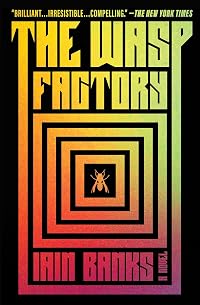
The Wasp Factory
by Iain Banks
On This Page
Description
The polarizing literary debut by Scottish author Ian Banks, The Wasp Factory is the bizarre, imaginative, disturbing, and darkly comic look into the mind of a child psychopath.Meet Frank Cauldhame. Just sixteen, and unconventional to say the least:
Two years after I killed Blyth I murdered my young brother Paul, for quite different and more fundamental reasons than I'd disposed of Blyth, and then a year after that I did for my young cousin Esmerelda, more or less on a whim.
That's my show more score to date. Three. I haven't killed anybody for years, and don't intend to ever again.
It was just a stage I was going through. show less
Tags
Recommendations



Member Recommendations
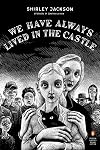
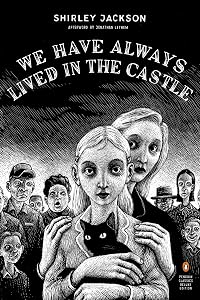
taz_ I suspect that Iain Banks' "Wasp Factory" character Frank Cauldhame was inspired by Shirley Jackson's Merricat, as these two darkly memorable teenagers share a great many quirks - the totems and protections to secure their respective "fortresses", the obsessive superstitions that govern their daily lives and routines, their isolation and cloistered pathology, their eccentric families and dark secrets. Be warned, though, that "The Wasp Factory" is a far more explicit and grisly tale than the eerily genteel "Castle" and certainly won't appeal to all fans of the latter.
172

Member Reviews
Why, yes, this was the very copy of the Wasp Factory I purchased with the same book token I used to buy that copy of One Hundred Years Of Solitude. Well spotted.
By all accounts this caused a bit of a storm when it first came out, as witnessed by the infamous Irish Times review, now used as a blurb of pride, though not on my edition. It can't be the murders or the paganism or the dysfunctional family or the gruesome bit or the cruelty to animals, because there was nothing there that you couldn't have found in horror fiction in one form or another over the years. I imagine what rankled was the language and the realism and the psychological acuity, not to mention the literary packaging. Nowadays, from that point of view, it seems show more relatively tame. Still packs a bit of a wallop, though.
Frank lives with his father on a small island in Scotland. He mounts animal skulls on poles, embeds wasps in candle wax, hunts rabbits with a flame thrower and keeps the skull of his enemy, Old Saul, in a bunker. The island is his domain and he rules it like a god. Now his brother, Eric, who sets dogs on fire, has escaped from his asylum and is on his way home.
Frank's a monster, a fledgling serial killer who capriciously decided on a different career track after his first three victims. His rituals and his ceremonies and his totemic objects make sense of the world and make sense of his own mind. His voice is sane, articulate, witty and intelligent. He uses it to describe his odd activities, makes them seem strange, unhealthy, perhaps, but essentially harmless. Then he seamlessly uses that same voice to describe catapulting small animals into river mud, the murder of his brother and two cousins or his attitude to women. One clings to the voice as a sign of potential redemption, but redemption is something you do, not something you are, and Frank is utterly aware of what he is and of what he has done. Or so he thinks.
A familiar pattern of secrets, ideas, family circles, social lives and horrible accidents and bizarre occurrences marks this as the proto-Banks novel, but for a debut it springs fully formed with voice, attitude and gleeful cunning intact and ready to rip it up through the twin worlds of literary and science fiction. show less
By all accounts this caused a bit of a storm when it first came out, as witnessed by the infamous Irish Times review, now used as a blurb of pride, though not on my edition. It can't be the murders or the paganism or the dysfunctional family or the gruesome bit or the cruelty to animals, because there was nothing there that you couldn't have found in horror fiction in one form or another over the years. I imagine what rankled was the language and the realism and the psychological acuity, not to mention the literary packaging. Nowadays, from that point of view, it seems show more relatively tame. Still packs a bit of a wallop, though.
Frank lives with his father on a small island in Scotland. He mounts animal skulls on poles, embeds wasps in candle wax, hunts rabbits with a flame thrower and keeps the skull of his enemy, Old Saul, in a bunker. The island is his domain and he rules it like a god. Now his brother, Eric, who sets dogs on fire, has escaped from his asylum and is on his way home.
Frank's a monster, a fledgling serial killer who capriciously decided on a different career track after his first three victims. His rituals and his ceremonies and his totemic objects make sense of the world and make sense of his own mind. His voice is sane, articulate, witty and intelligent. He uses it to describe his odd activities, makes them seem strange, unhealthy, perhaps, but essentially harmless. Then he seamlessly uses that same voice to describe catapulting small animals into river mud, the murder of his brother and two cousins or his attitude to women. One clings to the voice as a sign of potential redemption, but redemption is something you do, not something you are, and Frank is utterly aware of what he is and of what he has done. Or so he thinks.
A familiar pattern of secrets, ideas, family circles, social lives and horrible accidents and bizarre occurrences marks this as the proto-Banks novel, but for a debut it springs fully formed with voice, attitude and gleeful cunning intact and ready to rip it up through the twin worlds of literary and science fiction. show less
I first read The Wasp Factory in 1985, when the first paperback edition came out. It was recommended to me by a science fiction bookseller of my acquaintance whose instincts on new books was usually pretty good, and who raved over it - "You must read this! It's not science fiction, but the author is definitely One Of Us!". Little did we then know that Iain Banks was actually a wannabe science fiction author who had not succeeded in selling any science fiction novels, and so tried his hand at writing "mainstream" fiction. The Wasp Factory was the result.
Remarkable for publishing the uncomplimentary reviews as well as the complimentary ones (in the paperback edition), this novel very quickly became notorious for its graphic content - show more murder of children and torture of animals run through this novel. And yet, I find myself reminded of my early teenage years growing up in a rural part of England: Frank Cauldhame is merely me and some of my contemporaries writ (very) large. In the distant past of the 1960s, 70s and early 80s, small boys were likely to do things that involved harm to small animals and other children. After all that, the central character's misogyny hardly registers on many readers' radar; if published today, it would certainly raise eyebrows if not hackles. Banks was almost certainly doing this for impact, especially in light of the novel's ending.
Many of Banks' later mainstream novels involve families with secrets, eccentric habits, or both. This trend starts here. What also comes over is the sensibility of the writer as a science fiction reader writing a mainstream novel. Here - as well as later - we see Banks' p.o.v. character reacting to events, or entertaining thoughts, that would be more expected from a science fiction reader. For instance, at one point Frank refers to his brother Eric's mental fragmentation in terms of a hologram, which although shattered into pieces still carries in each fragment a complete image of the whole.
Elsewhere, there is a lot of 1980s colour that was just ordinary scene-setting at the time but now looks very dated to us. And it took me a while to twig that this was the sort of thing kids did (though not the torture and murder stuff, obviously) before we all had smartphones...
Frank's obsessive behaviour, his adherence to ritual, is described in loving detail and with total conviction. Only towards the end of the novel do we realise that the whole island upon which Frank lives is itself a macro version of Frank's own Wasp Factory, the eccentric machine he has built to make predictions based on the movements of wasps injected into its innards. As rational adults, we know that this is nonsense; but Banks clearly depicts the teenage personality, making massive deductions based on very little direct knowledge or experience, and self-reinforcing beliefs based around nothing more than habit.
There are some interesting foreshadowings of the writer Banks was to become; Frank's father with his eccentric beliefs (the Earth is not a globe but a Möbius strip, and human flatulence can conceal a wealth of information about the health, diet and personality of the emitter) will reappear in The Crow Road as Uncle Hamish with his eccentric personal religion and its prayers ("Please visit vexation upon those wee rascals the Khmer Rouge and especially their leader Mr. P. Pot"), and I groaned with pleasurable pain on seeing that the failed book on the nature of noxious human emissions was called The State of the Fart. And the way in which Frank's father's books have collected rejection slips now sounds very much like Banks writing what he knew from recent bitter experience. Other signs of the writer to come are less Easter Egg-like.
There is an odd aspect to the whole story: Frank experiences a life-changing revelation towards the end of the novel, and yet the novel is written in the first person in a way that does not acknowledge that life change. It may not have been possible to write the novel in a way that would satisfy this anomaly without imposing a much more restrictive diary format on the book. Instead of seeing this as a fault, it made me speculate on Frank's future story. Given the life-changing revelations he receives, what course might the adult Frank chart through the world of the 1980s and 1990s? Banks was never interested in writing direct sequels to any of his books, so my musings would never have been answered in any case, but I found them fascinating.
This anniversary edition includes a foreword from Neil Gaiman and another from Banks himself, dated 2013, which leads me to speculate that this anniversary edition may well have been planned for the book's 30th anniversary, but events most likely put that plan on long-term hold.
This book's excesses will make it not to everyone's taste, though hopefully, no-one who obsesses over the evils of "cancel culture" or loudly promotes "free speech" will be amongst that number (or at least admit to it). But Banks completists must read this to get a rounded picture of the writer and his works. The sense of place about Scotland that was a recurring feature of his mainstream novels is clearly on view here, as long as the reader can see past the Sacrifice Poles and the Bomb Circle. show less
Remarkable for publishing the uncomplimentary reviews as well as the complimentary ones (in the paperback edition), this novel very quickly became notorious for its graphic content - show more murder of children and torture of animals run through this novel. And yet, I find myself reminded of my early teenage years growing up in a rural part of England: Frank Cauldhame is merely me and some of my contemporaries writ (very) large. In the distant past of the 1960s, 70s and early 80s, small boys were likely to do things that involved harm to small animals and other children. After all that, the central character's misogyny hardly registers on many readers' radar; if published today, it would certainly raise eyebrows if not hackles. Banks was almost certainly doing this for impact, especially in light of the novel's ending.
Many of Banks' later mainstream novels involve families with secrets, eccentric habits, or both. This trend starts here. What also comes over is the sensibility of the writer as a science fiction reader writing a mainstream novel. Here - as well as later - we see Banks' p.o.v. character reacting to events, or entertaining thoughts, that would be more expected from a science fiction reader. For instance, at one point Frank refers to his brother Eric's mental fragmentation in terms of a hologram, which although shattered into pieces still carries in each fragment a complete image of the whole.
Elsewhere, there is a lot of 1980s colour that was just ordinary scene-setting at the time but now looks very dated to us. And it took me a while to twig that this was the sort of thing kids did (though not the torture and murder stuff, obviously) before we all had smartphones...
Frank's obsessive behaviour, his adherence to ritual, is described in loving detail and with total conviction. Only towards the end of the novel do we realise that the whole island upon which Frank lives is itself a macro version of Frank's own Wasp Factory, the eccentric machine he has built to make predictions based on the movements of wasps injected into its innards. As rational adults, we know that this is nonsense; but Banks clearly depicts the teenage personality, making massive deductions based on very little direct knowledge or experience, and self-reinforcing beliefs based around nothing more than habit.
There are some interesting foreshadowings of the writer Banks was to become; Frank's father with his eccentric beliefs (the Earth is not a globe but a Möbius strip, and human flatulence can conceal a wealth of information about the health, diet and personality of the emitter) will reappear in The Crow Road as Uncle Hamish with his eccentric personal religion and its prayers ("Please visit vexation upon those wee rascals the Khmer Rouge and especially their leader Mr. P. Pot"), and I groaned with pleasurable pain on seeing that the failed book on the nature of noxious human emissions was called The State of the Fart. And the way in which Frank's father's books have collected rejection slips now sounds very much like Banks writing what he knew from recent bitter experience. Other signs of the writer to come are less Easter Egg-like.
There is an odd aspect to the whole story: Frank experiences a life-changing revelation towards the end of the novel, and yet the novel is written in the first person in a way that does not acknowledge that life change. It may not have been possible to write the novel in a way that would satisfy this anomaly without imposing a much more restrictive diary format on the book. Instead of seeing this as a fault, it made me speculate on Frank's future story. Given the life-changing revelations he receives, what course might the adult Frank chart through the world of the 1980s and 1990s? Banks was never interested in writing direct sequels to any of his books, so my musings would never have been answered in any case, but I found them fascinating.
This anniversary edition includes a foreword from Neil Gaiman and another from Banks himself, dated 2013, which leads me to speculate that this anniversary edition may well have been planned for the book's 30th anniversary, but events most likely put that plan on long-term hold.
This book's excesses will make it not to everyone's taste, though hopefully, no-one who obsesses over the evils of "cancel culture" or loudly promotes "free speech" will be amongst that number (or at least admit to it). But Banks completists must read this to get a rounded picture of the writer and his works. The sense of place about Scotland that was a recurring feature of his mainstream novels is clearly on view here, as long as the reader can see past the Sacrifice Poles and the Bomb Circle. show less
This book is the ultimate "creep-out"! I thought it was great. Its theme (which is only fully revealed at book's end) has been handled before in other novels I've read, but I thought this novel did it in a most bizarre way.
For the sensitive...skip this book. It's full of cruelty to animals and children. If you can read this as a novel and not as a reflection of true life, then be prepared for a story that will hold you in its grip directly to the end. Know that the first chapter or two seem not to make any sense. In fact, I read those two chapters twice before I was so taken in by the story that I had to then read it straight through.
If you like "weird", this is your book. The main character, Frank Cauldhame, is a teenager who lives on show more a small island in Scotland with his dad. Frank reports that he himself murdered three children. Frank learns that Eric, his mentally ill older brother who had been formerly accused of setting dogs on fire and feeding maggots to children, has just escaped from the hospital. Both Frank and his dad feel sure that Eric will eventually try to return to their home.
This was a book of family secrets. What I loved most about this story was how the secrets were revealed in interesting ways. I also enjoyed the description of the island setting (the weather, the birds, the sheep, the land) and The Wasp Factory, Frank's very strange altar/retreat.
I feel certain that this book is one that a reader will either love or hate. Count me among the former. show less
For the sensitive...skip this book. It's full of cruelty to animals and children. If you can read this as a novel and not as a reflection of true life, then be prepared for a story that will hold you in its grip directly to the end. Know that the first chapter or two seem not to make any sense. In fact, I read those two chapters twice before I was so taken in by the story that I had to then read it straight through.
If you like "weird", this is your book. The main character, Frank Cauldhame, is a teenager who lives on show more a small island in Scotland with his dad. Frank reports that he himself murdered three children. Frank learns that Eric, his mentally ill older brother who had been formerly accused of setting dogs on fire and feeding maggots to children, has just escaped from the hospital. Both Frank and his dad feel sure that Eric will eventually try to return to their home.
This was a book of family secrets. What I loved most about this story was how the secrets were revealed in interesting ways. I also enjoyed the description of the island setting (the weather, the birds, the sheep, the land) and The Wasp Factory, Frank's very strange altar/retreat.
I feel certain that this book is one that a reader will either love or hate. Count me among the former. show less
"I had been making the rounds of the Sacrifice Poles the day we heard my brother had escaped. I already knew something was going to happen; the Factory told me."
Those two lines begin one of the creepiest Scottish characters and novels that I have read in some time. Frank Cauldhame, is a weird and scary 16 year old who lives on a tiny island connected to mainland Scotland by a bridge. He maintains grisly "Sacrifice Poles" to serve as his early warning system and deterrent against anyone who might invade his territory. I can’t imagine anyone ever wanting to do that but you can bet he’s ready for them if they do. Those that choose to push their luck soon find that any luck they may have had has all run out. If Iain Banks was going show more for shock value he achieved it with flying colors creating characters carrying out some really sick and violent acts... the ultimate dysfunctional family is putting it mildly....the understatement of the century! This book is NOT for the faint of heart or stomach. This is Iain Banks' début novel but it shows the same undisputed talent for telling a long tall tale as he has in all his later novels. show less
Those two lines begin one of the creepiest Scottish characters and novels that I have read in some time. Frank Cauldhame, is a weird and scary 16 year old who lives on a tiny island connected to mainland Scotland by a bridge. He maintains grisly "Sacrifice Poles" to serve as his early warning system and deterrent against anyone who might invade his territory. I can’t imagine anyone ever wanting to do that but you can bet he’s ready for them if they do. Those that choose to push their luck soon find that any luck they may have had has all run out. If Iain Banks was going show more for shock value he achieved it with flying colors creating characters carrying out some really sick and violent acts... the ultimate dysfunctional family is putting it mildly....the understatement of the century! This book is NOT for the faint of heart or stomach. This is Iain Banks' début novel but it shows the same undisputed talent for telling a long tall tale as he has in all his later novels. show less
Rating: 4.95* of five
The Publisher Says: Frank--no ordinary sixteen-year-old--lives with his father outside a remote Scottish village. Their life is, to say the least, unconventional. Frank's mother abandoned them years ago: his elder brother Eric is confined to a psychiatric hospital; & his father measures out his eccentricities on an imperial scale. Frank has turned to strange acts of violence to vent his frustrations. In the bizarre daily rituals there is some solace. But when news comes of Eric's escape from the hospital Frank has to prepare the ground for his brother's inevitable return--an event that explodes the mysteries of the past & changes Frank utterly.
My Review: Much has been said in disgust and even anger about this show more polarizing book. Some have called for it to be banned. Others have written the equivalent of a silent finger-down-the-throat mime.
You are all entitled to your opinion. Here is mine: This book is brilliant. It will be remembered long long after the pleasant entertainments of the day are more forgotten than Restoration drama. (Hands up anyone who knows who Colley Cibber is. And don't front. Or use Wikipedia.)
I'm also an ardent partisan of Lolita, that deeply disturbing and very beautiful book by a pedophile about his pursuit of the perfect lover. I loved Mrs. Dalloway, the chilling, near-perfect narrative of a wealthy woman's desperation and crushing ennui.
So here's the deal: Frank, and his brother Eric, aren't role models, aren't people you'd want to be around, aren't amusing compadres for a jaunt along the path to the Banal Canal. They are, like Hum and Lo and Clarissa and Septimus, avatars (in the pre-Internet sense) of the raw, bleeding, agonic (unangled, in this use) purposelessness of life. They are the proof that salvation is a cruel ruse. These characters rip your fears from the base of your brain and move them, puppetlike, eerily masterful withal, into your worst nightmares.
And all without resorting to the supernatural.
Humanity comes off badly in this book. The truth of what made Frank the person he is will leave you more chilled than any silly evocation of a devil in a religious text. Frank's very being is an ambulatory evil act. But the reason for it, the motivating factor, is the absolute worst horror this book contains. All the animal-torture stuff is unpleasant, I agree. It's not as though it's lovingly and lingeringly described. And it pales in comparison to Frank's raison d'etre.
So yes, this book is strong meat. It's got deeply twisted characters enacting their damage before us, the safely removed audience. It's making a serious point about human nature. And it's doing all of that in quite beautifully wrought prose, without so much as one wasted word.
But it's essentially a warning to the reader: Don't go there. Don't do the pale, weak-kneed versions of the rage-and-hate fueled horrors inflicted on Frank, and even on Eric. Pay attention, be mindful of the many ways we as lazy moral actors condone the creation of Erics and Franks in our world.
Pay attention. show less
The Publisher Says: Frank--no ordinary sixteen-year-old--lives with his father outside a remote Scottish village. Their life is, to say the least, unconventional. Frank's mother abandoned them years ago: his elder brother Eric is confined to a psychiatric hospital; & his father measures out his eccentricities on an imperial scale. Frank has turned to strange acts of violence to vent his frustrations. In the bizarre daily rituals there is some solace. But when news comes of Eric's escape from the hospital Frank has to prepare the ground for his brother's inevitable return--an event that explodes the mysteries of the past & changes Frank utterly.
My Review: Much has been said in disgust and even anger about this show more polarizing book. Some have called for it to be banned. Others have written the equivalent of a silent finger-down-the-throat mime.
You are all entitled to your opinion. Here is mine: This book is brilliant. It will be remembered long long after the pleasant entertainments of the day are more forgotten than Restoration drama. (Hands up anyone who knows who Colley Cibber is. And don't front. Or use Wikipedia.)
I'm also an ardent partisan of Lolita, that deeply disturbing and very beautiful book by a pedophile about his pursuit of the perfect lover. I loved Mrs. Dalloway, the chilling, near-perfect narrative of a wealthy woman's desperation and crushing ennui.
So here's the deal: Frank, and his brother Eric, aren't role models, aren't people you'd want to be around, aren't amusing compadres for a jaunt along the path to the Banal Canal. They are, like Hum and Lo and Clarissa and Septimus, avatars (in the pre-Internet sense) of the raw, bleeding, agonic (unangled, in this use) purposelessness of life. They are the proof that salvation is a cruel ruse. These characters rip your fears from the base of your brain and move them, puppetlike, eerily masterful withal, into your worst nightmares.
And all without resorting to the supernatural.
Humanity comes off badly in this book. The truth of what made Frank the person he is will leave you more chilled than any silly evocation of a devil in a religious text. Frank's very being is an ambulatory evil act. But the reason for it, the motivating factor, is the absolute worst horror this book contains. All the animal-torture stuff is unpleasant, I agree. It's not as though it's lovingly and lingeringly described. And it pales in comparison to Frank's raison d'etre.
So yes, this book is strong meat. It's got deeply twisted characters enacting their damage before us, the safely removed audience. It's making a serious point about human nature. And it's doing all of that in quite beautifully wrought prose, without so much as one wasted word.
But it's essentially a warning to the reader: Don't go there. Don't do the pale, weak-kneed versions of the rage-and-hate fueled horrors inflicted on Frank, and even on Eric. Pay attention, be mindful of the many ways we as lazy moral actors condone the creation of Erics and Franks in our world.
Pay attention. show less
Disturbing, genial novel narrated by the most unpleasant narrator character ever created, after Humbert Humbert and the guy in American Psycho. I was looking, in my deep ignorance, for some brain chewingum. I was given brain food, hard and chewy, but definitely nutritious, and divinely tasty.
Years after reading it, I still don't know what to do of this story. The plot, if I were to summarise it, would sound so improbable to become ridiculous. Yet, the psychology behind it is so punctual and realistic that, by the end of the novel, all seems perfectly fitting. Fitting by the point of view of a psychotic, murderous teenager whose last problem is the habit of torturing wasps. In the end of the day, he just does it in search of spiritual show more answers to the nonsensical world around him. You could not say better of the habits of most religious leaders.
A novel of devious survival to a horrible childhood. Coming of age, yes. Into what? show less
Years after reading it, I still don't know what to do of this story. The plot, if I were to summarise it, would sound so improbable to become ridiculous. Yet, the psychology behind it is so punctual and realistic that, by the end of the novel, all seems perfectly fitting. Fitting by the point of view of a psychotic, murderous teenager whose last problem is the habit of torturing wasps. In the end of the day, he just does it in search of spiritual show more answers to the nonsensical world around him. You could not say better of the habits of most religious leaders.
A novel of devious survival to a horrible childhood. Coming of age, yes. Into what? show less
Staggering, dark, direct and at times worryingly hilarious The Wasp Factory is now at this shamefully late stage in my life, firmly set amongst my favourite novels. Whilst of course not for the easily offended or sensitive of demeanour, the unmistakabley genuine voice of Frank has to rank among the most effective examinations of a flawed and self absorbed personality that I've come across in fiction.
Though it has come under constant fire since its publication in the 80's, for its bleak storyline and often graphic violence there is not a gratuitous thought, word or act to be found within this gem of a book. Banks explores the roots of sympathetic magic and primitive religious belief, whilst simultaneously exploring a unique coming of show more age story, all the while challenging the reader at every turn. In the end, not only deft but entertaining.
At all times neat and absorbing , The Wasp Factory stands as testament to how a great writer can explode into the world with a debut of awe inspiring skill. Hats off! show less
Though it has come under constant fire since its publication in the 80's, for its bleak storyline and often graphic violence there is not a gratuitous thought, word or act to be found within this gem of a book. Banks explores the roots of sympathetic magic and primitive religious belief, whilst simultaneously exploring a unique coming of show more age story, all the while challenging the reader at every turn. In the end, not only deft but entertaining.
At all times neat and absorbing , The Wasp Factory stands as testament to how a great writer can explode into the world with a debut of awe inspiring skill. Hats off! show less
Members
- Recently Added By
Lists

1001 Books You Must Read Before You Die
1,448 works; 1,134 members

The Guardian's 1000 Novels Everyone Must Read
1,005 works; 550 members
BBC Big Read
191 works; 45 members

Best Contemporary Literary Fiction (Around the Last 30 Years)
388 works; 124 members
20th Century Literature
1,161 works; 55 members

Weird and Weirder Fiction
270 works; 35 members

Unreliable Narrators
170 works; 43 members

Scary Stories for the Season
160 works; 94 members

Best Horror Books
281 works; 85 members

Dark Books for Winter Reading
71 works; 11 members

Books With a Twist
69 works; 46 members

Books Read in 2014
2,343 works; 89 members

Most Disturbing Books
124 works; 27 members
1,001 BYMRBYD Concensus
723 works; 27 members

Novels featuring siblings
133 works; 8 members

BBC Big Read
100 works; 10 members

Jones and Newman's Horror: The 100 Best Books
100 works; 4 members

Christmas haul 2013
15 works; 2 members

SomethingAwful TBB BOTM
66 works; 2 members

A Novel Cure
742 works; 23 members

Dysfunctional Families
133 works; 7 members

BBC Radio 4 Bookclub
340 works; 13 members

Books Set on Islands
190 works; 24 members

Best Psychological Suspense
33 works; 6 members

Best Antiheroes and Antiheroines
119 works; 7 members

Animals in the Title
498 works; 11 members
Most Popular Books Tagged Scotland
35 works; 2 members

Books Received As Gifts in 2013
20 works; 3 members

Cheesy pleasures and odd lots!
119 works; 7 members

I Can't Finish This Book
189 works; 22 members

SHOULD Read Books!
354 works; 9 members

Finished in 2020
12 works; 2 members

recalling favorites...
105 works; 2 members

Best Horror Mega-List
342 works; 6 members

To Read - Horror
137 works; 14 members
United Kingdom
82 works; 4 members

GeoCAT 2016
15 works; 1 member

Books Read in 2020
4,379 works; 124 members
First Novels
373 works; 17 members

Books Read in 2016
4,666 works; 199 members
Reedsydiscovery 100 Best Horror Books of All Time
100 works; 5 members

Books Read in 2003
257 works; 7 members

5 Best 5 Years
71 works; 4 members
Retrospective of Horror and Thrillers
21 works; 2 members
Books About Murder
313 works; 7 members

BBC World Book Club
265 works; 5 members

Bookshelf from Interstellar
62 works; 1 member
'Books You Can't Live Without: The Top 100', The Guardian, 2007
156 works; 7 members

BitLife
212 works; 4 members

living room bookshelf
150 works; 1 member

Literature About Mental Illness
37 works; 5 members

My TBR
371 works; 3 members
Reddit Recommendations
3 works; 1 member
Mind-Benders: Fiction that Hurts Your Head
34 works; 8 members

Books About Boys
175 works; 15 members
Serial Killer Thrillers
56 works; 6 members

Read in 2014
334 works; 11 members

Books Featuring Teens
25 works; 4 members

World Book Club (BBC World Service)
212 works; 1 member
Five star books
1,767 works; 110 members
Talk Discussions
Past Discussions
Group Read: The Wasp Factory by Iain Banks in 75 Books Challenge for 2013 (August 2013)
Author Information

25+ Works 31,796 Members
Some Editions
Awards and Honors
Series
Belongs to Publisher Series
Work Relationships
Is contained in
Is abridged in
Has as a student's study guide
Common Knowledge
- Canonical title*
- De wespenfabriek
- Original title
- The Wasp Factory
- Alternate titles*
- La fabbrica delle vespe
- Original publication date
- 1984
- People/Characters
- Francis "Frank" L. Cauldhame; Eric Cauldhame; Paul Cauldhame; Diggs; Blyth Cauldhame; Mrs Clamp (show all 7); Jamie "the dwarf"
- Important places
- Porteneil, Fife, Scotland, UK (Fictional)
- Dedication
- for Ann
For Adele - First words
- I had been making the rounds of the Sacrifice Poles the day we heard my brother had escaped.
- Quotations
- Two years after I killed Blyth I murdered my young brother Paul, for quite different and more fundamental reasons than I'd disposed of Blyth, and then a year after that I did for my young cousin Esmerelda, more or less on a w... (show all)him.
That's my score to date. Three. I haven't killed anybody for years, and don't intend to ever again.
It was just a stage I was going through.
Eric was crazy all right, even if he was my brother. He was lucky to have somebody sane who still liked him.
After I'd come to understand evolution and know a little about history and farming, I saw that the thick white animals I laughed at for following each other around and getting caught in bushes were the product of generations ... (show all)of farmers as much as generations of sheep; we made them, we moulded them from the wild, smart survivors that were their ancestors so that they would become docile, frightened, stupid, tasty wool-producers. We didn't want them to be smart, and to some extent their aggression and their intelligence went together. - Last words
- (Click to show. Warning: May contain spoilers.)Poor Eric came home to see his brother, only to find (Zap! Pow! Dams burst! Bombs go off! Wasps fry: ttssss!) he's got a sister.
- Original language
- English
*Some information comes from Common Knowledge in other languages. Click "Edit" for more information.
Classifications
Statistics
- Members
- 7,834
- Popularity
- 1,442
- Reviews
- 219
- Rating
- (3.74)
- Languages
- 20 — Chinese, Czech, Danish, Dutch, English, Estonian, Finnish, French, German, Greek, Hungarian, Italian, Lithuanian, Polish, Portuguese, Russian, Croatian, Spanish, Swedish, Turkish
- Media
- Paper, Audiobook, Ebook
- ISBNs
- 69
- ASINs
- 25