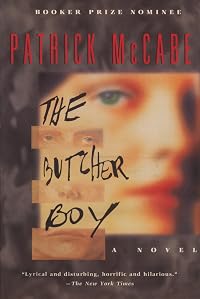
The Butcher Boy
by Patrick McCabe
On This Page
Description
When I was a lad twenty or thirty or forty years ago I lived in a small town where they were all after me on account of what I done on Mrs. Nugent. Welcome to the mind of Francie Brady. Just what Francie did to Mrs. Nugent is the final, terrifying act of a young boy at the end of a relentless descent into a world of scorn and fear, brought to unforgettably vivid life in this tour-de-force performance by author Patrick McCabe. Francie Brady, the "pig boy," is growing up in a poor small show more Irish town in the early sixties, fueled on an adolescent's comic books, Flash Bars, and John Wayne movies. He is determined to win the Francie Brady Not a Bad Bastard Anymore Diploma. But how do you do that when your mother is sent to the madhouse, your father is an alcoholic, and everyone turns their back on you? show lessTags
Recommendations





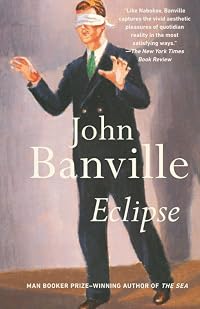
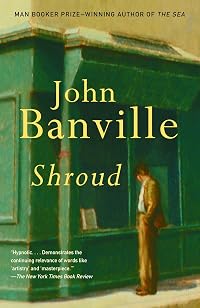
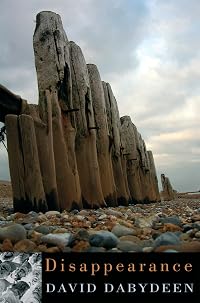
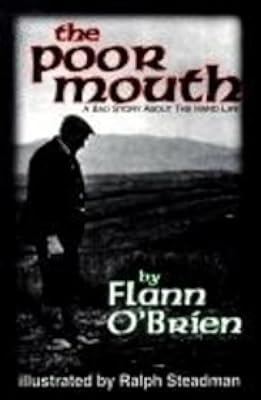

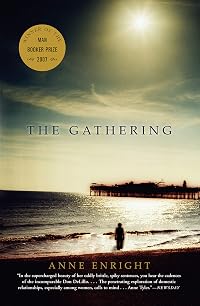

Member Recommendations
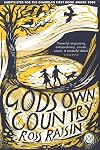
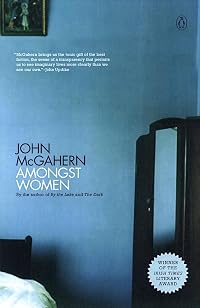
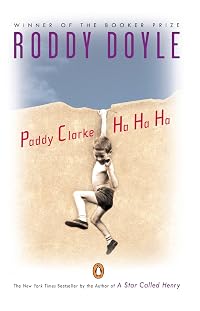
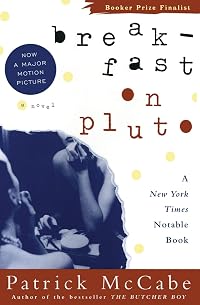
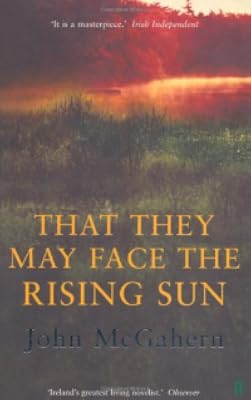
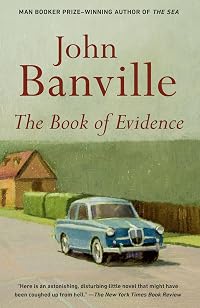
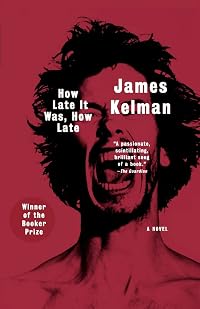
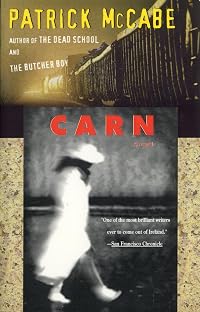
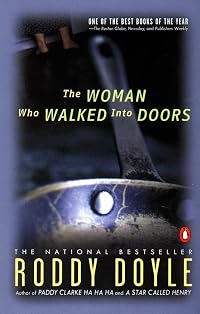
steevohenderson Similiar style and atmosphere but in present day England.
30
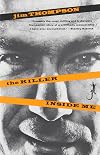
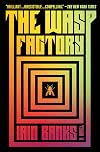
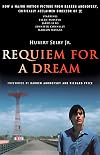
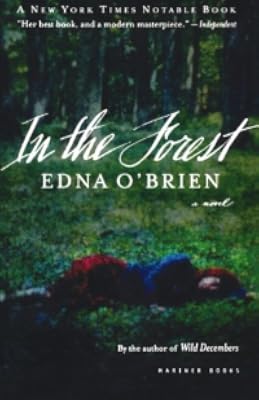
ursula Stylistically similar.
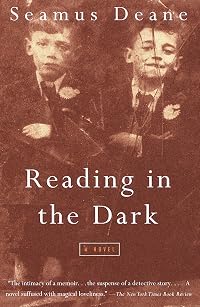
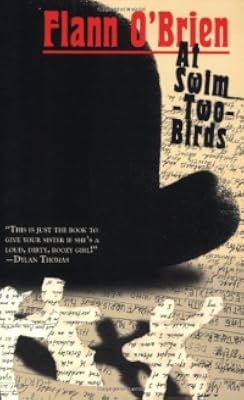
nessreader robust modern irish boyhood voices
Member Reviews
Francie Brady is raised in 1950s and 60s Ireland by an angry alcoholic father and half-mad suicidal mother. His life is sad and disturbing. His behavior is troublesome and leading up to worse. Half the town is scared of him. After he loses his mother, then father, Francie clings to his relationship with his best friend Joe. The loss of that friendship is one blow too many and Francie eventually takes revenge on the person he holds responsible.
The entire story takes place in Francie’s unreliable stream of consciousness point of view. His observations are reliable. His interpretations are suspect. It keeps things interesting.
Patrick McCabe’s trademark horror-humor style is perfect for this story. (A musical based on the book is about show more to run in New York City. I plan on seeing it.) show less
The entire story takes place in Francie’s unreliable stream of consciousness point of view. His observations are reliable. His interpretations are suspect. It keeps things interesting.
Patrick McCabe’s trademark horror-humor style is perfect for this story. (A musical based on the book is about show more to run in New York City. I plan on seeing it.) show less
"All the beautiful things in this world are lies. They count for nothing in the end."
Set in a small town in the early 1960's Ireland 'The Butcher Boy' is a hybrid of first-person narrative and stream of consciousness told by Francis 'Francie' Brady, also known as the 'pig boy'.
We first meet Francie hiding out "in hole under a tangle of briars" whilst being hunted by the police "on account of what I done on Mrs Nugent." It is only much later that we learn what his actual crime was.
The only child of an alcoholic father and a mother driven mad by despair, as his troubled home life collapses Francie retreats into a fantasy world. Sexually abused whilst at a Catholic reform school, ridiculed by his neighbour Mrs. Nugent, when he is dropped show more by his best friend Joe Purcell who has outgrown their boyhood mischief in favour of Mrs. Nugent’s son, Philip, Francie finally finds a target for his twisted rage. This novel chronicles 'the pig boy’s' chilling loss of innocence and descent into tragedy and madness.
Written in the regional vernacular it initially takes a bit of getting used to but once I did I found its rhythm strangely compelling that seemed to match Francie's deteriorating mental state really well. My feelings towards Francie were constantly shifting; at times I pitied him, at times I despaired of him and would have liked to have got my own hands upon him. One New York Times critic described the book as “part Huck Finn, part Holden Caulfield, part Hannibal Lecter” and its hard to disagree with that assessment. This novel is certainly dark but there are also touches of humour. I cannot say in truth that I actually enjoyed it but that may have something to do with the subject matter, however I still found it a remarkable piece of writing that is likely to live in the memory. show less
Set in a small town in the early 1960's Ireland 'The Butcher Boy' is a hybrid of first-person narrative and stream of consciousness told by Francis 'Francie' Brady, also known as the 'pig boy'.
We first meet Francie hiding out "in hole under a tangle of briars" whilst being hunted by the police "on account of what I done on Mrs Nugent." It is only much later that we learn what his actual crime was.
The only child of an alcoholic father and a mother driven mad by despair, as his troubled home life collapses Francie retreats into a fantasy world. Sexually abused whilst at a Catholic reform school, ridiculed by his neighbour Mrs. Nugent, when he is dropped show more by his best friend Joe Purcell who has outgrown their boyhood mischief in favour of Mrs. Nugent’s son, Philip, Francie finally finds a target for his twisted rage. This novel chronicles 'the pig boy’s' chilling loss of innocence and descent into tragedy and madness.
Written in the regional vernacular it initially takes a bit of getting used to but once I did I found its rhythm strangely compelling that seemed to match Francie's deteriorating mental state really well. My feelings towards Francie were constantly shifting; at times I pitied him, at times I despaired of him and would have liked to have got my own hands upon him. One New York Times critic described the book as “part Huck Finn, part Holden Caulfield, part Hannibal Lecter” and its hard to disagree with that assessment. This novel is certainly dark but there are also touches of humour. I cannot say in truth that I actually enjoyed it but that may have something to do with the subject matter, however I still found it a remarkable piece of writing that is likely to live in the memory. show less
I found The Butcher Boy by Patrick McCabe a powerful, engrossing and disturbing read. Young Francie Brady never really stood a chance at having a normal life. His father spent all his time in the local, drinking and feeling sorry for himself for how his life had turned out. Francie’s mother, whom he loved very much, had emotional problems and at one point is taken off to the ‘mad-house’. After his parents have a particular nasty fight, Francie runs away. He makes it to Dublin, but misses his mother, his friends and his village and so returns. He buys a present for his mother, hoping that will make her happy. Unfortunately, while he was gone his mother had killed herself. His father tells him it was Francie’s fault that she did show more this and he responds by withdrawing further into his violent fantasy world.
He takes against one particular family; in particular the mother, Mrs. Nugent and her son, Philip, but it’s obvious that he longs to have his mother back and in such a close, caring and safe relationship. As his obsession grows stronger, Francie’s behavior gets worse and worse until he crosses the line from mischief to madness. A spell in reform school under the care of priests only served to make him worse. When he gets back home, he picks up a job at the local butcher’s, which of course, doesn’t help. The author never uses quotation marks so I found I had to read carefully to figure out who was talking, also Francie was so into his strange visions that the reader had to figure out what was really taking place and what was just happening in his head. Even with these difficulties, this is a book that I am glad that I didn’t miss.
The Butcher Boy was a violent, pitiful, sometimes funny and exhausting read. I felt almost traumatized by being placed in Francie’s mind and experiencing the blurring of his reality taking form. You can’t help but feel compassion for this young man even as he shocks and revolts you. The content of Francie’s mind is horrific, but his inner voice can be quite funny. In the end you are left wondering if things would have been different if this boy had only been nurtured on love and hope instead of indifference and despair. This will definitely be a book that I will remember as much for it’s uniqueness as for it’s unrelenting darkness. show less
He takes against one particular family; in particular the mother, Mrs. Nugent and her son, Philip, but it’s obvious that he longs to have his mother back and in such a close, caring and safe relationship. As his obsession grows stronger, Francie’s behavior gets worse and worse until he crosses the line from mischief to madness. A spell in reform school under the care of priests only served to make him worse. When he gets back home, he picks up a job at the local butcher’s, which of course, doesn’t help. The author never uses quotation marks so I found I had to read carefully to figure out who was talking, also Francie was so into his strange visions that the reader had to figure out what was really taking place and what was just happening in his head. Even with these difficulties, this is a book that I am glad that I didn’t miss.
The Butcher Boy was a violent, pitiful, sometimes funny and exhausting read. I felt almost traumatized by being placed in Francie’s mind and experiencing the blurring of his reality taking form. You can’t help but feel compassion for this young man even as he shocks and revolts you. The content of Francie’s mind is horrific, but his inner voice can be quite funny. In the end you are left wondering if things would have been different if this boy had only been nurtured on love and hope instead of indifference and despair. This will definitely be a book that I will remember as much for it’s uniqueness as for it’s unrelenting darkness. show less
One of the best books I’ve ever picked up. Francie Brady has definitely made my list of favorite characters and he is a character that will stick with me. It was whimsically dark and humorous in the most inappropriate parts, and I couldn’t help but root for Francie, the somewhat villain of his own story, who’s biggest victim is himself.
Can children be evil? In literature this is certainly the case. I am reminded of the evil little girl, Rhoda Penmark, in The Bad Seed by William March. In Patrick McCabe's third novel we have a rival for Rhoda with Francie Brady. It is a journey into the heart of darkness: the mind of a desperately troubled kid one step away from madness and murder. Francie Brady is a schoolboy in a small town in Ireland. His father is a mean drunk and his mother a slovenly housekeeper, but Francie has a good buddy, Joe Purcell, and their Tom-and-Huck friendship is what sustains him. Then a seemingly trivial incident alters the landscape: Francie and Joe con the very proper Philip Nugent out of his prize collection of comic books, and Philip's mother show more calls the Bradys ``pigs.''
Like many of Edgar Allan Poe's narrators, Francie will blame all his troubles on someone else, in his case Mrs. Nugent; it doesn't help that the Nugent household is a cozy haven, maddeningly out of his reach. Matters rapidly deteriorate. His mother enters a mental hospital. Francie runs away to Dublin; he returns to find that his ma, whom he had promised never to let down, has drowned herself. He breaks into the Nugents' house, defecates on the carpet, is sent to reform school, and (the unkindest cut) loses Joe to Philip Nugent. Francie tells us all of this in a voice that is the novel's greatest triumph--a minimally punctuated but always intelligible flow of razor-sharp impressions, name-calling, self-loathing, pop-culture detritus culled from comic books and John Wayne movies (the time is 1962), all delivered with the assurance of a stand-up comic.
We see in this story the longing for childhood innocence, now lost forever, and just an inkling of the gathering mental darkness that will lead to an inevitable denouement. Reminiscent of Salinger and Sillitoe, McCabe has created something all his own--an uncompromisingly bleak vision of a child who retains the pathos of a grubby urchin even as he evolves into a monster not unlike some of those that issue from Poe's imagination. His novel is a tour de force. show less
Like many of Edgar Allan Poe's narrators, Francie will blame all his troubles on someone else, in his case Mrs. Nugent; it doesn't help that the Nugent household is a cozy haven, maddeningly out of his reach. Matters rapidly deteriorate. His mother enters a mental hospital. Francie runs away to Dublin; he returns to find that his ma, whom he had promised never to let down, has drowned herself. He breaks into the Nugents' house, defecates on the carpet, is sent to reform school, and (the unkindest cut) loses Joe to Philip Nugent. Francie tells us all of this in a voice that is the novel's greatest triumph--a minimally punctuated but always intelligible flow of razor-sharp impressions, name-calling, self-loathing, pop-culture detritus culled from comic books and John Wayne movies (the time is 1962), all delivered with the assurance of a stand-up comic.
We see in this story the longing for childhood innocence, now lost forever, and just an inkling of the gathering mental darkness that will lead to an inevitable denouement. Reminiscent of Salinger and Sillitoe, McCabe has created something all his own--an uncompromisingly bleak vision of a child who retains the pathos of a grubby urchin even as he evolves into a monster not unlike some of those that issue from Poe's imagination. His novel is a tour de force. show less
I had seen the movie version of this book before reading it. And although I don't remember the movie entirely, it did prepare me for some of what to expect. I imagine going into this one cold would be a bit of a wild ride.
We're thrust into the mind of Francie Brady, a young Irish boy who lives in a troubled home. In short order, we start to realize that Francie himself is a bit troubled. I feel like this book defies description or pinning down. It is sometimes horrifying, sometimes funny, often confusing. Francie's view of things is often unreliable, and his disordered mind isn't the easiest to spend time in. But the book manages to dance enough on the edges that it pulls you back in just when you think things are going to become show more completely unbearable. Still, it's not a book for the genteel crowd.
Recommended for: fans of Requiem for a Dream, A Clockwork Orange, people who like their humor black.
Quote: "I says I will ma and she says I know you will son and then we'd just sit for hours sometimes just staring into the firegate only there never was a fire ma never bothered to light one and I wasn't sure how to go about it. I said what fire do we want its just as good sitting here staring into the ashes." show less
We're thrust into the mind of Francie Brady, a young Irish boy who lives in a troubled home. In short order, we start to realize that Francie himself is a bit troubled. I feel like this book defies description or pinning down. It is sometimes horrifying, sometimes funny, often confusing. Francie's view of things is often unreliable, and his disordered mind isn't the easiest to spend time in. But the book manages to dance enough on the edges that it pulls you back in just when you think things are going to become show more completely unbearable. Still, it's not a book for the genteel crowd.
Recommended for: fans of Requiem for a Dream, A Clockwork Orange, people who like their humor black.
Quote: "I says I will ma and she says I know you will son and then we'd just sit for hours sometimes just staring into the firegate only there never was a fire ma never bothered to light one and I wasn't sure how to go about it. I said what fire do we want its just as good sitting here staring into the ashes." show less
I don’t often leave reviews, but I’ve been itching to review this book and I’ve finally gotten around to it. this is not only the best Patrick McCabe book I’ve read thus far, but my favorite book of the year and one of my favorite all-time reads. A well crafted portrait of a young, flawed dreamer with a propensity for violence and escapism. My only gripe is the lack of organized writing cloaked by flamboyant storytelling, but with that being said… it’s part of the charm and I found myself fond of the sentence structures. With every page turn, It felt like the grammatical errors and lack of punctuation only put me further in his headspace as the story unraveled and his mental health declined. great plot, great characters, show more overall great story. I will be giving this one another go-around and be just as charmed as the first time by the lyrical beauty in all of the madness that is Francie (Pig boy) Brady. snort snort. show less
Members
- Recently Added By
Lists

1001 Books You Must Read Before You Die
1,448 works; 1,135 members

The Guardian's 1000 Novels Everyone Must Read
1,005 works; 551 members

child hero ~ adult novel
60 works; 12 members

Booker Prize
491 works; 62 members

EU Fiction: 1950-2022
223 works; 70 members

did I say that I didn't mean that (unreliable narrators)
34 works; 7 members

TML 200 Best Books 1950-1999
202 works; 10 members

Man Booker Prize Longlist 1992
6 works; 2 members

1,001 BYMRBYD Concensus
723 works; 27 members

BBC Radio 4 Bookclub
341 works; 13 members

hideous creatures
18 works; 3 members

Julie Parson’s Old Books
52 works; 4 members

A Good Read (Radio 4)
287 works; 1 member

Booker Prize Shortlist: Titles Not Yet Read
161 works; 4 members

Blue Pyramid 1,276 Best Books of All Time
1,248 works; 32 members

My Favourite Books
86 works; 5 members

Books We Couldn't Put Down
443 works; 197 members

Novels set in the Irish Border Region
10 works; 1 member
Favourite Books
1,820 works; 316 members

The Modern Library (The Two Hundred Best Novels....
202 works; 1 member
Author Information

18+ Works 4,158 Members
Patrick McCabe has been twice short-listed for the prestigious Booker Prize in Great Britain. He is considered one of Ireland's major new writers. McCabe was teaching learning-disabled students in a grammar school in London when his third novel, "The Butcher Boy," was published in 1992. The novel is a coming-of-age story written in the voice of show more its young narrator. The small town that Francie Brady lives in is modeled on the town where McCabe grew up. "The Butcher Boy" was an immediate success, and was nominated for the Booker Prize. It won the top literary prize in Ireland, the Aer Lingus Prize. McCabe's fifth novel, "Breakfast on Pluto," was published in 1998. It too was on the shortlist for the Booker Prize. He has also written several plays, including an adaptation of "The Butcher Boy." Patrick McCabe was born in 1955 in Ireland and was educated at St. Patrick's College in Dublin. He is married to Margot Quinn and has two daughters, Ellen and Katy. (Bowker Author Biography) show less
Some Editions
Awards and Honors
Awards
Notable Lists
Series
Belongs to Publisher Series
Work Relationships
Has the adaptation
Common Knowledge
- Canonical title
- The Butcher Boy
- Original publication date
- 1992
- People/Characters
- Francis "Francie" Brady; Joe Purcell; Benny Brady (Da); Annie Brady (Ma); Uncle Alo Brady; Mrs. Connolly (show all 8); Mrs. Nugent; Philip Nugent
- Important places
- Ireland
- Related movies
- The Butcher Boy (1997 | IMDb)
- Dedication
- For the McCabes, Brian, Eugene, Mary, and Dympna
- First words
- When I was a young lad twenty or thirty or forty years ago I lived in a small town where they were all after me on account of what I done on Mrs Nugent.
- Quotations
- I was thinking about Mrs. Nugent standing their crying.
- Last words
- (Click to show. Warning: May contain spoilers.)He told me what he was going to do when he won the money then I said it was time to go tracking in the mountains, so off we went, counting our footprints in the snow, him with his bony arse clicking and me with the tears streaming down my face.
- Blurbers
- Doyle, Roddy; Sillitoe, Alan; Bolger, Dermot; Jordan, Neil; Donleavy, J P
- Original language
- English
Classifications
Statistics
- Members
- 1,723
- Popularity
- 12,885
- Reviews
- 36
- Rating
- (3.78)
- Languages
- 17 — Czech, Danish, Dutch, English, Estonian, Finnish, French, German, Greek, Italian, Norwegian (Bokmål), Norwegian, Polish, Croatian, Spanish, Swedish, Portuguese (Portugal)
- Media
- Paper, Audiobook, Ebook
- ISBNs
- 41
- UPCs
- 1
- ASINs
- 11