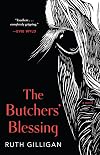
The Butchers' Blessing
by Ruth Gilligan
On This Page
Description
"Every year, Úna prepares for her father to leave her. He will wave goodbye early one morning, then disappear with seven other men to traverse the Irish countryside. Together, these men form the Butchers, a group that roams from farm to farm, enacting ancient methods of cattle slaughter. The Butchers' Blessing moves between the events of 1996 and the present, offering a simmering glimpse into the modern tensions that surround these eight fabled men. For Úna, being a Butcher's daughter show more means a life of tangled ambition and incredible loneliness. For her mother, Grá, it's a life of faith and longing, of performing a promise that she may or may not be able to keep. For nonbeliever Fionn, the Butchers represent a dated and complicated reality, though for his son, Davey, they represent an entirely new world--and potentially new love. For photographer Ronan, the Butchers are ideal subjects: representatives of an older, more folkloric Ireland whose survival is now being tested. As he moves through the countryside, Ronan captures this world image by image--a lake, a cottage, and his most striking photo: a single Butcher, hung upside down in a pose of unspeakable violence."-- show lessTags
Recommendations




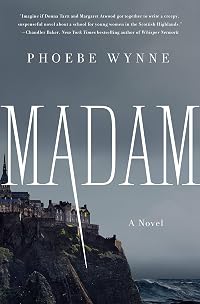
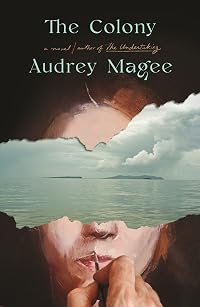
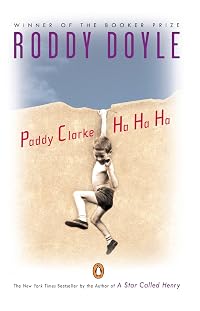
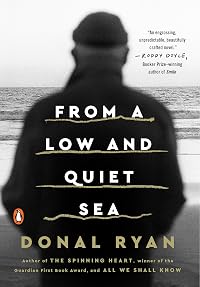





Member Recommendations
Member Reviews
How far back in the past should a novel take us for it to be considered “historical fiction”? Ruth Gilligan’s The Butchers is set in the rural borderlands of Ireland in 1996, at a time when a widespread outbreak of bovine spongiform encephalopathy (BSE), commonly known as “mad cow disease”, was threatening to scupper the British, and then, eventually, the Irish beef industry. That was less than three decades ago, and yet it already seems a different era, one which Gilligan accurately and authentically evokes through contemporary references: Euro 1996 football games were showing on TV, the Spice Girls were assailing the charts, recent legislative enactments had decriminalized homosexuality and just introduced divorce.
The show more Butchers is grounded in the reality of living in Ireland in the 90s, but, strikingly, it is also built on a supernatural or mythological premise referring to a curse supposedly lain on Ireland by a “farmer’s widow” of olden times:
... since the war had claimed all eight of her men She decreed, henceforth, no man could slaughter alon; Instead, seven others had to be by his side to stop the memory of her grief from dying too...
According to the ancient Irish custom, there had to be eight men present at every cattle slaughter; eight different hands touching the animal’s hide as it passed from this life to the next. So now eight Butchers spent eleven months of the year calling on the few families around the country who still believed, and killing their beasts in the traditional, curse-abiding way...
The novel revolves around a number of characters who are, in some way or another, connected to the Butchers or their beliefs. There’s Grá, the long-suffering wife of one of the Eight, and her twelve-year old daughter Úna; there’s Fionn, a small-time farmer with demons in his past and a wife with a debilitating tumour; there’s Fionn’s teenage son Davey, who has heard of the Butchers from his mother and wants her to meet them to satisfy her dying wish.
In the brave new world of 1996 Ireland, the Butchers seem increasingly out of place and, as the BSE crisis escalates they are also viewed with suspicion by the non-believers. So when one of the Eight is found dead in a slaughterhouse, hanging by his feet on a meat hook suspended from the ceiling, the Butchers feel it is time for them to quit. Úna’s dreams of following in her father’s footsteps seem shattered… Or perhaps not. Twenty-two years after these calamitous events, a photograph appears on a New York gallery wall showing the Butcher’s hanging body. How has it ended up there and what fresh light will it shed on this “cold case”? It will be up to Úna to solve the mystery and avenge the man’s death.
The Butchers is, first and foremost, a great story, brilliantly told. It is tautly plotted, revealing its secrets in unexpected twists. The frequent changes in points of view introduce variety and keep up the momentum. It’s been some time since I read such a page turner.
But this is just one aspect of this book. It is, in fact, a novel of many parts, combining as it does a generally realistic storyline with elements of supernatural and crime fiction. Davey’s studies of classical mythology also serve as an excuse to introduce a symbolical subtext where references to myths reflect certain plot elements (to be honest, I found this to be rather heavy-handed and the least appealing ingredient in the book)
However, if I were pressed to pigeon-hole this genre-bending book, I would say it strikes me as primarily a coming-of-age novel. We see Úna growing up as a rebel against the patriarchal expectations of society; Davey coming to terms with his identity and sexuality; their parents questioning the choices they made when they were their children’s age. Equally importantly, this is a novel about the coming of age of a nation: contemporary Ireland. Gilligan’s portrayal of this rapidly changing country is deliciously ambivalent. Whilst on the one hand new civil rights were being introduced, and this is positively portrayed in the novel, the country was also being overwhelmed by a capitalist culture where money ruled, connections between politics and business were the order of the day and traditions were being forgotten.
Several recent novels have used folklore and the otherworldly to address present-day themes. This might explain, for instance, why witches have become such a potent and frequent feminist symbol in contemporary fiction. With its nods to the supernatural, The Butchers could be seen as the latest addition to this phenomenon – but it certainly stands out both in ideas and in their execution.
https://endsoftheword.blogspot.com/2020/01/the-butchers-ruth-gilligan-review.htm... show less
The show more Butchers is grounded in the reality of living in Ireland in the 90s, but, strikingly, it is also built on a supernatural or mythological premise referring to a curse supposedly lain on Ireland by a “farmer’s widow” of olden times:
... since the war had claimed all eight of her men She decreed, henceforth, no man could slaughter alon; Instead, seven others had to be by his side to stop the memory of her grief from dying too...
According to the ancient Irish custom, there had to be eight men present at every cattle slaughter; eight different hands touching the animal’s hide as it passed from this life to the next. So now eight Butchers spent eleven months of the year calling on the few families around the country who still believed, and killing their beasts in the traditional, curse-abiding way...
The novel revolves around a number of characters who are, in some way or another, connected to the Butchers or their beliefs. There’s Grá, the long-suffering wife of one of the Eight, and her twelve-year old daughter Úna; there’s Fionn, a small-time farmer with demons in his past and a wife with a debilitating tumour; there’s Fionn’s teenage son Davey, who has heard of the Butchers from his mother and wants her to meet them to satisfy her dying wish.
In the brave new world of 1996 Ireland, the Butchers seem increasingly out of place and, as the BSE crisis escalates they are also viewed with suspicion by the non-believers. So when one of the Eight is found dead in a slaughterhouse, hanging by his feet on a meat hook suspended from the ceiling, the Butchers feel it is time for them to quit. Úna’s dreams of following in her father’s footsteps seem shattered… Or perhaps not. Twenty-two years after these calamitous events, a photograph appears on a New York gallery wall showing the Butcher’s hanging body. How has it ended up there and what fresh light will it shed on this “cold case”? It will be up to Úna to solve the mystery and avenge the man’s death.
The Butchers is, first and foremost, a great story, brilliantly told. It is tautly plotted, revealing its secrets in unexpected twists. The frequent changes in points of view introduce variety and keep up the momentum. It’s been some time since I read such a page turner.
But this is just one aspect of this book. It is, in fact, a novel of many parts, combining as it does a generally realistic storyline with elements of supernatural and crime fiction. Davey’s studies of classical mythology also serve as an excuse to introduce a symbolical subtext where references to myths reflect certain plot elements (to be honest, I found this to be rather heavy-handed and the least appealing ingredient in the book)
However, if I were pressed to pigeon-hole this genre-bending book, I would say it strikes me as primarily a coming-of-age novel. We see Úna growing up as a rebel against the patriarchal expectations of society; Davey coming to terms with his identity and sexuality; their parents questioning the choices they made when they were their children’s age. Equally importantly, this is a novel about the coming of age of a nation: contemporary Ireland. Gilligan’s portrayal of this rapidly changing country is deliciously ambivalent. Whilst on the one hand new civil rights were being introduced, and this is positively portrayed in the novel, the country was also being overwhelmed by a capitalist culture where money ruled, connections between politics and business were the order of the day and traditions were being forgotten.
Several recent novels have used folklore and the otherworldly to address present-day themes. This might explain, for instance, why witches have become such a potent and frequent feminist symbol in contemporary fiction. With its nods to the supernatural, The Butchers could be seen as the latest addition to this phenomenon – but it certainly stands out both in ideas and in their execution.
https://endsoftheword.blogspot.com/2020/01/the-butchers-ruth-gilligan-review.htm... show less
How far back in the past should a novel take us for it to be considered “historical fiction”? Ruth Gilligan’s The Butchers is set in the rural borderlands of Ireland in 1996, at a time when a widespread outbreak of bovine spongiform encephalopathy (BSE), commonly known as “mad cow disease”, was threatening to scupper the British, and then, eventually, the Irish beef industry. That was less than three decades ago, and yet it already seems a different era, one which Gilligan accurately and authentically evokes through contemporary references: Euro 1996 football games were showing on TV, the Spice Girls were assailing the charts, recent legislative enactments had decriminalized homosexuality and just introduced divorce.
The show more Butchers is grounded in the reality of living in Ireland in the 90s, but, strikingly, it is also built on a supernatural or mythological premise referring to a curse supposedly lain on Ireland by a “farmer’s widow” of olden times:
... since the war had claimed all eight of her men She decreed, henceforth, no man could slaughter alon; Instead, seven others had to be by his side to stop the memory of her grief from dying too...
According to the ancient Irish custom, there had to be eight men present at every cattle slaughter; eight different hands touching the animal’s hide as it passed from this life to the next. So now eight Butchers spent eleven months of the year calling on the few families around the country who still believed, and killing their beasts in the traditional, curse-abiding way...
The novel revolves around a number of characters who are, in some way or another, connected to the Butchers or their beliefs. There’s Grá, the long-suffering wife of one of the Eight, and her twelve-year old daughter Úna; there’s Fionn, a small-time farmer with demons in his past and a wife with a debilitating tumour; there’s Fionn’s teenage son Davey, who has heard of the Butchers from his mother and wants her to meet them to satisfy her dying wish.
In the brave new world of 1996 Ireland, the Butchers seem increasingly out of place and, as the BSE crisis escalates they are also viewed with suspicion by the non-believers. So when one of the Eight is found dead in a slaughterhouse, hanging by his feet on a meat hook suspended from the ceiling, the Butchers feel it is time for them to quit. Úna’s dreams of following in her father’s footsteps seem shattered… Or perhaps not. Twenty-two years after these calamitous events, a photograph appears on a New York gallery wall showing the Butcher’s hanging body. How has it ended up there and what fresh light will it shed on this “cold case”? It will be up to Úna to solve the mystery and avenge the man’s death.
The Butchers is, first and foremost, a great story, brilliantly told. It is tautly plotted, revealing its secrets in unexpected twists. The frequent changes in points of view introduce variety and keep up the momentum. It’s been some time since I read such a page turner.
But this is just one aspect of this book. It is, in fact, a novel of many parts, combining as it does a generally realistic storyline with elements of supernatural and crime fiction. Davey’s studies of classical mythology also serve as an excuse to introduce a symbolical subtext where references to myths reflect certain plot elements (to be honest, I found this to be rather heavy-handed and the least appealing ingredient in the book)
However, if I were pressed to pigeon-hole this genre-bending book, I would say it strikes me as primarily a coming-of-age novel. We see Úna growing up as a rebel against the patriarchal expectations of society; Davey coming to terms with his identity and sexuality; their parents questioning the choices they made when they were their children’s age. Equally importantly, this is a novel about the coming of age of a nation: contemporary Ireland. Gilligan’s portrayal of this rapidly changing country is deliciously ambivalent. Whilst on the one hand new civil rights were being introduced, and this is positively portrayed in the novel, the country was also being overwhelmed by a capitalist culture where money ruled, connections between politics and business were the order of the day and traditions were being forgotten.
Several recent novels have used folklore and the otherworldly to address present-day themes. This might explain, for instance, why witches have become such a potent and frequent feminist symbol in contemporary fiction. With its nods to the supernatural, The Butchers could be seen as the latest addition to this phenomenon – but it certainly stands out both in ideas and in their execution.
https://endsoftheword.blogspot.com/2020/01/the-butchers-ruth-gilligan-review.htm... show less
The show more Butchers is grounded in the reality of living in Ireland in the 90s, but, strikingly, it is also built on a supernatural or mythological premise referring to a curse supposedly lain on Ireland by a “farmer’s widow” of olden times:
... since the war had claimed all eight of her men She decreed, henceforth, no man could slaughter alon; Instead, seven others had to be by his side to stop the memory of her grief from dying too...
According to the ancient Irish custom, there had to be eight men present at every cattle slaughter; eight different hands touching the animal’s hide as it passed from this life to the next. So now eight Butchers spent eleven months of the year calling on the few families around the country who still believed, and killing their beasts in the traditional, curse-abiding way...
The novel revolves around a number of characters who are, in some way or another, connected to the Butchers or their beliefs. There’s Grá, the long-suffering wife of one of the Eight, and her twelve-year old daughter Úna; there’s Fionn, a small-time farmer with demons in his past and a wife with a debilitating tumour; there’s Fionn’s teenage son Davey, who has heard of the Butchers from his mother and wants her to meet them to satisfy her dying wish.
In the brave new world of 1996 Ireland, the Butchers seem increasingly out of place and, as the BSE crisis escalates they are also viewed with suspicion by the non-believers. So when one of the Eight is found dead in a slaughterhouse, hanging by his feet on a meat hook suspended from the ceiling, the Butchers feel it is time for them to quit. Úna’s dreams of following in her father’s footsteps seem shattered… Or perhaps not. Twenty-two years after these calamitous events, a photograph appears on a New York gallery wall showing the Butcher’s hanging body. How has it ended up there and what fresh light will it shed on this “cold case”? It will be up to Úna to solve the mystery and avenge the man’s death.
The Butchers is, first and foremost, a great story, brilliantly told. It is tautly plotted, revealing its secrets in unexpected twists. The frequent changes in points of view introduce variety and keep up the momentum. It’s been some time since I read such a page turner.
But this is just one aspect of this book. It is, in fact, a novel of many parts, combining as it does a generally realistic storyline with elements of supernatural and crime fiction. Davey’s studies of classical mythology also serve as an excuse to introduce a symbolical subtext where references to myths reflect certain plot elements (to be honest, I found this to be rather heavy-handed and the least appealing ingredient in the book)
However, if I were pressed to pigeon-hole this genre-bending book, I would say it strikes me as primarily a coming-of-age novel. We see Úna growing up as a rebel against the patriarchal expectations of society; Davey coming to terms with his identity and sexuality; their parents questioning the choices they made when they were their children’s age. Equally importantly, this is a novel about the coming of age of a nation: contemporary Ireland. Gilligan’s portrayal of this rapidly changing country is deliciously ambivalent. Whilst on the one hand new civil rights were being introduced, and this is positively portrayed in the novel, the country was also being overwhelmed by a capitalist culture where money ruled, connections between politics and business were the order of the day and traditions were being forgotten.
Several recent novels have used folklore and the otherworldly to address present-day themes. This might explain, for instance, why witches have become such a potent and frequent feminist symbol in contemporary fiction. With its nods to the supernatural, The Butchers could be seen as the latest addition to this phenomenon – but it certainly stands out both in ideas and in their execution.
https://endsoftheword.blogspot.com/2020/01/the-butchers-ruth-gilligan-review.htm... show less
My first thought was "wicked" - but as a good thing, just a delicious sprinkling of wickedness. Masterfully written, compelling, smart, funny in bits, and with a lovely homage of a little twist. I liked it so much.
Starting my journey through The Butchers’ Blessing, I expected a Gothic fantasy full of Irish myth and the lives of country folk following ancient traditions.
Instead I found a novel closer ro an exposé of corruption and Mad Cows Disease (BSE) that was rife in the late 20th century in the UK and Western Europe, all wrapped up in a blanket story about the career of a photographer whose rise to fame is intertwined with Irish politics and artistic deception.
The Irish beliefs in folk remedies for good luck, and the tales of miser and loneliness of rural life are still there, but serve more as a tapestry for the exposing of the photographer, the politician, and revenge that results.
Instead I found a novel closer ro an exposé of corruption and Mad Cows Disease (BSE) that was rife in the late 20th century in the UK and Western Europe, all wrapped up in a blanket story about the career of a photographer whose rise to fame is intertwined with Irish politics and artistic deception.
The Irish beliefs in folk remedies for good luck, and the tales of miser and loneliness of rural life are still there, but serve more as a tapestry for the exposing of the photographer, the politician, and revenge that results.
Stronger in premise than in execution. Strangely uninterested and blithely sentimentalising about the animals at the heart of the novel. Veers into the horrible trope of animals inviting, sanctioning and consenting to their own deaths.
WOW. I am stunned with how quickly I blew through this book. I think I just ignored my life for 24 hours and dove full-on into the lives of these characters. There is a strange, creepy vibe throughout the story that I am still feeling after finishing it, but instead of repulsing me I’m even more intrigued thinking about it. I’m SO happy I took the recommendation to read this (thanks Pam!) because it may be the best book I’ve read in years. A Also want to read everything this author ever writes... just beautifully crafted!
This is the second book I read this year that included the made cow disease BSE as part of the setting in a historical fiction. I loved the story being told from different perspectives and how it all wraps up being related. Una and Gra believe in The Butchers and are left to wait for Una's dad when he is doing his work around Ireland, Fionn and his son Davey live at a farm the father is making bank during the Irish Beef Boom that can pay for his wife's treatment while Davey wants nothing to do with the farm. Then there is Roan who is taking photos as art and captures something truly disturbing relating to The Butchers. There is a lot that happens in this 300 page book and the writing keeps the plot interesting and the story moving in a show more haunting tone. Highly recommended! show less
Members
- Recently Added By
Author Information

6 Works 282 Members
Awards and Honors
Awards
Common Knowledge
- Original title
- The Butchers' Blessing
- Alternate titles
- The Butchers
Classifications
Statistics
- Members
- 133
- Popularity
- 245,128
- Reviews
- 9
- Rating
- (3.91)
- Languages
- Dutch, English, French
- Media
- Paper, Audiobook, Ebook
- ISBNs
- 15
- ASINs
- 4