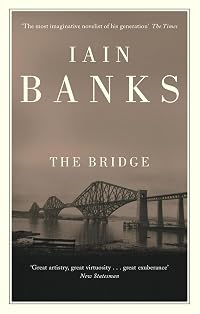
The Bridge
by Iain Banks
On This Page
Description
The man who wakes up in the extraordinary world of a bridge has amnesia, and his doctor doesn't seem to want to cure him. Does it matter? Exploring the bridge occupies most of his days. But at night there are his dreams. Dreams in which desperate men drive sealed carriages across barren mountains to a bizarre rendezvous; an illiterate barbarian storms an enchanted tower under a stream of verbal abuse; and broken men walk forever over bridges without end, taunted by visions of a doomed show more sexuality. Lying in bed unconscious after an accident wouldn't be much fun, you'd think. Oh yes? It depends who and what you've left behind. Which is the stranger reality, day or night? Frequently hilarious and consistently disturbing, THE BRIDGE is a novel of outrageous contrasts, constructed chaos and elegant absurdities. show lessTags
Recommendations
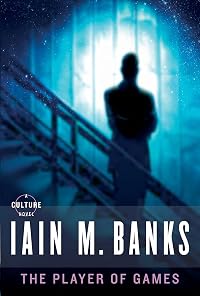
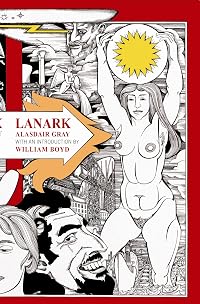
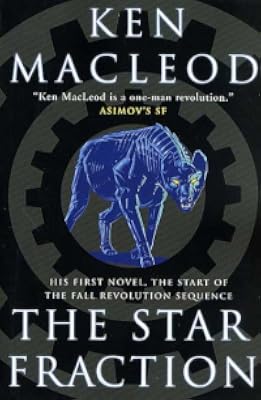
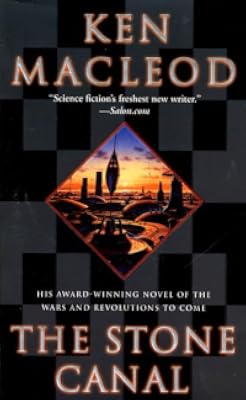





Member Recommendations
by aynar
Member Reviews
A man in a coma after crashing on the Forth Bridge dreams his way back towards waking. Or does he? It's not a question of a twist: we know going in this is a coma dream. We also know that there is nothing as dull as listening to other people's dreams (our own are so much more interesting.) But Iain Banks is the dream-master, and this, in essence, is a fictional world within a fictional world, an idea made explicit from the start as dream-man invents dreams to recount to his dream therapist who is treating his amnesia because he doesn't dream. Dream man was fished from the waters below an apparently endless bridge with no memories of who he is or where he came from. In treatment, he lives a more or less blissful life under the benevolent show more rule of the bridge, enjoying a mildly hedonistic lifestyle punctuated with generally unsatisfactory visits to his dream therapist. He has begun a desultory investigation into the bridge itself, with the only result a better understanding of how little he understands.
So is he finding his way back to wakefulness? Or is he finally living the life he always wanted?
At the heart of the book is a love story, or an attempt to write a mature, modern (for the late 80s early 90s modern) love story devoid of the usual conventions but with the same universal emotional core. Our couple are modern, well-educated, liberal. He's climbing out of the working and into the middle class, an rationalist, materialist engineer, she comes from moderate wealth, an intellectual, a linguist and if not a believer then less committed to rationalism then he is. All these things subtly and indirectly provide the raw materials that go into constructing the Bridge, and it is through all this the man must find his way and decide if that's a life he wants back.
Brilliantly written, this still dazzles, even as it prefigures the dazzling baroque world-building of the Culture and the tales of Scottish adults and how their lives were shaped by their experiences as youths. It also firmly sets out the notion that though Banks, and most of his protagonists, firmly and categorically do not believe in God, the human imagination that produced Him is a mighty one indeed. show less
So is he finding his way back to wakefulness? Or is he finally living the life he always wanted?
At the heart of the book is a love story, or an attempt to write a mature, modern (for the late 80s early 90s modern) love story devoid of the usual conventions but with the same universal emotional core. Our couple are modern, well-educated, liberal. He's climbing out of the working and into the middle class, an rationalist, materialist engineer, she comes from moderate wealth, an intellectual, a linguist and if not a believer then less committed to rationalism then he is. All these things subtly and indirectly provide the raw materials that go into constructing the Bridge, and it is through all this the man must find his way and decide if that's a life he wants back.
Brilliantly written, this still dazzles, even as it prefigures the dazzling baroque world-building of the Culture and the tales of Scottish adults and how their lives were shaped by their experiences as youths. It also firmly sets out the notion that though Banks, and most of his protagonists, firmly and categorically do not believe in God, the human imagination that produced Him is a mighty one indeed. show less
Con Banks se cumple una máxima: nunca escribe dos veces la misma historia. Y esto no es nada sencillo, ya que en un momento u otro todos los escritores caen en el autoplagio.
La historia es apasionante. John Orr, nuestro protagonista, vive en una ciudad que no es tal. Se trata de un puente de unas dimensiones enormes en el que hay trenes, tranvías, ciudades, aviones que sobrevuelan el puente sin razón aparente, dirigibles... y todo dentro del puente. John sufre amnesia y visita periódicamente la consulta de un doctor al que le cuenta sus sueños como terapia, sueños que son importantes para la historia ya que son otro protagonista más. Pero John está intrigado por este puente, pregunta y pregunta pero nadie sabe o quiere show more responderle. Intenta buscar la Biblioteca para obtener respuestas, pero parece que nadie sabe donde se encuentra. Parece que John se encuentra perdido, hasta que conoce a una joven... Y es que esta es una historia de amor.
Banks escribe muy bien y nunca decepciona, sabe narrar y sorprender con cada uno de sus libros. Es una pena que únicamente sea conocido por los amantes de la ciencia ficción y la fantasía. show less
La historia es apasionante. John Orr, nuestro protagonista, vive en una ciudad que no es tal. Se trata de un puente de unas dimensiones enormes en el que hay trenes, tranvías, ciudades, aviones que sobrevuelan el puente sin razón aparente, dirigibles... y todo dentro del puente. John sufre amnesia y visita periódicamente la consulta de un doctor al que le cuenta sus sueños como terapia, sueños que son importantes para la historia ya que son otro protagonista más. Pero John está intrigado por este puente, pregunta y pregunta pero nadie sabe o quiere show more responderle. Intenta buscar la Biblioteca para obtener respuestas, pero parece que nadie sabe donde se encuentra. Parece que John se encuentra perdido, hasta que conoce a una joven... Y es que esta es una historia de amor.
Banks escribe muy bien y nunca decepciona, sabe narrar y sorprender con cada uno de sus libros. Es una pena que únicamente sea conocido por los amantes de la ciencia ficción y la fantasía. show less
I first read The Bridge 25 years ago and thought it one of the best books I had ever read. Coming back to it after all this time I did wonder if it would hold up. Banks has always been one of my favourite authors and thankfully this novel is as strange, moving and funny as it was all those years ago.
The book takes place on a vast bridge where society is strictly regimented based on job, class and dialect. It soon becomes apparent that John Orr, as our protagonist is named by his doctor, is an amnesiac, memory last after an accident. He is under the care of a Doctor Joyce who analyses dreams as a form of treatment. But Orr has no dreams, so makes them up. The bridge is Kafkaesque in it's convoluted bureaucracy and once Orr stops playing show more the game he finds himself demoted, cast aside. Yesterday's news. His only ally is the Chief Engineer's daughter, Abberlaine Arrol - a decadent, confident young woman who takes Orr to bed as well as under her wing.
There are many layers to this book. It is soon obvious that all of this is inside the head of an unnamed coma patient. Strands of his personality, such as the huge barbarian warrior who speaks in broad Glaswegian and travels a fantasy land peopled with mythical characters such as Charon the Ferryman and Prometheus, are struggling to knit themselves back into a whole.
The novel becomes darker. War breaks out. Orr travels the length of the bridge, stowing away on an express. The imagery becomes more surreal, the horror more explicit.
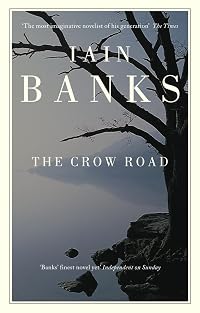
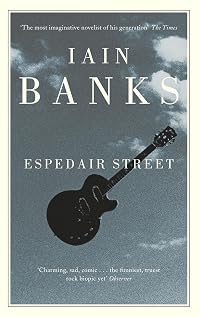
But interspersed amongst the fantasy there are passages where a life is remembered. A man grows up in Scotland, meets the love of his life, experiences loss, success and all the things that come with love. It is here that Banks flies, foreshadowing the prose of such Scottish sagas as The Crow Road, Espedair Street and even The Quarry. There is a sweet melancholy to these passages and they are my favourite part of the book.
Some might say that Banks never reached these heights again and maybe his decision to split his writing into SF and contemporary fiction robbed him of something. Certainly he never attempted this hybrid again until Transition, many years later, and that book is bonkers, but not a patch on The Bridge. Fiercely inventive, brilliantly written and utterly human, this is a book you need to read. show less
The book takes place on a vast bridge where society is strictly regimented based on job, class and dialect. It soon becomes apparent that John Orr, as our protagonist is named by his doctor, is an amnesiac, memory last after an accident. He is under the care of a Doctor Joyce who analyses dreams as a form of treatment. But Orr has no dreams, so makes them up. The bridge is Kafkaesque in it's convoluted bureaucracy and once Orr stops playing show more the game he finds himself demoted, cast aside. Yesterday's news. His only ally is the Chief Engineer's daughter, Abberlaine Arrol - a decadent, confident young woman who takes Orr to bed as well as under her wing.
There are many layers to this book. It is soon obvious that all of this is inside the head of an unnamed coma patient. Strands of his personality, such as the huge barbarian warrior who speaks in broad Glaswegian and travels a fantasy land peopled with mythical characters such as Charon the Ferryman and Prometheus, are struggling to knit themselves back into a whole.
The novel becomes darker. War breaks out. Orr travels the length of the bridge, stowing away on an express. The imagery becomes more surreal, the horror more explicit.
But interspersed amongst the fantasy there are passages where a life is remembered. A man grows up in Scotland, meets the love of his life, experiences loss, success and all the things that come with love. It is here that Banks flies, foreshadowing the prose of such Scottish sagas as The Crow Road, Espedair Street and even The Quarry. There is a sweet melancholy to these passages and they are my favourite part of the book.
Some might say that Banks never reached these heights again and maybe his decision to split his writing into SF and contemporary fiction robbed him of something. Certainly he never attempted this hybrid again until Transition, many years later, and that book is bonkers, but not a patch on The Bridge. Fiercely inventive, brilliantly written and utterly human, this is a book you need to read. show less
I enjoyed reading this but I didn't get it. I don't mean I didn't understand what was happening. It was very clear and interesting, up to a point. What I didn't get was "why these things in this order?" There are three parallel stories, which do tie together. One is the adult life of a Scotsman who loves bridges and a woman whom he ends up sharing with another lover in France that he never meets. This story is heavy on melancholy. The second story is about an amnesiac who wakes up in a hospital on The Bridge, a mammoth multilevel structure that is more a small country than a roadway. The tone here is more Kafka, as he is first randomly relocated by a cryptic bureaucracy, seeks a Library no one else remembers, and eventually wanders away show more and takes a train to somewhere else. The third story follows a Scottish parody of Conan-like barbarian with a magic mechanical parrot on his shoulder and a flying dagger, encountering and defeating without ever recognizing classic mythic figures. The tone here is humorous.
What makes this enjoyable is the writing and variety of moods. What failed for me was my inability to grasp more than the most basic connections between these stories. The first one has a linear progression with a perfectly fine conclusion. The third story likewise comes to a satisfactory end. The second story though was never more than a sequence of events and ideas with nothing wrapped up.
Recommended. It's Banks, it will keep you reading, and it may resonate and connect for you in ways it didn't for me. show less
What makes this enjoyable is the writing and variety of moods. What failed for me was my inability to grasp more than the most basic connections between these stories. The first one has a linear progression with a perfectly fine conclusion. The third story likewise comes to a satisfactory end. The second story though was never more than a sequence of events and ideas with nothing wrapped up.
Recommended. It's Banks, it will keep you reading, and it may resonate and connect for you in ways it didn't for me. show less
Two novels for the price of one in this early book by Iain Banks published in 1986. It preceded the first of his science fiction novels which was published the following year. After the Bridge, Banks' literary career diverged into writing science fiction novels and mainstream fiction novels, but today The Bridge reads like a combination of the two. If you enjoy reading about the Scottish socialist, rock music loving heroes struggling to come to terms with the vicissitudes of life in some of Banks' mainstream fiction and also enjoy his flights of fantasy in his alter ego as Iain M Banks the science fiction writer then this might be just the novel for you.
The novel starts with a short chapter entitled Coma where we are told of a near show more fatal car crash from a first person point of view. The next chapter plunges the reader into the mysterious world of the bridge where the unnamed hero who is suffering from amnesia is in consultation with a psychoanalyst (Dr Joyce) who is intent on exploring his dreams. The first time reader may be intrigued by the significance of this as the world that our hero (referred to as John Orr) inhabits is a sort of bridge to nowhere. John Orr becomes increasingly suspicious of the treatment he is receiving and seems to want to explore further the curious world that he inhabits. It is a world that has a resemblance to the Forth bridge in Scotland but takes the form of a city on a bridge. It is a Kafka-esque world where actions are taken for seemingly bureaucratic reasons which are accepted without question by the inhabitants. Orr challenges the treatment he is receiving and finds his privileges in the city summarily removed and decides to escape.
Much later in the novel we are told the story of Alex growing up in Scotland, falling in love with Andrea and becoming a successful businessman. This is typical of Bank's mainstream writing at this period of his career. Andrea and Alex grow together, but with Andrea wanting to keep her independence, there is more in her life than Alex and she moves to Paris for a four year period in pursuit of her own career and ambitions. Bank's skilfully builds in links between Alex and John Orrs story and indulges in a third story of a Barbarian who seems to be a participant in a video game. This story is told with a thick Glaswegian accent which takes a little deciphering. The three strands of the story progress towards a final denouement leaving the reader to wonder how they are connected in good mystery writing fashion.
The world building of the city on the bridge which is the dominant story in the first two thirds of the novel is handled with panache and Banks creates the atmosphere and feel of a credible alternative world, which has sufficient reference points to make it seem credible. A world of engineers and metalwork and of course trains that should appeal to railway enthusiasts. This contrasts nicely with Alex and Andreas story which has all the realism of growing up in the authors known environment of 1980's Scotland. I found the video game story with its exploration of classical myths the least convincing element to the book, and certainly the most difficult to read, but it works on a certain level even if the novel would not have been any the lesser without it. In my opinion John Orrs escape from the Bridge was the least convincing element to the book.
An element of Bank's mainstream novel writing that appeals to me is his use of contemporary cultural references; particularly to music. His characters emphasise their moods and feelings by their choice of music and if the reader has a similar amount of knowledge of popular music; of artists and their songs as does Banks then you can be even more tune with his writing. I am not aware of a writer that uses these seemingly casual references as well as Banks did, it works for me as I can hear the music in the background as I am reading the words on the page.
I have not read all of Banks; novels, but I have read many of his science fiction books and some of his mainstream fiction. I particularly enjoy his left wing, music loving heroes, out of step with Thatcher's 1980's Britain and I enjoy the hedonistic atmosphere of his science fiction culture novels. This is not quite a combination of the two, but it does have elements of both. It bursts with ideas and references that may be a bit over ambitious at times, but on the whole it works and is an absorbing read. I rate it as 4 stars. show less
The novel starts with a short chapter entitled Coma where we are told of a near show more fatal car crash from a first person point of view. The next chapter plunges the reader into the mysterious world of the bridge where the unnamed hero who is suffering from amnesia is in consultation with a psychoanalyst (Dr Joyce) who is intent on exploring his dreams. The first time reader may be intrigued by the significance of this as the world that our hero (referred to as John Orr) inhabits is a sort of bridge to nowhere. John Orr becomes increasingly suspicious of the treatment he is receiving and seems to want to explore further the curious world that he inhabits. It is a world that has a resemblance to the Forth bridge in Scotland but takes the form of a city on a bridge. It is a Kafka-esque world where actions are taken for seemingly bureaucratic reasons which are accepted without question by the inhabitants. Orr challenges the treatment he is receiving and finds his privileges in the city summarily removed and decides to escape.
Much later in the novel we are told the story of Alex growing up in Scotland, falling in love with Andrea and becoming a successful businessman. This is typical of Bank's mainstream writing at this period of his career. Andrea and Alex grow together, but with Andrea wanting to keep her independence, there is more in her life than Alex and she moves to Paris for a four year period in pursuit of her own career and ambitions. Bank's skilfully builds in links between Alex and John Orrs story and indulges in a third story of a Barbarian who seems to be a participant in a video game. This story is told with a thick Glaswegian accent which takes a little deciphering. The three strands of the story progress towards a final denouement leaving the reader to wonder how they are connected in good mystery writing fashion.
The world building of the city on the bridge which is the dominant story in the first two thirds of the novel is handled with panache and Banks creates the atmosphere and feel of a credible alternative world, which has sufficient reference points to make it seem credible. A world of engineers and metalwork and of course trains that should appeal to railway enthusiasts. This contrasts nicely with Alex and Andreas story which has all the realism of growing up in the authors known environment of 1980's Scotland. I found the video game story with its exploration of classical myths the least convincing element to the book, and certainly the most difficult to read, but it works on a certain level even if the novel would not have been any the lesser without it. In my opinion John Orrs escape from the Bridge was the least convincing element to the book.
An element of Bank's mainstream novel writing that appeals to me is his use of contemporary cultural references; particularly to music. His characters emphasise their moods and feelings by their choice of music and if the reader has a similar amount of knowledge of popular music; of artists and their songs as does Banks then you can be even more tune with his writing. I am not aware of a writer that uses these seemingly casual references as well as Banks did, it works for me as I can hear the music in the background as I am reading the words on the page.
I have not read all of Banks; novels, but I have read many of his science fiction books and some of his mainstream fiction. I particularly enjoy his left wing, music loving heroes, out of step with Thatcher's 1980's Britain and I enjoy the hedonistic atmosphere of his science fiction culture novels. This is not quite a combination of the two, but it does have elements of both. It bursts with ideas and references that may be a bit over ambitious at times, but on the whole it works and is an absorbing read. I rate it as 4 stars. show less
Must have first read this 20 years ago; liked it less this time but still a good novel despite the "it's all a dream" conceit (not a spoiler as the edition I read this time spells it out in the blurb). The fantasy strands set in the surreal world of the neverending bridge are brilliantly done; the "real life" parts alternate between rushes of time-compressing exposition and somewhat ploddingly recounted pivotal life moments. The author stand-in character, as almost always, is somewhat annoying with his penchant for listing every performance car he buys and sells and all the records he drinks scotch and smokes weed to. But spotting the points of connection between the two worlds, and untangling the strange arc of the Barbarian and his show more Familiar, are a lot of fun. show less
After experiencing a terrible car crash, a man finds himself -- or dreams he finds himself -- with no memories and no identity, on a bridge that stretches out into a vast, unknown distance at either end. It's a strange, layered, somewhat abstract novel, one that shifts back and forth between reality and something else, full of dreams-within-dreams. To what extent it all comes together in the end as a coherent narrative, I'm really not at all sure. There are definitely elements whose meaning, if there is one, is not entirely clear to me. But it's a strangely compelling read, and one that's well-written, imaginative, and interestingly complex.
Members
- Recently Added By
Lists

Best Contemporary Literary Fiction (Around the Last 30 Years)
400 works; 124 members
SantaThing 2014 Gifts
299 works; 17 members

David Pringle's Modern Fantasy: The 100 Best Novels
100 works; 5 members

living room bookshelf
150 works; 1 member

Books We Couldn't Put Down
443 works; 197 members

Authors' Favourites
18 works; 5 members
Author Information

25+ Works 31,796 Members
Some Editions
Awards and Honors
Awards
Notable Lists
Series
Belongs to Publisher Series
Work Relationships
Is contained in
Common Knowledge
- Canonical title
- The Bridge
- Original title
- The Bridge
- Original publication date
- 1986
- People/Characters
- John Orr; Abberlaine Arrol; Brooke; Andrea Cramond; Mrs. Cramond; Dr. Joyce (show all 10); The Barbarian; Stewart; Shona; Gustave
- Important places
- Edinburgh, Scotland, UK; Forth Bridge, Scotland, UK
- Dedication
- for James Hale
- First words
- Trapped. Crushed. Weight coming from all directions, entangled in the wreckage (you have to become one with the machine).
- Quotations
- You don't belong to her and she doesn't belong to you, but you're both part of each other; if she got up and left now and walked away and you never saw each other again for the rest of your lives, and you lived an ordinary wa... (show all)king life for another fifty years, even so on your deathbed you would know she was part of you.
- Last words
- (Click to show. Warning: May contain spoilers.)'Welcome back,' she says, smiling. 'Oh yeah?'
- Original language
- English
Classifications
Statistics
- Members
- 2,337
- Popularity
- 8,484
- Reviews
- 32
- Rating
- (3.72)
- Languages
- 10 — Czech, Dutch, English, French, German, Italian, Lithuanian, Polish, Russian, Spanish
- Media
- Paper, Audiobook, Ebook
- ISBNs
- 28
- ASINs
- 17