
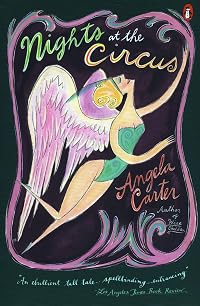
Nights at the Circus
by Angela Carter
On This Page
Description
'Angela Carter has influenced a whole generation of fellow writers towards dream worlds of baroque splendour, fairy tale horror, and visions of the alienated wreckage of a future world. In Nights at the Circus she has invented a new, raunchy, raucous, Cockney voice for her heroine Fevvers, taking us back into a rich, turn of the 19th century world, which reeks of human and animal variety' The Times.Tags
Recommendations









Member Recommendations
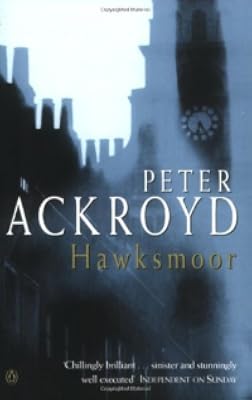
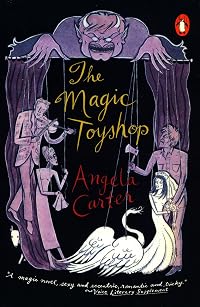
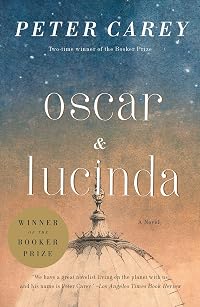
the_awesome_opossum Nights at the Circus was an inspiration for Ellen Bryson. Both novels are set in a circus and feature beautiful but intimidating women with some unorthodox gender dynamics. Also, both are really really fun reads.
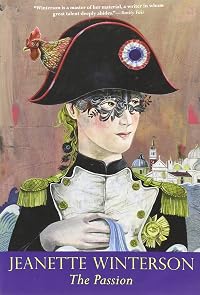
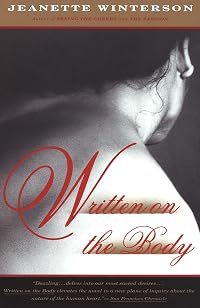
mysimas Both books deal with feminism (Nights at the Circus focuses especially on women, Vagabonds! on the lgbt+ community) and blur the line between the mundane and magic. Both follow a great many marginalized characters and are written in a lush, rich prose.
mysimas The heroines both deal with the conflict between their identity and the perception of others (Fevvers’ slogan ‘fact or fiction’ fits perfectly) and live in a world that tries to entrap them. There’s magic, and freeing love. The Last Unicorn is more on the fairy-taleish side and suitable even for young readers.
Member Reviews
This is rollicking fun! I expected something somehow darker from Angela Carter, so it was a pleasant surprise that it was so lighthearted.
This is the story of Fevvers, a winged Cockney aerialiste, and Walser, a young American reporter who runs away to join the circus to satisfy his curiosity about her. There's a slew of colorful characters, from the sapient monkeys to the debauched clowns to the escaped murderesses and their guards who the circus encounters on its round-the-world tour as the 19th century is poised to turn to the 20th.
While this is easy and painless to read, it's also full of surprising language. From a list of new vocabulary words (lithic, parupe, capripede, and exiguous, for a small sample) to lovely expressions such show more as "a language that sounded not as if spoken but as if knitted on steel needles" to the most amazing and fabulous plot turns, it was a delight to read.
show less
This is the story of Fevvers, a winged Cockney aerialiste, and Walser, a young American reporter who runs away to join the circus to satisfy his curiosity about her. There's a slew of colorful characters, from the sapient monkeys to the debauched clowns to the escaped murderesses and their guards who the circus encounters on its round-the-world tour as the 19th century is poised to turn to the 20th.
While this is easy and painless to read, it's also full of surprising language. From a list of new vocabulary words (lithic, parupe, capripede, and exiguous, for a small sample) to lovely expressions such show more as "a language that sounded not as if spoken but as if knitted on steel needles" to the most amazing and fabulous plot turns, it was a delight to read.
show less
My book group took a look at Nights At the Circus Angela Carters big messy magical hard to describe wonderful novel.
in the waning days of 1899 a skeptical American Journalist is sent to interview "Fevvers", the "Cockney Venus" a big bawdy musical hall Artiste who performs dazzling tricks on the trapeze and - by the way - has real wings growing out of her shoulders that she claims she can fly with.
The journalist is out to prove her a hoax - but then he falls in love. The Swan-Scheherazade is spinning a comic tale of her outrageous upbringing in several different brothels where fantasies are peddled wholesale to wealthy punters.
The story follows Fevvers on tour from London to St Petersburg in Russia and in a manic train ride across the show more wild lands of Siberia. We meet clowns and con men, musicians and tiger tamers, Grand Dukes and Shamen , and it is phantasmorigical and "WHAT did she just say?"over and over again. What the pig says, goes.
The writing is amazing and baroque and lyrical , and funny and heartbreaking sometimes in a single sentence. Carter has things to say about modern Capitalism and Society and women and society and all that is worth reading but mostly it's just an entertainment and hang on to your hat. Lots of memorable characters take center stage along the way.
You can like it or hate it. I loved it. show less
in the waning days of 1899 a skeptical American Journalist is sent to interview "Fevvers", the "Cockney Venus" a big bawdy musical hall Artiste who performs dazzling tricks on the trapeze and - by the way - has real wings growing out of her shoulders that she claims she can fly with.
The journalist is out to prove her a hoax - but then he falls in love. The Swan-Scheherazade is spinning a comic tale of her outrageous upbringing in several different brothels where fantasies are peddled wholesale to wealthy punters.
The story follows Fevvers on tour from London to St Petersburg in Russia and in a manic train ride across the show more wild lands of Siberia. We meet clowns and con men, musicians and tiger tamers, Grand Dukes and Shamen , and it is phantasmorigical and "WHAT did she just say?"over and over again. What the pig says, goes.
The writing is amazing and baroque and lyrical , and funny and heartbreaking sometimes in a single sentence. Carter has things to say about modern Capitalism and Society and women and society and all that is worth reading but mostly it's just an entertainment and hang on to your hat. Lots of memorable characters take center stage along the way.
You can like it or hate it. I loved it. show less
' "I do think, myself," I added, "that a girl should shoot her own rapists." '
In "Nights at the Circus" by Angela Carter
Then I thought about it from a different angle. This is a novel written by someone who very strongly holds political and social views, for sure, and a novel which reflects those views in its themes and story, but is it really a Political Novel in the didactic/polemic/instructional sense?
I believe a lot of Carter's writing draws on fantasy and horror traditions; I first encountered her writing via a collection of fairy-tales and folklore and coming in that way to her own fiction meant I was completely fine with abusive puppeteers, winged women and panopticons in the tundra. It's a fantasy and horror world informed by show more the author's feminism, (arguably in the vein of the very earliest horror-feminism à la Maria, or The Wrongs of Woman et al) and I can't help but think considering it in comparison to, say, Atwood's “The Handmaid's Tale”. Atwood's novel is “mittelmässig”, but I would consider it a book in the "usual" dystopian-activist mould; it creates an imagined oppressive world and depicts oppression to make you stand up and want to do something.
Perhaps that's a reductive reading of a very good novel, but the idea I want to get across is that there's a body of political genre fiction that very plainly states what's wrong and what should be avoided and resisted. “Nights at the Circus” isn't that, and isn't interested in being that. It's depicting a strange world and the women and men within it - it puts across without lecturing what the author believes about feminism, but I don't really feel it a call to action.
I think the most obvious artefact of Carter's feminism is the upending of traditional fairy-tale gender roles. Heroines get the better of big bad wolves, and mothers arrive to save the damsel in place of dashing princes. Carter is essentially offering an alternative, more diverse storytelling legacy... rewriting literary history if you like.
I agree that “The Handmaid's Tale” is sort of activism-by-fiction. Actually, so is "The Blind Assassin". Clickbait as novel almost: you read it to be angered and appalled and come away with a difficult-to-justify sense of injustice. You read Carter with a sense of wonder, barely noticing that anything political has even been proposed, let alone achieved. She was always seen as a contradiction and hence she is able to shine a light on what is perceived and actually show us what is real. Even Edmund Gordon’s biography is titled “The Invention of Angela Carter”. It's quite hard to reconcile how Carter writes with how she apparently came across in public.
Here she wrote three different books in a single volume, each one with its own themes and characteristics. Even the form changes: the first part is basically a dialogue between Fevvers and Lizzie; the second displays a more classic third-person narration; the last is interspersed with clutches of text from Fevvers' point of view. My gripes were with the Siberian act. There's not so much humour, the narrative is way less baroque, the events seem more unconnected and the overall tone is too serious, although paradoxically this is the section that relies more clearly on fairy-tale devices. There are moments the story feels kind of botched, to be honest. But the fantasy elements largely make up for any downsides, and there's a couple of U-turns in the plot that are simply ingenious.
Some contemporary SF women writers could learn one or two things with Carter. show less
In "Nights at the Circus" by Angela Carter
Then I thought about it from a different angle. This is a novel written by someone who very strongly holds political and social views, for sure, and a novel which reflects those views in its themes and story, but is it really a Political Novel in the didactic/polemic/instructional sense?
I believe a lot of Carter's writing draws on fantasy and horror traditions; I first encountered her writing via a collection of fairy-tales and folklore and coming in that way to her own fiction meant I was completely fine with abusive puppeteers, winged women and panopticons in the tundra. It's a fantasy and horror world informed by show more the author's feminism, (arguably in the vein of the very earliest horror-feminism à la Maria, or The Wrongs of Woman et al) and I can't help but think considering it in comparison to, say, Atwood's “The Handmaid's Tale”. Atwood's novel is “mittelmässig”, but I would consider it a book in the "usual" dystopian-activist mould; it creates an imagined oppressive world and depicts oppression to make you stand up and want to do something.
Perhaps that's a reductive reading of a very good novel, but the idea I want to get across is that there's a body of political genre fiction that very plainly states what's wrong and what should be avoided and resisted. “Nights at the Circus” isn't that, and isn't interested in being that. It's depicting a strange world and the women and men within it - it puts across without lecturing what the author believes about feminism, but I don't really feel it a call to action.
I think the most obvious artefact of Carter's feminism is the upending of traditional fairy-tale gender roles. Heroines get the better of big bad wolves, and mothers arrive to save the damsel in place of dashing princes. Carter is essentially offering an alternative, more diverse storytelling legacy... rewriting literary history if you like.
I agree that “The Handmaid's Tale” is sort of activism-by-fiction. Actually, so is "The Blind Assassin". Clickbait as novel almost: you read it to be angered and appalled and come away with a difficult-to-justify sense of injustice. You read Carter with a sense of wonder, barely noticing that anything political has even been proposed, let alone achieved. She was always seen as a contradiction and hence she is able to shine a light on what is perceived and actually show us what is real. Even Edmund Gordon’s biography is titled “The Invention of Angela Carter”. It's quite hard to reconcile how Carter writes with how she apparently came across in public.
Here she wrote three different books in a single volume, each one with its own themes and characteristics. Even the form changes: the first part is basically a dialogue between Fevvers and Lizzie; the second displays a more classic third-person narration; the last is interspersed with clutches of text from Fevvers' point of view. My gripes were with the Siberian act. There's not so much humour, the narrative is way less baroque, the events seem more unconnected and the overall tone is too serious, although paradoxically this is the section that relies more clearly on fairy-tale devices. There are moments the story feels kind of botched, to be honest. But the fantasy elements largely make up for any downsides, and there's a couple of U-turns in the plot that are simply ingenious.
Some contemporary SF women writers could learn one or two things with Carter. show less
BkC15) Carter, Angela, NIGHTS AT THE CIRCUS: *swoon*
Yes indeed, I still agree with myself here. In these fill-in reviews of the over 100 books my RL (or F2F, whichever) book circle has read since 1994 that I have never written reviews for, I'm finding that some opinions have changed significantly. Not here. *SWOON*
Whatever I tell you about the plot, which is unremarkable (boy meets girl-oid, etc.), is utterly overshadowed by one fact of the book: Fevvers.
She is an aerialiste, the best in the world, and it's all down to her unknown avian ancestry, she tells Jack, the newspaperman who's in love with her (as who isn't?). See, she was hatched from an egg, and spent her post-menarche years as a living cupid in a bordello foyer. Now she's a show more six-two, winged sensation with only a nodding acquaintance with reality, since she's always lived outside its dreary confines in the bordello, which she helped burn down, and then with Col. Kearney's circus, where she's the star attraction.
The novel takes us from London to Petersburg and points east at the tail end of the 19th century. We meet Lizzie, Fevvers' adopted mom (and probably a witch); the Princess of Abyssinia, a silent-through-trauma cat-tamer and lesbian lover of Mignon, the young lassie with the beautiful voice that drives a jealous spike between Fevvers and Jack; Christian the christian idiot who believes Fevvers is an angel fallen from Heaven and sets about sacrificing her to obtain immortality from god; and not least Col. Kearney himself, the profligate owner of the circus that's on tour, who is advised by his pig Sybil.
PG Wodehouse writes a Monty Python sketch in the style of Virginia Woolf. Enchanting. Scintillating. Close to perfect. A bottle of Veuve Cliquot served in a crystal flute while sitting in the shade of an ancient oak in a summery forest glade. show less
Yes indeed, I still agree with myself here. In these fill-in reviews of the over 100 books my RL (or F2F, whichever) book circle has read since 1994 that I have never written reviews for, I'm finding that some opinions have changed significantly. Not here. *SWOON*
Whatever I tell you about the plot, which is unremarkable (boy meets girl-oid, etc.), is utterly overshadowed by one fact of the book: Fevvers.
She is an aerialiste, the best in the world, and it's all down to her unknown avian ancestry, she tells Jack, the newspaperman who's in love with her (as who isn't?). See, she was hatched from an egg, and spent her post-menarche years as a living cupid in a bordello foyer. Now she's a show more six-two, winged sensation with only a nodding acquaintance with reality, since she's always lived outside its dreary confines in the bordello, which she helped burn down, and then with Col. Kearney's circus, where she's the star attraction.
The novel takes us from London to Petersburg and points east at the tail end of the 19th century. We meet Lizzie, Fevvers' adopted mom (and probably a witch); the Princess of Abyssinia, a silent-through-trauma cat-tamer and lesbian lover of Mignon, the young lassie with the beautiful voice that drives a jealous spike between Fevvers and Jack; Christian the christian idiot who believes Fevvers is an angel fallen from Heaven and sets about sacrificing her to obtain immortality from god; and not least Col. Kearney himself, the profligate owner of the circus that's on tour, who is advised by his pig Sybil.
PG Wodehouse writes a Monty Python sketch in the style of Virginia Woolf. Enchanting. Scintillating. Close to perfect. A bottle of Veuve Cliquot served in a crystal flute while sitting in the shade of an ancient oak in a summery forest glade. show less
What can I say about Angela Carter's Nights at the Circus? I loved it so much, I didn't want it to end. It has lots of the things I love: humour, folklore, politics, magical realism, adventure. Carter's writing is superb and brings to life the vaudeville world of circus performers. The setting of the story at the turn of the 19th into the 20th century lends a mix of political ideas to the story, from women's suffrage to the nascent Russian revolution. It is, simply, brilliant.
A remarkable work of the imagination and magical realism, "Nights at the Circus" is one of my favourite novels, and one I can always turn to to remind me that writing is an artform of limitless possibility.
The characters and setting are rich and vibrant and, while I don't particularly enjoy fantasy or sci-fi works, Carter's world here is like that of Gabriel Garcia Marquez: anything is possible, but what happens always seems hauntingly, and depressingly, real. The difference between this and a Marquez work is that our protagonist is a reporter from the equally real world of fin-de-siecle England who finds himself unable to ascertain the boundaries between reality and fantasy. I acknowledge that not everyone will "get it", although I show more think that is BECAUSE there is nothing to get. This isn't a book with one meaning to be found on the last page, nor a book in which the fantastic elements are hiding some kind of comment on the 'real world'. This is instead a work of boundless beauty and effervescent figures living in an historical era, as all historical eras are: filled - or so it seems from our viewpoint - with possibility and impossibility. What it means, if anything, is for us to open our eyes to the world, even if - at the end of the day - seeing won't necessarily mean believing. Anything is possible but nothing is as it seems. Accept the confusion, relish it, and live amongst it. Or that's what I think, anyway. show less
The characters and setting are rich and vibrant and, while I don't particularly enjoy fantasy or sci-fi works, Carter's world here is like that of Gabriel Garcia Marquez: anything is possible, but what happens always seems hauntingly, and depressingly, real. The difference between this and a Marquez work is that our protagonist is a reporter from the equally real world of fin-de-siecle England who finds himself unable to ascertain the boundaries between reality and fantasy. I acknowledge that not everyone will "get it", although I show more think that is BECAUSE there is nothing to get. This isn't a book with one meaning to be found on the last page, nor a book in which the fantastic elements are hiding some kind of comment on the 'real world'. This is instead a work of boundless beauty and effervescent figures living in an historical era, as all historical eras are: filled - or so it seems from our viewpoint - with possibility and impossibility. What it means, if anything, is for us to open our eyes to the world, even if - at the end of the day - seeing won't necessarily mean believing. Anything is possible but nothing is as it seems. Accept the confusion, relish it, and live amongst it. Or that's what I think, anyway. show less
A grand, excessive, debauched, lascivious, luxurious, seedy, lavish, vulgar, generous romp of a novel.
Reading it gives me the feeling I get from big swing/jazz bands when the trumpets do that big overblown dirty warble. Here, Carter again upends the traditional aspects of fairytales, gender roles, and sexuality, bringing to life a rich layered world of possibilities. The three-part structure can be jarring in its transition, with the momentum slowly petering out in the last part. However, Carter's masterful deployment of all her dashing turns of phrases and incredible vocabulary make part one a fevered powerhouse in the art of storytelling.
A textual burlesque.
Reading it gives me the feeling I get from big swing/jazz bands when the trumpets do that big overblown dirty warble. Here, Carter again upends the traditional aspects of fairytales, gender roles, and sexuality, bringing to life a rich layered world of possibilities. The three-part structure can be jarring in its transition, with the momentum slowly petering out in the last part. However, Carter's masterful deployment of all her dashing turns of phrases and incredible vocabulary make part one a fevered powerhouse in the art of storytelling.
A textual burlesque.
Members
- Recently Added By
Lists

1001 Books You Must Read Before You Die
1,448 works; 1,131 members

The Guardian's 1000 Novels Everyone Must Read
1,005 works; 550 members

David Bowie's Top 100
97 works; 23 members

Best Books Set in London
157 works; 42 members

Recommend the 20 best books you've read in the last five years
2,168 works; 601 members

Under The Big Top - Favorite circus-related adult fiction
18 works; 15 members

Magic Realism
371 works; 52 members
20th Century Literature
1,161 works; 54 members

Female Protagonist
1,056 works; 56 members

BBC's 100 Novels That Shaped Our World
100 works; 22 members

Top Five Books of 2018
802 works; 264 members

magic realism novels
44 works; 11 members

Significant works of postmodern fiction
86 works; 25 members
1,001 BYMRBYD Concensus
723 works; 27 members

50 Books by Women Authors
50 works; 10 members

Amazon's 100 Science Fiction & Fantasy Books to Read in a Lifetime
87 works; 23 members
David Bowie's List of Top 100 Books
94 works; 6 members

Books Read in 2023
5,547 works; 145 members

Books Read in 2022
5,166 works; 114 members

Greatest Books
40 works; 3 members

Bibliography for How to be a Heroine
148 works; 12 members

Fiction: Historical
288 works; 3 members

Schwob Nederland
207 works; 2 members

Literary Witches
86 works; 4 members

Books Read in 2024
4,623 works; 126 members

Michael Dirda's Desert Island Books
62 works; 5 members
Put a Bird On It
75 works; 12 members

David Pringle's Modern Fantasy: The 100 Best Novels
100 works; 5 members

Books With Time Words in the Title
160 works; 4 members

A Novel Cure
742 works; 23 members

My TBR
371 works; 3 members

Myth (Reuse and Retelling)
188 works; 24 members
David Bowie’s Top 100 Favourite Reads
100 works; 3 members
Talk Discussions
Past Discussions
Nights at the Circus by Angela Carter--Bowie's Top 100 in 75 Books Challenge for 2016 (November 2016)
Author Information

99+ Works 25,323 Members
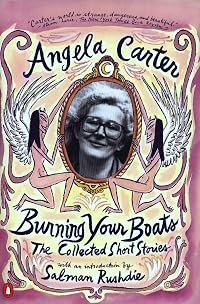
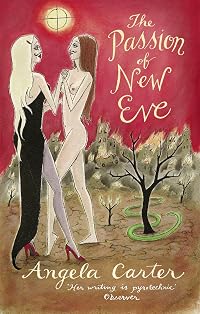
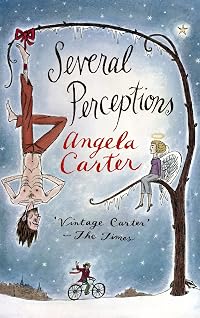
A powerful and disturbing writer, Angela Carter created haunting fiction about travelers surviving their passage through a disintegrating universe. Often based on myth or fairy tale-borrowed or invented for the occasion-her work evokes the most powerful aspects of sexuality and selfhood, of life and death, of apocalypse. Carter's most successful show more novels include The Magic Toyshop (1967), which received the John Llewellyn Rhys Prize and Several Perceptions (1968), winner of the Somerset Maugham Award. The Passion of New Eve (1977), a story of the end of the world and its possible new beginning with failed mankind replaced by a self-generating womankind. She translated many fairy tales and wrote several collections of short stories, including The Bloody Chamber (1979) which won the Cheltenham Festival of Literature Award and was the basis for the powerful movie A Company of Wolves. She worked as a journalist and as a professor at Brown and the University of Texas. She published two nonfiction books of interest: Nothing Sacred, selected writings, and The Sadeian Woman (1979). (Bowker Author Biography) show less
Some Editions
Awards and Honors
Awards
Notable Lists
Series
Belongs to Publisher Series
Work Relationships
Common Knowledge
- Canonical title
- Nights at the Circus
- Original title
- Nights at the Circus
- Original publication date
- 1984
- People/Characters
- Sophie Fevvers; Ma Nelson; Jack Walser
- Important places
- London, England, UK; Siberia, Russia; St. Petersburg, Russia
- First words
- 'Lor' love you, sir!' Fevvers sang out in a voice that clanged like dustbin lids.
- Last words
- (Click to show. Warning: May contain spoilers.)'It just goes to show there's nothing like confidence.'
- Blurbers
- Mungo, Raymond; See, Carolyn; Gray, Paul
- Original language
- English
- Disambiguation notice
- Please only the Carter novel in its whole and unedited form and not the script for the play.
Classifications
Statistics
- Members
- 2,939
- Popularity
- 6,070
- Reviews
- 55
- Rating
- (3.92)
- Languages
- 12 — Danish, Dutch, English, Estonian, Finnish, French, German, Italian, Norwegian (Bokmål), Slovenian, Spanish, Swedish
- Media
- Paper, Audiobook, Ebook
- ISBNs
- 39
- ASINs
- 15