On This Page
Description
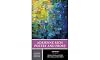
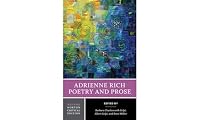
This Norton Critical Edition includes:* Generous selections of poetry and prose from the entire oeuvre of one of America's most influential poets.* An introduction and explanatory annotations by Barbara Charlesworth Gelpi, Albert Gelpi, and Brett Millier.* Fifteen reviews and critical commentaries, nine of them new to the Second Edition, carefully chosen as a guide to Adrienne Rich's poetics--and to her poetics as related to politics--ranging from W. H. Auden's 1951 response to her first show more book to critics' reviews of the magisterial Collected Poems in 2016.* A Chronology, a Selected Bibliography, and an Index.About the SeriesRead by more than 12 million students over fifty-five years, Norton Critical Editions set the standard for apparatus that is right for undergraduate readers. The three-part format--annotated text, contexts, and criticism--helps students to better understand, analyze, and appreciate the literature, while opening a wide range of teaching possibilities for instructors. Whether in print or in digital format, Norton Critical Editions provide all the resources students need. show lessTags
Recommendations

















Member Reviews
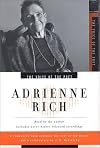
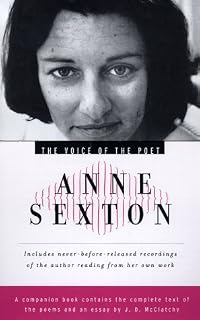
This is a recording of Adrienne Rich reading some of the poems from throughout her life accompanied by a little volume of those poems. I'll quote just a few:
Translations
You show me the poems of some woman
my age, or younger
translated from your language
Certain words occur: "enemy, oven, sorrow"
enough to let me know
she's a woman of my time
obsessed
with Love, our subject:
we've trained it like ivy to our walls
baked it like bread in our ovens
worn it like lead on our ankles
watched it through binoculars as if
it were a helicopter
bringing food to our famine
or the satellite
of a hostile power
I begin to see that woman
doing things: stirring rice
ironing a skirt
typing a manuscript till dawn
trying to make a call
from a phonebooth
The phone rings show more unanswered
in a man's bedroom
she hears him telling someone else
"Never mind. She'll get tired--"
hears him telling her story to her sister
who becomes her enemy
and will in her own time
light her own way to sorrow
ignorant of the fact this way of grief
is shared, unnecessary
and political
and just one little piece of one:
from twenty-one Love Poems
xvii
No one's fated or doomed to love anyone.
The accidents happen, we're not heroines,
they happen in our lives like car crashes,
books that change us, neighborhoods
we move into and come to love.
Tristan und Isolde is scarcely the story,
women at least should know the difference
between love and death...
Power
Living in the earth-deposits of our history
Today a backhoe divulged out of a crumbling flank of earth
one bottle amber perfect a hundred-year-old
cure for fever or melancholy a tonic
for living on this earth in the winters of this climate
Today I was reading about Marie Curie:
she must have known she suffered from radiation
sickness
her body bombarded for years by the element
she had purified
It seems she denied to the end
the source of the cataracts on her eyes
the cracked and suppurating skin of her finger-ends
till she could no longer hold a test-tube or a pencil
She died a famous woman denying
her wounds
denying
her wounds came from the same source as her
power
North American Time
I
When my dreams showed signs
of becoming
politically correct
no unruly images
escaping beyond borders
when walking in the street I found my
themes cut out for me
knew what I would not report
for fear of enemies' usage
then I began to wonder
II
Everything we write
will be used against us
or against those we love
These are the terms
take them or leave them.
Poetry never stood a chance
of standing outside history.
One line typed twenty years ago
can be blazed on a wall in spraypaint
to glorify art as detachment
or torture of those we
did not love but also
did not want to kill
We move but our words stand
become responsible
for more than we intended
and this is verbal privilege
What an amazing, brave and insightful person Rich was, and how lucky we are to have her words still standing. show less
Translations
You show me the poems of some woman
my age, or younger
translated from your language
Certain words occur: "enemy, oven, sorrow"
enough to let me know
she's a woman of my time
obsessed
with Love, our subject:
we've trained it like ivy to our walls
baked it like bread in our ovens
worn it like lead on our ankles
watched it through binoculars as if
it were a helicopter
bringing food to our famine
or the satellite
of a hostile power
I begin to see that woman
doing things: stirring rice
ironing a skirt
typing a manuscript till dawn
trying to make a call
from a phonebooth
The phone rings show more unanswered
in a man's bedroom
she hears him telling someone else
"Never mind. She'll get tired--"
hears him telling her story to her sister
who becomes her enemy
and will in her own time
light her own way to sorrow
ignorant of the fact this way of grief
is shared, unnecessary
and political
and just one little piece of one:
from twenty-one Love Poems
xvii
No one's fated or doomed to love anyone.
The accidents happen, we're not heroines,
they happen in our lives like car crashes,
books that change us, neighborhoods
we move into and come to love.
Tristan und Isolde is scarcely the story,
women at least should know the difference
between love and death...
Power
Living in the earth-deposits of our history
Today a backhoe divulged out of a crumbling flank of earth
one bottle amber perfect a hundred-year-old
cure for fever or melancholy a tonic
for living on this earth in the winters of this climate
Today I was reading about Marie Curie:
she must have known she suffered from radiation
sickness
her body bombarded for years by the element
she had purified
It seems she denied to the end
the source of the cataracts on her eyes
the cracked and suppurating skin of her finger-ends
till she could no longer hold a test-tube or a pencil
She died a famous woman denying
her wounds
denying
her wounds came from the same source as her
power
North American Time
I
When my dreams showed signs
of becoming
politically correct
no unruly images
escaping beyond borders
when walking in the street I found my
themes cut out for me
knew what I would not report
for fear of enemies' usage
then I began to wonder
II
Everything we write
will be used against us
or against those we love
These are the terms
take them or leave them.
Poetry never stood a chance
of standing outside history.
One line typed twenty years ago
can be blazed on a wall in spraypaint
to glorify art as detachment
or torture of those we
did not love but also
did not want to kill
We move but our words stand
become responsible
for more than we intended
and this is verbal privilege
What an amazing, brave and insightful person Rich was, and how lucky we are to have her words still standing. show less
Ratings
Members
- Recently Added By
Author Information

103+ Works 9,846 Members
Adrienne Cecile Rich was born in Baltimore, Maryland on May 16, 1929. In 1951 she graduated from Radcliffe College and was selected for the Yale Series of Younger Poets prize by W.H. Auden. She began teaching for City College of New York in 1968, and was also a lecturer and adjunct professor at Swarthmore College and Columbia University School of show more the Arts. She taught in CUNY's basic writing program during the early 1970s. In the 1970s, she started to be active in the women's liberation movement. Her work has been characterized as confrontational, treating women's role in society, racism, and the Vietnam War. In addition to many collections of poetry, she has also written several books of nonfiction prose, such as Arts of the Possible: Essays and Conversations, What is Found There: Notebooks on Poetry and Politics, and Of Woman Born: Motherhood as Experience and Institution. Her last poetry collection was entitled Tonight No Poetry Will Serve: Poems 2007-2010. She has won numerous literary awards, including the 1986 Ruth Lilly Poetry Prize, the 1992 Poets' Prize, the 1997 Wallace Stevens Award of the Academy of American Poets, the 2004 National Book Critics Circle Award in Poetry, and the 2006 National Book Foundation Medal of Distinguished Contribution to American Letters. She has also received the Bollingen Prize, the Lannan Lifetime Achievement Award, the Academy of American Poets Fellowship, the Lenore Marshall Poetry Prize, and a MacArthur Fellowship. In 1974, she refused to receive as an individual the National Book Award for Poetry, instead accepting it on behalf of all silenced women. She also refused the National Medal of Arts in 1997, stating that "I could not accept such an award from President Clinton or this White House because the very meaning of art, as I understand it, is incompatible with the cynical politics of this administration." In 2012, she won the Lifetime Recognition Award from the Griffin Poetry Prize. She died from long-term rheumatoid arthritis on March 27, 2012. (Bowker Author Biography) show less
Series

Common Knowledge
- Canonical title
- The Voice of the Poet: Adrienne Rich
Classifications
- Genres
- Poetry, Fiction and Literature, Literature Studies and Criticism
- DDC/MDS
- 811.54 — Literature & rhetoric American literature in English American poetry in English 20th Century 1945-1999
- LCC
- PS3535 .I233 .A6 — Language and Literature American literature American literature Individual authors 1900-1960
- BISAC
Statistics
- Members
- 33
- Popularity
- 833,968
- Reviews
- 1
- Rating
- (5.00)
- Languages
- English
- Media
- Paper, Audiobook
- ISBNs
- 3
- ASINs
- 1