On This Page
Description
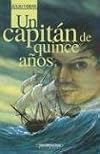
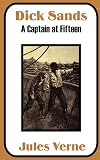
Although French science fiction innovator Jules Verne is best known for fantastical tales such as Twenty Thousand Leagues Under the Sea and Journey to the Center of the Earth, he also wrote a number of fast-paced action-adventure stories. Dick Sand: A Captain at Fifteen falls into this category, following the protagonist of the title through an around the world whaling trip that goes horribly wrong..
Tags
Recommendations






















Member Reviews
The seventeenth Extraordinary Voyage is the third time the series takes us to Africa, after Five Weeks in a Balloon and The Adventures of Three Englishmen and Three Russians in South Africa. This epic adventure is also the first of four Extraordinary Voyages to have a boy as the main character (the others will be Two Years' Vacation, Foundling Mick and Travel Scholarships).
What is it about?: In 1873, an undermanned whaling ship headed to San Francisco rescues five African American people and a dog, survivors from the wreck of another ship. After a whaling accident kills the captain and the rest of the crew, Dick Sand, a fifteen-year-old sailor, becomes the only remaining person on board with sailing knowledge. This will be the start of show more an long quest for survival.
Verne is most famous for his scientific fiction and the fabulous vehicles he imagined, but I deeply appreciate his work as an adventure writer. I think it's fair to say that, for Verne, both facets were part of the same whole. Even his straightforward adventures are for him a chance to tell stories exploring the limits of the scientific knowledge of his time. It's just that geography is one of the sciences he most often features. For us it's a given that the geography of our planet is completely known, but during the 19th century, when Verne was writing, vast parts of the Earth remained unknown to western civilization, and exploration was a way of expanding human knowledge.
This novel, in two volumes, has two distinct parts. The first is an adventure on the ocean and the second on African lands. This provides a good sampling of Verne's abilities as an adventure writer, and he is in good form here. Intrigue, betrayals, revenge... this story has it all. The ordeal the characters go through can be described as epic, with the human suffering depicted at certain parts surpassing what Verne had described in The Survivors of the Chancellor.
It is of course a coming of age story, with the young title character having to deal with a responsibility beyond his years, but it's also a denunciation of slavery, with Verne graphically depicting the horrors of a practice that had recently been outlawed in most European countries but was still going on, with countless people being killed or enslaved in Africa and sold to some western colonies or to muslim countries.
Verne's documentation, as usual, is extensive. Since Five Weeks in a Balloon was published, there had been new explorations of Africa, and Verne makes use of them and also informs his readers about them. The African part of the novel offers a number of those Vernian info dumps about explorers that some readers may find tiresome but that I kind of enjoy. If you have read Five Weeks in a Balloon you have a good idea of what to expect in that regard. Verne's descriptions of the landscape are also vivid, the product of his readings of the accounts of Livingstone's, Stanley's and Cameron's voyages.
As in Five Weeks in a Balloon, Verne's depiction of native cultures includes some sensationalism. Cannibalism and savagery, although they happened and were described in the explorers' accounts, are mentioned in his novels more often than it's really warranted; I don't know if that reflects the contemporary understanding of Africa or whether it is creative license to spice up the adventures (it's a bit similar to the overabundance of volcanos in his novels). Verne's Victorian view on the superiority of western civilization is balanced by his humanistic views on slavery, an institution which he very unambiguously condemns. His African American characters in this novel can be considered by modern readers as a bit Uncle-Tom-like, accepting of their lower-class social status, but at the same time they are depicted as brave and compassionate, and one of them, the giant Hercules, at times steals the show as the main hero of the story.
One of the characters, "Cousin" Benedict, reminded me of Paganel from In Search of the Castaways, a story that also began at sea and ended on land. Benedict is another absent-minded scientist, in this case an entomologist. In Benedict's case, however, his absent-mindedness is taken to the point that he's barely functioning as a human being, making him a character who has to be looked after like a child. I wonder if this is foretelling the less positive view of scientists that Verne's novels would feature in later years.
Enjoyment factor: Very high. This is one of the Verne novels that I read as a kid. I loved it then and I really enjoyed the reread. The pace is good, although in the second half we are treated to some info-dumps about African explorations. It's a very complete adventure, both at sea and on land, with brave heroes and really evil villains.
Next up: The Begum's Millions
See all my Verne reviews here: https://www.sffworld.com/forum/threads/reading-vernes-voyages-extraordinaires.58... show less
What is it about?: In 1873, an undermanned whaling ship headed to San Francisco rescues five African American people and a dog, survivors from the wreck of another ship. After a whaling accident kills the captain and the rest of the crew, Dick Sand, a fifteen-year-old sailor, becomes the only remaining person on board with sailing knowledge. This will be the start of show more an long quest for survival.
Verne is most famous for his scientific fiction and the fabulous vehicles he imagined, but I deeply appreciate his work as an adventure writer. I think it's fair to say that, for Verne, both facets were part of the same whole. Even his straightforward adventures are for him a chance to tell stories exploring the limits of the scientific knowledge of his time. It's just that geography is one of the sciences he most often features. For us it's a given that the geography of our planet is completely known, but during the 19th century, when Verne was writing, vast parts of the Earth remained unknown to western civilization, and exploration was a way of expanding human knowledge.
This novel, in two volumes, has two distinct parts. The first is an adventure on the ocean and the second on African lands. This provides a good sampling of Verne's abilities as an adventure writer, and he is in good form here. Intrigue, betrayals, revenge... this story has it all. The ordeal the characters go through can be described as epic, with the human suffering depicted at certain parts surpassing what Verne had described in The Survivors of the Chancellor.
It is of course a coming of age story, with the young title character having to deal with a responsibility beyond his years, but it's also a denunciation of slavery, with Verne graphically depicting the horrors of a practice that had recently been outlawed in most European countries but was still going on, with countless people being killed or enslaved in Africa and sold to some western colonies or to muslim countries.
Verne's documentation, as usual, is extensive. Since Five Weeks in a Balloon was published, there had been new explorations of Africa, and Verne makes use of them and also informs his readers about them. The African part of the novel offers a number of those Vernian info dumps about explorers that some readers may find tiresome but that I kind of enjoy. If you have read Five Weeks in a Balloon you have a good idea of what to expect in that regard. Verne's descriptions of the landscape are also vivid, the product of his readings of the accounts of Livingstone's, Stanley's and Cameron's voyages.
As in Five Weeks in a Balloon, Verne's depiction of native cultures includes some sensationalism. Cannibalism and savagery, although they happened and were described in the explorers' accounts, are mentioned in his novels more often than it's really warranted; I don't know if that reflects the contemporary understanding of Africa or whether it is creative license to spice up the adventures (it's a bit similar to the overabundance of volcanos in his novels). Verne's Victorian view on the superiority of western civilization is balanced by his humanistic views on slavery, an institution which he very unambiguously condemns. His African American characters in this novel can be considered by modern readers as a bit Uncle-Tom-like, accepting of their lower-class social status, but at the same time they are depicted as brave and compassionate, and one of them, the giant Hercules, at times steals the show as the main hero of the story.
One of the characters, "Cousin" Benedict, reminded me of Paganel from In Search of the Castaways, a story that also began at sea and ended on land. Benedict is another absent-minded scientist, in this case an entomologist. In Benedict's case, however, his absent-mindedness is taken to the point that he's barely functioning as a human being, making him a character who has to be looked after like a child. I wonder if this is foretelling the less positive view of scientists that Verne's novels would feature in later years.
Enjoyment factor: Very high. This is one of the Verne novels that I read as a kid. I loved it then and I really enjoyed the reread. The pace is good, although in the second half we are treated to some info-dumps about African explorations. It's a very complete adventure, both at sea and on land, with brave heroes and really evil villains.
Next up: The Begum's Millions
See all my Verne reviews here: https://www.sffworld.com/forum/threads/reading-vernes-voyages-extraordinaires.58... show less
This was a great Jules Verne novel! You are taken along for a wild ride that ultimately results in the young Dick Sand becoming a captain. However, it does not end there- there are dark undercurrents that put him in indefinite peril that trail throughout the book and force him to take action constantly. He is challenged for all his mettle and put to the test-- forced to do so with everything that he can muster. I won't spoil the ending, but it is quite a satisfying one as well with an element of realism thrown in.
4.25 stars- well deserved!
4.25 stars- well deserved!
A reasonable offering from Verne's lesser known stories, but rather uneven. The achievements of Dick Sand seemed unrealistic for a 15 year old, but if they were true, why refer to him as the novice throughout the book - this seemed increasingly inappropriate. Given that Verne's mother's family were slave traders, it was good to see moral opposition to the slave trade here. By Verne's standards, some of the black characters, especially Hercules and Tom, were portrayed fairly positively. Parts of the second half, after they discovered they had landed in Africa rather than South America, were chilling and horrific, especially the death march of the slaves.
Me agrada cómo aquí ya se va entendiendo el tema de la trata como un problema grave a nivel mundial. Me apena que en ese tiempo no haya tenido Verne la misma visión para el asunto de la caza de ballenas que cuenta en este libro.
No recomiendo la adquisición de este libro en esta editorial pues la traducción contiene varios errores, así como la impresión.
No recomiendo la adquisición de este libro en esta editorial pues la traducción contiene varios errores, así como la impresión.
Egy újabb kamasz-kaland, de ki mondta, hogy csak fiúk számára. Navigare necesse est! ;-)
I really liked it expectedly as it's one of the classics and I cannot wait to read every book written by Jules!
Prantsuse kirjaniku ülipopulaarne seiklusromaan, mille tegevus toimub 19. sajandil. Dick Sand oli 15-aastane laevapoiss laeval Pilgrim, aga traagilise sündmuse tõttu hukkus laeva õige kapten Kapten Hull ja uueks kapteniks oli sunnitud hakkama noor Dick Sand. Neil tuleb jõuda ühele maale, aga eksituse tõttu jõutakse teisele maale. Seal ootavad neid ärevakstegevad pärismaalased.
Members
- Recently Added By
Author Information

Jules Verne was born on February 8, 1828 in Nantes, France. He wrote for the theater and worked briefly as a stockbroker. He is considered by many to be the father of science fiction. His most popular novels included Journey to the Center of the Earth, Twenty Thousand Leagues Under the Sea, and Around the World in Eighty Days. Several of his works show more have been adapted into movies and TV mini-series. In 1892, he was made a Chevalier of the Legion of Honor in France. He died on March 24, 1905 at the age of 77. (Bowker Author Biography) Jules Verne (1828-1905) is the author of numerous adventure stories grounded in popularizations of science. (Publisher Provided) show less
Some Editions
Awards and Honors
Series

Belongs to Publisher Series
Work Relationships
Is contained in
Contains
Is abridged in
Common Knowledge
- Canonical title
- Dick Sands: A Captain at Fifteen; A Captain at Fifteen
- Original title
- Un capitaine de quinze ans
- Alternate titles*
- En kapten om femton år (1878) (1878); Bland slavjägare (1921) (1921)
- Original publication date
- 1878-12-15
- People/Characters
- Dick Sand
- Important places*
- Auckland, Neuseeland; Angola
- Important events*
- Sklavenhandel
- Original language
- French
- Disambiguation notice
- Also published as: "Boy Captain: Adventures on Land and Sea", "Dick Sand, or a Captain at Fifteen", "Dick Sands, or the Boy Captain"
*Some information comes from Common Knowledge in other languages. Click "Edit" for more information.
Classifications
Statistics
- Members
- 742
- Popularity
- 37,837
- Reviews
- 16
- Rating
- (3.74)
- Languages
- 27 — Catalan, Chinese, Czech, Danish, Dutch, English, Estonian, Finnish, French, German, Greek, Hungarian, Italian, Japanese, Norwegian (Bokmål), Polish, Portuguese (Brazil), Portuguese (Portugal), Romanian, Russian, Serbian, Croatian, Slovenian, Spanish, Swedish, Ukrainian, Vietnamese
- Media
- Paper, Ebook
- ISBNs
- 182
- ASINs
- 46