On This Page
Description
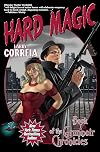
Jake Sullivan is a war hero, a private eye-and an ex-con. He's free because he has a magical talent, being able to alter the force of gravity in himself and objects in his vicinity, and the Bureau of Investigation calls on him when they need his help in apprehending criminals with their own magical talents. But the last operation he was sent along to help with went completely wrong, and Delilah Jones, the woman the G-men were after, who just happened to be an old friend of Jake's in happier show more times, had a lot of magical muscle with her, too much muscle for the cops to handle, even with Jake's help.It got worse. Jake found out that the Feds had lied to him about Delilah being a murderer as well as a bank robber, and they had lied about this being his last job for them-he was too valuable for them to let him go. And things were even worse than Jake imagined. There was a secret war being waged by opposing forces of magic-users, and Jake had no idea that he had just attracted the attention of one side, whose ruthless leaders were of the opinion that Jake was far too dangerous to be permitted to live...
At the publisher's request, this title is sold without DRM (Digital Rights Management).
. show less
Tags
Recommendations

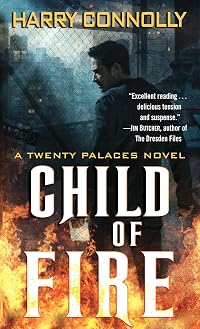
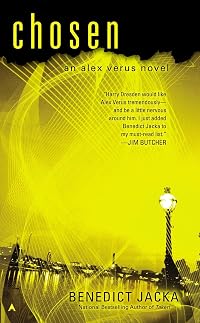
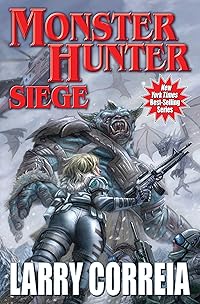
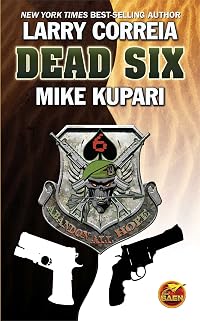

Member Recommendations
Member Reviews
One general law, leading to the advancement of all organic beings, namely, multiply, vary, let the strongest live and the weakest die. The appearance of esoteric and etheral abiliites, magical fires and feats of strength, in recent decades are the purest demonstration of natural selection. Surely, in time, that general law will require the extinction of traditional man.
—Charles Darwin, On the Origin of Man and Selection of Human Magical Abilities, 1879
Hard Magic is Great Depression / early 1930's era detective noir piece set in an alternate history where a few decades before magical abilities had suddenly popped up throughout the population and made everything just a bit more interesting.
You have all sorts of abilities, mostly show more grouped into a single power set per person. Torches start fires. Brutes hit really hard (which is particularly interesting when the main example we see is a woman). Heavies that can mess around with gravity. Healers that put people back together and Pale Horses that tear them apart. Lazaruses raise zombies. Travelers can teleport. Cogs are basically mad scientists.
It's an interesting world, especially part of the way through when you start getting a bit deeper into exactly why there are powers in the world (
“Hey!” he shouted. “Can you clamp it down from here?”
“Are you crazy? You want them to stay?” an older man in a blue UBF captain’s uniform shouted. “That’s my bird they’re glauming out there, and even I don’t want to mess with those freaks! He bent the door with his brain, son!”
There is just enough 20s/30s jargon to make the world feel real enough to me--although I'd admit that some of that might be that I just don't consume much media from that era / know terribly much about how it really was. It makes for a fun read though, you can say that again. There are more than a few points in the book that are somewhat jarring (slang and word choices that would not be acceptable in modern conversations) but at least they feel true to the times?
Characterwise, I really like both Jake Sullivan (an ex-con / less-than-completely-willing-Gman Heavy) and Faye Vierra (a Traveller with quite the tragic backstory who's more street savvy than book smart and got moxie to spare). They're both a lot of fun to read and although they don't directly interact that much until the end of the story, I love watching them act off one another. The supporting cast are really interesting as well. Delilah the woman Brute who can kick just about anyone's ass. Lance who we meet as a talking squirrel. The Grimnoir Society. Blackjack Pershing.
Storywise, the action scenes are amazing. When gravity gets twisted all out of shapes by a Heavy, things go sideways. When someone gets punched through a wall, you can feel it. When someone gets thrown out of a blimp... well...
He’d fallen two thousand feet, blasted through a train car, dug an impact crater, and still nothing felt broken. Somehow he’d used up the last of his Power unconsciously before impact. He must have gone real dense. He hadn’t known he could do that, but then again, he didn’t routinely fall off blimps.
Pretty much like that.
All in all, I liked this book far more than I expected to. I'm really looking forward to where it all goes from here... show less
Kind of urban fantasy, but despite them calling a lot of what happens 'magic' a lot of it just feels like superpowers (there is some more, what we might think of as magic happening as well though).
Have you read WildCards? Did you wish it was more consistent in tone and quality across different authors and characters? Then Grimnoir is for you! Despite the magic label, the superpowers and even their origins smack a little of Wildcards, though in a good way. Honestly, while we're still sort of dealing with the magic/powers coming from an alien, its a bit more of cosmic horror/alien to this universe which ultimately appeals more than the literal humanlike aliens from another planet we get in wildcards. I'd hesitate to call this 'better', show more because particular authors and characters from Wildcards succeed at a much higher level than Hard Magic does, but I'd say on average this is probably superior and more fun.
I know some others have complained about conservative politics in the storytelling. I'm familiar with the author's background in the industry and politics, and I do find them objectionable. However, what I *don't* find is them reflected anywhere in his writing, which I think is admirable. The closest I can find is a definite nationalistic bent in a number of characters, but that feels in keeping with both the time in which the story is set and nature of those individual characters.
Overall, a fun recommend and I'll polish off the rest of the story as soon as I find cheap used copies (library doesn't have them). show less
Have you read WildCards? Did you wish it was more consistent in tone and quality across different authors and characters? Then Grimnoir is for you! Despite the magic label, the superpowers and even their origins smack a little of Wildcards, though in a good way. Honestly, while we're still sort of dealing with the magic/powers coming from an alien, its a bit more of cosmic horror/alien to this universe which ultimately appeals more than the literal humanlike aliens from another planet we get in wildcards. I'd hesitate to call this 'better', show more because particular authors and characters from Wildcards succeed at a much higher level than Hard Magic does, but I'd say on average this is probably superior and more fun.
I know some others have complained about conservative politics in the storytelling. I'm familiar with the author's background in the industry and politics, and I do find them objectionable. However, what I *don't* find is them reflected anywhere in his writing, which I think is admirable. The closest I can find is a definite nationalistic bent in a number of characters, but that feels in keeping with both the time in which the story is set and nature of those individual characters.
Overall, a fun recommend and I'll polish off the rest of the story as soon as I find cheap used copies (library doesn't have them). show less
Wow, this book has it all in spades: Zane Gray meets Greg Keyes, Chandler, Pratchett, Steinbeck and Romero. i.e. gun-slinging secret societies mobster magic save the world arcane action ... with zombies!
It sounds like B-shlock, but Correia convincingly pulls it all together with great writing and a little quirky humour. I haven't enjoyed such a romp thru an alternate universe as much since ... forever.
It sounds like B-shlock, but Correia convincingly pulls it all together with great writing and a little quirky humour. I haven't enjoyed such a romp thru an alternate universe as much since ... forever.
Hard Magic is a work that is stunning in its overall mediocrity. Taking the idea that magical powers began manifesting themselves among humans in the 1850s and setting his story in the Prohibition-era United States, Correia manages to produce a book that is full of action-packed magically augmented gunfights and is tediously boring at the same time. Full of cardboard cut-out tough guys, two-dimensional damsels in distress, and wooden mustache twirling villains (who often seem to be awful racial stereotypes to boot), Hard Magic desperately wishes it could be a cross between The Maltese Falcon, X-Men, and The Lord of the Rings, but ultimately it amounts to nothing more than a series of combat scenes linked together by a limp and show more unconvincing plot.
The central conceit of the story is that along about the middle of the Nineteenth century people began to manifest magical powers. Those who do have access to magic seem to have just one power - some people can control fire, others can possess and control animals, others gain superior strength, a few can heal injuries, and still others can teleport. Some people have very weak or limited powers, such a "torch", who can control fire, but only enough to create or douse a flame the size of a pocket lighter. People with usable magical powers are called "Actives", and pretty much just about every character of any note in the book is one.
Oddly, while the presence of magically augmented humans has wrought some political changes, it doesn't seem to have changed the world in many ways otherwise. World War I happened right on schedule with the only substantive changes being that there was a Second Battle of the Somme involving lots of magically inclined combatants and Berlin ends up turned into a walled city of undead creatures. But the Tunguska Event takes place, as does the Oklahoma dust bowl, although in Correia's alternate world both caused by the use of magic. The book also makes clear that Prohibition is in effect in the U.S. and the Great Depression has laid the world economy low. J. Edgar Hoover is the head of the Bureau of Investigation, and the Bonus Army marched on Washington only to be driven out by U.S. Army troops serving under MacArthur. On the technological front, despite the existence of humans with preternatural affinity for invention called "cogs", the only real change that is notable seems to be the prevalence of dirigibles in the place of aircraft, serving both as passenger and freight transports as well as warships. It doesn't seem clear why the existence of magically augmented humans somehow makes wildly impractical aircraft like dirigibles and zeppelins into practical and ubiquitous ships of the sky, but nevertheless, they are and appear several times in the book.
Politically, the biggest change seems to be the expansion of power for Japan, which has taken over China, much of what in our world was the eastern Soviet Union and pretty much all of southeast Asia. Though technically ruled by an Emperor, all actual power is held by the Chairman, a figure who is described as being so magically powerful that he is personally undefeatable and who is served by the fearsome "Iron Guard" of magically powerful warriors and the "Shadow Guard" of magically augmented ninjas. The Imperium is, according to various characters in the book, a fairly hellish place, with "Actives" powerful enough to be useful impressed into service, and those who aren't herded into camps to be experimented with the hope of discovering how to enhance the power of those with magical abilities. Everything about the Imperium is essentially a racist caricature with the worst kind of "yellow peril" overtones throughout.
Jake Sullivan, the hero of the story, is the most hard boiled of private detectives and a magically augmented "gravity spiker" to boot. He is a hardened ex-con with a heart of gold, a decorated war hero of the Second Battle of the Somme sent to prison for saving a young black Active from a racist sheriff in the deep South who spent his time in Rockingham prison mulling over and experimenting with his magical gifts before being set free on a work release agreement where he signed up to help the Bureau of Investigation capture a set number of particularly dangerous magical criminals. His story begins with the attempted arrest of Delilah, an attractive "brute" that he has something of a romantic past with. But she's wanted by the BI, so Sullivan is there to help bring her in. The only trouble is that Delilah has some friends who also have magical powers, and the attempted arrest turns into a long fight sequence that eventually results in Sullivan getting tossed out of an airborne blimp.
And this sets the tone for the entire novel, which amounts to little more than detailed fight scene after fight scene interrupted by just enough plot to allow them to be strung together. Before long, one realizes that neither the plot or the characters matter much. What is important in the book is what kind of powers everyone has, and what kind of lovingly described firearm they carry. Unless they carry a sword, because even though the bullets fly fast and free in the fights, they are remarkably ineffective, with characters absorbing massive quantities of lead with limited ill-effects. After Sullivan's fight with Delilah and her allies, Sullivan turns to his underworld contacts to try to find out where she got her help from. His mobster "friends" then send people to try to kill Sullivan but they are interrupted by members of Delilah's group and a member of the Imperium's "Iron Guard", leading to a long fight sequence. We are introduced to the magical "traveler" Faye Vierra, and given just enough of her background before a group of men show up to kill her adoptive grandfather in another fight sequence. Faye goes to San Francisco and promptly finds herself in the crossfire of another fight scene. The bulk of the book is basically nothing more than preparations for a fight, a description of a fight, or the aftermath of a fight.
At the very least the fight sequences are reasonably creative, although for the most part they have a tendency to be overlong and tedious. But the writing in the book is somewhat weak and frequently repetitive - for example, when Faye Vierra first reaches San Francisco, there is an extended two page description as the country girl marvels at the sights of the railroad station and adjoining city street. This wouldn't be particularly noteworthy except that Corriea uses the word "astounding" to describe the sights no fewer than three times in these two pages. The series the book starts off is called the "Grimnoir Chronicles", clearly an attempt by Correia to evoke the "film noir" style of cinema, which is reasonable enough, but he feels compelled to clumsily try to put a lampshade upon his made-up word not once, but twice, and the end result is to highlight just how silly the neologism is. The whole book is pretty much written this way, with bland prose punctuated with adoring descriptions of weaponry and detailed accounts of the multiple grievous gunshot wounds suffered by the various combatants, although these wounds seem to almost never be fatal.
The plot, to the extent there is one among all of the superpowered characters futilely blasting away at one another, is the conflict between the secret "Grimnoir Society" and the Imperium as they contest ownership of Nicholas Tesla's "Geo-Tel", a MacGuffin that seems to be similar to a nuclear weapon in effect. Years before, the Grimnoir Knights foiled an attempt to use the Geo-Tel to destroy New York City, and instead of destroying it, they broke it into several pieces and had members take them and scatter across the world and seclude themselves. Now, it turns out, someone is tracking them down, killing them, and claiming the parts. The Grimnoir Society quickly figure out that the Imperium is trying to assemble the weapon so they can take over the world, but before they can act, Madi the leader of the Iron Guards (who happens to be Sullivan's estranged brother) launches an attack upon their hideout in San Francisco before melting a chunk of the city with the local "Peace Ray" installation Imperium agents had taken over with a ninja assault. Madi kidnaps Jane, the Grimnoir Society's healer, and then heads off to deliver the Geo-Tel to the Chairman. After all of the Grimnoir are healed up, they set about chasing after Madi while Sullivan goes to find the last piece of the device. Then the huge "twist" in the story is revealed, which only works because the supposedly incredibly crafty and intelligent Chairman acts like an idiot. And of course there is a huge, extended, tedious gunfight and a showdown between Madi and Sullivan that only concludes in Sullivan's favor because both Madi and the Chairman act like idiots. Also, swords are apparently much more damaging to people than getting shot multiple times with rounds of either .30-06 or .45 caliber ammunition.
In the end, both Madi and the Chairman are vanquished, their plots for world domination foiled, and almost all of the heroes return home alive despite being repeatedly shot, stabbed, burned, blown up, and other wise eviscerated. The lone exception is Delilah, who Sullivan establishes a romantic relationship with, and must therefore be sacrificed so that Sullivan can have some tragic character development. And this is really the root of the bland and flavorless mediocrity that pervades Hard Magic: To the extent that there is anything other than descriptions of people mangling one another, it is all worn out cliches and tired tropes. Even the premise - introducing magic into the modern world and creating an alternate history - isn't particularly original or even that interesting. Unless you are intrigued by nearly endless fight scenes and don't mind a paint-by-numbers plot in a standard-issue fantasy world populated by cardboard characters, there's really not much reason to bother reading this book.
This review has also been posted to my blog Dreaming About Other Worlds show less
The central conceit of the story is that along about the middle of the Nineteenth century people began to manifest magical powers. Those who do have access to magic seem to have just one power - some people can control fire, others can possess and control animals, others gain superior strength, a few can heal injuries, and still others can teleport. Some people have very weak or limited powers, such a "torch", who can control fire, but only enough to create or douse a flame the size of a pocket lighter. People with usable magical powers are called "Actives", and pretty much just about every character of any note in the book is one.
Oddly, while the presence of magically augmented humans has wrought some political changes, it doesn't seem to have changed the world in many ways otherwise. World War I happened right on schedule with the only substantive changes being that there was a Second Battle of the Somme involving lots of magically inclined combatants and Berlin ends up turned into a walled city of undead creatures. But the Tunguska Event takes place, as does the Oklahoma dust bowl, although in Correia's alternate world both caused by the use of magic. The book also makes clear that Prohibition is in effect in the U.S. and the Great Depression has laid the world economy low. J. Edgar Hoover is the head of the Bureau of Investigation, and the Bonus Army marched on Washington only to be driven out by U.S. Army troops serving under MacArthur. On the technological front, despite the existence of humans with preternatural affinity for invention called "cogs", the only real change that is notable seems to be the prevalence of dirigibles in the place of aircraft, serving both as passenger and freight transports as well as warships. It doesn't seem clear why the existence of magically augmented humans somehow makes wildly impractical aircraft like dirigibles and zeppelins into practical and ubiquitous ships of the sky, but nevertheless, they are and appear several times in the book.
Politically, the biggest change seems to be the expansion of power for Japan, which has taken over China, much of what in our world was the eastern Soviet Union and pretty much all of southeast Asia. Though technically ruled by an Emperor, all actual power is held by the Chairman, a figure who is described as being so magically powerful that he is personally undefeatable and who is served by the fearsome "Iron Guard" of magically powerful warriors and the "Shadow Guard" of magically augmented ninjas. The Imperium is, according to various characters in the book, a fairly hellish place, with "Actives" powerful enough to be useful impressed into service, and those who aren't herded into camps to be experimented with the hope of discovering how to enhance the power of those with magical abilities. Everything about the Imperium is essentially a racist caricature with the worst kind of "yellow peril" overtones throughout.
Jake Sullivan, the hero of the story, is the most hard boiled of private detectives and a magically augmented "gravity spiker" to boot. He is a hardened ex-con with a heart of gold, a decorated war hero of the Second Battle of the Somme sent to prison for saving a young black Active from a racist sheriff in the deep South who spent his time in Rockingham prison mulling over and experimenting with his magical gifts before being set free on a work release agreement where he signed up to help the Bureau of Investigation capture a set number of particularly dangerous magical criminals. His story begins with the attempted arrest of Delilah, an attractive "brute" that he has something of a romantic past with. But she's wanted by the BI, so Sullivan is there to help bring her in. The only trouble is that Delilah has some friends who also have magical powers, and the attempted arrest turns into a long fight sequence that eventually results in Sullivan getting tossed out of an airborne blimp.
And this sets the tone for the entire novel, which amounts to little more than detailed fight scene after fight scene interrupted by just enough plot to allow them to be strung together. Before long, one realizes that neither the plot or the characters matter much. What is important in the book is what kind of powers everyone has, and what kind of lovingly described firearm they carry. Unless they carry a sword, because even though the bullets fly fast and free in the fights, they are remarkably ineffective, with characters absorbing massive quantities of lead with limited ill-effects. After Sullivan's fight with Delilah and her allies, Sullivan turns to his underworld contacts to try to find out where she got her help from. His mobster "friends" then send people to try to kill Sullivan but they are interrupted by members of Delilah's group and a member of the Imperium's "Iron Guard", leading to a long fight sequence. We are introduced to the magical "traveler" Faye Vierra, and given just enough of her background before a group of men show up to kill her adoptive grandfather in another fight sequence. Faye goes to San Francisco and promptly finds herself in the crossfire of another fight scene. The bulk of the book is basically nothing more than preparations for a fight, a description of a fight, or the aftermath of a fight.
At the very least the fight sequences are reasonably creative, although for the most part they have a tendency to be overlong and tedious. But the writing in the book is somewhat weak and frequently repetitive - for example, when Faye Vierra first reaches San Francisco, there is an extended two page description as the country girl marvels at the sights of the railroad station and adjoining city street. This wouldn't be particularly noteworthy except that Corriea uses the word "astounding" to describe the sights no fewer than three times in these two pages. The series the book starts off is called the "Grimnoir Chronicles", clearly an attempt by Correia to evoke the "film noir" style of cinema, which is reasonable enough, but he feels compelled to clumsily try to put a lampshade upon his made-up word not once, but twice, and the end result is to highlight just how silly the neologism is. The whole book is pretty much written this way, with bland prose punctuated with adoring descriptions of weaponry and detailed accounts of the multiple grievous gunshot wounds suffered by the various combatants, although these wounds seem to almost never be fatal.
The plot, to the extent there is one among all of the superpowered characters futilely blasting away at one another, is the conflict between the secret "Grimnoir Society" and the Imperium as they contest ownership of Nicholas Tesla's "Geo-Tel", a MacGuffin that seems to be similar to a nuclear weapon in effect. Years before, the Grimnoir Knights foiled an attempt to use the Geo-Tel to destroy New York City, and instead of destroying it, they broke it into several pieces and had members take them and scatter across the world and seclude themselves. Now, it turns out, someone is tracking them down, killing them, and claiming the parts. The Grimnoir Society quickly figure out that the Imperium is trying to assemble the weapon so they can take over the world, but before they can act, Madi the leader of the Iron Guards (who happens to be Sullivan's estranged brother) launches an attack upon their hideout in San Francisco before melting a chunk of the city with the local "Peace Ray" installation Imperium agents had taken over with a ninja assault. Madi kidnaps Jane, the Grimnoir Society's healer, and then heads off to deliver the Geo-Tel to the Chairman. After all of the Grimnoir are healed up, they set about chasing after Madi while Sullivan goes to find the last piece of the device. Then the huge "twist" in the story is revealed, which only works because the supposedly incredibly crafty and intelligent Chairman acts like an idiot. And of course there is a huge, extended, tedious gunfight and a showdown between Madi and Sullivan that only concludes in Sullivan's favor because both Madi and the Chairman act like idiots. Also, swords are apparently much more damaging to people than getting shot multiple times with rounds of either .30-06 or .45 caliber ammunition.
In the end, both Madi and the Chairman are vanquished, their plots for world domination foiled, and almost all of the heroes return home alive despite being repeatedly shot, stabbed, burned, blown up, and other wise eviscerated. The lone exception is Delilah, who Sullivan establishes a romantic relationship with, and must therefore be sacrificed so that Sullivan can have some tragic character development. And this is really the root of the bland and flavorless mediocrity that pervades Hard Magic: To the extent that there is anything other than descriptions of people mangling one another, it is all worn out cliches and tired tropes. Even the premise - introducing magic into the modern world and creating an alternate history - isn't particularly original or even that interesting. Unless you are intrigued by nearly endless fight scenes and don't mind a paint-by-numbers plot in a standard-issue fantasy world populated by cardboard characters, there's really not much reason to bother reading this book.
This review has also been posted to my blog Dreaming About Other Worlds show less
If you’ve enjoyed Larry Correia’s Monster Hunter International series, then you’ll love Hard Magic, the first of his series set in an alternative 1930s America, where for just over seventy years (since the 1860s) magic has begun to manifest in random people around the world. Some become stronger, others can walk through walls, and still others can heal, curse, see the future, teleport, control the weather, raise demons, or create zombies.
That’s right. You didn’t think that Correia would write a book and not include zombies and other ghoulish monsters, did you? And, true to form, Correia gives his heroes plenty of armaments because a fair fight is only fair when the good guys are armed to the teeth.
So we’ve got monsters, show more magic, guns, and alternate history…did I mention that there are aliens, too?
If it sounds like Correia is blending too many genres, trust me: it works, and it’s every bit as enjoyable as the rest of Correia’s novels. Not only does Correia make it fun, weaving a creative new universe where almost anything goes, he brings his usual care to create characters that are both sympathetic and conflicted, diverse and credible. There’s something for everyone, from the tough guy who is soft inside to the fem fatal with a heart of gold, from the wizened and ancient mentor to the young, naive, and innocent prodigy on a mission of vengeance. There are pirates, gangsters, war heroes and villains, and Correia tells it with an almost effortless style.
Truth be told, Hard Magic kept me up burning the mid-night oil several days in row, and it was worth the lost sleep.
I ran into Correia on the floor of the Salt Lake Comic Con last week. Introduced by a mutual friend of ours, I was lucky enough to get a picture with him, but to look at the picture, you’d think he was the one who thought he was lucky. He’s wearing this smile that says “I can’t believe they pay me to do this.” It’s the smile of a man having the time of his life.
And, if you talk with him long enough, he’ll take the opportunity to note that he would have the number one audio book in the country right now, but for J.K. Rowling. Her revelation that Robert Galbraith was her pen name behind the critically acclaimed Cuckoo Calling catapulted her just over Correia (“Let’s start a rumor that ‘Larry Correia’ is a pen name for J.K. Rowling,” he said at one panel during the Salt Lake Comic Con). He says it with mock bitterness, and though other, less successful panelists occasionally rolled their eyes at him, he clearly enjoys the success that he’s enjoyed, and perhaps, as his smile seems to betray, he really can’t believe that he gets to write novels featuring his monsters, magic, and munitions. show less
That’s right. You didn’t think that Correia would write a book and not include zombies and other ghoulish monsters, did you? And, true to form, Correia gives his heroes plenty of armaments because a fair fight is only fair when the good guys are armed to the teeth.
So we’ve got monsters, show more magic, guns, and alternate history…did I mention that there are aliens, too?
If it sounds like Correia is blending too many genres, trust me: it works, and it’s every bit as enjoyable as the rest of Correia’s novels. Not only does Correia make it fun, weaving a creative new universe where almost anything goes, he brings his usual care to create characters that are both sympathetic and conflicted, diverse and credible. There’s something for everyone, from the tough guy who is soft inside to the fem fatal with a heart of gold, from the wizened and ancient mentor to the young, naive, and innocent prodigy on a mission of vengeance. There are pirates, gangsters, war heroes and villains, and Correia tells it with an almost effortless style.
Truth be told, Hard Magic kept me up burning the mid-night oil several days in row, and it was worth the lost sleep.
I ran into Correia on the floor of the Salt Lake Comic Con last week. Introduced by a mutual friend of ours, I was lucky enough to get a picture with him, but to look at the picture, you’d think he was the one who thought he was lucky. He’s wearing this smile that says “I can’t believe they pay me to do this.” It’s the smile of a man having the time of his life.
And, if you talk with him long enough, he’ll take the opportunity to note that he would have the number one audio book in the country right now, but for J.K. Rowling. Her revelation that Robert Galbraith was her pen name behind the critically acclaimed Cuckoo Calling catapulted her just over Correia (“Let’s start a rumor that ‘Larry Correia’ is a pen name for J.K. Rowling,” he said at one panel during the Salt Lake Comic Con). He says it with mock bitterness, and though other, less successful panelists occasionally rolled their eyes at him, he clearly enjoys the success that he’s enjoyed, and perhaps, as his smile seems to betray, he really can’t believe that he gets to write novels featuring his monsters, magic, and munitions. show less
ORIGINALLY POSTED AT Fantasy Literature.
Jake Sullivan is not your average Heavy. He spent his jail time honing his skills and improving his mind and now he’s J. Edgar Hoover’s super-weapon, useful for fighting Fades, Torches, Brutes, and any of the other Actives who are using their magic for criminal purposes. Jake doesn’t like being used this way, but it’s his ticket out of prison. When the FBI asks Jake to bring down Delilah Jones, the Brute who used to be his girlfriend, Jake gets caught up in a world-wide battle that involves magic, mobsters, zombies, zeppelins, Ninjas and Nikola Tesla’s peace ray.
Knowing that Larry Correia was into big guns and B movies, I wasn’t planning to pick up Hard Magic, the first of his Grimnoir show more Chronicles. It doesn’t really sound like my kind of thing. But then I noticed that it was released in audio by Audible Frontiers (who always do a superb production) and narrated by actor Bronson Pinchot. I decided to give it a shot, and I’m glad I did. Even though it is a bit too gory for me, Hard Magic is an exciting story with a fully-developed world, a cool magic system, terrific characters, and some hard-hitting action scenes.
I won’t even try to classify Hard Magic — it’s urban, it’s alternate history, it’s paranormal, it’s steampunk, it’s romance, it’s horror, it’s noir — it’s a little bit of everything. The story is set in an alternate 20th century between WWI and WWII. Magic talents have evolved in some humans so that each Active has one particular skill. For example, Jake Sullivan can alter gravitational forces, making himself or other objects light or heavy, Torches can set or put out fires, and Brutes have super strength. In addition to these heritable magical skills, the Germans have developed a way to create zombies to keep their soldiers fighting during The Great War, and the Japanese have developed their own nearly indestructible human super-weapons which they call the Iron Guard. And everyone wants to find the missing pieces of the machine that Nikola Tesla was working on at Wardenclyffe.
There’s a lot going on in the Grimnoir Chronicles, but Correia gives us a break by setting it in our own almost-recognizable world. The bits of true history orient the reader, and the mangled quotes of real historical figures at the beginning of each chapter give Hard Magic an authentic feel:
* I am by heritage a Jew, by citizenship a Swiss, by magical gift a Cog, and by makeup a human being, and only a human being, without any special attachment to any state or national entity whatsoever. —Albert Einstein, 1919
* You can go a long way with a smile. You can go a lot farther with a smile and a gun. A smile, a gun, and a Brute get you the key to the city. —Al “Scarface” Capone, 1930
Hard Magic is well-written and frequently funny. The complex and twisty plot moves swiftly and is full of intriguing characters such as the uneducated orphan who can Travel, the German Fade who walks through walls, the Pale Horse whose curse kills, the greedy billionaire who designs airships... there are too many interesting characters to list. All of their cool magical skills lead to some hardcore fight scenes. Most readers will probably find these fights to be the most fun part of the book. I was grossed out more than once and kind of irked that dead people didn’t necessarily stay dead, but that’s just me.
If you’re familiar with Bronson Pinchot’s acting career, it won’t surprise you to learn that his narration of the audiobook was brilliant. He took the whole production to a higher level. He easily managed all those characters with their different ethnicities and education levels — it was delightful, and was one of the best audiobook performances I’ve ever heard.
Despite my queasiness, I’m looking forward to Spellbound, the next novel in the Grimnoir Chronicles. I can highly recommend this series to urban fantasy/noir fans who don’t mind reading about ripped off heads and steaming entrails. If you want to give it a try, read the first few chapters of Hard Magic at Larry Correia’s blog. show less
Jake Sullivan is not your average Heavy. He spent his jail time honing his skills and improving his mind and now he’s J. Edgar Hoover’s super-weapon, useful for fighting Fades, Torches, Brutes, and any of the other Actives who are using their magic for criminal purposes. Jake doesn’t like being used this way, but it’s his ticket out of prison. When the FBI asks Jake to bring down Delilah Jones, the Brute who used to be his girlfriend, Jake gets caught up in a world-wide battle that involves magic, mobsters, zombies, zeppelins, Ninjas and Nikola Tesla’s peace ray.
Knowing that Larry Correia was into big guns and B movies, I wasn’t planning to pick up Hard Magic, the first of his Grimnoir show more Chronicles. It doesn’t really sound like my kind of thing. But then I noticed that it was released in audio by Audible Frontiers (who always do a superb production) and narrated by actor Bronson Pinchot. I decided to give it a shot, and I’m glad I did. Even though it is a bit too gory for me, Hard Magic is an exciting story with a fully-developed world, a cool magic system, terrific characters, and some hard-hitting action scenes.
I won’t even try to classify Hard Magic — it’s urban, it’s alternate history, it’s paranormal, it’s steampunk, it’s romance, it’s horror, it’s noir — it’s a little bit of everything. The story is set in an alternate 20th century between WWI and WWII. Magic talents have evolved in some humans so that each Active has one particular skill. For example, Jake Sullivan can alter gravitational forces, making himself or other objects light or heavy, Torches can set or put out fires, and Brutes have super strength. In addition to these heritable magical skills, the Germans have developed a way to create zombies to keep their soldiers fighting during The Great War, and the Japanese have developed their own nearly indestructible human super-weapons which they call the Iron Guard. And everyone wants to find the missing pieces of the machine that Nikola Tesla was working on at Wardenclyffe.
There’s a lot going on in the Grimnoir Chronicles, but Correia gives us a break by setting it in our own almost-recognizable world. The bits of true history orient the reader, and the mangled quotes of real historical figures at the beginning of each chapter give Hard Magic an authentic feel:
* I am by heritage a Jew, by citizenship a Swiss, by magical gift a Cog, and by makeup a human being, and only a human being, without any special attachment to any state or national entity whatsoever. —Albert Einstein, 1919
* You can go a long way with a smile. You can go a lot farther with a smile and a gun. A smile, a gun, and a Brute get you the key to the city. —Al “Scarface” Capone, 1930
Hard Magic is well-written and frequently funny. The complex and twisty plot moves swiftly and is full of intriguing characters such as the uneducated orphan who can Travel, the German Fade who walks through walls, the Pale Horse whose curse kills, the greedy billionaire who designs airships... there are too many interesting characters to list. All of their cool magical skills lead to some hardcore fight scenes. Most readers will probably find these fights to be the most fun part of the book. I was grossed out more than once and kind of irked that dead people didn’t necessarily stay dead, but that’s just me.
If you’re familiar with Bronson Pinchot’s acting career, it won’t surprise you to learn that his narration of the audiobook was brilliant. He took the whole production to a higher level. He easily managed all those characters with their different ethnicities and education levels — it was delightful, and was one of the best audiobook performances I’ve ever heard.
Despite my queasiness, I’m looking forward to Spellbound, the next novel in the Grimnoir Chronicles. I can highly recommend this series to urban fantasy/noir fans who don’t mind reading about ripped off heads and steaming entrails. If you want to give it a try, read the first few chapters of Hard Magic at Larry Correia’s blog. show less
Unfortunately, Hard Magic doesn't measure up to Correia's first series, Monster Hunters International. One reviewer hit it on the head when he noted that there is a lack of world building, and tossed-in 1920s vocabulary is supposed to stand for setting. There's more detail on guns then there are physical characteristics of setting and mood, critical elements of the detective noir. There's a lot of odd ethnic referrals going on as well that make me vaguely uncomfortable. I don't know a lot about the 20s, but it almost seems if Correia is pulling on American political attitudes from the 40s-50s(post WWII) in his characterizations of Germans and Japanese and the political divisions. I get the feeling he didn't research the 1920s for this show more book--more like he watched a couple of Al Capone movies.
I enjoyed Faye, the grey-eyed talented Okie kid who grows into her power, but I think I loved her because I root for grrl-power, and not because the characterization was done particularly well. Her simplistic speech pattern when we are inside her head need finesse as she progresses through her development. As usual, females play the "almost-but-not-quite-equal" role, despite the actions of Faye. One's a healer and one's a ex-prostitute (I believe there's an ex-ho in Monster as well), so you can pretty much tell from there how their characterization is going to run. Yes, I get that Faye saved the day. However, she does so with a sense of glee and with her uneducated speech/text, and she's still technically a juvenile, so she's not equal or sophisticated enough to rank with the male leaders. Her end scene with the jellyfish might negate my assessment, but that section is a little to weird to analyze).
You can tell Correia put a lot of thought into the development of his Heavy, Sullivan. I liked the premise of the story, the fascinating idea of "powers" branching out into "adjacent" areas with practice.
He is also taking the narrative short-cut of the almost-omniscient narrator, and flipping between a number of protagonists and antagonists. Despite the shift in narrators, there is one character "surprise" and a mediocre plot twist based on character premeditated plans in the last few pages of the book. It's a technique that irks me to no end for two reasons: one, because it feels like it's substituting character sketches for a congruent storyline; and two, it smacks of poor characterization--shouldn't we already be aware of their goals if we are in the characters' minds?
Alright, so it's not the most positive of reviews, but you can see so many 5 and 4 star reviews, I don't really need to re-iterate what's good, do I?
** Stars removed 05/14 due to author behavior, generally being a lackwit and Hugo shenanigans. His latest blog is ranting against the campaign to raise awareness about the abducted schoolgirls, as well as mocking the men involved in the anti-pedophile campaign. Plus there's the whole effort to destroy the Hugos by "getting underrepresented white minority conservative writers" 'represented.' monsterhunternation.com
If you are an anonymous poster who joined goodreads this month (whatever month that may be), have no personal details, or no reviews on this site, you can take your opinions and put them in an appropriate place--your own review. In other words, move along. I will delete your nonsense.
BTW,
I also down-rated all his other books I read. For your trolling convenience:
#1: https://www.goodreads.com/review/show...
#2: https://www.goodreads.com/review/show/166129606
#3: https://www.goodreads.com/review/show... show less
I enjoyed Faye, the grey-eyed talented Okie kid who grows into her power, but I think I loved her because I root for grrl-power, and not because the characterization was done particularly well. Her simplistic speech pattern when we are inside her head need finesse as she progresses through her development. As usual, females play the "almost-but-not-quite-equal" role, despite the actions of Faye. One's a healer and one's a ex-prostitute (I believe there's an ex-ho in Monster as well), so you can pretty much tell from there how their characterization is going to run.
You can tell Correia put a lot of thought into the development of his Heavy, Sullivan. I liked the premise of the story, the fascinating idea of "powers" branching out into "adjacent" areas with practice.
He is also taking the narrative short-cut of the almost-omniscient narrator, and flipping between a number of protagonists and antagonists. Despite the shift in narrators, there is one character "surprise" and a mediocre plot twist based on character premeditated plans in the last few pages of the book. It's a technique that irks me to no end for two reasons: one, because it feels like it's substituting character sketches for a congruent storyline; and two, it smacks of poor characterization--shouldn't we already be aware of their goals if we are in the characters' minds?
Alright, so it's not the most positive of reviews, but you can see so many 5 and 4 star reviews, I don't really need to re-iterate what's good, do I?
** Stars removed 05/14 due to author behavior, generally being a lackwit and Hugo shenanigans. His latest blog is ranting against the campaign to raise awareness about the abducted schoolgirls, as well as mocking the men involved in the anti-pedophile campaign. Plus there's the whole effort to destroy the Hugos by "getting underrepresented white minority conservative writers" 'represented.' monsterhunternation.com
If you are an anonymous poster who joined goodreads this month (whatever month that may be), have no personal details, or no reviews on this site, you can take your opinions and put them in an appropriate place--your own review. In other words, move along. I will delete your nonsense.
BTW,
I also down-rated all his other books I read. For your trolling convenience:
#1: https://www.goodreads.com/review/show...
#2: https://www.goodreads.com/review/show/166129606
#3: https://www.goodreads.com/review/show... show less
Members
- Recently Added By
Lists

Jean's Sci Fi/Fantasy Reading list
189 works; 12 members

Books Read in 2016
4,666 works; 199 members

Books Read in 2019
4,052 works; 110 members

Books Read in 2014
2,343 works; 89 members

Books Read in 2026
1,869 works; 66 members
Author Information

89+ Works 8,508 Members
Some Editions
Awards and Honors
Awards
Series

Belongs to Publisher Series
Common Knowledge
- Canonical title
- Hard Magic
- Original title
- Hard Magic
- People/Characters
- Jake Sullivan
- Canonical DDC/MDS
- 813.6
- Canonical LCC
- PS3603.O7723
Classifications
Statistics
- Members
- 880
- Popularity
- 30,692
- Reviews
- 47
- Rating
- (3.94)
- Languages
- English, French
- Media
- Paper, Audiobook, Ebook
- ISBNs
- 10
- ASINs
- 14