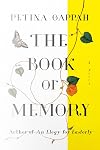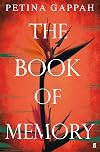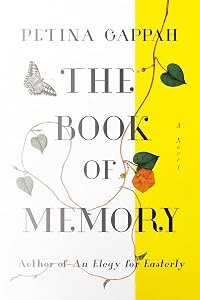
The Book of Memory
by Petina Gappah
On This Page
Description
Memory, the narrator of Petina Gappah's The Book of Memory, is an albino woman languishing in Chikurubi Maximum Security Prison in Harare, Zimbabwe, after being sentenced for murder. As part of her appeal, her lawyer insists that she write down what happened as she remembers it. The death penalty is a mandatory sentence for murder, and Memory is, both literally and metaphorically, writing for her life. As her story unfolds, Memory reveals that she has been tried and convicted for the murder show more of Lloyd Hendricks, her adopted father. But who was Lloyd Hendricks? Why does Memory feel no remorse for his death? And did everything happen exactly as she remembers? show lessTags
Recommendations







Member Reviews
This is a great read. Memory is in prison for killing the man she believes bought her from her parents as a child. I was relieved this wasn't the kind of abuse narrative that might be expected from that brief introduction. Instead, Memory's account is the story of her imprisonment in a corrupt jail system, as she writes her life story for the lawyers trying to overturn her death sentence. As Memory herself says, there is unexpected amounts of laughter to be found in prison, despite the removal of books. And I liked how she acknowledges the debt to other prison narratives.
"Scheherazade told stories to keep her head where it rightfully belonged. I am writing to keep myself alive. But I am also laying out the threads that have pulled my show more life together, to see just where this one connects with that one or crosses with the other, to see how they form the tapestry from which I will stand back to get a better view." show less
"Scheherazade told stories to keep her head where it rightfully belonged. I am writing to keep myself alive. But I am also laying out the threads that have pulled my show more life together, to see just where this one connects with that one or crosses with the other, to see how they form the tapestry from which I will stand back to get a better view." show less
A complicated one to rate. A slow, meandering read that was never the less rich in detail and characterisation and beautifully written. It is ambiguous and not a recommend for anyone who likes their novels with clear narrative and concise outcomes.
Plot in a Nutshell
Mnemosyne, known as Memory is an Albino woman incarcerated in a Zimbabwean high security prison for the murder of her ‘adopted father’, a white man named Lloyd. The novel takes the form of a series of journals she is writing to a western journalist interested in her story. In her journal she covers her early life with her family in the township outside of Harare, how she came to live with Lloyd, some of her life there and a good deal of prison life. All of which is set show more against the backdrop of the significant social changes in Zimbabwe at the end of the twentieth and beginning of the twenty-first century
Thoughts
This is not a pace filled, action led novel. Much of the writing is Memory sifting through her thoughts and memories from early childhood and her immediate prison experiences. In so doing she explores race, disability, memory and family. All of this is however done in a non-linear way so the story jumps from her time with Lloyd, to early childhood and prison and back round again and again. This felt very realistic to the experience of an intelligent, educated woman who had been without writing materials for over two years but did make the reading and following of the plot a little disjointed.
Whilst Gappah writes in English she includes a fair amount of the Shona language which although adding authenticity did also break up the story a little – particularly in places where she did not include translations. A final point on slowing the story down; there is a large cast of prisoners and prison words introduced; few add to the story but did confuse initially whilst trying to keep them all straight in my head, especially without a cast list!
If I found the Shona hard going at times I really enjoyed the local mythology and folktales that Memory relates when reflecting on her earlier life and her mother’s beliefs and how they are balanced and sit alongside the pursuit of more organised religion. I also love that Memory is a vociferous reader and found the chapter that has her exploring Lloyd’s library and using it to settle herself in her new life charming.
The subtle backdrop to the complicated Colonial history of Rhodesia and the early history of Zimbabwe was fascinating and makes me want to read more on this topic as there was an expectation of some pre knowledge in the writing.
Overall I enjoyed this one but would have liked to have seen slightly less on prison life and more of Memory’s experiences with Lloyd who seemed like an interesting character or her time outside of Zimbabwe and how that shaped her experiences further. show less
Plot in a Nutshell
Mnemosyne, known as Memory is an Albino woman incarcerated in a Zimbabwean high security prison for the murder of her ‘adopted father’, a white man named Lloyd. The novel takes the form of a series of journals she is writing to a western journalist interested in her story. In her journal she covers her early life with her family in the township outside of Harare, how she came to live with Lloyd, some of her life there and a good deal of prison life. All of which is set show more against the backdrop of the significant social changes in Zimbabwe at the end of the twentieth and beginning of the twenty-first century
Thoughts
This is not a pace filled, action led novel. Much of the writing is Memory sifting through her thoughts and memories from early childhood and her immediate prison experiences. In so doing she explores race, disability, memory and family. All of this is however done in a non-linear way so the story jumps from her time with Lloyd, to early childhood and prison and back round again and again. This felt very realistic to the experience of an intelligent, educated woman who had been without writing materials for over two years but did make the reading and following of the plot a little disjointed.
Whilst Gappah writes in English she includes a fair amount of the Shona language which although adding authenticity did also break up the story a little – particularly in places where she did not include translations. A final point on slowing the story down; there is a large cast of prisoners and prison words introduced; few add to the story but did confuse initially whilst trying to keep them all straight in my head, especially without a cast list!
If I found the Shona hard going at times I really enjoyed the local mythology and folktales that Memory relates when reflecting on her earlier life and her mother’s beliefs and how they are balanced and sit alongside the pursuit of more organised religion. I also love that Memory is a vociferous reader and found the chapter that has her exploring Lloyd’s library and using it to settle herself in her new life charming.
The subtle backdrop to the complicated Colonial history of Rhodesia and the early history of Zimbabwe was fascinating and makes me want to read more on this topic as there was an expectation of some pre knowledge in the writing.
Overall I enjoyed this one but would have liked to have seen slightly less on prison life and more of Memory’s experiences with Lloyd who seemed like an interesting character or her time outside of Zimbabwe and how that shaped her experiences further. show less
The Book of Memory is narrated by Memory herself. As the story opens, Memory is imprisoned in a maximum security prison in Harare, Zimbabwe. She has been charged with murder and awaits the possibility of the death penalty. An American journalist , as well as her lawyer , encourage Memory to write down her life story to better her chances of having her prison sentence reduced.
Memory is an albino woman of black parentage which creates difficulties for her from birth. Initially she lives with her family in an impoverished township with her very troubled mother and caring father. At the age of nine, Memory recalls being sold off by her parents to a well off white man, Lloyd Hendricks. This is also the man she is later accused of show more murdering.
The story is told in a non- linear fashion , as Memory recalls her life story from prison. The story is a very personal tale , and on a lesser level serves as a social and political commentary on life in Zimbabwe . There are plenty of fascinating glimpses into Zimbabwen culture and mythology. Life in prison also figures prominently.
At times I found the non- linear story as well as the numerous characters to be a bit challenging to follow. Overall I found this to be a fascinating story and a very worthwhile read. It is a dark read, very vivid in detail but always leavened with Memory's acerbic wit.
5 stars. show less
Memory is an albino woman of black parentage which creates difficulties for her from birth. Initially she lives with her family in an impoverished township with her very troubled mother and caring father. At the age of nine, Memory recalls being sold off by her parents to a well off white man, Lloyd Hendricks. This is also the man she is later accused of show more murdering.
The story is told in a non- linear fashion , as Memory recalls her life story from prison. The story is a very personal tale , and on a lesser level serves as a social and political commentary on life in Zimbabwe . There are plenty of fascinating glimpses into Zimbabwen culture and mythology. Life in prison also figures prominently.
At times I found the non- linear story as well as the numerous characters to be a bit challenging to follow. Overall I found this to be a fascinating story and a very worthwhile read. It is a dark read, very vivid in detail but always leavened with Memory's acerbic wit.
5 stars. show less
Memory, an albino Zimbabwean woman, is the only female prisoner on death row in the notorious Chikurubi prison in Harare. The law of Zimbabwe restricts her to a single appeal for a change of her sentence, to save her own life. She is accused of murdering a white man, to whom she was sold as a child.
"As a murungudunhu, I am a black woman who is imbued not with the whiteness of murungu, of privilege, but of dunhu, of ridicule and fakery, a ghastly whiteness."
Gappah has been called (to her dislike) “the voice of Zimbabwe.” Rather than being pigeonholed as an African author, or given the impossible task of being a single voice for a diverse population with diverse and opposing beliefs, we should regard Gappah as an author from Africa show more who writes for Zimbabwe. Memory’s white skin, and her sale to Lloyd, results in her receiving a white upbringing of privilege, while her childhood on Mharapara street gives her memories of growing up in modern Zimbabwean black culture, and in poverty. She is too white for the township and too African for the rich white farm community. Memory is an outsider who watches and reflects on both sides of the growing Zimbabwean conflict.
"The whole thing had been reduced to the simple matter of blackness versus whiteness. White people stole the land. Black people took farms and ruined them. Black people took control and ran things down. White people stole."
The Book of Memory is a bilingual book, as Shona phrases appear without translation. However, I never felt that I couldn’t understand what was going on; why should English be the only written language for a society that is anything but homogenous? At the Edinburgh international book festival she quoted Chinua Achebe, saying, “Let no one be fooled by the fact that we may write in English, for we intend to do unheard-of things with it.” In addition, the inclusion of Shona superstitions and traditions made the novel sing with pride for her country. It also sang of sorrow, as the farm invasions and murders occurred, and as Memory encounters racism, ostracism and loss. However, there is a note of humor that had me giggling too, particularly in the hilarious malapropisms of Patience.
“Irregardless of the absence of water,” she says, “you should make sure the hoarse pipes are connected.”
“You must make sure that your plates and bowels are clean.”
As the book shifts back and forth between Memory’s childhood, her early years with Lloyd, her current circumstances in one of the worst prisons in the world, and the days leading up to Lloyd’s murder, a vivid and vibrant picture of Zimbabwe is skillfully painted. The Shona traditions and superstitions give a depth to the stories, and give voice to an advanced, culturally complex society that has been silenced and discarded by the western-centric education system in place since the beginning of colonialism. The effect of this is the colonization of the mind, as prison guards dream of the riches of white privilege and base their ideas of success on it, while they continue to fear witchcraft and discriminate according to their old superstitions.
"In this independent, hundred-per-cent-empowered and fully and totally indigenous blacker-than-black country, a superior education is one that the whites would value, and as the whites do not value local languages, the best-educated among us have sacrificed our languages at the altar of what the whites deem supreme. So it was in colonial times, and so it remains, more than thirty years later."
The wide-reaching message of the book is that of political and social commentary. However, the story of one woman awaiting her execution for a complicated crime is a brilliant story as well. As she tells the story of her circumstances, the reasons for her parents’ sale of her to a white stranger, her relationship with him, and the many different circumstances that lead up to his murder, the reader is gripped and forced to question their assumptions at every turn. The final truth was entirely unexpected, and utterly heart-breaking.
"She is the voice of the Chimera that haunts my dreams. She is the stranger that glances back from my mirror when I least expect to see her. She is my beating heart, my palpitating fear."
The Book of Memory is a multilayered book, both an emotionally charged story of passion and crime, and a critical portrayal of Zimbabwean corruption and politics. Ultimately, however, it is a mature and honest depiction of a diverse society that is working through its violent and traumatic history, and how that history affects the present. It is a story of Zimbabweans of all races and alignments, and how prejudice, ignorance and corruption continue to cause immense tragedy. Gappah is not the voice of Zimbabwe, but she adds her voice to the chorus of Zimbabwean writers who are doing incredible things with fiction, and in The Book of Memory she hits all the right notes. show less
"As a murungudunhu, I am a black woman who is imbued not with the whiteness of murungu, of privilege, but of dunhu, of ridicule and fakery, a ghastly whiteness."
Gappah has been called (to her dislike) “the voice of Zimbabwe.” Rather than being pigeonholed as an African author, or given the impossible task of being a single voice for a diverse population with diverse and opposing beliefs, we should regard Gappah as an author from Africa show more who writes for Zimbabwe. Memory’s white skin, and her sale to Lloyd, results in her receiving a white upbringing of privilege, while her childhood on Mharapara street gives her memories of growing up in modern Zimbabwean black culture, and in poverty. She is too white for the township and too African for the rich white farm community. Memory is an outsider who watches and reflects on both sides of the growing Zimbabwean conflict.
"The whole thing had been reduced to the simple matter of blackness versus whiteness. White people stole the land. Black people took farms and ruined them. Black people took control and ran things down. White people stole."
The Book of Memory is a bilingual book, as Shona phrases appear without translation. However, I never felt that I couldn’t understand what was going on; why should English be the only written language for a society that is anything but homogenous? At the Edinburgh international book festival she quoted Chinua Achebe, saying, “Let no one be fooled by the fact that we may write in English, for we intend to do unheard-of things with it.” In addition, the inclusion of Shona superstitions and traditions made the novel sing with pride for her country. It also sang of sorrow, as the farm invasions and murders occurred, and as Memory encounters racism, ostracism and loss. However, there is a note of humor that had me giggling too, particularly in the hilarious malapropisms of Patience.
“Irregardless of the absence of water,” she says, “you should make sure the hoarse pipes are connected.”
“You must make sure that your plates and bowels are clean.”
As the book shifts back and forth between Memory’s childhood, her early years with Lloyd, her current circumstances in one of the worst prisons in the world, and the days leading up to Lloyd’s murder, a vivid and vibrant picture of Zimbabwe is skillfully painted. The Shona traditions and superstitions give a depth to the stories, and give voice to an advanced, culturally complex society that has been silenced and discarded by the western-centric education system in place since the beginning of colonialism. The effect of this is the colonization of the mind, as prison guards dream of the riches of white privilege and base their ideas of success on it, while they continue to fear witchcraft and discriminate according to their old superstitions.
"In this independent, hundred-per-cent-empowered and fully and totally indigenous blacker-than-black country, a superior education is one that the whites would value, and as the whites do not value local languages, the best-educated among us have sacrificed our languages at the altar of what the whites deem supreme. So it was in colonial times, and so it remains, more than thirty years later."
The wide-reaching message of the book is that of political and social commentary. However, the story of one woman awaiting her execution for a complicated crime is a brilliant story as well. As she tells the story of her circumstances, the reasons for her parents’ sale of her to a white stranger, her relationship with him, and the many different circumstances that lead up to his murder, the reader is gripped and forced to question their assumptions at every turn. The final truth was entirely unexpected, and utterly heart-breaking.
"She is the voice of the Chimera that haunts my dreams. She is the stranger that glances back from my mirror when I least expect to see her. She is my beating heart, my palpitating fear."
The Book of Memory is a multilayered book, both an emotionally charged story of passion and crime, and a critical portrayal of Zimbabwean corruption and politics. Ultimately, however, it is a mature and honest depiction of a diverse society that is working through its violent and traumatic history, and how that history affects the present. It is a story of Zimbabweans of all races and alignments, and how prejudice, ignorance and corruption continue to cause immense tragedy. Gappah is not the voice of Zimbabwe, but she adds her voice to the chorus of Zimbabwean writers who are doing incredible things with fiction, and in The Book of Memory she hits all the right notes. show less
"History’s always distorted to suit a political purpose, but fiction can try to redress the balance. And those are the stories I’m interested in telling—the stories of everyday normal people, who even in this injustice still managed to find their humanity." *
As I was reading this novel, I strongly felt Gappah's sensitivity and empathy. There is a very humane heart at the centre of this story. And while there were a couple of wobbly moments for me, overall I found this a vivid and evocative book.
Memory is a young Zimbabwean woman convicted of murdering the white professor who 'took her in' when she was 9yo. Memory doesn’t feel at home either in her new home with Lloyd, or in the home she longs for, back with her parents and their show more Shona culture. Her sense of not belonging is further complicated because Memory is a black albino - a condition that has caused her to be shunned, feared and distrusted. In prison, and in hope of having her guilty verdict overthrown or at least to have the execution order reduced to a lesser sentence, Memory is writing her life story - both as an aid to her lawyer, and at the request of an American journalist interested in her case.
Gappah covers a lot of territory in her book: politics, race, religion, sexuality, justice, family, memory, truth ... there is a lot to dig into with The Book of Memory. This can be an emotionally tough read at times, but Gappah also has moments of humour and levity - even having Memory note that discovering laughter in prison surprised her the most. I liked very much how Gappah questions memory, and how things we think we know/remember shape our lives. The book doesn't offer a traditional linear flow, but rather often mimics how memory works. While the character of Memory can be considered unreliable, her narration of her story through writing in notebooks makes things feel very personal.
Where I felt things wobbled a bit for me had to do with the character of Lloyd - so much was left unsaid and unexplored, so this made the one-sided nature of Memory's retelling even more prominent. Lloyd is a sympathetic fellow, and seemed quite interesting. It would have been nice to have had more from/about him, though I realize that could then defeat Memory's own story. I also felt that Memory's father came across as a confusing/inconsistent man, though he was portrayed as the stable, reliable and loving parent.
Gappah's style of storytelling is lovely - her writing is beautiful to read and she creates very strong imagery. This novel was longlisted for the Baileys Women's Prize for Fiction, and I think it makes for a very interesting and strong contender.
* = excerpted from interview with Gappah at the Lit Hub: http://lithub.com/petina-gappah-on-zimbabwe-language-and-afropolitans/ show less
As I was reading this novel, I strongly felt Gappah's sensitivity and empathy. There is a very humane heart at the centre of this story. And while there were a couple of wobbly moments for me, overall I found this a vivid and evocative book.
Memory is a young Zimbabwean woman convicted of murdering the white professor who 'took her in' when she was 9yo. Memory doesn’t feel at home either in her new home with Lloyd, or in the home she longs for, back with her parents and their show more Shona culture. Her sense of not belonging is further complicated because Memory is a black albino - a condition that has caused her to be shunned, feared and distrusted. In prison, and in hope of having her guilty verdict overthrown or at least to have the execution order reduced to a lesser sentence, Memory is writing her life story - both as an aid to her lawyer, and at the request of an American journalist interested in her case.
Gappah covers a lot of territory in her book: politics, race, religion, sexuality, justice, family, memory, truth ... there is a lot to dig into with The Book of Memory. This can be an emotionally tough read at times, but Gappah also has moments of humour and levity - even having Memory note that discovering laughter in prison surprised her the most. I liked very much how Gappah questions memory, and how things we think we know/remember shape our lives. The book doesn't offer a traditional linear flow, but rather often mimics how memory works. While the character of Memory can be considered unreliable, her narration of her story through writing in notebooks makes things feel very personal.
Where I felt things wobbled a bit for me had to do with the character of Lloyd - so much was left unsaid and unexplored, so this made the one-sided nature of Memory's retelling even more prominent. Lloyd is a sympathetic fellow, and seemed quite interesting. It would have been nice to have had more from/about him, though I realize that could then defeat Memory's own story. I also felt that Memory's father came across as a confusing/inconsistent man, though he was portrayed as the stable, reliable and loving parent.
Gappah's style of storytelling is lovely - her writing is beautiful to read and she creates very strong imagery. This novel was longlisted for the Baileys Women's Prize for Fiction, and I think it makes for a very interesting and strong contender.
* = excerpted from interview with Gappah at the Lit Hub: http://lithub.com/petina-gappah-on-zimbabwe-language-and-afropolitans/ show less
In The Book of Memory, the narrative takes the form of the protagonist Memory's recounting her story to support her appeal from a death sentence in prison in Zimbabwe. A black albino, Memory has been convicted for the murder of the white man she believes bought her from her parents as a child.
It's a novel that explores a number of interesting themes amidst the backdrop of the relatively newly formed Zimbabwe and the political and social upheaval of the times: the societal difficulties of being albino as a person of colour in Africa, homosexuality in a country where it is outlawed, the education disparities between the wealthy and the poor.
I enjoyed the writing style in this book. It's a book that didn't necessarily feel particularly new show more in terms of its plot ideas (so much so that for a while I was convinced I'd read it before), but it swept me along and Gappah kept the intrigue right to the end.
4 stars - a very worthwhile random grab from the library this week. show less
It's a novel that explores a number of interesting themes amidst the backdrop of the relatively newly formed Zimbabwe and the political and social upheaval of the times: the societal difficulties of being albino as a person of colour in Africa, homosexuality in a country where it is outlawed, the education disparities between the wealthy and the poor.
I enjoyed the writing style in this book. It's a book that didn't necessarily feel particularly new show more in terms of its plot ideas (so much so that for a while I was convinced I'd read it before), but it swept me along and Gappah kept the intrigue right to the end.
4 stars - a very worthwhile random grab from the library this week. show less
Memory is in a Zimbabwe prison. She has been found guilty of murdering her white adopted father,Lloyd. Her lawyer has asked her to write down her memories and the reader gradually learns the story of her life. Memory relates her 'sale' to Lloyd, a rich white man and how her life changes. She receives treatment for her albinism, goes to a convent school and then to university, travels to England and Australia. Memory never sees her parents or sister again. Gappah really brings Zimbabwe and its people to life.
I listened to an audiobook read by Chipo Chung who did a great job.
I listened to an audiobook read by Chipo Chung who did a great job.
Members
- Recently Added By
Published Reviews
he Book of Memory" by Zimbabwean author Petina Gappah is a fiercely vivid novel that in some places — particularly, unfortunately, its opening pages — takes itself too seriously. Some paragraphs there are loaded with foreshadowing and sentimentality — but this is just an awkward warm-up for a book of song and color....In the rush, it seems Gappah could have spent more time letting the show more reader learn about Memory as an adult. She has a couple of significant relationships, but one is left severely underdeveloped, possibly because it has no direct connection to Lloyd, whose death remains at the book's center...Gappah smoothly weaves these real-life issues into her first novel without shortchanging her main character. show less
added by vancouverdeb
There are sections that could have been more fully developed, such as Memory falling in love for the first time, and occasional inconsistencies in voice are jarring, but these glitches aside, this is a moving novel about memory that unfolds into one about forgiveness, and a passionate paean to the powers of language.
added by vancouverdeb
An evocative and powerful rendering of a country mired in corruption and caught between tradition and modernity, the novel explores themes of loss, memory and forgiveness with a most unusual narrator who believes, above all, in the power of language to restore....Gappah brings colour to the bleak world with her vivid characterisation of various prisoners and scenes that see the inmates put on show more mock courtroom dramas. For all their viciousness, there is humour too...As it seeks to tie all the disparate strains together, the book’s impact lessens significantly in the final quarter....Gappah is a gifted, sensual writer who uses everything from county and western music to “the high whine of a million mosquitoes”, to the taste of a stolen mango to draw the reader into her world. show less
added by vancouverdeb
Lists

2016 Baileys Women's Prize for Fiction
18 works; 10 members

Books Read in 2016
4,666 works; 199 members

Books Read in 2018
4,360 works; 110 members

Troublesome bodies
110 works; 7 members

Fiction: Crime, Detective, Mystery
350 works; 3 members

Books recommended by Calgary Public Library staff
1,588 works; 4 members

BBC World Book Club
265 works; 5 members

World Book Club (BBC World Service)
212 works; 1 member
Author Information

6+ Works 1,022 Members
Awards and Honors
Series
Belongs to Publisher Series
Keltainen kirjasto (478)
Common Knowledge
- Canonical title
- The Book of Memory
- Original title
- The book of memory
- Original publication date
- 2015
- People/Characters
- Memory; Lloyd Hendricks
- Important places
- Zimbabwe; Harare, Zimbabwe
- Epigraph
- The cradle rocks above an abyss, and common sense tells us that our existence is but a brief crack of light between to eternities of darkness. Vladimir Nabokov, Speak, Memory
- Dedication
- This book is dedicated , with all my love, to Lee Brackstone, who brought me home
- First words
- The story that you have asked me to tell you does not begin with the pitiful ugliness of Lloyd's death.
- Last words
- (Click to show. Warning: May contain spoilers.)If I ever get out, I will throw birds of paradise from the top of the world.
- Original language*
- englanti
*Some information comes from Common Knowledge in other languages. Click "Edit" for more information.
Classifications
Statistics
- Members
- 347
- Popularity
- 91,053
- Reviews
- 19
- Rating
- (3.80)
- Languages
- 7 — Dutch, English, Finnish, French, German, Italian, Swedish
- Media
- Paper, Audiobook, Ebook
- ISBNs
- 22
- ASINs
- 6