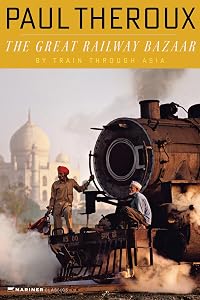
The Great Railway Bazaar
by Paul Theroux
On This Page
Description
The acclaimed author recounts his epic journey across Europe and Asia in this international bestselling classic of travel literature: "Compulsive reading" (Graham Greene).In 1973, Paul Theroux embarked on a four-month journey by train from the United Kingdom through Europe, the Middle East, and Southeast Asia. In The Great Railway Bazaar, he records in vivid detail and penetrating insight the many fascinating incidents, adventures, and encounters of his grand, intercontinental tour.
show more Asia's fabled trains—the Orient Express, the Khyber Pass Local, the Frontier Mail, the Golden Arrow to Kuala Lumpur, the Mandalay Express, the Trans-Siberian Express—are the stars of a journey that takes Theroux on a loop eastbound from London's Victoria Station to Tokyo Central, then back from Japan on the Trans-Siberian. Brimming with Theroux's signature humor and wry observations, this engrossing chronicle is essential reading for both the ardent adventurer and the armchair traveler. show less
Tags
Recommendations








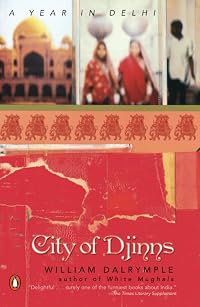
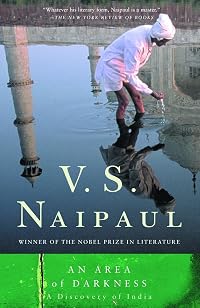
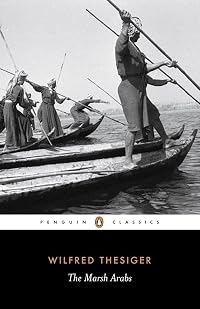
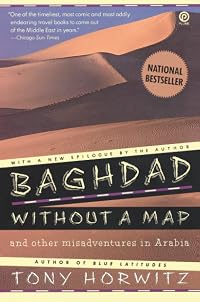




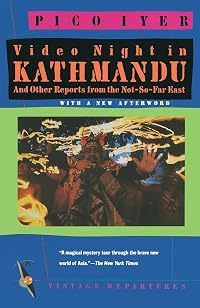


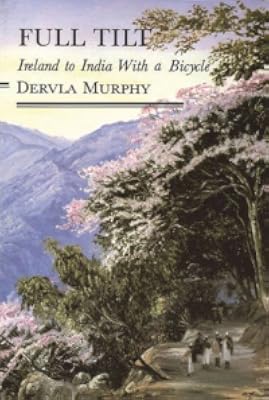
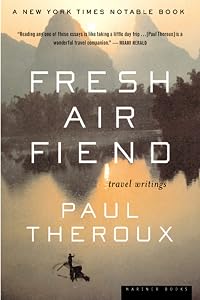
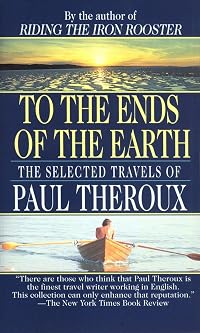


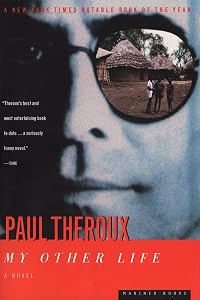
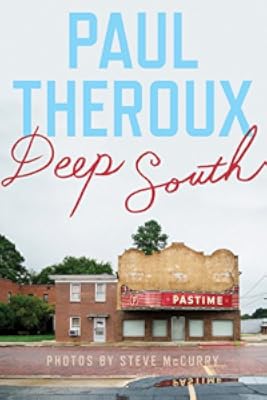
Member Recommendations


Cecrow 'Ghost Train' is the sequel
Member Reviews
I grew up with a wanderlust. A young boy. A voracious reader even then who hailed from a small mining village in the West Riding of Yorkshire. Trains were a joy and an adventure from my youngest days clipping across country to the seedy joys of an often overcast Blackpool or Lytham in July, with a bag of sweets in one hand and a Famous Five or Doctor Who book in the other. My Grandma and brother either side. I have Asia in my soul after thirty years imbibing its tastes and smells and sights and sounds.
Theroux's book - by train from London across Asia - is an obvious delight for me. His observations, encounters and opinions funny, descriptively vivid and oftentimes profound.
I read this many moons ago and I don't remember enjoying it show more quite nearly as much as this time.
Also one of my favourite ever book covers. show less
Theroux's book - by train from London across Asia - is an obvious delight for me. His observations, encounters and opinions funny, descriptively vivid and oftentimes profound.
I read this many moons ago and I don't remember enjoying it show more quite nearly as much as this time.
Also one of my favourite ever book covers. show less
“Ever since childhood, when I lived within earshot of the Boston and Maine, I have seldom heard a train go by and not wished I was on it.”
These are the first words of this marvelous travel book. In 1975, just after the fall of Saigon, Theroux decides to board a train in London and take it to Japan, by a southerly route and come back west, via the Trans-Siberian. He not only rides on some fascinating trains, like the Orient Express, the Khyber Pass Local and the Mandalay Express, he stops over in many incredible, and sometimes horrifying locales. We pass through Turkey, India, Afghanistan, Vietnam, Tokyo and the former Soviet Union, to name just a few.
This is not a light glossy travelogue, Theroux takes us to some pretty dark places. show more There are under-age brothels, drug-dealers, pimps, shady soldiers and sex clubs. His wry observations are spot-on and he never shies away from discussing all the discomforts that come along with this type of travel.
His writing style is lean and fast and even after 35 years, the narrative still remains modern and fresh. I have not read this author in many years and that’s a shame. show less
These are the first words of this marvelous travel book. In 1975, just after the fall of Saigon, Theroux decides to board a train in London and take it to Japan, by a southerly route and come back west, via the Trans-Siberian. He not only rides on some fascinating trains, like the Orient Express, the Khyber Pass Local and the Mandalay Express, he stops over in many incredible, and sometimes horrifying locales. We pass through Turkey, India, Afghanistan, Vietnam, Tokyo and the former Soviet Union, to name just a few.
This is not a light glossy travelogue, Theroux takes us to some pretty dark places. show more There are under-age brothels, drug-dealers, pimps, shady soldiers and sex clubs. His wry observations are spot-on and he never shies away from discussing all the discomforts that come along with this type of travel.
His writing style is lean and fast and even after 35 years, the narrative still remains modern and fresh. I have not read this author in many years and that’s a shame. show less
Fascinating. Grisly. Great details. The best parts were the people he met. Yes, his descriptions were often disparaging, but with a dark humor I found entertaining.
The year he traveled was a major part of the story -- 1973 -- especially when he was traveling in Vietnam! During the war!
I've been to some of the places he visited, like Istanbul and the Soviet Union, and also traveled around Asia for 3 months (China, Hong Kong, Thailand, Malaysia, and Singapore). The original plan was 3.5 months which I cut short due to burnout, and missed Indonesia. So, like Paul, I know how tiring and inconvenient travel can be, living out of a backpack and constantly washing my 3 shirts by hand. (So worth it, of course -- such rich memories and no show more regrets!) Still, I could really feel Paul's exhaustion at the end, in Siberia, his yearning to be home.
NOTE: Rated R, and sometimes X (from stories he heard, plus a violent stage show he attended in Japan and regretted it).
This was my second Paul Theroux book (the first was "Deep South") and I expect to read more of his books. I did start "On the Plain of Snakes" but put it aside due to the graphic descriptions of Mexican drug cartel violence. (Will read again when I'm feeling stronger.) I was interested in the "Snake" book because I lived in Mexico for several years and it always felt like my home away from home. But that was many years ago when the country was safer. Now I'm an aging armchair traveler and eager to read others' grand adventures. show less
The year he traveled was a major part of the story -- 1973 -- especially when he was traveling in Vietnam! During the war!
I've been to some of the places he visited, like Istanbul and the Soviet Union, and also traveled around Asia for 3 months (China, Hong Kong, Thailand, Malaysia, and Singapore). The original plan was 3.5 months which I cut short due to burnout, and missed Indonesia. So, like Paul, I know how tiring and inconvenient travel can be, living out of a backpack and constantly washing my 3 shirts by hand. (So worth it, of course -- such rich memories and no show more regrets!) Still, I could really feel Paul's exhaustion at the end, in Siberia, his yearning to be home.
NOTE: Rated R, and sometimes X (from stories he heard, plus a violent stage show he attended in Japan and regretted it).
This was my second Paul Theroux book (the first was "Deep South") and I expect to read more of his books. I did start "On the Plain of Snakes" but put it aside due to the graphic descriptions of Mexican drug cartel violence. (Will read again when I'm feeling stronger.) I was interested in the "Snake" book because I lived in Mexico for several years and it always felt like my home away from home. But that was many years ago when the country was safer. Now I'm an aging armchair traveler and eager to read others' grand adventures. show less
This book covers a journey which takes the author by train from London to Japan, returning via the Trans-Siberian, all on the railway, bar a few necessary flights, buses and ships. As with other Theroux travelogues, it is his fellow passengers and the trains that come under the most scrutiny. On the one hand, these passengers offer an insight into their own culture, but sometimes personality clashes or a lack of a common language causes frustration on all sides.
Of his travelling companions, I particularly enjoyed reading about Mr. Bernard in Burma, his views and recollections of the Royal Artillery he worked for. In a kind of travel snobbery, much of Theroux's disdain is reserved for other foreigners, especially his compatriots. I did, show more however, smirk at his interchange with an American Buddhist monk looking for water, but instead finding the author intent on reminding him of his US roots.
What is strange, and rather sad, is that 35 years have passed since his journey and the world is a very different place. Vietnam is no longer at war, indeed it has been open to tourists for many years now. Other countries are all but closed off to travellers now, like Iran and Burma. The legacy of war and Empire is also visible, such as the shot-up carriages in Vietnam, the Victorian houses in Simla, the prevalence of English and British ways in the Subcontinent. It can also be seen in the people, the Eurasians he meets, such as Tony who works for the railway in Burma, or the unwanted children of G.I.s in Vietnam which women try to thrust upon the author, or the British Indian in Pakistan, caught between two cultures, feeling out of place in the U.K., where he was born and brought up, yet equally not quite a local in his adopted country.
The topic of sex is prevalent, as to be expected, the lack f it, the selling of it, tales of exotic sex acts, as well as different attitudes towards it. The candid conversations with the Japanese professor near the end were, for want of a better word, enlightening.
Like Theroux, I love travelling by train, indeed I read the book and am writing this review on a train. This means his travel books appeal to me, from the descriptions of the run-down Orient Express, the faded grandeur of the '20s train to Simla right through to Japan's bullet trains are like manna from heaven. I am reminded of my own trips, of my own experiences of dodgy carriage mates, making the book that much more identifiable with, and thus, more entertaining. I have mixed feelings on reading Theroux, whilst he can be terribly entertaining, he is rather a miserable git.
If you enjoy travelling by train, meeting random people, conversations on everything and nothing, this is the book for you. If you are looking for a travelogue with a view to visiting these places, this isn't for you. show less
Of his travelling companions, I particularly enjoyed reading about Mr. Bernard in Burma, his views and recollections of the Royal Artillery he worked for. In a kind of travel snobbery, much of Theroux's disdain is reserved for other foreigners, especially his compatriots. I did, show more however, smirk at his interchange with an American Buddhist monk looking for water, but instead finding the author intent on reminding him of his US roots.
What is strange, and rather sad, is that 35 years have passed since his journey and the world is a very different place. Vietnam is no longer at war, indeed it has been open to tourists for many years now. Other countries are all but closed off to travellers now, like Iran and Burma. The legacy of war and Empire is also visible, such as the shot-up carriages in Vietnam, the Victorian houses in Simla, the prevalence of English and British ways in the Subcontinent. It can also be seen in the people, the Eurasians he meets, such as Tony who works for the railway in Burma, or the unwanted children of G.I.s in Vietnam which women try to thrust upon the author, or the British Indian in Pakistan, caught between two cultures, feeling out of place in the U.K., where he was born and brought up, yet equally not quite a local in his adopted country.
The topic of sex is prevalent, as to be expected, the lack f it, the selling of it, tales of exotic sex acts, as well as different attitudes towards it. The candid conversations with the Japanese professor near the end were, for want of a better word, enlightening.
Like Theroux, I love travelling by train, indeed I read the book and am writing this review on a train. This means his travel books appeal to me, from the descriptions of the run-down Orient Express, the faded grandeur of the '20s train to Simla right through to Japan's bullet trains are like manna from heaven. I am reminded of my own trips, of my own experiences of dodgy carriage mates, making the book that much more identifiable with, and thus, more entertaining. I have mixed feelings on reading Theroux, whilst he can be terribly entertaining, he is rather a miserable git.
If you enjoy travelling by train, meeting random people, conversations on everything and nothing, this is the book for you. If you are looking for a travelogue with a view to visiting these places, this isn't for you. show less
I’m told this is a benchmark in travel literature, a must read, but I couldn’t honestly rate this even three stars. It’s the kind of book that instead of causing you to yearn to see new places makes you want to stay at home. The book would seem to have all the ingredients of a classic; in print after 38 years, this is the account of Theroux’s travels by rail across Asia in the mid seventies, beginning with the Orient Express. Each chapter is named after a train taken: The Orient Express Direct, The Mandalay Express, Golden Arrow to Kuala, Trans-Siberian Express, etc. Theroux can write beautifully, lyrically. Look, for instance, at the opening of the book:
Ever since childhood, when I lived within earshot of Boston and Maine, I show more have seldom heard a train go by and not wished I was on it. Those whistles sing bewitchment: railways are irresistible bazaars, snaking along perfectly level no matter what the landscape, improving your mood with speed, and never upsetting your drink. The train can reassure you in awful places--a far cry from the anxious sweats of doom airplanes inspire, or the nauseating gas-sickness of the long-distance bus, or the paralysis that afflicts the car passenger. If a train is large and comfortable you don’t even need a destination; a corner seat is enough, and you can be one of those travelers who stay in motion, straddling the tracks, and never arrive or feel they out to--like that lucky man who lives on Italian Railways because he is retired and has a free pass. Better to go first class than to arrive, or, as the English novelist Michael Frayn once rephrased McLuhan: “The journey is the goal.”
Ah, elegant prose, an erudite man who kept a journal and so can write with the immediacy of a novel, a promise of adventure through railways of legend, and an eye and ear for incisively describing character. What’s not to love? Yet I soon felt an urge to skim. It was often depressing, this narrative filled with accounts of corruption, begging, prostitution, drug addiction and the just plain crass. (I really could have done without the long, involved graphic description of people defecating along the tracks.) Maybe it’s just that I’m reading Theroux at the tail end of a list of recommended travel books and I can’t help but compare him to other writers I encountered. Bill Bryson was often laugh-out-loud funny; John McPhee had a genius for eliciting from others stories that seemed to sum up a place; Rory Stewart exuded openness and genuine interest in the people he encountered. And though I had my issues with books by Pico Iyer and Elizabeth Gilbert, both in different ways showed compassion for the people they encountered and saw them as... well, human.
Theroux, on the other hand, struck me at times, if not racist or xenophobic, then maybe just plain misanthropic: “Afghans are lazy, idle, and violent.” "I always found myself in the company of Australians, who were like a reminder that I'd touched bottom." Russians he often called monkeys. His snobby horror at the very idea of riding in third class was unbelievable, and his behavior in Japan was so very rude I wished I could apologize on behalf of all Americans. (Really--don’t ask.) I rarely found in his account of drinking and whoring and peering at the landscape rushing past in trains any fresh insight or moving story. The one exception actually was his two chapters about visiting Vietnam in 1973 after the withdrawal of the Americans but before the South fell to the communists. Those chapters had a poignancy, vivid, memorable detail and Vietnam seemingly evoked a rare empathy in him missing in the other chapters. By itself those chapters redeemed the book enough to tempt me into giving it a third star. But in the end, at least for me, when it comes to a good travel book I prefer a less obnoxious companion, and I doubt I’ll read another book by this author. show less
Ever since childhood, when I lived within earshot of Boston and Maine, I show more have seldom heard a train go by and not wished I was on it. Those whistles sing bewitchment: railways are irresistible bazaars, snaking along perfectly level no matter what the landscape, improving your mood with speed, and never upsetting your drink. The train can reassure you in awful places--a far cry from the anxious sweats of doom airplanes inspire, or the nauseating gas-sickness of the long-distance bus, or the paralysis that afflicts the car passenger. If a train is large and comfortable you don’t even need a destination; a corner seat is enough, and you can be one of those travelers who stay in motion, straddling the tracks, and never arrive or feel they out to--like that lucky man who lives on Italian Railways because he is retired and has a free pass. Better to go first class than to arrive, or, as the English novelist Michael Frayn once rephrased McLuhan: “The journey is the goal.”
Ah, elegant prose, an erudite man who kept a journal and so can write with the immediacy of a novel, a promise of adventure through railways of legend, and an eye and ear for incisively describing character. What’s not to love? Yet I soon felt an urge to skim. It was often depressing, this narrative filled with accounts of corruption, begging, prostitution, drug addiction and the just plain crass. (I really could have done without the long, involved graphic description of people defecating along the tracks.) Maybe it’s just that I’m reading Theroux at the tail end of a list of recommended travel books and I can’t help but compare him to other writers I encountered. Bill Bryson was often laugh-out-loud funny; John McPhee had a genius for eliciting from others stories that seemed to sum up a place; Rory Stewart exuded openness and genuine interest in the people he encountered. And though I had my issues with books by Pico Iyer and Elizabeth Gilbert, both in different ways showed compassion for the people they encountered and saw them as... well, human.
Theroux, on the other hand, struck me at times, if not racist or xenophobic, then maybe just plain misanthropic: “Afghans are lazy, idle, and violent.” "I always found myself in the company of Australians, who were like a reminder that I'd touched bottom." Russians he often called monkeys. His snobby horror at the very idea of riding in third class was unbelievable, and his behavior in Japan was so very rude I wished I could apologize on behalf of all Americans. (Really--don’t ask.) I rarely found in his account of drinking and whoring and peering at the landscape rushing past in trains any fresh insight or moving story. The one exception actually was his two chapters about visiting Vietnam in 1973 after the withdrawal of the Americans but before the South fell to the communists. Those chapters had a poignancy, vivid, memorable detail and Vietnam seemingly evoked a rare empathy in him missing in the other chapters. By itself those chapters redeemed the book enough to tempt me into giving it a third star. But in the end, at least for me, when it comes to a good travel book I prefer a less obnoxious companion, and I doubt I’ll read another book by this author. show less
A travelogue composed of witty sketches of strangers on board trains. The author travels from London to Japan and back. Theroux loves the state of being a traveler, at the same time, he seems dubious of people in general, so most of these vignettes have a humorously misanthropic tone.
I loved this book. The only thing to detract from it is how exhaustive it is. There isn't a dry stretch, and it's never boring, but there's not much of a character arc to follow, either.
I loved this book. The only thing to detract from it is how exhaustive it is. There isn't a dry stretch, and it's never boring, but there's not much of a character arc to follow, either.
Yes. Paul Theroux is a curmudgeon at best and a sexist, racist asshole at worst. Still, this book is compelling in its embrace of the nature of travel. That is, Theroux recognizes the wonderful coincidences of travel for the miracles they are while acknowledging the horror of the small burdens that travel creates. He puts on an air of condescension but in his conversations, he belies both a knowledge and interest in the cultures and people he comes into contact with. I see now why this is considered a classic.
Members
- Recently Added By
Lists

Best of Travel Narratives (Trains)
22 works; 5 members

501 Must-Read Books
529 works; 72 members

Recommend the 20 best books you've read in the last five years
2,168 works; 602 members

Best Travel Writing - Non-Fiction
110 works; 6 members

Non-Fiction Worth Reading
1,016 works; 263 members

Asia
178 works; 7 members

Swinging Seventies
255 works; 18 members

Folio Society
831 works; 51 members

Books Read in 2019
4,052 works; 110 members

The Art of Manliness' 100+ Books Every Man Should Read
108 works; 2 members

Mustich's 1000 Books to Read Before You Die: A Life Changing List
1,001 works; 20 members

Sense of place
156 works; 13 members
Author Information

116+ Works 32,356 Members
Paul Edward Theroux was born on April 10, 1941 in Medford, Massachusetts and is an acclaimed travel writer. After attending the University of Massachusetts Amherst he joined the Peace Corps and taught in Malawi from 1963 to 1965. He also taught in Uganda at Makerere University and in Singapore at the University of Singapore. Although Theroux has show more also written travel books in general and about various modes of transport, his name is synonymous with the literature of train travel. Theroux's 1975 best-seller, The Great Railway Bazaar, takes the reader through Asia, while his second book about train travel, The Old Patagonian Express (1979), describes his trip from Boston to the tip of South America. His third contribution to the railway travel genre, Riding the Iron Rooster: By Train Through China, won the Thomas Cook Prize for best literary travel book in 1989. His literary output also includes novels, books for children, short stories, articles, and poetry. His novels include Picture Palace (1978), which won the Whitbread Award and The Mosquito Coast (1981), which won the James Tait Black Memorial Prize. Theroux is a fellow of both the British Royal Society of Literature and the Royal Geographic Society. His title Lower River made The New York Times Best Seller List for 2012. Currently his 2015 book, Deep South , is a bestseller. (Bowker Author Biography) Paul Theroux is the distinguished author of numerous award-winning books, including "The Mosquito Coast," "Kowloon Tong," & "Half Moon Street." (Publisher Provided) show less
Some Editions
Awards and Honors
Distinctions
Series
Belongs to Publisher Series
Work Relationships
Is contained in
Contains
Has as a student's study guide
Common Knowledge
- Canonical title
- The Great Railway Bazaar
- Original title
- The Great Railway Bazaar
- Original publication date
- 1975
- People/Characters
- Paul Theroux
- Important places
- Asia; India; Russia; China; Turkey; Iran (show all 11); Afghanistan; Europe; Sri Lanka; Vietnam; Japan
- Dedication
- "To the legion of the lost ones, to the cohortof the damned,To my brethren in their sorrows overseas . . ."
And to my brothers and sisters, namely Eugene, Alexander, Ann-Marie, Mary, Joseph, and Peter, with love - First words
- Ever since childhood, when I lived within earshot of the Boston and Maine, I have seldom heard a train go by and not wished I was on it.
- Last words
- (Click to show. Warning: May contain spoilers.)Ever since childhood, when I lived within earshot of the Boston and Maine, I have seldom heard a train go by and not wished I was on it.
Classifications
- Genres
- Travel, Nonfiction, General Nonfiction, Biography & Memoir
- DDC/MDS
- 915.0443 — History & geography Geography & travel Geography of and travel in Asia subdivisions and modified standard subdivisions Travel; guidebooks 1905- 2000-
- LCC
- DS10 .T43 — History of Europe, Asia, Africa and Oceania Asia History of Asia Description and travel
- BISAC
Statistics
- Members
- 3,094
- Popularity
- 5,714
- Reviews
- 73
- Rating
- (3.79)
- Languages
- 16 — Danish, Dutch, English, Finnish, French, German, Greek, Italian, Japanese, Norwegian (Bokmål), Polish, Portuguese, Romanian, Slovenian, Spanish, Swedish
- Media
- Paper, Audiobook, Ebook
- ISBNs
- 67
- UPCs
- 2
- ASINs
- 32