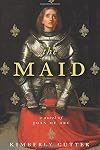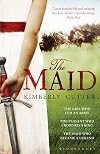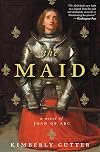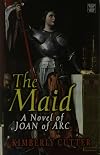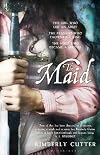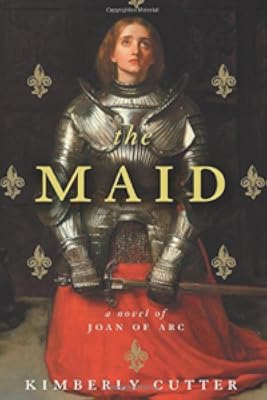
The Maid: A Novel of Joan of Arc
by Kimberly Cutter
On This Page
Description
A "stunning" novel of Joan of Arc, the fifteenth century teenage visionary who led an army and saved France (Publishers Weekly, starred review).The tumultuous Hundred Years' War rages on and France is under siege. English soldiers tear through the countryside destroying all who cross their paths, and Charles VII, the uncrowned king, has neither the strength nor the will to rally his army. Meanwhile, in the quiet of her parents' garden in Domrémy, a seventeen-year-old peasant girl has a show more mystical vision and hears a powerful voice speak her name: Jehanne.
The story of Jehanne d'Arc, who believed she had been chosen by God to lead an army and save her country, has captivated our imaginations for centuries. But the story of a girl whose sister was murdered by the English; who sought an escape from a violent father and a forced marriage; who taught herself to ride and fight; and who somehow found the courage to persuade thousands to follow her—is at once thrilling, surprising, and heartbreaking.
"Impressive . . . Cutter evokes the novel's medieval world with striking details." —The New York Times Book Review
"Cutter's portrait of 'Jehanne' as a strange, gritty teenage tomboy and true believer is compelling." —USA Today
"Cutter strips away the romanticism in favor of a more complex portrayal that raises some provocative questions." —O, The Oprah Magazine
. show less
Tags
Recommendations














Member Reviews
he Maid is the epic retelling of Jehanne de Arc’s life. Her story starts in Domremy. As a girl, she lives with her parents and brothers and sister in a house with fine leaded windows. When her sister is found dead at the hands of English marauders, life changes for Jehanne. Her father takes his rage out on Jehanne and tries to arrange a marriage for her. Jehanne, however has different plans. She sees three heavenly beings, and they tell her to leave Domremy and travel to the Dauphin. She is told to liberate France and lead the Dauphin to Reims to crown him as King of France. She leaves Domremy, and soon gains a following. The rest, as they say, is history.
Kimberly Cutter uses facts to bring Jehanne de Arc to life. Jehanne’s early show more life shapes her life and lends her strength to carry out her mission. Jehanne is a real life character, complete with flaws. Cutter presents her as the truthful prophetess and warrior, with her visions being the driving force behind her life. There are times when the reader wants to reach into the book and assist Jehanne. The story almost seems impossible and improbable. But, the Maid of Lorraine did in fact become the rallying cry of France. There were times when the writing got heavy. If you are looking for a book that argues for or against the validity of Jehanne’s visions, this isn’t the book for you. If you want to find out who Jehanne really was, read this book. While I am not convinced that Jehanne was a divine messenger, Cutter’s book is a fascinating journey from peasant farm girl to France’s divine warrior. show less
Kimberly Cutter uses facts to bring Jehanne de Arc to life. Jehanne’s early show more life shapes her life and lends her strength to carry out her mission. Jehanne is a real life character, complete with flaws. Cutter presents her as the truthful prophetess and warrior, with her visions being the driving force behind her life. There are times when the reader wants to reach into the book and assist Jehanne. The story almost seems impossible and improbable. But, the Maid of Lorraine did in fact become the rallying cry of France. There were times when the writing got heavy. If you are looking for a book that argues for or against the validity of Jehanne’s visions, this isn’t the book for you. If you want to find out who Jehanne really was, read this book. While I am not convinced that Jehanne was a divine messenger, Cutter’s book is a fascinating journey from peasant farm girl to France’s divine warrior. show less
The Maid is a fictionalized biography of St. Joan of Arc. Like many, I'd heard of Joan of Arc, the girl who dressed as a boy and fought for France, but I knew very little about her life. Author Kimberly Cutter tells the story mainly from the viewpoint of Joan (both third-person and first-person). Joan is called Jehanne in the book, the time-appropriate Middle French version of her name. Later in the book, she is often referred to as La Pucelle, the maid (that is, a virgin).
In her author's note at the end, Cutter notes that "almost everything" in the book is true. "Almost all of the characters are real people, and the book adheres closely to the established historical facts surrounding Joan of Arc's life" (p. 281). She does identify show more situations where she took "novelistic license" (p. 282), but they are few. She cites many of her sources in her acknowledgments at the end.
I liked the way this book portrayed Joan as a human being, rather than a perfect saint. She has temptations and doubts, she makes mistakes and has regrets, and is not always a "good" person. show less
In her author's note at the end, Cutter notes that "almost everything" in the book is true. "Almost all of the characters are real people, and the book adheres closely to the established historical facts surrounding Joan of Arc's life" (p. 281). She does identify show more situations where she took "novelistic license" (p. 282), but they are few. She cites many of her sources in her acknowledgments at the end.
I liked the way this book portrayed Joan as a human being, rather than a perfect saint. She has temptations and doubts, she makes mistakes and has regrets, and is not always a "good" person. show less
I really enjoyed this historical re-telling of Joan of Arc's campaign against the English in 15th century France. Whilst sticking to what we actually know about Joan - or Jehanne - Cutter weaves a compelling tale of the peasant girl stricken with religious conviction. The depiction of religious experience is especially good - a combination of extreme joy and pain as she is caught up in vision glorious, yet has to return to ordinary life:
"She doesn't know how long it lasted. It felt like a long time, but she doesn't know. What she does know is that afterward, when the voice and light were gone, it was terrible. All the world gray and cold, like a tomb. Gray trees, gray sky, black sun. Black leaves scuttling down the hillside. Everything show more cold, shrivelled, bereft. She lay curled on the ground, sobbing. 'Come back, please. Come back.' Wanting nothing but to die, sleep. Return."
Throughout her mission, Jehanne is hurled from ecstasy to despair. Sometimes her voices are there to comfort and call her 'darling', sometimes they are silent.
It is a compelling story (more books have been written about her than about any other woman in history), and Cutter writes so well that 'knowing how it will end' is irrelevant. We see Jehanne's faith, and understand that her passion and drive make her death inevitable. When her voices tell her that she will be dead in a year and she collapses in grief, we weep with her for the unfairness of it all. Near the end, recovering from a wound and living in Charles' court, she realises that war has become what she is for:
"And she understood the strange beauty of war then, the way it brings the world to life for its participants, makes each moment shimmer simply because it exists, makes each blade of grass a marvel, makes the humblest gruel seem a delicacy, the trip of a squirrel up a tree trunk an adventure, a thing of wonder. And she saw then that she missed the war, that she'd felt at home in it, among the filthy soldiers and the horses and the fires and the trees, in a way she'd never felt anywhere else."
Joan's story moves us because it is the story of youth, full of hope and faith, crushed by the relentless pressure of the quotidian, the regular, the ordinary. Fear destroying the extraordinary. The bibliography shows how meticulously it has been reserached - not just historical sources, but Teresa d'Avila and William James, Shaw and works on mental illness. Whatever you've ever thought about Joan of Arc, about faith or sainthood, it will be changed and enriched by this book. show less
"She doesn't know how long it lasted. It felt like a long time, but she doesn't know. What she does know is that afterward, when the voice and light were gone, it was terrible. All the world gray and cold, like a tomb. Gray trees, gray sky, black sun. Black leaves scuttling down the hillside. Everything show more cold, shrivelled, bereft. She lay curled on the ground, sobbing. 'Come back, please. Come back.' Wanting nothing but to die, sleep. Return."
Throughout her mission, Jehanne is hurled from ecstasy to despair. Sometimes her voices are there to comfort and call her 'darling', sometimes they are silent.
It is a compelling story (more books have been written about her than about any other woman in history), and Cutter writes so well that 'knowing how it will end' is irrelevant. We see Jehanne's faith, and understand that her passion and drive make her death inevitable. When her voices tell her that she will be dead in a year and she collapses in grief, we weep with her for the unfairness of it all. Near the end, recovering from a wound and living in Charles' court, she realises that war has become what she is for:
"And she understood the strange beauty of war then, the way it brings the world to life for its participants, makes each moment shimmer simply because it exists, makes each blade of grass a marvel, makes the humblest gruel seem a delicacy, the trip of a squirrel up a tree trunk an adventure, a thing of wonder. And she saw then that she missed the war, that she'd felt at home in it, among the filthy soldiers and the horses and the fires and the trees, in a way she'd never felt anywhere else."
Joan's story moves us because it is the story of youth, full of hope and faith, crushed by the relentless pressure of the quotidian, the regular, the ordinary. Fear destroying the extraordinary. The bibliography shows how meticulously it has been reserached - not just historical sources, but Teresa d'Avila and William James, Shaw and works on mental illness. Whatever you've ever thought about Joan of Arc, about faith or sainthood, it will be changed and enriched by this book. show less
There were sections that dragged slightly with a little too much war and bickering(of course that is expected)yet other sections completely grabbed my attention. After recently reading a very thorough non-fiction about Joan this book felt like it was well researched. The closer look at her life from a personal point of view, emotions etc. was nicely done and overall worth reading even for those who are not a particular fan of Joan of Ark. For those who are what a delight!
I received a copy in exchange for an honest review via Libboo.com.
I received a copy in exchange for an honest review via Libboo.com.
The Maid is all opaque, earnest intensity. It marches onward without much modulation or nuance, with imagined internal and external dialogues aligning with the historical record. That a 17 year old peasant girl ended up victoriously leading the army of 15th century France, however, is fabulously miraculous. That this book fails to breathe much life into such a potent story may be a reflection of how powerful source material may overwhelm a retelling. Another reason why I may have found The Maid so prosaic though, relates to Cutter's handling of Joan's visions: they are essentially memos from God. However one might explain them, without somehow communicating how revelatory her visions were, Joan of Arc's story never really takes off.
Full review (with footnotes) on my blog: http://morsiereads.blogspot.com/2011/06/maid-by-kimberly-cutter.html
She looked up at her saints in the stained-glass windows, Saint Catherine, Saint Margaret, Saint Clare... those tall, sad, lovely women illuminated by the sun. She though of their enormous love for God, their heroic lives, their miracles. How they'd found a way to be bigger, better, to do good, fight evil, escape the mud, the smallness of life. She thought they were the luckiest people in the world. (32)
I've been fascinated by Joan of Arc since I first heard her story so I was quite excited to read Kimberly Cutter's novelization of her life.
Cutter begins The Maid with Jehanne (this is the proper period spelling of her given show more name) incarcerated and awaiting her death. Jehanne's recollections while in prison are the source of the novel's primary narrative, which begins with Jehanne at age twelve when she first received her visions.
Jehanne may be a saint, but she's also a teenage girl and Cutter does a wonderful job of portraying her as a flawed human being. Cutter's Jehanne is impatient, she gets mad, she feels temptation and doubt. However Jehanne is not a particularly sympathetic character and it's not because she's more than a little bit self-righteous.1 I assume that Cutter makes Jehanne difficult to identify with to highlight for readers just how confounding Jehanne's contemporaries found her to be.
One of the most interesting things about The Maid is how the secondary characters react to Jehanne. Jehanne has many fair-weather supporters and it seems like nearly every character in the novel changes the way he or she behaves toward Jehanne depending on the circumstances and whether she's in favor or not.
The Maid is well-researched and the battle scenes in particular seem authentic. Cutter also includes an author's note, which provides additional context and possible explanations for some of the more confusing things about Jehanne and her story. It also justifies the sexual content of the novel.
There was one thing in particular that bothered me about The Maid. Michael and the saints who speak to Jehanne have have pet names for her. Pet names like darling and cabbage. Yes, Margaret calls her cabbage.2 It may be minor quibble, but this use of pet names was incongruous and it occurred many times over the course of the novel, irritating me afresh with each instance.
Part of the reason this irritated me so much--besides the fact that something like "my child" seems more appropriate way for them to refer to her--is that Jehanne never seems like she needs comforting endearments. Even at twelve, she is wise beyond her years. For example:
She looked up at her saints in the stained-glass windows, Saint Catherine, Saint Margaret, Saint Clare... those tall, sad, lovely women illuminated by the sun. She though of their enormous love for God, their heroic lives, their miracles. How they'd found a way to be bigger, better, to do good, fight evil, escape the mud, the smallness of life. She thought they were the luckiest people in the world. (32)
I've been fascinated by Joan of Arc since I first heard her story so I was quite excited to read Kimberly Cutter's novelization of her life.
Cutter begins The Maid with Jehanne (this is the proper period spelling of her given show more name) incarcerated and awaiting her death. Jehanne's recollections while in prison are the source of the novel's primary narrative, which begins with Jehanne at age twelve when she first received her visions.
Jehanne may be a saint, but she's also a teenage girl and Cutter does a wonderful job of portraying her as a flawed human being. Cutter's Jehanne is impatient, she gets mad, she feels temptation and doubt. However Jehanne is not a particularly sympathetic character and it's not because she's more than a little bit self-righteous.1 I assume that Cutter makes Jehanne difficult to identify with to highlight for readers just how confounding Jehanne's contemporaries found her to be.
One of the most interesting things about The Maid is how the secondary characters react to Jehanne. Jehanne has many fair-weather supporters and it seems like nearly every character in the novel changes the way he or she behaves toward Jehanne depending on the circumstances and whether she's in favor or not.
The Maid is well-researched and the battle scenes in particular seem authentic. Cutter also includes an author's note, which provides additional context and possible explanations for some of the more confusing things about Jehanne and her story. It also justifies the sexual content of the novel.
There was one thing in particular that bothered me about The Maid. Michael and the saints who speak to Jehanne have have pet names for her. Pet names like darling and cabbage. Yes, Margaret calls her cabbage.2 It may be minor quibble, but this use of pet names was incongruous and it occurred many times over the course of the novel, irritating me afresh with each instance.
Part of the reason this irritated me so much--besides the fact that something like "my child" seems more appropriate way for them to refer to her--is that Jehanne never seems like she needs comforting endearments. Even at twelve, she is wise beyond her years. For example:
She never considered telling the priest about her voices. She knew he would hate her for it. Would not be able to help hating her for it. He was a gentle main, Pere Guillaume, a decent main even, but fearful too. Scared, trembling beneath his holy robes. You could see it in his face. The thin purple lips, the dry papery white hands, the cold, silent judgments... She knew if she told him, he would see to it that she suffered. He would not inflict the suffering himself, that was not his way, but he would tell someone who would be sure to inflict it. (33)show less
I was initially really excited about this title because I love historical fiction and can still remember an episode of Wishbone dealing with Joan of Arc. (Please tell me there is at least one person who remembers Wishbone, the cute little dog that imagines himself the main character in classic literature? I got a Jack Russell because of Wishbone.)
However, once I started this title, it became very apparent that it wasn’t for me. There were several instances of child abuse and even a moment where Joan (who is called Jeanne in the novel) punches another child because they pick on her for being too religious. That made no sense to me, yes she had visions but historically speaking, the inhabitants of the villages in this time would be just show more as religious as Jeanne.
I also thought that there was too much sexual content. I think it was a misplaced attempt to put emphasis on the fact that she was supposed to be virginal. In every chapter there seemed to be a man who wanted to sleep with her; leading her to have another monologue as to how important it was that she remains chaste. The sexual content became distracting.
I could not get past the personality of Jeanne either. I was expecting her to be somewhat reserved, perhaps meek, yet still able to lead. Yet she came across as mean, bossy and self-righteous; the latter not being a compliment. I started this novel expecting to feel inspired by this character, when in actuality I was more so tempted to punch her. She expected everyone to listen to her (Yes, I know, she was hearing the voices of God and several Saints) but she didn’t extend that same courtesy to anyone else. Anyone who showed any hesitation to what she wanted, she treated like an idiot and an enemy.
I wish I had more enthusiasm for this title, as I am a historical fiction freak and because I was really excited to read this one, but I don’t. There were too many things that I didn’t like about this title for me to really like the book. I do think that there will definitely be an audience for this book. Sadly, I am not the one of them. show less
However, once I started this title, it became very apparent that it wasn’t for me. There were several instances of child abuse and even a moment where Joan (who is called Jeanne in the novel) punches another child because they pick on her for being too religious. That made no sense to me, yes she had visions but historically speaking, the inhabitants of the villages in this time would be just show more as religious as Jeanne.
I also thought that there was too much sexual content. I think it was a misplaced attempt to put emphasis on the fact that she was supposed to be virginal. In every chapter there seemed to be a man who wanted to sleep with her; leading her to have another monologue as to how important it was that she remains chaste. The sexual content became distracting.
I could not get past the personality of Jeanne either. I was expecting her to be somewhat reserved, perhaps meek, yet still able to lead. Yet she came across as mean, bossy and self-righteous; the latter not being a compliment. I started this novel expecting to feel inspired by this character, when in actuality I was more so tempted to punch her. She expected everyone to listen to her (Yes, I know, she was hearing the voices of God and several Saints) but she didn’t extend that same courtesy to anyone else. Anyone who showed any hesitation to what she wanted, she treated like an idiot and an enemy.
I wish I had more enthusiasm for this title, as I am a historical fiction freak and because I was really excited to read this one, but I don’t. There were too many things that I didn’t like about this title for me to really like the book. I do think that there will definitely be an audience for this book. Sadly, I am not the one of them. show less
Members
- Recently Added By
Lists

A High School Trip to France
57 works; 5 members
Author Information

1 Work 330 Members
Common Knowledge
- Canonical title
- The Maid: A Novel of Joan of Arc
- Original publication date
- 2011
- People/Characters
- Joan of Arc
- Important places
- France
- Important events
- Hundred Years' War
Classifications
Statistics
- Members
- 330
- Popularity
- 96,321
- Reviews
- 17
- Rating
- (3.42)
- Languages
- English
- Media
- Paper, Audiobook, Ebook
- ISBNs
- 20
- ASINs
- 4