On This Page
Description
While hiking on the Continental Divide of Costa Rica, a young boy with a heart condition falls into a magical otherworld full of fantastical creatures.Tags
Recommendations





Member Reviews
A boy with a serious heart condition goes on vacation to Costa Rica where he wants to see the continental divide. While there he passes out, as his condition causes him to do often, but when he awakens he finds himself in a different world where unicorns, elves and magic are real and humans and science are the things of myth. This was a fun book. It was well suited for the young side of the young adult spectrum. I love the idea of the world and all of the mythical creatures. It was a fun twist to have humans be the mythical creature. The social commentary was a little obvious but well suited for the age group it targets. It brought up issues of medical ethics, the power and responsibility of the press, and making your own destiny that show more would be good discussions to continue with kids that have read the book. I would recommend this to young teens or tweens that enjoy magical worlds. show less
Felix has a rare, serious heart condition. He pesters his parents to take him somewhere exciting before he dies: Costa Rica. When Felix breaks away from them to explore the Continental Divide, he realises he’s pushed himself too far. But when he awakens from his faint, he is in an entirely different world. Here, mythological creatures and races exist, magic is commonplace; and conversely, no-one really believes in human beings, and everyone is in awe of Felix’s basic scientific instruments.
There are two main quests in this story which occupy Felix’s mind: 1) how to get home and 2) how to manage his disease while isolated from modern medicine. Although he meets and befriends a young tangle-child named Betony shortly after his show more arrival, she is frequently surprised by how touchy he can be about the subject of death. However it does not take her too long to decide on the advantages of accompanying Felix, in the name of an adventure she could never hope for in her native provincial Geddon.
In addition to Felix’s appearance, there is conflict shaping up in this peaceful land. A japegrin named Snakeweed has decided that the time has come to make a quick buck He is working on developing a range of medicines, but his methods are underhanded and his products often untested on the full range of species he is offering to sell them to. Betony comes from a community of herbalists, and her two older siblings find themselves initially unimpressed by Snakeweed’s presentation, then eventually determined to discredit him and his products.
The world that Felix crosses into is not named, but is similar to Felix’s (and our) own in many ways. Technological and industrial advancement is way behind ours, however, as perhaps can be expected when the inhabitants are relying on magic rather than science. Felix is surprised to find, for example, that Betony has never heard of the idea of farming, and can’t understand the point of the concept of a ‘country’. In Betony’s world, the king and queen’s main function is to dance and sing, and Felix can’t help noticing that there may be advantages to this type of system, too.
This world has its own distinctive geography and habitation patterns. Only certain areas are inhabited by brittlehorns; and the brazzles that agree to help Felix are reluctant to land in one particular city for fear of being too conspicuous this far from their usual habitat. In addition, in the city of Tiratattle, where much of the story’s action takes place, different parts of town are favoured by different dominant races. This leads to Felix and his new-found friends often having to disguise themselves, with varying degrees of effectiveness.
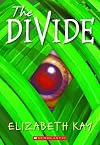
I found this book enjoyable because of the way it responds to traditional fantasy stereotypes: although many ‘mythological’ creatures are present in this story, the author has introduced some entirely new ‘shadow-beasts’ as well. Conversely, there are creatures from our world that have no identifiable parallel beyond the Divide, although the ‘humungally’ (elephant) is popular in the fairy tales of several of the intelligent races of Betony’s world. I highly recommend this book to all enthusiastic readers, for great ideas, a few laughs, and because it’s got such a dinky cover! show less
There are two main quests in this story which occupy Felix’s mind: 1) how to get home and 2) how to manage his disease while isolated from modern medicine. Although he meets and befriends a young tangle-child named Betony shortly after his show more arrival, she is frequently surprised by how touchy he can be about the subject of death. However it does not take her too long to decide on the advantages of accompanying Felix, in the name of an adventure she could never hope for in her native provincial Geddon.
In addition to Felix’s appearance, there is conflict shaping up in this peaceful land. A japegrin named Snakeweed has decided that the time has come to make a quick buck He is working on developing a range of medicines, but his methods are underhanded and his products often untested on the full range of species he is offering to sell them to. Betony comes from a community of herbalists, and her two older siblings find themselves initially unimpressed by Snakeweed’s presentation, then eventually determined to discredit him and his products.
The world that Felix crosses into is not named, but is similar to Felix’s (and our) own in many ways. Technological and industrial advancement is way behind ours, however, as perhaps can be expected when the inhabitants are relying on magic rather than science. Felix is surprised to find, for example, that Betony has never heard of the idea of farming, and can’t understand the point of the concept of a ‘country’. In Betony’s world, the king and queen’s main function is to dance and sing, and Felix can’t help noticing that there may be advantages to this type of system, too.
This world has its own distinctive geography and habitation patterns. Only certain areas are inhabited by brittlehorns; and the brazzles that agree to help Felix are reluctant to land in one particular city for fear of being too conspicuous this far from their usual habitat. In addition, in the city of Tiratattle, where much of the story’s action takes place, different parts of town are favoured by different dominant races. This leads to Felix and his new-found friends often having to disguise themselves, with varying degrees of effectiveness.
I found this book enjoyable because of the way it responds to traditional fantasy stereotypes: although many ‘mythological’ creatures are present in this story, the author has introduced some entirely new ‘shadow-beasts’ as well. Conversely, there are creatures from our world that have no identifiable parallel beyond the Divide, although the ‘humungally’ (elephant) is popular in the fairy tales of several of the intelligent races of Betony’s world. I highly recommend this book to all enthusiastic readers, for great ideas, a few laughs, and because it’s got such a dinky cover! show less
Reviewed by K. Osborn Sullivan for TeensReadToo.com
Felix is a boy whose parents are a little overprotective of him. And who can blame them? Their son has a potentially fatal heart condition. One wrong move could be Felix's last. Considering the circumstances, his parents are doubly horrified when Felix disappears during a family vacation to Costa Rica.
While his parents fear that Felix might be kidnapped or lost in the jungle, the truth is far stranger. Their son is in another world - one he entered accidentally while crossing the continental divide. In this other world, magic is real and Felix is treated like a legend that sprang from a storybook. After all, the many odd creatures that inhabit this magical world have never seen a human show more before and find it hard to believe that one is walking among them. Felix spends the majority of THE DIVIDE exploring the magical world, making friends with its bizarre inhabitants, and trying to find a spell that will send him home.
Some of my favorite characters in the book are the brazzles, which are huge, bird-like creatures, much like griffins. The males of the species are obsessed with math. The females are not. This does not make for happy brazzle marriages. Felix also becomes close friends with what is known as a tangle child. Her name is Betony and she is an elf. After getting over the fact that they have really met a legendary human, Felix's new friends are willing to use their understanding of magic to try and help him find his way home.
Unfortunately, not everyone in the magical world is so generous and kind. Felix also runs afoul of some unpleasant creatures, including japegrins, who want to take advantage of his helplessness.
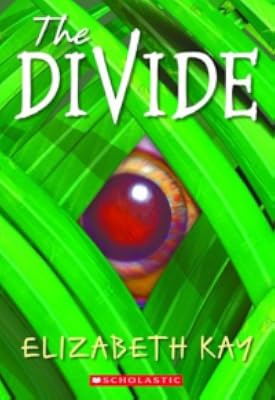
THE DIVIDE is an imaginative book that I highly recommend to lovers of young adult fantasy. It has likeable characters, as well as villains who are easy to despise. It presents a magical world that the reader can see through Felix's eyes. Also, as an added bonus, it has a wonderful cover. Maybe that should not carry much weight, but for some reason, I was delighted by the cover that split down the middle. Overall, I believe that if readers jump to a magical world along with Felix, they will agree that it was well worth the trip. show less
Felix is a boy whose parents are a little overprotective of him. And who can blame them? Their son has a potentially fatal heart condition. One wrong move could be Felix's last. Considering the circumstances, his parents are doubly horrified when Felix disappears during a family vacation to Costa Rica.
While his parents fear that Felix might be kidnapped or lost in the jungle, the truth is far stranger. Their son is in another world - one he entered accidentally while crossing the continental divide. In this other world, magic is real and Felix is treated like a legend that sprang from a storybook. After all, the many odd creatures that inhabit this magical world have never seen a human show more before and find it hard to believe that one is walking among them. Felix spends the majority of THE DIVIDE exploring the magical world, making friends with its bizarre inhabitants, and trying to find a spell that will send him home.
Some of my favorite characters in the book are the brazzles, which are huge, bird-like creatures, much like griffins. The males of the species are obsessed with math. The females are not. This does not make for happy brazzle marriages. Felix also becomes close friends with what is known as a tangle child. Her name is Betony and she is an elf. After getting over the fact that they have really met a legendary human, Felix's new friends are willing to use their understanding of magic to try and help him find his way home.
Unfortunately, not everyone in the magical world is so generous and kind. Felix also runs afoul of some unpleasant creatures, including japegrins, who want to take advantage of his helplessness.
THE DIVIDE is an imaginative book that I highly recommend to lovers of young adult fantasy. It has likeable characters, as well as villains who are easy to despise. It presents a magical world that the reader can see through Felix's eyes. Also, as an added bonus, it has a wonderful cover. Maybe that should not carry much weight, but for some reason, I was delighted by the cover that split down the middle. Overall, I believe that if readers jump to a magical world along with Felix, they will agree that it was well worth the trip. show less
Felix is 13, but looks younger as he has a heart condition -- and he's in Costa Rica because he wanted to go somewhere exciting "before he died". As he stands on the divide -- between the Atlantic and Pacific -- he passes out -- and at the moment he passes into an alternate world, a world where he is a mythical creature and all the mythical creatures of our world exist -- with funny names. Griffins are called Brazzles there, Unicorns are called Brittlehorns, Elves are called Tangle-people, etc. Felix meets up with a brazzle called Ironclaw and a Tangle-person called Betony -- and together they rescue that world from an unscrupulous merchant foisted untried pharmaceuticals on the public -- and manage to find a cure for Felix's heart show more problems. Modern lessons in a pre-technological, mythical society. (e.g., that world doesn't know what printing is -- unless someone reads a book Felix brought across with him). Sequels....
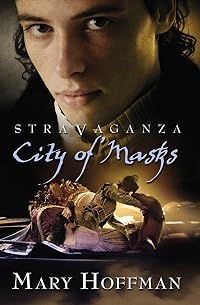
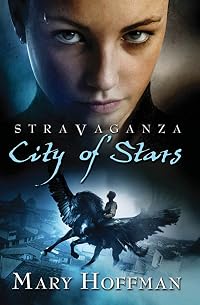
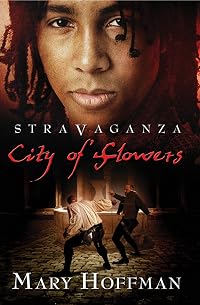
The theme of the sickly child who is cured by entering an alternate world is similar Stravaganza by Mary Hoffman. show less
The theme of the sickly child who is cured by entering an alternate world is similar Stravaganza by Mary Hoffman. show less
Felix is 13, but looks younger as he has a heart condition -- and he's in Costa Rica because he wanted to go somewhere exciting "before he died". As he stands on the divide -- between the Atlantic and Pacific -- he passes out -- and at the moment he passes into an alternate world, a world where he is a mythical creature and all the mythical creatures of our world exist -- with funny names. Griffins are called Brazzles there, Unicorns are called Brittlehorns, Elves are called Tangle-people, etc. Felix meets up with a brazzle called Ironclaw and a Tangle-person called Betony -- and together they rescue that world from an unscrupulous merchant foisted untried pharmaceuticals on the public -- and manage to find a cure for Felix's heart show more problems. Modern lessons in a pre-technological, mythical society. (e.g., that world doesn't know what printing is -- unless someone reads a book Felix brought across with him). Sequels....
The theme of the sickly child who is cured by entering an alternate world is similar Stravaganza by Mary Hoffman. show less
The theme of the sickly child who is cured by entering an alternate world is similar Stravaganza by Mary Hoffman. show less
This book is always a big hit when I booktalk it at my school library, yesterday all six copies were circulated within ten minutes of a booktalk. A young boy, terminally ill with a serious heart defect, is on what his parents consider his last vacation in Costa Rica. He stands on the place where two oceans meet, called "The Divide". He slips through The Divide, and is transported to a world where humans are creature of myth and elfs, satyrs, dragons, unicorns and other creatures that we consider mythical are cold hard fact. In this alternate world, Felix seeks a cure for his heart defect and becomes involved in an epic struggle between good and evil.
I really enjoyed this cute, creative little book. This story takes place in the real world and in an alternate world which a 13-year-old youngster, Felix, finds by accident. In this new world, Felix finds that he is the myth, and all the legendary beasts and people who are myths in our world are real, although they are not called by the same names. The beings we meet in this new land are delightful.
Members
- Recently Added By
Lists

Best Fantasy Novels
821 works; 361 members
Books We Love to Reread
695 works; 298 members
Author Information

10+ Works 1,895 Members
All Editions
Awards and Honors
Series

Common Knowledge
- Original publication date
- 2003
- First words
- The rat-tat-tat of the helicopter's rotor blades scattered the hummingbirds across the Study Center garden as though someone had thrown a handful of jewels into the air.
Classifications
Statistics
- Members
- 944
- Popularity
- 28,287
- Reviews
- 12
- Rating
- (3.71)
- Languages
- English, Finnish, French, German
- Media
- Paper, Ebook
- ISBNs
- 14
- ASINs
- 6