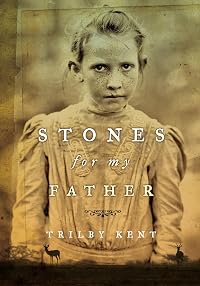
Stones for My Father
by Trilby Kent
On This Page
Description
Corlie Roux's farm life in South Africa is not easy: the Transvaal is beautiful, but it is also a harsh place where the heat can be so intense that the very raindrops sizzle. When her beloved father dies, she is left with a mother who is as devoted to her sons as she is cruel to her daughter. Despite this, Corlie finds solace in her friend, Sipho, and in Africa itself and in the stories she conjures for her brothers. But Corlie's world is about to vanish: the British are invading and driving show more Boer families like hers from their farms. Some escape into the bush to fight the enemy. The unlucky ones are rounded up and sent to internment camps. Will Corlie's resilience and devotion to her country sustain her through the suffering and squalor she finds in the camp at Kroonstad? That may depend on a soldier from faraway Canada and on inner resources Corlie never dreamed she had.... show lessTags
Recommendations



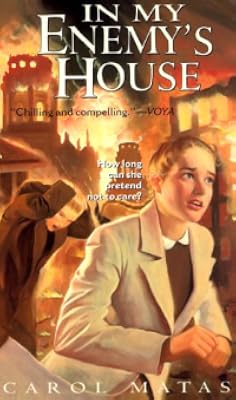

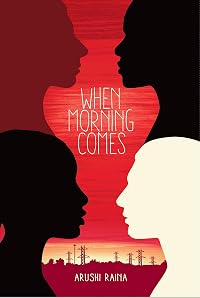
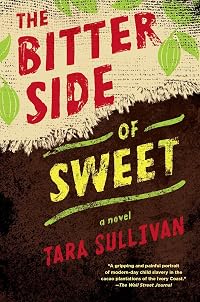
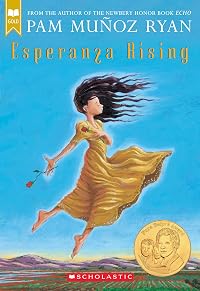

Member Recommendations
Member Reviews
“in my heart of hearts I wanted my mother to love me. But I also knew that she would never forgive me for who I was…We were at a stalemate, just like in the war.” (p. 159 Stones for My Father)
SUMMARY
In her young adult novel Stones for My Father, Trilby Kent presents the experience of a small group of Afrikaner women, children, and their "Kaffirs" (African servants) during the period of the Second Anglo-Boer War (1899-1902) through the eyes of a young Boer girl, 12-year-old Corlie Roux. The narrative is set in motion with Corlie and her younger brother, Gert, carrying supplies out to a pigeon cote, planning to leave these for pick-up by Boer commandos. The children see that the British--"Khakis"--have discovered this hiding place show more and now know that a British attack and burning of nearby Boer homesteads, including their own, is imminent.
With the help of Lindy, her African servant, Corlie's mother has almost single-handedly been running their farm since Mr. Roux’s recent death from scrofula. While Mr. Roux had been more interested in saving his farm and his family, Corlie’s mother is hard and bitter, a believer in "the one true faith". She is uncompromising in her hatred of the British. Corlie’s relationship with her mother is strained. It is clear to Corlie that her mother favors her handsome sons and has little patience for Corlie and her "heathen" storytelling. The mystery behind Mrs. Roux’s severe treatment of Corlie is only revealed in the last quarter of the book.
After being discovered by the British, the Roux family and their black servants have little choice but to make their way to a laager—a Boer encampment of women, children, and men too old to fight: all essentially refugees. Here they are soon captured and transported to a British-run detention camp where conditions are squalid and disease is rife. In this place, Corlie is engaged in the struggle of her life and it is here that she uncovers the secret of her mother’s hatred and her own true identity.
Among the many episodes detailed by the author are Corlie and her brother’s life-changing encounter with sympathetic Canadian soldier fighting with the British who offers them meat, Corlie’s rescue of an orphaned vervet monkey, and her witnessing the death of many Boer children in the detention camp. Among the more interesting but less developed strands of the book is the author’s consideration of the Boer attitude to native Africans through Corlie's long friendship with and deep allegiance to a Zulu boy, Sipho (the son of her dead father's laborer) who was "gifted' to Corlie at her birth.
PERSONAL RESPONSE
Stones for My Father allows the reader to enter a world and an era that I have never before seen depicted in children's literature. In fact, my only prior acquaintance with the Boer War was through an Australian film many years back: Breaker Morant. Even though I’m Canadian, I had no knowledge of the Canadian contribution to this war. Certainly, Malachi Byrne, the Albertan farmer that Corlie and her brother receive meat from, doesn’t seem to be a lot clearer than I am about why he is there. (But that is so often the lament of the colonials sent off to fight in the wars of the British Empire.) I wonder if Kent’s depiction of Byrne’s compassionate act toward Corlie and Gert has any basis in the historical research she clearly did to write this novel.
As for Corlie: she is a strong and sympathetic protagonist, determined to reject the model of Boer womanhood that she is presented with. To her credit, Kent manages to adeptly pack considerable historical and geographical information into this short novel. The causes of the war don’t get much treatment, it is true, but what is given is adequate for a young adult novel. Corlie’s view is that the war is a contest between two white tribes over land and gold—and that rings true enough as the observation of a twelve-year-old narrator. There are times, however, when some of Corlie's sophisticated impressions strain credibility. I’m thinking, for example, of the time Corlie, looking into the eyes of a pregnant woman at the British camp, observes: “I realized that the baby inside her was no better than a parasite” (p. 96). On another occasion, a distraught Corlie speaks of “a sensation of being hopelessly suspended in time and space, like a high-wire acrobat anticipating the spring and bounce-back of the safety harness.” (p. 85) Neither of these perceptions strikes me as those of a twelve-year-old child of the African veld. Perhaps the author should have considered a third-person over a first-person narration.
Afrikaans vocabulary is sprinkled quite liberally through the text. While the use of the actual language of the Boer adds flavor and authenticity and it’s not hard to infer the meaning of most of these inclusions, many young readers I know would be put off by them. A glossary would have been a good idea, and a map might have been helpful as well.
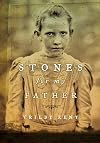
Although the subject matter and the cover are grim, Stones for My Father is an informative and intelligently written piece of historical fiction. I don't regret spending a few hours with Corlie, and I learned a fair bit while doing so. Whether this book will actually be read by the audience for whom it is intended seems uncertain. I can imagine that stronger, motivated middle school and young adult readers (Grades 7 and up) who are interested in history, race relations, and/or historical fiction might read the text if it were enthusiastically promoted by teachers and librarians. The book might also be appreciated by adult readers of historical fiction, particularly those interested in the experiences of women and children during war. The book is worthwhile, interesting, and possesses considerable literary merit. show less
SUMMARY
In her young adult novel Stones for My Father, Trilby Kent presents the experience of a small group of Afrikaner women, children, and their "Kaffirs" (African servants) during the period of the Second Anglo-Boer War (1899-1902) through the eyes of a young Boer girl, 12-year-old Corlie Roux. The narrative is set in motion with Corlie and her younger brother, Gert, carrying supplies out to a pigeon cote, planning to leave these for pick-up by Boer commandos. The children see that the British--"Khakis"--have discovered this hiding place show more and now know that a British attack and burning of nearby Boer homesteads, including their own, is imminent.
With the help of Lindy, her African servant, Corlie's mother has almost single-handedly been running their farm since Mr. Roux’s recent death from scrofula. While Mr. Roux had been more interested in saving his farm and his family, Corlie’s mother is hard and bitter, a believer in "the one true faith". She is uncompromising in her hatred of the British. Corlie’s relationship with her mother is strained. It is clear to Corlie that her mother favors her handsome sons and has little patience for Corlie and her "heathen" storytelling. The mystery behind Mrs. Roux’s severe treatment of Corlie is only revealed in the last quarter of the book.
After being discovered by the British, the Roux family and their black servants have little choice but to make their way to a laager—a Boer encampment of women, children, and men too old to fight: all essentially refugees. Here they are soon captured and transported to a British-run detention camp where conditions are squalid and disease is rife. In this place, Corlie is engaged in the struggle of her life and it is here that she uncovers the secret of her mother’s hatred and her own true identity.
Among the many episodes detailed by the author are Corlie and her brother’s life-changing encounter with sympathetic Canadian soldier fighting with the British who offers them meat, Corlie’s rescue of an orphaned vervet monkey, and her witnessing the death of many Boer children in the detention camp. Among the more interesting but less developed strands of the book is the author’s consideration of the Boer attitude to native Africans through Corlie's long friendship with and deep allegiance to a Zulu boy, Sipho (the son of her dead father's laborer) who was "gifted' to Corlie at her birth.
PERSONAL RESPONSE
Stones for My Father allows the reader to enter a world and an era that I have never before seen depicted in children's literature. In fact, my only prior acquaintance with the Boer War was through an Australian film many years back: Breaker Morant. Even though I’m Canadian, I had no knowledge of the Canadian contribution to this war. Certainly, Malachi Byrne, the Albertan farmer that Corlie and her brother receive meat from, doesn’t seem to be a lot clearer than I am about why he is there. (But that is so often the lament of the colonials sent off to fight in the wars of the British Empire.) I wonder if Kent’s depiction of Byrne’s compassionate act toward Corlie and Gert has any basis in the historical research she clearly did to write this novel.
As for Corlie: she is a strong and sympathetic protagonist, determined to reject the model of Boer womanhood that she is presented with. To her credit, Kent manages to adeptly pack considerable historical and geographical information into this short novel. The causes of the war don’t get much treatment, it is true, but what is given is adequate for a young adult novel. Corlie’s view is that the war is a contest between two white tribes over land and gold—and that rings true enough as the observation of a twelve-year-old narrator. There are times, however, when some of Corlie's sophisticated impressions strain credibility. I’m thinking, for example, of the time Corlie, looking into the eyes of a pregnant woman at the British camp, observes: “I realized that the baby inside her was no better than a parasite” (p. 96). On another occasion, a distraught Corlie speaks of “a sensation of being hopelessly suspended in time and space, like a high-wire acrobat anticipating the spring and bounce-back of the safety harness.” (p. 85) Neither of these perceptions strikes me as those of a twelve-year-old child of the African veld. Perhaps the author should have considered a third-person over a first-person narration.
Afrikaans vocabulary is sprinkled quite liberally through the text. While the use of the actual language of the Boer adds flavor and authenticity and it’s not hard to infer the meaning of most of these inclusions, many young readers I know would be put off by them. A glossary would have been a good idea, and a map might have been helpful as well.
Although the subject matter and the cover are grim, Stones for My Father is an informative and intelligently written piece of historical fiction. I don't regret spending a few hours with Corlie, and I learned a fair bit while doing so. Whether this book will actually be read by the audience for whom it is intended seems uncertain. I can imagine that stronger, motivated middle school and young adult readers (Grades 7 and up) who are interested in history, race relations, and/or historical fiction might read the text if it were enthusiastically promoted by teachers and librarians. The book might also be appreciated by adult readers of historical fiction, particularly those interested in the experiences of women and children during war. The book is worthwhile, interesting, and possesses considerable literary merit. show less
 This review was written for LibraryThing Early Reviewers.
For a second time, the British are invading her beloved homeland in an attempt to control Africa’s gold mines, land, and its people. It’s 1899 and Tweede Vryheidsoorlog: The Second War of Liberation is about to change everything that twelve-year-old Corlie Roux knows and loves.
Corlie’s life will never be the same after her father’s death leaves her cold, cruel mother alone on the family farm to raise Corlie and her two brothers, Gert and Hansie. As soldiers sweep across the land salting the earth under the destroyed crops, burning homes, barns, and outbuildings and killing everything in their path, Corlie and her Mother know it’s only a matter of time before they too, suffer the same fate. All around them other Boer families, show more neighbours and friends are being burned out and rounded up as the British Army strives to take control.
A desperate attempt at escape is thwarted by brutal soldiers and the starving the family is forced into a filthy, poverty-stricken internment camp against their will. Despite her resilience, Corlie struggles to survive the abuse, starvation, and suffering knowing that something must change if she’s going to endure. A chance encounter with a Canadian soldier she met while foraging out on the veld may just turn out to be Corlie’s only hope to finally live her life without pain, suffering, and the horrors of war.
Author, Trilby Kent has delivered a clear-eyed, historically-significant view of life on the Transvaal during the Anglo-Boer War. An interesting subject; well-written, thought-provoking, and with just enough details to keep the reader engaged with the very relatable and resilient, Corlie. Highly-recommended! show less
Corlie’s life will never be the same after her father’s death leaves her cold, cruel mother alone on the family farm to raise Corlie and her two brothers, Gert and Hansie. As soldiers sweep across the land salting the earth under the destroyed crops, burning homes, barns, and outbuildings and killing everything in their path, Corlie and her Mother know it’s only a matter of time before they too, suffer the same fate. All around them other Boer families, show more neighbours and friends are being burned out and rounded up as the British Army strives to take control.
A desperate attempt at escape is thwarted by brutal soldiers and the starving the family is forced into a filthy, poverty-stricken internment camp against their will. Despite her resilience, Corlie struggles to survive the abuse, starvation, and suffering knowing that something must change if she’s going to endure. A chance encounter with a Canadian soldier she met while foraging out on the veld may just turn out to be Corlie’s only hope to finally live her life without pain, suffering, and the horrors of war.
Author, Trilby Kent has delivered a clear-eyed, historically-significant view of life on the Transvaal during the Anglo-Boer War. An interesting subject; well-written, thought-provoking, and with just enough details to keep the reader engaged with the very relatable and resilient, Corlie. Highly-recommended! show less
This review was written for LibraryThing Early Reviewers.I know other American reviewers have mentioned that this book does not have as much appeal for Americans as for Canadians and English, but I fail to see why Americans should be so disinterested in any history other than their own. As an American reader, Stones for My Father was even more interesting to me because it was about a relatively little-known, yet horrific, historical event - the Boer War and the concentration camps for Afrikaners, built by the British. These camps, in which thousands of European and African women and children starved to death or died from disease, predate the Nazi camps of WWII by almost 50 years.
As a younger author, Kent writes a good story. I couldn't put the book down, and even with a busy schedule managed show more to read it in one day. There were a few things that were confusing or could have been expanded upon. For example, Corlie, the main character, at one point suddenly begins to refer to herself as a calabash shell, which, of course, breaks at the end of the story. It would seem that this metaphor would be a major feature of the later part of the book, yet it is briefly, suddenly mentioned only three or four times. Besides this, however, Stones for My Father is an educational, fascinating, and eye-opening read. show less
As a younger author, Kent writes a good story. I couldn't put the book down, and even with a busy schedule managed show more to read it in one day. There were a few things that were confusing or could have been expanded upon. For example, Corlie, the main character, at one point suddenly begins to refer to herself as a calabash shell, which, of course, breaks at the end of the story. It would seem that this metaphor would be a major feature of the later part of the book, yet it is briefly, suddenly mentioned only three or four times. Besides this, however, Stones for My Father is an educational, fascinating, and eye-opening read. show less
This review was written for LibraryThing Early Reviewers.Before reading Stones for my Father, I knew about as much of the Boer Wars as could fit into a thimble. I had a vague idea that there was some kind of conflict between Afrikaners and English in South Africa, and when seeing the "Boer War" phrase, I could recognize the period of history when it occurred and maybe guess two or three places on a map - one of which would have been correct.
Like any good historical fiction, Stones for my Father brought the setting to life for me and taught me a good deal about the war. I learned, in general, what the primary conflict was about, who was involved in it, and what it meant to the people affected by it. For this, I think it is quite a good book, and not too long, either, at 168 pages.
As a novel, show more however, I didn't enjoy it so much. The plot is, out of necessity, driven by the events of the war in its last year or so, as viewed through the eyes of a Boer girl whose family had resisted as long as possible. The finally leave their farm to join a laager (a traveling caravan of people hiding from the British), and are then captured and sent to an internment camp, where they remain until the war ends. The plot movement is understandable and fairly normal for a historical novel, but I felt that it needed something more, something for Corlie (the 12-year-old protagonist and narrator) to have agency in, rather than being tugged along.
There are a few elements to the story that seemed to have been added to give depth or that elusive character-driven plot, but they felt forced and overdone to me.
The first of these is the relationship between Corlie and her mother. Throughout the book, it is shown over and over that her mother hates her and wishes Corlie had never been born - it is to the point that Corlie asks if she is part Black, as that would explain the hatred and abuse (recall that the book is set in a time and place when Blacks are thought of as little better than animals, which is also repeated and shown throughout the story). I felt that the hatred and abuse was unnecessary to the story in light of the setting, as it added very little to the characters who are already in a bad situation. The revelation of why her mother treats her so, when it came towards the end, also seemed to be a bit odd and extraneous, and Corlie barely even seems to be affected by any of it. The whole thing could have been omitted and not left the book any worse, as shown by countless other stories about wars and internment camps where the narrator has an average or even warm relationship with her parents.
The second element that didn't work for me is the inclusion of a Canadian corporal who helps Corlie and her family. Frankly, it was a little too deus ex machina, though I can understand the desire to include something to show the humanity of the opposing side. From the moment he was named, I knew his role in the story and how things would turn out.
On the balance, Stones for my Father isn't an awful book, but it's not the best of the genre. As a book about the Boer War for pre-teens, it definitely has worth, and I'm not sure that they wouldn't enjoy it more than I did. It does have the nice feature of peppering the narrative with Afrikaans words and phrases, only glossing them when they can't be figured out from context. I would have loved that at that age, and still do enjoy the immersion feeling and challenge of figuring out what the word means. (Luckily, Afrikaans and Dutch are similar enough to English to not make it too difficult.) show less
Like any good historical fiction, Stones for my Father brought the setting to life for me and taught me a good deal about the war. I learned, in general, what the primary conflict was about, who was involved in it, and what it meant to the people affected by it. For this, I think it is quite a good book, and not too long, either, at 168 pages.
As a novel, show more however, I didn't enjoy it so much. The plot is, out of necessity, driven by the events of the war in its last year or so, as viewed through the eyes of a Boer girl whose family had resisted as long as possible. The finally leave their farm to join a laager (a traveling caravan of people hiding from the British), and are then captured and sent to an internment camp, where they remain until the war ends. The plot movement is understandable and fairly normal for a historical novel, but I felt that it needed something more, something for Corlie (the 12-year-old protagonist and narrator) to have agency in, rather than being tugged along.
There are a few elements to the story that seemed to have been added to give depth or that elusive character-driven plot, but they felt forced and overdone to me.
The first of these is the relationship between Corlie and her mother. Throughout the book, it is shown over and over that her mother hates her and wishes Corlie had never been born - it is to the point that Corlie asks if she is part Black, as that would explain the hatred and abuse (recall that the book is set in a time and place when Blacks are thought of as little better than animals, which is also repeated and shown throughout the story). I felt that the hatred and abuse was unnecessary to the story in light of the setting, as it added very little to the characters who are already in a bad situation. The revelation of why her mother treats her so, when it came towards the end, also seemed to be a bit odd and extraneous, and Corlie barely even seems to be affected by any of it. The whole thing could have been omitted and not left the book any worse, as shown by countless other stories about wars and internment camps where the narrator has an average or even warm relationship with her parents.
The second element that didn't work for me is the inclusion of a Canadian corporal who helps Corlie and her family. Frankly, it was a little too deus ex machina, though I can understand the desire to include something to show the humanity of the opposing side. From the moment he was named, I knew his role in the story and how things would turn out.
On the balance, Stones for my Father isn't an awful book, but it's not the best of the genre. As a book about the Boer War for pre-teens, it definitely has worth, and I'm not sure that they wouldn't enjoy it more than I did. It does have the nice feature of peppering the narrative with Afrikaans words and phrases, only glossing them when they can't be figured out from context. I would have loved that at that age, and still do enjoy the immersion feeling and challenge of figuring out what the word means. (Luckily, Afrikaans and Dutch are similar enough to English to not make it too difficult.) show less
This review was written for LibraryThing Early Reviewers.I received this book free from Librarything's early reviewers program.
This is a short, easy to read but well-plotted novel about a historical event few Americans know anything about. I was aware that there had been such thing as a Boer War in South Africa and had heard something about internment camps, but that was about it.
The protagonist, a twelve-year-old Boer girl, was locked up in a prison camp with her mother and younger brothers, a dreadful place where disease was rampant and people starved to death in vast numbers. It reminded me very much of the Nazi camps, with the main difference being that the British were not actively trying to kill the women and children in these camps; they just let them die through neglect and show more starvation.
A big part of the story is the girl's relationship with her mother, who for no particular reason has always hated her. The story behind that was incredibly sad -- I can't understand why the mother persists in blaming the child so much for something that was in no way her fault -- but unfortunately that sort of thing does happen all too often.
This would be good for about sixth grade on up, perhaps for a unit on African history. It tells the reader a great deal about the Boer War without sounding too much like it's TRYING to tell the reader about the Boer War, something which is not as easy as it sounds. Recommended. show less
This is a short, easy to read but well-plotted novel about a historical event few Americans know anything about. I was aware that there had been such thing as a Boer War in South Africa and had heard something about internment camps, but that was about it.
The protagonist, a twelve-year-old Boer girl, was locked up in a prison camp with her mother and younger brothers, a dreadful place where disease was rampant and people starved to death in vast numbers. It reminded me very much of the Nazi camps, with the main difference being that the British were not actively trying to kill the women and children in these camps; they just let them die through neglect and show more starvation.
A big part of the story is the girl's relationship with her mother, who for no particular reason has always hated her. The story behind that was incredibly sad -- I can't understand why the mother persists in blaming the child so much for something that was in no way her fault -- but unfortunately that sort of thing does happen all too often.
This would be good for about sixth grade on up, perhaps for a unit on African history. It tells the reader a great deal about the Boer War without sounding too much like it's TRYING to tell the reader about the Boer War, something which is not as easy as it sounds. Recommended. show less
This review was written for LibraryThing Early Reviewers.An interesting piece of fiction about the Boer war (a time in history I knew very little about), filled with interesting storylines from the characters. The book is shown from the point of view of a young girl, Corlie Roux, of age 12. The book makes the reader feel that they are part of this time period, watching what is happening to the characters. The descriptions of life in refugee camps are just awful, but show how that is what people faced at that time.
A book that I think others should read if interested.
A book that I think others should read if interested.
This review was written for LibraryThing Early Reviewers.I read this book in a day. The main character, a young girl named Corlie Roux from Africa during the Boer War, is a delight. Her father dies when she is young and she is growing up with a mother who doesn't seem to like her for some reason. They are forced our of their home by the British army and life in a wagon train situation in the outdoors. After they are taken from there by the soldiers, they are forced into a refuge camp where there is little food, room, and lots of sickness. Corlie finds herself fighting for her family-her mother who doesn't like her and her two younger brothers. When her brother Gert dies, Corlie's mother kicks her out of the home and Corlie discovers that she is not her father's biological. Through the show more kindness of a Canadian soldier, she has hope for a bright future. I loved Corlie as a character-she is strong and kind and resilient. I found myself wanting her to have better and be treated better. I would recommend this book to upper elementary or middle school age students looking for a book with a strong female character and adventure. show less
This review was written for LibraryThing Early Reviewers.Members
- Recently Added By
Lists

A Child's Book Tour of South Africa ::: Botswana, Mozambique, Zimbabwe
33 works; 3 members

CBC's 100 Young Adult Books
100 works; 4 members
Author Information
6+ Works 166 Members
Trilby Kent was born in Toronto. Ontario, but grew up in cities on both sides of the Atlantic, After completing degrees at Oxford University and the London School of Economics, she worked in the rare books department at a prominent auction house before turning to journalism and finally writing her first book, the critically acclaimed Medina Hill. show more Her most recent book. Once, in a Town Called Moth, was nominated for a Governor General's Award for Literature. After years living in England, she now resides in Toronto with her family. show less
Awards and Honors
Awards
Distinctions
Notable Lists
Common Knowledge
- Canonical title
- Stones for My Father
- People/Characters
- Coraline "Corlie" Roux; Gert Roux; Hansi Roux; Maria Roux; Morne Andries Roux; Oom Flip (show all 16); Tant Sanna; Tant Minna; Sipho; Lindiwe; Nelisiwe; Nosipho; Coproral Malachi Byrne; Smous Petrus; Yvette va der Westhuizen; Betsie Gouws
- Important places
- Africa
- Important events
- Boer War; Treaty of Vereeniging
- Dedication
- In memory of those who came before me - the sons and daughters of the prairie and veld.
- First words
- My mother once told me of a dream she had as young girl, in the days before the English came.
Classifications
- Genres
- Tween, Fiction and Literature, Kids, Children's Books, Teen
- DDC/MDS
- 813.6 — Literature & rhetoric American literature in English American fiction in English 2000-
- LCC
- PZ7 .K421 — Language and Literature Fiction and juvenile belles lettres Fiction and juvenile belles lettres Juvenile belles lettres
- BISAC
Statistics
- Members
- 80
- Popularity
- 397,076
- Reviews
- 24
- Rating
- (3.86)
- Languages
- English
- Media
- Paper, Ebook
- ISBNs
- 7
- ASINs
- 1