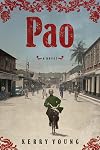
Pao
by Kerry Young
On This Page
Description
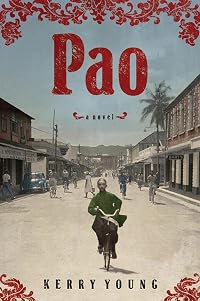
As a boy, Pao came to Jamaica with his mother and brother in the wake of the Chinese Civil War. Pao becomes a powerful man, but he's not a typical crime boss. He is sensitive at heart and guided by the principles 0f Sun Tzu's Art of War, even though , as he discovers, the wisdom of the ancient Chinese sage can be tough to interpret when applied to the criminal annd predicament he faces.Tags
Recommendations













Member Reviews
To learn Jamaican history through the fictional life story of a Chinese gangster is novel; that it is written in the vernacular somehow gives it even more appeal. Pao, a teenage immigrant from China in the days before Jamaica's independence, becomes a sort of godfather. Many Chinese were escaping the horrors of the Chinese Civil War. Their growing numbers in Jamaica reduced the few jobs that were available, creating a need for protection. This is not a topic or time that is covered often in historical fiction and Kerry Young has done an excellent job of creating a tale that is interesting and entertaining.
 This review was written for LibraryThing Early Reviewers.
Decades slip by in a flash in this delightfully crafted novel about a Chinese immigrant to Jamaica and his life, labors, and loves. Author Kerry Young does a great service to her home country and to her own ancestral history by bringing the world's attention to the often unknown world of the Chinese immigrant in Jamaica.
Young Pao is introduced to his new life in his new country by Zhang, the man who has paid for Pao's mother's passage to the West Indies after the death of Pao's father. Zhang is a combination godfather and wise man in the underworld of Jamaica's Chinatown. He raises Pao to follow his footsteps and Pao, who has little formal schooling, learns his lessons of life on the city streets.
As Pao narrates, the reader sees him as show more a rather serious, contemplative man for whom toughness does not seem to come naturally, but rather as a symptom of circumstance. Like all of Young's characters, Pao is strong, memorable, and easy for the reader to relate to. In just 270 pages, we follow most of Pao's life. We see him as a child, as a teenager, a young man, a middle-aged man, and as an elder. Although multigenerational novels are hard to do in short manuscripts, Young seems to succeed, and what we end up seeing in Pao is a totally "round" character, one who transforms and changes in many ways through the pages of the book.
Kerry Young creates memorable characters: Zhang as the wise man, Pao as the always musing good "bad" boy, Cecily, the African Jamaican married to a Chinese man who rules over her privileged household and holds insecurities to herself, and Gloria, the bright, loving, practical, and very vital prostitute who creates a balance in Pao's life.
For those interested in British Colonialism and West Indian history, particularly around the issues of independence in former British colonies, Pao offers interesting insights. With a flavor of historical fiction, Young brings her characters' lives in line with the years of British colonialsim through independence, taking us on a ride through the administrations of Bustamante, Manley, and Seaga. She does not burden the reader with too much information; there's just enough to set the stage and get the reader to thinking about the political scene going on around Pao's personal narrative.
Pao is an excellent book about a little-written-about group - the Jamaican Chinese, a group that some readers may be discovering for the first time. Young left her homeland of Jamaica when she was just ten years old, but she is able to conjure up the flavor and feel of the country and give us not only wonderful characters that we will hold in our mind for a long time but also a real view and sense of the country that is Jamaica. For both lovers of West Indian literature and those who have never been exposed to it, this book is highly recommended. show less
Young Pao is introduced to his new life in his new country by Zhang, the man who has paid for Pao's mother's passage to the West Indies after the death of Pao's father. Zhang is a combination godfather and wise man in the underworld of Jamaica's Chinatown. He raises Pao to follow his footsteps and Pao, who has little formal schooling, learns his lessons of life on the city streets.
As Pao narrates, the reader sees him as show more a rather serious, contemplative man for whom toughness does not seem to come naturally, but rather as a symptom of circumstance. Like all of Young's characters, Pao is strong, memorable, and easy for the reader to relate to. In just 270 pages, we follow most of Pao's life. We see him as a child, as a teenager, a young man, a middle-aged man, and as an elder. Although multigenerational novels are hard to do in short manuscripts, Young seems to succeed, and what we end up seeing in Pao is a totally "round" character, one who transforms and changes in many ways through the pages of the book.
Kerry Young creates memorable characters: Zhang as the wise man, Pao as the always musing good "bad" boy, Cecily, the African Jamaican married to a Chinese man who rules over her privileged household and holds insecurities to herself, and Gloria, the bright, loving, practical, and very vital prostitute who creates a balance in Pao's life.
For those interested in British Colonialism and West Indian history, particularly around the issues of independence in former British colonies, Pao offers interesting insights. With a flavor of historical fiction, Young brings her characters' lives in line with the years of British colonialsim through independence, taking us on a ride through the administrations of Bustamante, Manley, and Seaga. She does not burden the reader with too much information; there's just enough to set the stage and get the reader to thinking about the political scene going on around Pao's personal narrative.
Pao is an excellent book about a little-written-about group - the Jamaican Chinese, a group that some readers may be discovering for the first time. Young left her homeland of Jamaica when she was just ten years old, but she is able to conjure up the flavor and feel of the country and give us not only wonderful characters that we will hold in our mind for a long time but also a real view and sense of the country that is Jamaica. For both lovers of West Indian literature and those who have never been exposed to it, this book is highly recommended. show less
This review was written for LibraryThing Early Reviewers.This novel has enough forward momentum to keep me interested in a subject that I probably would have never known about if not for this story. There is a fair amount of reading between the lines which I appreciated from the author - she doesn't insult the reader's intelligence by explaining every little detail about the characters' for us. The one time where this fails is the heavy-handed discussions on Jamaican history. Often a chapter will begin with a few pages detailing what was happening in Jamaica at the time. I felt the history sat inelegantly on the page and worked better when the political events were woven into conversations between the characters rather than the out-of-place history lessons.
This review was written for LibraryThing Early Reviewers.Pao traces the history of 20th century Jamaica from British rule to independence and the economic imperialism which keeps profits funneling out of the country into British and American pockets. Pao comes to Jamaica as a boy, in the wake of the Chinese Civil War, and his family is taken in by a friend of his late father's, the godfather of Kingston's Chinatown. As Pao adapts to his new life, he makes friends in all social strata, marries the wrong woman, and struggles with his feelings for his children, his true love, and the people and culture of the island which has become his true home.
Pao's speech patterns are distinctive, and Young uses them to give a sense of place and culture. His Jamaica is multicultural, poverty-stricken, and show more subject to the whims of neocolonialist economic powers, but his story is engaging, complicated, and very real. Highly recommended. show less
Pao's speech patterns are distinctive, and Young uses them to give a sense of place and culture. His Jamaica is multicultural, poverty-stricken, and show more subject to the whims of neocolonialist economic powers, but his story is engaging, complicated, and very real. Highly recommended. show less
This review was written for LibraryThing Early Reviewers.This novel is narrated by Pao, who fled at the age of 14 from Guangzhou, along with his mother and brother, to Jamaica in 1938, after his father was killed during the second Sino-Japanese War. Uncle Zhang, a friend of Pao's father who is the godfather of Kingston's Chinese community, provides for the family and takes Pao under his wing. Pao quickly learns the business, and acquires more power and status as he provides protection for businesses and individuals in Chinatown and becomes an influential racketeer and businessman in his own right. He marries Fay Wong, the beautiful but self-absorbed daughter of another powerful businessman, which allows him to accrue more power but leads to personal grief and tragedy. Through Pao's narrative show more the reader learns about multicultural Kingston, the relationship between the races and different segments of the local community, and the history of Jamaica as a British colony and an independent though not completely free nation, where the majority struggle to overcome poverty and increasing violence while a select few profit handsomely and leave the island with their ill gotten gains.
Pao is an engaging narrator, whose Jamaican patois, frequent quotes from Sun Tzu's "The Art of War", and personal conflicts and successes make this an enjoyable and educational novel. However, the reader learns about the other characters through Pao's not entirely reliable eyes, and they are more inscrutable and less interesting as a result.
Th author was born in Kingston and emigrated to England in 1965 along with her Chinese father and Chinese-African mother, and her personal knowledge and experiences add flavor and integrity to this compelling debut novel. show less
Pao is an engaging narrator, whose Jamaican patois, frequent quotes from Sun Tzu's "The Art of War", and personal conflicts and successes make this an enjoyable and educational novel. However, the reader learns about the other characters through Pao's not entirely reliable eyes, and they are more inscrutable and less interesting as a result.
Th author was born in Kingston and emigrated to England in 1965 along with her Chinese father and Chinese-African mother, and her personal knowledge and experiences add flavor and integrity to this compelling debut novel. show less
This review was written for LibraryThing Early Reviewers.This is the history of Jamaica and its independence through the eyes of a Chinese immigrant, Pao. We follow Pao’s journey from a child fleeing China’s revolution to an adult running Chinatown in Jamaica. Pao rises to power in Chinatown following a family friend who teaches him the philosophy of war from Sun Tzu. Pao lives by this philosophy when dealing with challenges in his personal and professional life.
The idea of telling a historical story through fiction was great for this narrative. I enjoyed learning about Jamaica’s independence and the struggles afterwards. Pao’s story was interesting, but it always felt a little off to me. Maybe Pao’s character wasn’t developed enough for me – he seemed to lack any deeper show more substance than the present situation or in any situation that did not directly relate to Sun Tzu’s “Art of War.” At times I felt that Pao was an empty character. I was also a little annoyed with the constant reference of Sun Tzu’s “Art of War” even if it was not a great match for the situation. I understand what the author was trying to do, but I felt that it was done to excess. Overall Pao was an enjoyable read that just lacked something for me. show less
The idea of telling a historical story through fiction was great for this narrative. I enjoyed learning about Jamaica’s independence and the struggles afterwards. Pao’s story was interesting, but it always felt a little off to me. Maybe Pao’s character wasn’t developed enough for me – he seemed to lack any deeper show more substance than the present situation or in any situation that did not directly relate to Sun Tzu’s “Art of War.” At times I felt that Pao was an empty character. I was also a little annoyed with the constant reference of Sun Tzu’s “Art of War” even if it was not a great match for the situation. I understand what the author was trying to do, but I felt that it was done to excess. Overall Pao was an enjoyable read that just lacked something for me. show less
This review was written for LibraryThing Early Reviewers.Pao depicts life in a time and place that’s unusual for historical fiction: Jamaica, from pre-independence through to the present day. The narrator’s perspective is also unique. Yang Pao immigrated to Jamaica from revolutionary China as a boy of fourteen. He gradually built himself up into a benign gangster based in Chinatown, providing protection to Chinese merchants, running brothels and a gambling enterprise, and distributing stolen goods.
The story Pao tells covers his entire life, a long span of time that sees many changes in his adopted homeland. Pao relates the events of his life as a series of vignettes. Known as “Uncle,” he solves problems for the people under his purview, such as when a young Chinese girl becomes show more pregnant by an older white man, or a waitress witnesses a murder involving a powerful resident. He experiences some personal turmoil, battling with his estranged wife over their children, but for the most part, Pao’s life is peaceful and prosperous. His story, while interesting for its historical detail and different point of view, lacks vital conflict.
At its heart, Pao is a political novel, but here it falls somewhat short. Pao loves Jamaica and holds strong views about how the country can become more self-sufficient, especially during its turbulent post-Independence days. But Pao remains a passive observer, never involving himself in politics. As a narrator, he only glosses over the important events in Jamaica’s history and the political life of the country. He even refers to the country’s leaders mostly by their nicknames. For a reader who doesn’t know much about Jamaica but would like to learn more, this scanty summary can be frustrating. I was left wanting more: more detail, more politics, more involvement by Pao in the events he watches unfold.
Pao is narrated by its title character, and the entire book is written in dialect, a pidgin English in which words are dropped, verb tenses don’t agree, and the language mimics spoken speech. Because Kerry Young is Chinese-Jamaican herself, I assume the dialect is authentic. It’s not easy to write an entire book in dialect and keep it readable, but the author mostly succeeds. I found the broken English a little tiresome at times, but mostly it was very readable. What bothered me more is that I didn’t understand the roots of the dialect. Does Pao speak that way because he is Chinese or because he is mimicking Jamaican speech, or is it a combination of both? I wish Young had provided more context to help readers understand the language as well as the history of her setting and characters.
Pao is a first novel, and it is primarily an enjoyable, light read, especially for fans of historical fiction who are looking for something new. My main criticisms of the book are not of what is there, but of what is missing, mainly more historical detail, more conflict, and a deeper understanding of the characters and their home country. When an author leaves you wanting more, that’s not necessarily a bad thing. I look forward to future writing from Kerry Young.
Early Reviewers' win. Article first published as Book Review: Pao by Kerry Young on Blogcritics. I wrote this review and retain the right to republish it. (2011) show less
The story Pao tells covers his entire life, a long span of time that sees many changes in his adopted homeland. Pao relates the events of his life as a series of vignettes. Known as “Uncle,” he solves problems for the people under his purview, such as when a young Chinese girl becomes show more pregnant by an older white man, or a waitress witnesses a murder involving a powerful resident. He experiences some personal turmoil, battling with his estranged wife over their children, but for the most part, Pao’s life is peaceful and prosperous. His story, while interesting for its historical detail and different point of view, lacks vital conflict.
At its heart, Pao is a political novel, but here it falls somewhat short. Pao loves Jamaica and holds strong views about how the country can become more self-sufficient, especially during its turbulent post-Independence days. But Pao remains a passive observer, never involving himself in politics. As a narrator, he only glosses over the important events in Jamaica’s history and the political life of the country. He even refers to the country’s leaders mostly by their nicknames. For a reader who doesn’t know much about Jamaica but would like to learn more, this scanty summary can be frustrating. I was left wanting more: more detail, more politics, more involvement by Pao in the events he watches unfold.
Pao is narrated by its title character, and the entire book is written in dialect, a pidgin English in which words are dropped, verb tenses don’t agree, and the language mimics spoken speech. Because Kerry Young is Chinese-Jamaican herself, I assume the dialect is authentic. It’s not easy to write an entire book in dialect and keep it readable, but the author mostly succeeds. I found the broken English a little tiresome at times, but mostly it was very readable. What bothered me more is that I didn’t understand the roots of the dialect. Does Pao speak that way because he is Chinese or because he is mimicking Jamaican speech, or is it a combination of both? I wish Young had provided more context to help readers understand the language as well as the history of her setting and characters.
Pao is a first novel, and it is primarily an enjoyable, light read, especially for fans of historical fiction who are looking for something new. My main criticisms of the book are not of what is there, but of what is missing, mainly more historical detail, more conflict, and a deeper understanding of the characters and their home country. When an author leaves you wanting more, that’s not necessarily a bad thing. I look forward to future writing from Kerry Young.
Early Reviewers' win. Article first published as Book Review: Pao by Kerry Young on Blogcritics. I wrote this review and retain the right to republish it. (2011) show less
This review was written for LibraryThing Early Reviewers.Members
- Recently Added By
Published Reviews
ThingScore 75
Young settles mostly for observation and head-scratching quizzicality rather than outright dogma and rhetoric, so her themes slip under your skin rather than slap you in the face. All this, and with an island charm to its colour and language, Pao is compelling, and unlike anything I've read in a long while.
added by lkernagh
The complexity of Jamaican society in Pao is fascinating and bewildering, not only racially but on the religious level too.
added by lkernagh
Young, the daughter of a Chinese father and a mother of mixed Chinese-African heritage, came to Britain in 1965 at the age of 10. Pao, her zingy first novel, lovingly recreates the Jamaican-Chinese world of her childhood, with its betting parlours, laundries, fortune-telling shops, supermarkets and (business being a hard game in Jamaica) gang warfare.
Along the way, Young provides a show more micro-history of Jamaica from its independence in 1962 to the present day. In 1965, dreadfully, Chinese properties were set ablaze in Kingston and the owners even "chopped" with machetes.
Poignantly, Pao celebrates a vanished world. Jamaica's Chinatown disappeared when Kingston railway station closed in the early 1990s. Few Chinese businesses operate there now; the old shops are boarded up or else serve as crack dens. Pao, meanwhile, confirms Young as a gifted new writer. Her novel is a blindingly good read in parts, both for its mesmeric story-telling and the quality of its prose. show less
Along the way, Young provides a show more micro-history of Jamaica from its independence in 1962 to the present day. In 1965, dreadfully, Chinese properties were set ablaze in Kingston and the owners even "chopped" with machetes.
Poignantly, Pao celebrates a vanished world. Jamaica's Chinatown disappeared when Kingston railway station closed in the early 1990s. Few Chinese businesses operate there now; the old shops are boarded up or else serve as crack dens. Pao, meanwhile, confirms Young as a gifted new writer. Her novel is a blindingly good read in parts, both for its mesmeric story-telling and the quality of its prose. show less
added by kidzdoc
Lists

Favorite Caribbean Books
60 works; 28 members

Books with a Character's Name as the Title
130 works; 10 members

The Immigrant's Stories
74 works; 19 members

Books Read in 2011
684 works; 20 members

Latin America
45 works; 6 members
Author Information

9 Works 216 Members
Awards and Honors
Common Knowledge
- Canonical title
- Pao
- Original publication date
- 2011-07-05 (US) (US); 2011-06-06 (UK) (UK)
- Important places
- Jamaica
- Epigraph
- People 'make their own history, but they do not make it as they please; they do not make it under self-selected circumstances, but under circumstances existing already, given and transmitted from the past'.
Karl Marx - Dedication
- For my father, Alfred Anthony Young (1924-69).
My mother, Joyce Young.
And Jamaica, land we love. - First words
- Me and the boys was sitting in the shop talking 'bout how good business was and how we need to go hire up some help and that is when she show up.
- Quotations
- The other thing that strike me 'bout the way Jamaica changing is how everybody start talking 'bout Africa. Is like we 'Out of Many', but the 'One People' seem to be just the Africans. Is Africa this and Africa that. Marcus... (show all) Garvey and Haile Selassie. And ever since the world discover Bob Marley, everything turn to Rasta and reggae. It like they think the only true Jamaican is a African. Like they forget that the original Jamaican was the Arawak Indian and after the Spanish and the British get through murdering all of them we was all imports. Every last one of us. But it no matter, all I see and hear everyday now is how we got to get back to Africa.
- Last words
- (Click to show. Warning: May contain spoilers.)That is when I realize that I not dead yet, so maybe it not all lost. And I remember how Zhang rest his palm flat on my chest one time and say to me, 'Everything is in your own heart.'
Classifications
Statistics
- Members
- 136
- Popularity
- 240,614
- Reviews
- 29
- Rating
- (3.59)
- Languages
- English, Spanish
- Media
- Paper, Audiobook, Ebook
- ISBNs
- 7
- ASINs
- 4