On This Page
Description
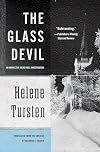
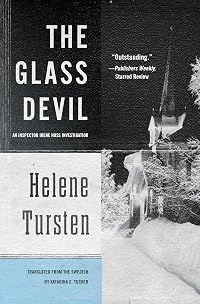
The fourth investigation in the nationally bestselling Swedish detective seriesWhen one of his teachers fails to show up for work, a high school principal calls his friend on the Göteborg police force. To Detective Inspector Irene Huss’s surprise, her boss takes the
complaint seriously, even bringing her with him to a remote cottage in southern Sweden to investigate. There they discover the body of the teacher in question, victim of a rifle shot to the head. When they visit his parents show more to break the news, they find the couple dead in their bed, each shot between the eyes. The family’s sole surviving member, their daughter in London, is too grief-stricken for questioning. A swath of suspects arises as Irene investigates, but she has a hunch the answers to this case lie in England. show less
Tags
Recommendations





Member Reviews
An amazingly detailed and well-crafted police procedural. Each book in the series gets better and better. Irene Huss and her colleagues make an excellent team; working dilligently, professionally, and kindly. They are open minded and attentive when interviewing witnesses, family members of victims, and suspects.
A very satisfying read.
A very satisfying read.
The fourth case for Irene Huss and her colleagues starts with the killing of a clergyman and his wife and grown-up son in a rural area. There's the suggestion of a link to satanism, but even the police don't see this as anything other than a red herring for very long. More problematic is the difficulty they are having in getting any information from the pastor's daughter in London, and eventually, to everyone's surprise but the reader's, Irene is forced to make a trip to the UK.
I had my suspicions in the last book that Tursten was pulling our legs. This time it seems almost certain that we're being led up the garden path. Irene and her British colleague travel to Scotland to interview a witness called St Clair who lives in his family's show more ancestral castle at a place called Rosslyn. Hmmm. I thought at first that she might simply be jumping on the Dan Brown bandwagon - that bit of nonsense was at its height just then - but the Chapel hardly figures, and then I remembered that the real-life Earl of Rosslyn, who owns the castle and has the family name St Clair-Erskine, happens to be a former senior officer of the Metropolitan Police. Obviously a private joke there somewhere! (In real life, Rosslyn Castle is much more of a ruin than she makes it in the book - the only habitable part is rented out for holidays by Landmark Trust.)
The main storyline of this one is a bit creaky, and it's pretty obvious from quite early on which way it's headed, but, as in the previous books, the detail of the investigation and the interactions in the police team are what keep us interested. show less
I had my suspicions in the last book that Tursten was pulling our legs. This time it seems almost certain that we're being led up the garden path. Irene and her British colleague travel to Scotland to interview a witness called St Clair who lives in his family's show more ancestral castle at a place called Rosslyn. Hmmm. I thought at first that she might simply be jumping on the Dan Brown bandwagon - that bit of nonsense was at its height just then - but the Chapel hardly figures, and then I remembered that the real-life Earl of Rosslyn, who owns the castle and has the family name St Clair-Erskine, happens to be a former senior officer of the Metropolitan Police. Obviously a private joke there somewhere! (In real life, Rosslyn Castle is much more of a ruin than she makes it in the book - the only habitable part is rented out for holidays by Landmark Trust.)
The main storyline of this one is a bit creaky, and it's pretty obvious from quite early on which way it's headed, but, as in the previous books, the detail of the investigation and the interactions in the police team are what keep us interested. show less
I'm of two minds about this mystery series. I really like the main detective, Irene Huss. It's one of the few detective series I've found where the lead detective works to maintain a healthy home life and work life balance. It strikes me as much more realistic than when the detectives fall into each case so completely.
But . . . this book took a really gruesome turn at the end that I wasn't really prepared for. I think it sort of soured me on reading any more in the series.
But . . . this book took a really gruesome turn at the end that I wasn't really prepared for. I think it sort of soured me on reading any more in the series.
First Line: Everything had seemed perfect.
After finding Jacob Schyttelius shot to death in his isolated cottage, Detective Inspector Irene Huss and her team from the Violent Crimes Unit in Göteborg, Sweden, visit his parents. Schyttelius's parents have also been shot to death, and the computer monitor in their home-- like Jacob's-- has a Satanic symbol painted on it in their own blood. Both computers' hard drives have been professionally wiped, and the only lead Huss has-- Jacob's sister in London-- is so devastated by the tragedy that she's unable to be of much help. It will be a long and difficult investigation before Irene Huss can solve this case.
There's really not that much mystery to this book. I found the whodunit easy to put show more together, and how the murderer's confession was handled didn't quite set well with me. (It was a case of tell rather than show.) Be that as it may, I really enjoyed the book for Tursten's portrayal of a female detective inspector trying to juggle her profession and her family life. Huss is one of the few members of the fictional police force of the world that I know who actually has a good family life.
Huss got to travel to London, and it was interesting to see England through the eyes of a Swede. There's also a scene in London that came out of nowhere and startled me, which was a definite plus. I do tend to like surprises that make me blink and reread a paragraph because something happened that I did not expect.
Tursten not only does an excellent job of portraying Irene Huss, she brings a homicide investigation to life with its slow, methodical piecing together of conjecture, clues and evidence. I almost felt as though I were a part of the investigative team.
There are only three books in the Irene Huss series so far, and I have come to the end, which is sad. I like this series, and I hope that there will be more in the future. show less
After finding Jacob Schyttelius shot to death in his isolated cottage, Detective Inspector Irene Huss and her team from the Violent Crimes Unit in Göteborg, Sweden, visit his parents. Schyttelius's parents have also been shot to death, and the computer monitor in their home-- like Jacob's-- has a Satanic symbol painted on it in their own blood. Both computers' hard drives have been professionally wiped, and the only lead Huss has-- Jacob's sister in London-- is so devastated by the tragedy that she's unable to be of much help. It will be a long and difficult investigation before Irene Huss can solve this case.
There's really not that much mystery to this book. I found the whodunit easy to put show more together, and how the murderer's confession was handled didn't quite set well with me. (It was a case of tell rather than show.) Be that as it may, I really enjoyed the book for Tursten's portrayal of a female detective inspector trying to juggle her profession and her family life. Huss is one of the few members of the fictional police force of the world that I know who actually has a good family life.
Huss got to travel to London, and it was interesting to see England through the eyes of a Swede. There's also a scene in London that came out of nowhere and startled me, which was a definite plus. I do tend to like surprises that make me blink and reread a paragraph because something happened that I did not expect.
Tursten not only does an excellent job of portraying Irene Huss, she brings a homicide investigation to life with its slow, methodical piecing together of conjecture, clues and evidence. I almost felt as though I were a part of the investigative team.
There are only three books in the Irene Huss series so far, and I have come to the end, which is sad. I like this series, and I hope that there will be more in the future. show less
This is the fourth in the Inspector Irene Huss series from Sweden. Three people from a single family, but not in a single location, are found murdered with no apparent motive to link their deaths, and the police must ferret out a reason from people unwilling to provide information.
While the plot was interesting, the various perpetrators and the various crimes were a little to obvious. At one point Inspector Huss travels to London, and the narrative devolves into travelogue. Tursten doesn't skimp on detail, but often it's a kind of decoration rather than being integral to the story. (Writing this, I find myself going back to edit out my own unnecessary words.) Not a bad book, but longer and more fretful than it needs to be, depending show more too much on information withheld from both the reader and the police.
comment after reread:Three members of a family are found shot dead. The father, a highly regarded pastor, is killed beside his depressive wive; their son is killed at their summer cottage some distance away. Why? No one can find a motive, and the only surviving member of the family, a daughter working in London, is unable to help, as she is herself in a deep and anxiety-ridden depression. But Irene feels she holds the key to this tragedy.
Scandi police novels being what they are, I had an inkling of the solution even though I hadn't remembered reading the book, but it was still a surprising ending. show less
While the plot was interesting, the various perpetrators and the various crimes were a little to obvious. At one point Inspector Huss travels to London, and the narrative devolves into travelogue. Tursten doesn't skimp on detail, but often it's a kind of decoration rather than being integral to the story. (Writing this, I find myself going back to edit out my own unnecessary words.) Not a bad book, but longer and more fretful than it needs to be, depending show more too much on information withheld from both the reader and the police.
comment after reread:Three members of a family are found shot dead. The father, a highly regarded pastor, is killed beside his depressive wive; their son is killed at their summer cottage some distance away. Why? No one can find a motive, and the only surviving member of the family, a daughter working in London, is unable to help, as she is herself in a deep and anxiety-ridden depression. But Irene feels she holds the key to this tragedy.
Scandi police novels being what they are, I had an inkling of the solution even though I hadn't remembered reading the book, but it was still a surprising ending. show less
Pillars of the community in a remote Swedish village, a pastor and his wife and their son, a teacher, are shot dead one night. The pastor has recently been investigating Satanism in his village, and all the signs are indicating that this may be a cult killing. It seems likely that the remaining member of the pastor's family, a daughter in London, may be in some danger and so the investigation takes Detective Inspector Irene Huss from Goteborg to England. When interviewing the daughter becomes difficult Irene feels that the Satanist clues are not really pointing to the answer. There are also suspects in the village, even amongst those who will take over from the pastor.
This is the third of Helene Tursten's Swedish police procedurals to show more be translated into English, and it will be a great pity if there are no more, which I believe at present may be the case. I don't think THE GLASS DEVIL is the strongest of the three. I'm not sure either about the opening Prologue and just how some of that fits in with the main story. There are patches that read a bit like a travelogue when Irene goes to London, but Irene Huss is such a strong, likeable character, that I do want to meet her again. However I do like the way Tursten weaves elements of 'ordinary' policing and family life into the plot. I also like the gruff and down to earth character of her boss Criminal Superintendent Sven Andersson. show less
This is the third of Helene Tursten's Swedish police procedurals to show more be translated into English, and it will be a great pity if there are no more, which I believe at present may be the case. I don't think THE GLASS DEVIL is the strongest of the three. I'm not sure either about the opening Prologue and just how some of that fits in with the main story. There are patches that read a bit like a travelogue when Irene goes to London, but Irene Huss is such a strong, likeable character, that I do want to meet her again. However I do like the way Tursten weaves elements of 'ordinary' policing and family life into the plot. I also like the gruff and down to earth character of her boss Criminal Superintendent Sven Andersson. show less
Written 11/17/2011
A minister and his wife are found murdered in their home, while in a cottage in the woods not too far away, their grown son has also been murdered. Pentagrams have been left in blood at the scene, a clue that suggests some local Satanists, who gave the area some trouble the previous year. Inspector Irene Huss is put in charge of this case that becomes more and more complex as she investigates.
I'll say right up front that I'm not sure I was in the right frame of mind while reading this so it may be better than the mediocre marks I'm giving it. It's very good about credibly showing the drudgery of real police work, but that alongside such sensational murders, it seemed not to jive well. And I'm not sure I really warmed show more up to any of the characters either. Still, I read it all and on some level enjoyed it, so if you enjoy crime fiction and the book crosses your path, I wouldn't avoid it (it's received plenty of decent reviews according to the back of the book) show less
A minister and his wife are found murdered in their home, while in a cottage in the woods not too far away, their grown son has also been murdered. Pentagrams have been left in blood at the scene, a clue that suggests some local Satanists, who gave the area some trouble the previous year. Inspector Irene Huss is put in charge of this case that becomes more and more complex as she investigates.
I'll say right up front that I'm not sure I was in the right frame of mind while reading this so it may be better than the mediocre marks I'm giving it. It's very good about credibly showing the drudgery of real police work, but that alongside such sensational murders, it seemed not to jive well. And I'm not sure I really warmed show more up to any of the characters either. Still, I read it all and on some level enjoyed it, so if you enjoy crime fiction and the book crosses your path, I wouldn't avoid it (it's received plenty of decent reviews according to the back of the book) show less
Members
- Recently Added By
Lists

Scandinavian Crime Fiction
224 works; 37 members
Author Information

19+ Works 5,841 Members
Some Editions
Series

Belongs to Publisher Series
btb (73233)
Work Relationships
Is contained in
Common Knowledge
- Canonical title
- The Glass Devil
- Original title
- Glasdjävulen
- Original publication date
- 2002
- People/Characters
- Irene Huss (Detective Inspector); Sven Andersson; Fredrik Stridh; Hannu Rauhala; Tommy Persson; Jonny Blom (show all 11); Svante Malm; Krister Huss; Jenny Huss; Katarina Huss; Yvonne Stridner
- Important places
- Göteborg, Sweden; London, England, UK; Sweden
- Dedication
- To Hilmer and Cecilia
- First words
- Everything had seemed perfect.
- Last words
- (Click to show. Warning: May contain spoilers.)Thank you all for a really great party and the wonderful present...er...experience. Cheers!
- Original language
- Swedish
Classifications
- Genres
- Fiction and Literature, Mystery
- DDC/MDS
- 839.7374 — Literature & rhetoric German & related literatures Other Germanic literatures Swedish literature Swedish fiction 1900-1999 1945-1999
- LCC
- PT9876.3 .U55 .G5313 — Language and Literature German, Dutch and Scandinavian literatures Swedish literature Individual authors or works 1961-2000
- BISAC
Statistics
- Members
- 498
- Popularity
- 60,705
- Reviews
- 12
- Rating
- (3.54)
- Languages
- 10 — Danish, Dutch, English, Finnish, French, German, Hungarian, Norwegian (Bokmål), Norwegian, Swedish
- Media
- Paper, Ebook
- ISBNs
- 24
- ASINs
- 5