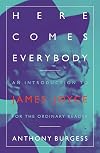
Here Comes Everybody: An Introduction to James Joyce for the Ordinary Reader
by Anthony Burgess 
On This Page
Description
Commentary on Joyce for the average reader.Tags
Recommendations


















Member Recommendations

Member Reviews
Burgess states in the Foreword of Here Comes Everybody, "After nearly fifty years of reading Joyce, it seems only right that I should pass on what I have learned of his methods to those who come fresh to his riches". And indeed his does this beautifully. Burgess covers the entire scope of Joyce's work, arranging the book into three chronological parts, Part 1 covering everything up to A Portrait of the Artist as a Young Man and Parts 2 and 3 expounding Ulysses and Finnegans Wake respectively.
This book may be read as an introduction to Joyce, as an accompaniment while reading Joyce, or as a synopsis having read Joyce. My familiarity with Joyce's works could apply it to any one of those three categories. In the case of Finnegans Wake, show more however, I'm most certainly talking about the first. Burgess devotes a third of the book to elucidating this monster and quotes enough passages to illustrate the difficulty of the text, but in the process gives me a curiosity that will some day result in further study.
My final thought; it seems a Shem to me that later editions of this book were renamed to Re Joyce, I preferred Humphrey Chimpden Earwicker. show less
This book may be read as an introduction to Joyce, as an accompaniment while reading Joyce, or as a synopsis having read Joyce. My familiarity with Joyce's works could apply it to any one of those three categories. In the case of Finnegans Wake, show more however, I'm most certainly talking about the first. Burgess devotes a third of the book to elucidating this monster and quotes enough passages to illustrate the difficulty of the text, but in the process gives me a curiosity that will some day result in further study.
My final thought; it seems a Shem to me that later editions of this book were renamed to Re Joyce, I preferred Humphrey Chimpden Earwicker. show less
I recommend this wonderful book to anyone who wants to approach either "Ulysses" or "Finnegans Wake". Burgess was a great admirer of Joyce. In this book his enthusiasm shines through, and Burgess does admirably in going out of his way to encourage readers to go beyond any initial hesitancy they may have, and to search out the magic in Joyce's masterpieces.
Burgess' elucidation of "Ulysses" would be an invaluable help to have alongside one while reading the novel. As for "Finnegans Wake", Burgess does his best in teasing out the thousand fold threads that permeate and tangle the dream-scape of this thundering monster. He is the first to admit limitations, but he ought to be congratulated in doing his best. The final chapter is a stout show more defence of Joyce in face of his detractors, who accuse him of unintelligibility. Burgess' point is that "Dream-literature, breaking down all boundaries, may be more concerned with the phenomenon of language" than "Waking literature (that is, literature that bows to time and space)" which "is the exploitation of a single language". show less
Burgess' elucidation of "Ulysses" would be an invaluable help to have alongside one while reading the novel. As for "Finnegans Wake", Burgess does his best in teasing out the thousand fold threads that permeate and tangle the dream-scape of this thundering monster. He is the first to admit limitations, but he ought to be congratulated in doing his best. The final chapter is a stout show more defence of Joyce in face of his detractors, who accuse him of unintelligibility. Burgess' point is that "Dream-literature, breaking down all boundaries, may be more concerned with the phenomenon of language" than "Waking literature (that is, literature that bows to time and space)" which "is the exploitation of a single language". show less
I'm very pleased with this book. Not only is it on point and information it also has enough writerly style in it that I can't help but keep turning the page even if I didn't find the section on Finnegans Wake to be helpful. I think Burgess should've focused on Dubliners and A Portrait Of The Artist As A Young Man more. But these quibbles aside the Ulysses section of the book was absolutely inspired. I loved his thoughts on what were going to be the ramifications of Bloomsday and how he made it even bigger than what had been apparent from the book and other books I've read about the book. It was a treat having re-confirmed in my mind that Bloom ate liver and bacon on that day while his companion ate steak and kidney pie. I love Joyce show more books and I love books on Joyce almost as much. show less
"My book does not pretend to scholarship, only to a desire to help the average reader who wants to know Joyce's work but has been scared off by the professors. The appearance of difficulty is part of Joyce's big joke; the profundities are always expressed in good round Dublin terms; Joyce's heroes are humble men." --From the Foreword by Anthony Burgess.
A great and inventive writer enjoys himself immensely in discussing and explaining perhaps the most inventive and important writer of the twentieth century. Vigorous, humorous, and perceptive, Anthony Burgess's commentary is an excellent introduction and a valuable companion to reading Joyce. Source: Publisher per www.books.google.com
A great and inventive writer enjoys himself immensely in discussing and explaining perhaps the most inventive and important writer of the twentieth century. Vigorous, humorous, and perceptive, Anthony Burgess's commentary is an excellent introduction and a valuable companion to reading Joyce. Source: Publisher per www.books.google.com
An enthusiastic guide to "Ulysses", and to "Finnegan's Wake". I still haven't tried more than a few pages of "Finnegan's Wake", but I had no trouble with "Ulysses". Burgess, no mean novelist himself, was a great fan, and the book was a pleasant introduction to the word-puzzler's novels.
It might be that Burgess is the best equipped to deal with Joyce, Robert Anton Wilson is no slouch on the subject.
Still working on this book actually. As I plow through Joyce, I read more of this, a wonderful guide.
Members
- Recently Added By
Author Information

120+ Works 48,185 Members
Anthony Burgess was born in 1917 in Manchester, England. He studied language at Xaverian College and Manchester University. He had originally applied for a degree in music, but was unable to pass the entrance exams. Burgess considered himself a composer first, one who later turned to literature. Burgess' first novel, A Vision of Battlements show more (1964), was based on his experiences serving in the British Army. He is perhaps best known for his novel A Clockwork Orange, which was later made into a movie by Stanley Kubrick. In addition to publishing several works of fiction, Burgess also published literary criticism and a linguistics primer. Some of his other titles include The Pianoplayers, This Man and Music, Enderby, The Kingdom of the Wicked, and Little Wilson and Big God. Burgess was living in Monaco when he died in 1993. (Bowker Author Biography) show less
Anthony Burgess has a Legacy Library. Legacy libraries are the personal libraries of famous readers, entered by LibraryThing members from the Legacy Libraries group.
All Editions
Work Relationships
Is a study of
Common Knowledge
- Canonical title
- Here Comes Everybody: An Introduction to James Joyce for the Ordinary Reader
- Original title
- Here Comes Everybody
- Alternate titles
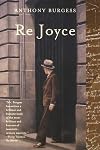
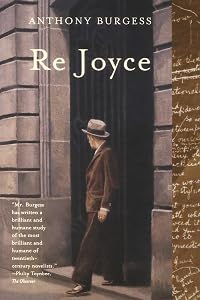
- Re Joyce
- Original publication date
- 1965
- People/Characters
- James Joyce
- Important places
- Dublin, Ireland; Ireland
- Original language
- English
- Disambiguation notice
- Here Comes Everybody (1965) was reprinted in the U.S. as Re Joyce (1966). Please do not separate them.
Classifications
Statistics
- Members
- 564
- Popularity
- 52,631
- Reviews
- 7
- Rating
- (3.85)
- Languages
- English, French, German, Portuguese
- Media
- Paper, Ebook
- ISBNs
- 11
- ASINs
- 16