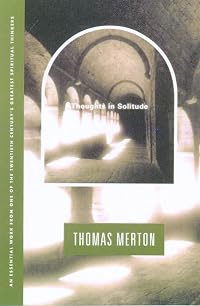
Thoughts In Solitude
by Thomas Merton
On This Page
Description
Thoughtful and eloquent, as timely (or timeless) now as when it was originally published in 1956, Thoughts in Solitude addresses the pleasure of a solitary life, as well as the necessity for quiet reflection in an age when so little is private. Thomas Merton writes: "When society is made up of men who know no interior solitude it can no longer be held together by love: and consequently it is held together by a violent and abusive authority. But when men are violently deprived of the show more solitudeand freedom which are their due, the society in which they live becomes putrid, it festers with servility, resentment and hate." Thoughts in Solitude stands alongsideThe Seven Storey Mountain as one of Merton's most uring and popular works. Thomas Merton, a Trappist monk, is perhaps the foremost spiritual thinker of the twentiethcentury. His diaries, social commentary, and spiritual writings continue to be widely read after his untimely death in 1968. show lessTags
Recommendations






















Member Reviews
Thoughtful and eloquent, as timely (or timeless) now as when it was originally published in 1956, Thoughts in Solitude addresses the pleasure of a solitary life, as well as the necessity for quiet reflection in an age when so little is private. Thomas Merton writes: "When society is made up of men who know no interior solitude it can no longer be held together by love: and consequently it is held together by a violent and abusive authority. But when men are violently deprived of the solitude and freedom which are their due, the society in which they live becomes putrid, it festers with servility, resentment and hate."
There's a distinct pattern to Thomas Merton's writing in each chapter of Thoughts in Solitude, none of which is more than three or four pages. Merton makes an insightful assertion about living a spiritual life, immediately points out the dangers of misinterpreting either his point or one's own feelings about his point, lays out the benefits of applying his thoughts to one's actions, and admits how difficult it is. He's perfectly concise while still managing to delineate the progression of his thoughts, a talent that I probably respect most in any writer, but especially one with a religious focus. Because Merton is so succinct and direct, readers are forced to confront what he's saying head-on. This will probably make you uncomfortable, show more but hey, it'll be much more comfortable than THE FIRES OF HELL!!!
I'm exaggerating. While Merton does force us to ask tough questions of ourselves, there's nothing accusatory in his tone. My favorite aspect of his writing is his unique way of showcasing his struggles with living out his understanding of the spiritual life. He writes his own prayers at the end of several chapters (some long, some short) that are great in two ways. These prayers are a way for him to illustrate his personal struggles to the reader without having to pull the "Hey guys, we're all in the same boat! Let's get through it together!" hokeyness that so many Christian writers love, but more importantly, they're a great guide for those looking for help on the path to achieving what Merton wants us to achieve.
I'm looking for two things from non-fiction spiritual writing. I want the author to both reaffirm and challenge my thoughts (basically saying that I'm right but not right enough) and then challenge my actions, not based on the fact that they're naughty but rather that my actions don't gel with my revised thoughts. I think we all are to a certain extent aware that we live our lives in this way, but we aren't reminded of it in a productive manner. Thinking about it on our own tends to lead down a road of perpetual self-castigation rather than self-improvement. We need a quality outside resource to pair with our thoughts, and Merton provides that here.
Somewhat unrelated, I've been thinking a lot about how Merton is perceived by the modern reader. I love the guy and find his struggles with vices in his personal life both endearing and a good supplement to his writing. Other than the dolts who conflate imperfect humans and hypocrites, other than the irrepressible morons who somehow see failure to live up to one's own standards as a counterpoint to religion, I think most people appreciate a generally holy person's struggles that linger long after his religious epiphany has occurred. But the most important thing to remember is that even disliking Merton as a person is alright as long as it isn't affecting the way you live your life. Merton makes a great point in the book that alludes to the dangers of tying goodness to people rather than letting it stand on its own.
I'm exaggerating. While Merton does force us to ask tough questions of ourselves, there's nothing accusatory in his tone. My favorite aspect of his writing is his unique way of showcasing his struggles with living out his understanding of the spiritual life. He writes his own prayers at the end of several chapters (some long, some short) that are great in two ways. These prayers are a way for him to illustrate his personal struggles to the reader without having to pull the "Hey guys, we're all in the same boat! Let's get through it together!" hokeyness that so many Christian writers love, but more importantly, they're a great guide for those looking for help on the path to achieving what Merton wants us to achieve.
I'm looking for two things from non-fiction spiritual writing. I want the author to both reaffirm and challenge my thoughts (basically saying that I'm right but not right enough) and then challenge my actions, not based on the fact that they're naughty but rather that my actions don't gel with my revised thoughts. I think we all are to a certain extent aware that we live our lives in this way, but we aren't reminded of it in a productive manner. Thinking about it on our own tends to lead down a road of perpetual self-castigation rather than self-improvement. We need a quality outside resource to pair with our thoughts, and Merton provides that here.
Somewhat unrelated, I've been thinking a lot about how Merton is perceived by the modern reader. I love the guy and find his struggles with vices in his personal life both endearing and a good supplement to his writing. Other than the dolts who conflate imperfect humans and hypocrites, other than the irrepressible morons who somehow see failure to live up to one's own standards as a counterpoint to religion, I think most people appreciate a generally holy person's struggles that linger long after his religious epiphany has occurred. But the most important thing to remember is that even disliking Merton as a person is alright as long as it isn't affecting the way you live your life. Merton makes a great point in the book that alludes to the dangers of tying goodness to people rather than letting it stand on its own.
“The desire for virtue is frustrated in many men of good will by the distaste they instinctively feel for the false virtues of those who are supposed to be holy. Sinners have a very keen eye for false virtues and a very exacting idea of what virtue should be in a good man. If in the men who are supposed to be good they only see a “virtue” which is effectively less vital and less interesting than their own vices they will conclude that virtue has no meaning, and will cling to what they have although they hate it.”Dismissing someone's ideas because of their personal failings is the ultimate "shoving your head inside your own asshole because someone else forgot to wipe" move (I don't know who I'm quoting there. Ben Franklin, maybe?). Don't do that, but do read the book. show less
Solitude is Golden
A review of “Thoughts in Solitude” (eighteen short chapters on aspects of the spiritual life, and the love of solitude) by Thomas Merton.
Preamble
The world is populated by too many mindless men and women. “Automatons cannot make a society”, and thus we must learn how to choose, and especially how to choose the life of faith. We “cannot choose faith unless we have self determination and freedom.” Solitude is a vital tool in enabling choice - “coming to this place [of ability to choose] requires some solitude”.
Summary
Developing spiritual strength and intimacy with God requires spiritual disciplines. Perhaps solitude is one of the most important and least utilised. Jesus sets the example: “Very early in show more the morning, while it was still dark, Jesus got up, left the house and went off to a solitary place, where he prayed.” (Mark 1:35 NIV11; cf. Luke 5:16). Merton’s message is a challenge to courageously enter the ‘desert’ of solitude, “Man's despair will never be solved by conquering the wilderness with materialism, instead his despair will be solved by embracing the wilderness and it's solitude, and there finding God.” p22 I recommend the book with some caveats. It is best read a chapter at a time, and perhaps once a week. The text deserves proper reflection and assessment as to the accuracy and efficacy of his recommendations. Not all suggestions will appeal or work for all people.
Body of the Book
In part one, “Aspects of the Spiritual Life”, Merton introduces us to the value of the ‘desert’ as wildernesses, “created by God so people can only enjoy him.” In other words, since there is nothing else other than God in the wilderness, we can settle the heart on him. Deserts require self-denial which, “should strengthen our appreciation of emotion.” Joy is heightened by focus, not abundance. The desert is conducive to self-work, enabling us “to have enough mastery of ourselves to renounce our own will into the hands of Christ – so that he may conquer what we cannot reach by our own efforts.” Christlike behaviour is aided by remembering the pleasure of a good act, not to feel good, but to remember that it is more delightful and fruitful "than the acts of vice which oppose and frustrate them". It is good to take pleasure in serving the poor, speaking the gospel to people, and such like.
Discretion is a key aspect of the spiritual life, but laziness and cowardice can mask as discretion. “Discretion warns us against wasted effort: but for the coward all effort is wasted effort. Discretion shows us where effort is wasted and when it is obligatory. Laziness flies from all risk. Discretion flies from useless risk: but urges us on to take the risks that faith and the grace of God demands of us.” Courage is needed. Cowardice prevents both faith and hope. Yet we are weak. How will God respond? Going to God fully conscious of our weakness is helpful and necessary for us to fully experience his love for us. Therefore we should rejoice in our poverty.
God gives us pleasures in this life, but we do well not to grasp them too firmly. Merton reminds us, “My hope is in what the eye has never seen. Therefore, let me not trust in visible rewards. My hope is in what the heart of man cannot feel. Therefore let me not trust in the feelings of my heart. My hope is in what the hand of man has never touched. Do not let me trust what I can grasp between my fingers. Death will loosen my grasp and my vain hope will be gone.” Instead, we are grateful for whatever God provides. “Gratitude of itself makes us sincere - or if it does not, then it is not true gratitude”, says Merton, and true gratitude is the strongest defence against tepidity.
Humility is perhaps the king of virtues. But, can we love ourselves while remaining humble? The proud man loves himself because he thinks he deserves it. We love ourselves because in loving what we are, it means we have accepted it and that takes us to the mercy of God. Jesus lived a humble life for a purpose. He “lived the ordinary life of the men of his time, in order to sanctify the ordinary lives of men of all time.” Living as he lived requires meditation in prayer. Meditative prayer is bringing the whole of the self to God. Physical, spiritual, emotional. Therefore, it requires significant effort, or "upheaval" as Merton calls it. And prayer, while meditative, is not pure introspection - “We ruin our life of prayer if we are constantly examining our prayer and seeking the fruit of prayer in a peace that is nothing more than a psychological process.” Pure prayer helps refine our will to that of God. To live a truly spiritual life, and one which glorifies God, we must live the will of God and this will connect us with his mercy, because we can only do this with his mercy empowering us. This leaves the question as to how we know that we are living the will of God. Merton seems to be saying that this becomes clear when we remove desire for anything attached to this world. That might work for a monk, but will it work for everyone else?
Reading is a spiritual discipline. It “ought to be an act of homage to the God of all truth”, because books can "bring us light and peace and fill us with silence.” While reading we must not forget to look for the person in the words and the book, instead of just an idea. It's all about Jesus - "the incarnate Word, is the book of life in whom we read God.” Looking for Jesus stimulates our humility, even though it is a frightening prospect. It is frightening because it is impossible. Merton says that we like a false and shallow humility, humility that he describes as making a person "charming and attractive". But true humility is a humility that knows it is a liar!
Part two, “The Love of Solitude” focusses on how to enjoy and value solitude. We will have to reckon with anxiety. Merton suggests that “our anxiety is not imposed on us by force from outside. We impose it on our world and upon one another from within ourselves.” How do we respond to challenges and incompletions? “We are not meant to resolve all contradictions but to live with them and rise above them and see them in the light of exterior and objective values which make them trivial by comparison.” (see Isaiah 30:15) Merton appears to be urging us to employ silence as a state that will prevent us from trying to fix our problems by human effort, but instead letting God be God and allow him to define himself to us and his relationship with us. Is this passive?
What action is needful? Merton would argue that listening is not passive - “He is heard only when we hope to hear Him, and if, thinking our hope to be fulfilled, we cease to listen, He ceases to speak, His silence ceases to be vivid and becomes dead, even though we re-charge it with the echo of our own emotional noise.” Resting in God does not mean we do not continue to seek him. A growing relationship requires that we are active in seeking. If we become passive, the resting will become a false contentment and we will find God withdrawing. Or is it us who withdraws?
How is prayer affected? Merton comments, “If my prayer is centred in myself, if it seeks only an enrichment of my own self, my prayer itself will be my greatest potential distraction.” When our hearts are truly centred on God, and everything within us is unified in that, then we do not seek things from God as our fulfilment. Because God is already our fulfilment. However, I would question how this fits with Jesus telling us to ask for our daily bread.
Solitude helps us grow because it is in silence that we become more aware of the immensity of God. “It is a greater thing and a better prayer to live in him who is infinite, and to rejoice that he is infinite, than to strive always to press his infinity into the narrow space of our own hearts.” Trying to bring God into us diminishes him. Taking ourself into him grows us.
Solitude is not an end in itself, however. “Actions are the doors and windows of being. Unless we act we have no way of knowing what we are. Hence to find our spiritual being we must travel down the path made by our spiritual activity.” We find who we are in solitude and in action. “I do not have to run away from myself; it is sufficient that I find myself, not as I have made myself, by my stupidity, but as he has made me in his wisdom and re-made me in his infinite mercy.”
In essence the book is concerned with creating space to be heard, to hear and to handle reality - with God. Merton gives us plenty of sound reasoning to demonstrate the value of solitude. His use of scripture to support his points is of variable effectiveness, and some of his interpretation ventures into more allegorical territory than is warranted. Indeed, more scripture overall would have been helpful. My primary criticism of this book would be Merton’s argument that to be a solitary is a vocation. There is scant Biblical testimony for this. To choose such a life cannot be easy. But it does avoid many of the community aspects of the way God forms Christ in us. I can’t help but wonder if a certain kind of person becomes a solitary to avoid those hardships.
Conclusion
Most of the short chapters are compact nuggets of spiritual gold. Some are more questionable as to their relevance for the average Christ-follower. Read this book and you will likely benefit from its company and reach the conclusion that more ‘solitude’ in your life would be helpful. Keep an open mind about what makes you uncomfortable, but do not accept all Merton’s ideas just because they come from such a persuasive writer and deep thinker.
Malcolm Cox
23 March 2017
The final chapter contains this helpful paragraph on how we read the Bible:
“To those who read scripture in an academic or aesthetic or merely devotional way the Bible indeed offers pleasant refreshment and profitable thoughts. But to learn the inner secrets of the Scriptures we must make them our true daily bread, find God in them when we are in greatest need-and usually when we can find him nowhere else and have nowhere else to look!” show less
A review of “Thoughts in Solitude” (eighteen short chapters on aspects of the spiritual life, and the love of solitude) by Thomas Merton.
Preamble
The world is populated by too many mindless men and women. “Automatons cannot make a society”, and thus we must learn how to choose, and especially how to choose the life of faith. We “cannot choose faith unless we have self determination and freedom.” Solitude is a vital tool in enabling choice - “coming to this place [of ability to choose] requires some solitude”.
Summary
Developing spiritual strength and intimacy with God requires spiritual disciplines. Perhaps solitude is one of the most important and least utilised. Jesus sets the example: “Very early in show more the morning, while it was still dark, Jesus got up, left the house and went off to a solitary place, where he prayed.” (Mark 1:35 NIV11; cf. Luke 5:16). Merton’s message is a challenge to courageously enter the ‘desert’ of solitude, “Man's despair will never be solved by conquering the wilderness with materialism, instead his despair will be solved by embracing the wilderness and it's solitude, and there finding God.” p22 I recommend the book with some caveats. It is best read a chapter at a time, and perhaps once a week. The text deserves proper reflection and assessment as to the accuracy and efficacy of his recommendations. Not all suggestions will appeal or work for all people.
Body of the Book
In part one, “Aspects of the Spiritual Life”, Merton introduces us to the value of the ‘desert’ as wildernesses, “created by God so people can only enjoy him.” In other words, since there is nothing else other than God in the wilderness, we can settle the heart on him. Deserts require self-denial which, “should strengthen our appreciation of emotion.” Joy is heightened by focus, not abundance. The desert is conducive to self-work, enabling us “to have enough mastery of ourselves to renounce our own will into the hands of Christ – so that he may conquer what we cannot reach by our own efforts.” Christlike behaviour is aided by remembering the pleasure of a good act, not to feel good, but to remember that it is more delightful and fruitful "than the acts of vice which oppose and frustrate them". It is good to take pleasure in serving the poor, speaking the gospel to people, and such like.
Discretion is a key aspect of the spiritual life, but laziness and cowardice can mask as discretion. “Discretion warns us against wasted effort: but for the coward all effort is wasted effort. Discretion shows us where effort is wasted and when it is obligatory. Laziness flies from all risk. Discretion flies from useless risk: but urges us on to take the risks that faith and the grace of God demands of us.” Courage is needed. Cowardice prevents both faith and hope. Yet we are weak. How will God respond? Going to God fully conscious of our weakness is helpful and necessary for us to fully experience his love for us. Therefore we should rejoice in our poverty.
God gives us pleasures in this life, but we do well not to grasp them too firmly. Merton reminds us, “My hope is in what the eye has never seen. Therefore, let me not trust in visible rewards. My hope is in what the heart of man cannot feel. Therefore let me not trust in the feelings of my heart. My hope is in what the hand of man has never touched. Do not let me trust what I can grasp between my fingers. Death will loosen my grasp and my vain hope will be gone.” Instead, we are grateful for whatever God provides. “Gratitude of itself makes us sincere - or if it does not, then it is not true gratitude”, says Merton, and true gratitude is the strongest defence against tepidity.
Humility is perhaps the king of virtues. But, can we love ourselves while remaining humble? The proud man loves himself because he thinks he deserves it. We love ourselves because in loving what we are, it means we have accepted it and that takes us to the mercy of God. Jesus lived a humble life for a purpose. He “lived the ordinary life of the men of his time, in order to sanctify the ordinary lives of men of all time.” Living as he lived requires meditation in prayer. Meditative prayer is bringing the whole of the self to God. Physical, spiritual, emotional. Therefore, it requires significant effort, or "upheaval" as Merton calls it. And prayer, while meditative, is not pure introspection - “We ruin our life of prayer if we are constantly examining our prayer and seeking the fruit of prayer in a peace that is nothing more than a psychological process.” Pure prayer helps refine our will to that of God. To live a truly spiritual life, and one which glorifies God, we must live the will of God and this will connect us with his mercy, because we can only do this with his mercy empowering us. This leaves the question as to how we know that we are living the will of God. Merton seems to be saying that this becomes clear when we remove desire for anything attached to this world. That might work for a monk, but will it work for everyone else?
Reading is a spiritual discipline. It “ought to be an act of homage to the God of all truth”, because books can "bring us light and peace and fill us with silence.” While reading we must not forget to look for the person in the words and the book, instead of just an idea. It's all about Jesus - "the incarnate Word, is the book of life in whom we read God.” Looking for Jesus stimulates our humility, even though it is a frightening prospect. It is frightening because it is impossible. Merton says that we like a false and shallow humility, humility that he describes as making a person "charming and attractive". But true humility is a humility that knows it is a liar!
Part two, “The Love of Solitude” focusses on how to enjoy and value solitude. We will have to reckon with anxiety. Merton suggests that “our anxiety is not imposed on us by force from outside. We impose it on our world and upon one another from within ourselves.” How do we respond to challenges and incompletions? “We are not meant to resolve all contradictions but to live with them and rise above them and see them in the light of exterior and objective values which make them trivial by comparison.” (see Isaiah 30:15) Merton appears to be urging us to employ silence as a state that will prevent us from trying to fix our problems by human effort, but instead letting God be God and allow him to define himself to us and his relationship with us. Is this passive?
What action is needful? Merton would argue that listening is not passive - “He is heard only when we hope to hear Him, and if, thinking our hope to be fulfilled, we cease to listen, He ceases to speak, His silence ceases to be vivid and becomes dead, even though we re-charge it with the echo of our own emotional noise.” Resting in God does not mean we do not continue to seek him. A growing relationship requires that we are active in seeking. If we become passive, the resting will become a false contentment and we will find God withdrawing. Or is it us who withdraws?
How is prayer affected? Merton comments, “If my prayer is centred in myself, if it seeks only an enrichment of my own self, my prayer itself will be my greatest potential distraction.” When our hearts are truly centred on God, and everything within us is unified in that, then we do not seek things from God as our fulfilment. Because God is already our fulfilment. However, I would question how this fits with Jesus telling us to ask for our daily bread.
Solitude helps us grow because it is in silence that we become more aware of the immensity of God. “It is a greater thing and a better prayer to live in him who is infinite, and to rejoice that he is infinite, than to strive always to press his infinity into the narrow space of our own hearts.” Trying to bring God into us diminishes him. Taking ourself into him grows us.
Solitude is not an end in itself, however. “Actions are the doors and windows of being. Unless we act we have no way of knowing what we are. Hence to find our spiritual being we must travel down the path made by our spiritual activity.” We find who we are in solitude and in action. “I do not have to run away from myself; it is sufficient that I find myself, not as I have made myself, by my stupidity, but as he has made me in his wisdom and re-made me in his infinite mercy.”
In essence the book is concerned with creating space to be heard, to hear and to handle reality - with God. Merton gives us plenty of sound reasoning to demonstrate the value of solitude. His use of scripture to support his points is of variable effectiveness, and some of his interpretation ventures into more allegorical territory than is warranted. Indeed, more scripture overall would have been helpful. My primary criticism of this book would be Merton’s argument that to be a solitary is a vocation. There is scant Biblical testimony for this. To choose such a life cannot be easy. But it does avoid many of the community aspects of the way God forms Christ in us. I can’t help but wonder if a certain kind of person becomes a solitary to avoid those hardships.
Conclusion
Most of the short chapters are compact nuggets of spiritual gold. Some are more questionable as to their relevance for the average Christ-follower. Read this book and you will likely benefit from its company and reach the conclusion that more ‘solitude’ in your life would be helpful. Keep an open mind about what makes you uncomfortable, but do not accept all Merton’s ideas just because they come from such a persuasive writer and deep thinker.
Malcolm Cox
23 March 2017
The final chapter contains this helpful paragraph on how we read the Bible:
“To those who read scripture in an academic or aesthetic or merely devotional way the Bible indeed offers pleasant refreshment and profitable thoughts. But to learn the inner secrets of the Scriptures we must make them our true daily bread, find God in them when we are in greatest need-and usually when we can find him nowhere else and have nowhere else to look!” show less
A second read of one of TM's later books. Also a read after reading more Jesuits philosophy. Became infatuated with TM 35 years ago. His mental and spiritual wanderings are internal and on this re-read sounded like spiritual naval gazing with the Catholic verbial trimmings (a lot of capital letters). But when one sits and prays and thinks without reflecting on actions never taken that is where a well meaning literary monk would end up,
But Catholicism is a large tent. Both TMs and Father James Martin's "God is where You Are" and the Jesuits "God in All things" can abide.
But Catholicism is a large tent. Both TMs and Father James Martin's "God is where You Are" and the Jesuits "God in All things" can abide.
As a fan of writers such a Augustine, Aquinas, and Thomas a Kempis, I'm very familiar with the writings of monks. I've benefited from the timeless wisdom and though provoking writings of all these authors. However, this was the first book I've read by Merton.
I really enjoyed this short book. Merton writes beautifully and from a philosophical as well as practical perspective. He defines solitude (which can be found either amid groups of people or when we're alone), the benefits of it, and explains how to seek it. As a natural introvert, reading this book was a little like preaching to the choir, which may be why I didn't rate it higher. It impressed me enough that I will be reading more of Merton's work on other subjects within the next show more year. show less
I really enjoyed this short book. Merton writes beautifully and from a philosophical as well as practical perspective. He defines solitude (which can be found either amid groups of people or when we're alone), the benefits of it, and explains how to seek it. As a natural introvert, reading this book was a little like preaching to the choir, which may be why I didn't rate it higher. It impressed me enough that I will be reading more of Merton's work on other subjects within the next show more year. show less
There is much to learn from in this short book and I know I've only scratched the surface. In a world of smartphones, Netflix, social media and everything else, I'm grateful for any clear headed thoughts that point me towards silence and contentment, rather than endless cycle of consuming.
This is a thoughtful book of meditations. I was impressed and moved by my reading of Merton's Seven Story Mountain and found this compact book a welcome adjunct.
Members
- Recently Added By
Author Information

397+ Works 38,275 Members
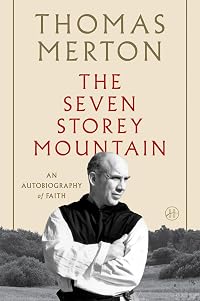
Born in France, Thomas Merton was the son of an American artist and poet and her New Zealander husband, a painter. Merton lost both parents before he had finished high school, and his younger brother was killed in World War II. Something of the ephemeral character of human endeavor marked all his works, deepening the pathos of his writings and show more drawing him close to Eastern, especially Buddhist, forms of monasticism. After an initial education in the United States, France, and England, he completed his undergraduate degree at Columbia University. His parents, nominally friends, had given him little religious guidance, and in 1938, he converted to Roman Catholicism. The following year he received an M.A. from Columbia University and in 1941, he entered Gethsemani Abbey in Kentucky, where he remained until a short time before his death. His working life was spent as a Trappist monk. At Gethsemani, he wrote his famous autobiography, "The Seven Storey Mountain" (1948); there he labored and prayed through the days and years of a constant regimen that began with daily prayer at 2:00 a.m. As his contemplative life developed, he still maintained contact with the outside world, his many books and articles increasing steadily as the years went by. Reading them, it is hard to think of him as only a "guilty bystander," to use the title of one of his many collections of essays. He was vehement in his opposition to the Vietnam War, to the nuclear arms race, to racial oppression. Having received permission to leave his monastery, he went on a journey to confer with mystics of the Hindu and Buddhist traditions. He was accidentally electrocuted in a hotel in Bangkok, Thailand, on December 10, 1968. (Bowker Author Biography) show less
Series
Belongs to Publisher Series
Common Knowledge
- Canonical title*
- Pensieri nella solitudine
- Original title
- Thoughts in solitude
- Original publication date
- 1958
- First words*
- Non esiste nella vita spirituale disastro più grande dell'essere immersi nell'irrealtà, perché la vita in noi viene alimentata e mantenuta dall scombio vitale che intercorre tra noi e le realtà che ci circondano e ci sovr... (show all)astano.
- Last words*
- (Click to show. Warning: May contain spoilers.)Ecco il vero frutto e il vero scopo della solitudine cristiana.
*Some information comes from Common Knowledge in other languages. Click "Edit" for more information.
Classifications
Statistics
- Members
- 1,350
- Popularity
- 17,799
- Reviews
- 12
- Rating
- (3.85)
- Languages
- 7 — Catalan, English, Finnish, Italian, Norwegian (Bokmål), Spanish, Swedish
- Media
- Paper, Audiobook, Ebook
- ISBNs
- 16
- ASINs
- 22