
About the Author
Works by Patrick Hart
Run to the Mountain: The Story of a Vocation (The Journals of Thomas Merton, Volume One 1939-1941) (1995) — Editor — 448 copies, 5 reviews
An Monastic Vision For The Twenty-First Century: Where Do We Go From Here? (Monastic Wisdom Series) (2006) 42 copies
Thomas Merton Remembered — Editor — 2 copies
A Prolegomenon to the Study of Paul (Supplements to Method & Theory in the Study of Religion) (2020) 2 copies
Merton na Intimidade 1 copy
Associated Works
Tagged
Common Knowledge
- Gender
- male
Members
Reviews
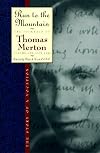
This first of seven volumes of Merton's journals consists of writing that predates his entrance into the Trappist monastery of Gethsemani. As the subtitle promises, it is the story of a vocation; and, as any complete story of a vocation must be, it is the story of the time in which the vocation was formed. Merton was already one of the most influential spiritual writers of the twentieth century when he died unexpectedly in 1968, and, in the more than twenty five years since, his influence show more has continued to grow. This collection is a fascinating personal glimpse into the intellectual and spiritual sources of that influence. Moments of brilliance are intertwined with ordinariness lifted to extraordinary heights by increasingly disciplined reflection. It is no coincidence that the time in which Merton's vocation was formed was also a pivotal time for the formation of modern history. Merton's spiritual development is thoroughly entangled with the development of his attitude toward war and peace, and his account of the development is an important glimpse into the interconnection of the "personal" with the "political." The book will be of particular interest not only to those who seek a greater understanding of Merton but also to those who seek a greater understanding of spiritual development and the spiritual dimensions of the political developments of this troubled century. show less
Run to the Mountain: The Story of a VocationThe Journal of Thomas Merton, Volume 1: 1939-1941 (The Journals of Thomas Merton) by Thomas Merton
I picked this up while my husband and I were on retreat at a Trappist monastery. I blazed through it. I'd never read Merton, and I wanted to stop to contemplate his insights, but he gave me something I seemed to be starving for, so I gobbled it up. I was greedy and obsessive. Vol. 1 covers the years 1939-1941, just before he became a monk. The final entry is dated two days before the Japanese attacked Pearl Harbor. He writes about the war in Europe from the perspective of a draft-age man show more living through it day-to-day, reacting to the headlines, speculating about Roosevelt’s intentions. This immediacy will be irresistible for anyone who loves history. As a grad student living in Greenwich Village, Merton taught at Columbia University. He was a poet and novelist (unpublished at the time), so this volume includes candid responses to rejection letters from New York publishers. The New Yorker magazine rejected one of his poems because it was “a parody of Emily Dickinson,” and since New Yorker readers didn’t read Dickinson, they wouldn’t understand the connection. Merton protests in a journal entry. “I never read a line of Emily Dickinson.” Writers, take heart … you’re in excellent company. I was struck by Merton’s absolute visceral knowledge of God’s love … as well as the deep insights he had even in his twenties. His writing caused me to have a couple of epiphanies about my own life and faith. At 500 pages, it’s an enormous book, (and only the first of seven volumes) but down to earth, funny, inspiring. I found it transformative. I’m going to jump right in to Volume 2. show less
Run to the Mountain: The Story of a VocationThe Journal of Thomas Merton, Volume 1: 1939-1941 (The Journals of Thomas Merton, V. 1) by Thomas Merton
Thomas Merton wrote the clearest, most sincere, important works of Christian spirituality of the 20th century. This is the first of his lengthy series of journals (of which dozens are published.) This is definitely early Merton: opinionated in literature, conflicted about his future, and deep in study of Catholic theology and saints. Intelligent and honest analysis of the world that, though it was written at the onset of WWII, doesn't feel outdated because Merton's focus is on the underlying show more causes in the world, rather than the events themselves. show less
Run to the Mountain: The Story of a VocationThe Journal of Thomas Merton, Volume 1: 1939-1941 by Thomas Merton
Best read after Seven Storey Mountain and New Seeds Of Contempation. If you want to know more about Thomas and the struggle of vocation. Lovely writting, very few bits you have to skim over. The Cuban writting is wonderful, all the time you can tell there is a parallel struggle going on just under the surface, and boy does it surface. The struggle that is in all of us to find true meaning and the path to vocation.
You May Also Like


Associated Authors
Statistics
- Works
- 15
- Also by
- 2
- Members
- 1,144
- Popularity
- #22,444
- Rating
- 3.9
- Reviews
- 9
- ISBNs
- 25
- Languages
- 2