
Monica Furlong (1930–2003)
Author of Wise Child
About the Author
Monica Furlong has worked as a religious programmes producer for the BBC.
Series
Works by Monica Furlong
Women Pray: Voices through the Ages, from Many Faiths, Cultures, and Traditions (2002) 58 copies, 1 review
Associated Works
Tagged
Common Knowledge
- Birthdate
- 1930-01-17
- Date of death
- 2003-01-14
- Gender
- female
- Occupations
- journalist
author
biographer - Nationality
- UK
- Birthplace
- Kenton, Middlesex, England, UK
- Places of residence
- Kenton, Middlesex, England, UK (Birth)
London, Middlesex, England, UK - Place of death
- Umberleigh, Devon, England, UK
- Map Location
- England, UK
Members
Reviews
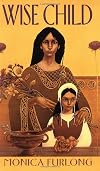
I read this because it was a friend's beloved childhood book, and I'm so glad I did. It hit me right in my pagan, "living in the rhythm," kitchen-witch heart. I have aspired to be Juniper my entire adult life, and I didn't even know it.
This would be a hard sell for most contemporary kids I know. It's slow. The pacing feels old-fashioned: languorous descriptions of the light falling across the floor, the milking of the cow, the gradual coming to terms with being Juniper's ward... punctuated show more by occasional adventures. The GR description makes it sound like Wise Child choosing between Maeve and Juniper is the major story arc. It is part of the main emotional arc, which is Wise Child choosing Juniper over both Maeve and her village, but as a plot point Maeve is one two-chapter adventure among others. I probably wouldn't try it on anyone who isn't used to reading old-school agricultural-adventure books. It's most akin in feel to "what if [b:Understood Betsy|347151|Understood Betsy|Dorothy Canfield Fisher|https://images.gr-assets.com/books/1388985862s/347151.jpg|3234038] were set in [b:The Mists of Avalon|402045|The Mists of Avalon (Avalon, #1)|Marion Zimmer Bradley|https://images.gr-assets.com/books/1388857089s/402045.jpg|806813]?" I am here. for. that, it turns out, but I'm not sure most current kids are. show less
This would be a hard sell for most contemporary kids I know. It's slow. The pacing feels old-fashioned: languorous descriptions of the light falling across the floor, the milking of the cow, the gradual coming to terms with being Juniper's ward... punctuated show more by occasional adventures. The GR description makes it sound like Wise Child choosing between Maeve and Juniper is the major story arc. It is part of the main emotional arc, which is Wise Child choosing Juniper over both Maeve and her village, but as a plot point Maeve is one two-chapter adventure among others. I probably wouldn't try it on anyone who isn't used to reading old-school agricultural-adventure books. It's most akin in feel to "what if [b:Understood Betsy|347151|Understood Betsy|Dorothy Canfield Fisher|https://images.gr-assets.com/books/1388985862s/347151.jpg|3234038] were set in [b:The Mists of Avalon|402045|The Mists of Avalon (Avalon, #1)|Marion Zimmer Bradley|https://images.gr-assets.com/books/1388857089s/402045.jpg|806813]?" I am here. for. that, it turns out, but I'm not sure most current kids are. show less

With admirable candor and sensitive insight, Monica Furlong traces the stages of growth that made Merton the unique figure that he was. She draws not only on his writings but on his voluminous correspondence and unpublished journals and on interviews with virtually everyone who knew him well, to present a fully sympathetic but nonadulatory portrait of this gifted and complex man.

LibraryThing is the greatest thing ever for so many reasons, and not the least is finding books in a series one read as a child that one wasn't aware existed. I adored Juniper and Wise Child as a kid and read those books over and over. In 2003, Colman was published, just after the death of author Monica Furlong, and I am so pleased to have been able to find out about it and finish the story of these amazing characters.
(SPOILERS for the previous 2 books in the series)
Wise Child and Juniper show more have escaped from Wise Child's village along with her cousin, Colman. They retreat with Finbar to hopefully find succor in Juniper's home country of Cornwall. Unfortunately Juniper's Aunt Meroot and her consort have sacked the kingdom and kidnapped Juniper's brother in another attempt to seize power. Working together, the group must rescue Brangwyn and restore the kingdom.
This story isn't quite as strong as the previous two, but I am grateful for the opportunity to revisit these great characters and put a cap on their tale. show less
(SPOILERS for the previous 2 books in the series)
Wise Child and Juniper show more have escaped from Wise Child's village along with her cousin, Colman. They retreat with Finbar to hopefully find succor in Juniper's home country of Cornwall. Unfortunately Juniper's Aunt Meroot and her consort have sacked the kingdom and kidnapped Juniper's brother in another attempt to seize power. Working together, the group must rescue Brangwyn and restore the kingdom.
This story isn't quite as strong as the previous two, but I am grateful for the opportunity to revisit these great characters and put a cap on their tale. show less
For many, at least of my reading generation who were just too young to miss the turbulent sixties and publication of the Seven Storey Mountain, Furlong’s biography of Merton was the first oeuvre we grasped into his life and work and meaning. Furlong wrote well, tenderly and with a fine scholarly grasp of her subject, and her book deserves a top shelf place in the Merton catalogue.
Yet something is missing. Not, as some would wish, the salacious details of did he didn’t he with Margie show more Smith, which really are none of our business, or the similarly breathy suspicions that he committed suicide (likewise not our business), but something deeper, something in the narrative that catapults him from zany, questing, terribly human monk to celebrity. In this telling it happens too soon, too inexplicable. One moment he’s a tortured soul, exorcising his demons though institutionally imposed flagellation, the next he an exhausted celebrity (still exorcising his demons though institutionally imposed flagellation).
I need to know more of the journey from tonsure to Seven Storey Mountain, know more of the writer in Merton that refused to be suppressed by the Trappist regime he chose. And I need to know more of the spiritual and sociological vacuum in which Seven Storey Mountain arrived and exploded across collective consciousness, catapulting its author to fame. I remember seeing Seven Storey Mountain on my elder confreres’ shelves, nestled alongside Carson's Silent Spring and Pirsig's Zen and the Art and Richard Fariña’s Been Down … what zeitgeist did Merton tap to be there? For an older generation, that of my parents', it even found a place alongside H. V. Morton (and Winston Churchill!). How did it and how did Merton come to register on the searching, collective consciousness of post war generations? What was the connection between the collective zeitgeist and Merton’s personal angst?
Furlong only hints at the end of her study at the commonality of monastic experience, transcending religious and cultural barriers, that Merton was embracing. I felt readers needed to know more of the individual Merton’s journey to that point, and more of the collective malaise that catapulted this angsty monk to stardom. Seven Storey Mountain is after all no easy read, and presumably it had to overcome readers' inertia to have the impact it had, it had to tap into enough spiritual hunger to overcome collective ennui and be read in an era that would soon opt instead for Chicken Soup for the Soul or One Minute Wisdom.
That said, Furlong’s biography was a powerful entry point for many to Merton, and deserves its place in the inner sanctum or Mertonalia. show less
Yet something is missing. Not, as some would wish, the salacious details of did he didn’t he with Margie show more Smith, which really are none of our business, or the similarly breathy suspicions that he committed suicide (likewise not our business), but something deeper, something in the narrative that catapults him from zany, questing, terribly human monk to celebrity. In this telling it happens too soon, too inexplicable. One moment he’s a tortured soul, exorcising his demons though institutionally imposed flagellation, the next he an exhausted celebrity (still exorcising his demons though institutionally imposed flagellation).
I need to know more of the journey from tonsure to Seven Storey Mountain, know more of the writer in Merton that refused to be suppressed by the Trappist regime he chose. And I need to know more of the spiritual and sociological vacuum in which Seven Storey Mountain arrived and exploded across collective consciousness, catapulting its author to fame. I remember seeing Seven Storey Mountain on my elder confreres’ shelves, nestled alongside Carson's Silent Spring and Pirsig's Zen and the Art and Richard Fariña’s Been Down … what zeitgeist did Merton tap to be there? For an older generation, that of my parents', it even found a place alongside H. V. Morton (and Winston Churchill!). How did it and how did Merton come to register on the searching, collective consciousness of post war generations? What was the connection between the collective zeitgeist and Merton’s personal angst?
Furlong only hints at the end of her study at the commonality of monastic experience, transcending religious and cultural barriers, that Merton was embracing. I felt readers needed to know more of the individual Merton’s journey to that point, and more of the collective malaise that catapulted this angsty monk to stardom. Seven Storey Mountain is after all no easy read, and presumably it had to overcome readers' inertia to have the impact it had, it had to tap into enough spiritual hunger to overcome collective ennui and be read in an era that would soon opt instead for Chicken Soup for the Soul or One Minute Wisdom.
That said, Furlong’s biography was a powerful entry point for many to Merton, and deserves its place in the inner sanctum or Mertonalia. show less
Lists
Awards


You May Also Like


Associated Authors
Statistics
- Works
- 40
- Also by
- 1
- Members
- 4,172
- Popularity
- #6,035
- Rating
- 4.0
- Reviews
- 77
- ISBNs
- 117
- Languages
- 2
- Favorited
- 14