
Sainte Thérèse de Lisieux (1873–1897)
Author of The Autobiography of Saint Therese of Lisieux: The Story of a Soul
About the Author
Image credit: Thérèse en février 1886 Photographie remise au Carmel en 1917 par la famille de M. Poupet, photographe d'Alençon
Works by Sainte Thérèse de Lisieux
The Autobiography of Saint Therese of Lisieux: The Story of a Soul (1899) — Author; Author; Author — 3,704 copies, 43 reviews
Sermon in a Sentence: A Treasury of Quotes on the Spiritual Life from St. Therese of Lisieux : Doctor of the Church (2002) 51 copies
The Story of a Soul: The Autobiography of St. Therese of Lisieux with Additional Writings and Sayings of St. Therese (2011) 44 copies, 1 review
Comfort in Hardship: Wisdom from Therese of Lisieux (Classic Wisdom Collection) (2011) 14 copies, 1 review
The Classics Made Simple: The Story of a Soul: The Autobiography of Saint Therese of Lisieux (2011) 13 copies
Novissima Verba: The Last Conversations of St Therese of the Child Jesus May-September 1897 (1953) 9 copies
Självbiografiska skrifter 4 copies
The Story of a Soul, The Autobiography of Saint Therese of Lisieux: New Illustrated, Annotated Study Guide and Workbook Edition (2021) 4 copies
La Bible avec Thérèse de Lisieux: Textes de Sainte Thérèse de l'Enfant-Jésus et de la Sainte-Face (1979) 3 copies
O caminho das pequenas coisas 2 copies
Sainte Thèrèse de Lisieux : Histoire d'une Âme (écrite par elle-même): Édition intégrale avec illustrations (2021) 2 copies
Ce que croyait Therése de Lisieux 2 copies
Mijn roeping is de liefde 2 copies
Den Hellige Therese av Jesusbarnet 2 copies
Thérèse de Lisieux par elle-même : tous ses écrits de Pâques 1896 (5 avril) à sa mort (30 septembre 1897) - L'épreuve et le grâce (3 études) (1997) 2 copies
Storia di un'anima : ristabilita criticamente secondo la disposizione originale degli autografi 1 copy
Teresa z Lisieux. Rekopisy 1 copy
Jestem córką Kościoła 1 copy
L'Esprit de la Bienheureuse Thérèse de l'Enfant-Jésus — Author — 1 copy
Derniers entretiens 1 copy
Nine Days with Saint Therese 1 copy
Poésies tome 2, Notes et commentaires : Sainte Thérèse de l'Enfant-Jésus et de la Sainte Face (1979) — Author — 1 copy
Opuscules de la sainte 1 copy
Historia de un alma 1 copy
Saint Therese of Lisieux 1 copy
Histoire d'une âme: Illustré 1 copy
Mornings with Saint Therese 1 copy
The Mission of Joan of Arc 1 copy
Treatise on love 1 copy
Histoire d'une âme - Manuscrits autobiographiques: Les fac-similés et leur transcription (2025) 1 copy
Burning with Love 1 copy
Manuscrits autobiographiques 1 copy
Pensamientos 1 copy
Sista samtal 1 copy
The Story of a Soul (L'Histoire d'une Ame): The Autobiography of St. Therese of Lisieux (Large Print Edition) (2008) 1 copy
Just for today 1 copy
La première "histoire d'une âme" de 1898: texte intégral des onze premiers chapitres (1992) — Author — 1 copy
Associated Works
God Makes the Rivers To Flow: Sacred Literature of the World (1982) — Contributor — 231 copies, 2 reviews
The Divine Office, Volume 1: Daily Prayer for Advent, Christmastide and Weeks 1-9 (1974) — Contributor — 197 copies, 1 review
The Liturgy of the Hours According to the Roman Rite (Volume II Lenten Season and Easter Season) (1974) — Contributor — 193 copies
The Liturgy of the Hours According to the Roman Rite (Volume III: The Weeks of the Year 6 - 34) (1974) — Contributor — 73 copies
Witness of the Saints: Patristic Readings in the Liturgy of the Hours (2012) — Contributor — 29 copies, 1 review
L'autobiographie de Thérèse de Lisieux. Edition critique du manuscrit A, 1895 (2009) — Contributor — 1 copy
Lettres à ma mère bien-aimée: juin 1897. Lecture du manuscrit C de Thérèse de Lisieux (2007) — Contributor — 1 copy
Tagged
Common Knowledge
- Canonical name
- Saint Thérèse of Lisieux
- Legal name
- Martin, Marie-Françoise-Thérèse
- Other names
- Sainte Thérèse de l'Enfant Jésus et de la Sainte-Face
Saint Thérèse of the Child Jesus and the Holy Face
The Little Flower of Jesus
Sainte Thérèse
Martin, Marie-Françoise-Thérèse (birth name)
Sainte Thérèse de l'Enfant Jésu - Birthdate
- 1873-01-02
- Date of death
- 1897-09-30
- Gender
- female
- Occupations
- Carmelite nun
- Organizations
- Order of Discalced Carmelites
Roman Catholic Church - Awards and honors
- Doctor of the Church
- Relationships
- Genevieve of the Holy Face, Sister (sister)
Agnes of Jesus, Mother (sister) - Short biography
- Saint Thérèse of Lisieux (January 2, 1873 – September 30, 1897), or Saint Thérèse of the Child Jesus and the Holy Face, O.C.D., was a French Discalced Carmelite nun. She is popularly known as "The Little Flower of Jesus" or simply, "The Little Flower".
- Nationality
- France
- Birthplace
- Alençon, Normandy, France
- Places of residence
- Lisieux, Normandy, France
Alençon, Normandy, France - Place of death
- Lisieux, Normandy, France
- Burial location
- Carmel of Lisieux, France
- Map Location
- France
- Associated Place (for map)
- Normandy, France
Members
Reviews
Story of a Soul: The Autobiography of St. Therese of Lisieux, Third Edition by Saint Thérèse of Lisieux
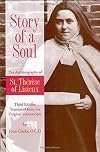
Like many of the autobiographies of great Catholic saints, Therese never intended the short manuscripts she wrote for her sisters in Carmel to be collected and published. Consequently, she writes in an entirely unpolished style, with none of the artifice or poetry of her predecessor John of the Cross. Instead, like her spiritual mother (and namesake) Teresa of Avila, she was an intelligent but less-educated woman whose personality shines through in her writing. I read this work - the work show more which made Therese into a saint and Doctor of the Church - in honor of her October 1 feat day.
Therese's life story is short: she is born into a large, middle-class French family, her mom dies when she is a small girl, she and her remaining sisters (five girls total, no boys) move to the small country town of Lisieux. She was a shy girl who experienced bouts of loneliness and emotional turbulence as a result of the grief caused by her mom's death. She had few friends at school, and almost all of her socialization came from time spent with siblings. So we can imagine her sorrow when Marie and Pauline join the Carmelites, a cloistered order, effectively ending their ability to spend time together.
Therese, following a call she felt since two, attempted to join the convent at 14, and was told she was not old enough by the superior and the bishop. Even visiting the pope himself did not further her cause. Eventually the bishop gave in, and at 16 she became a nun. Eventually her younger sister would follow, and the fifth girl would also be a nun. (Her father's loneliness at losing both his wife and five daughters made him mentally ill and unable to take care of himself.) A very precocious girl, it seemed Therese did everything early, so sadly and fittingly she died at 25 after a painful bout with tuberculosis.
The main thing that struck me about Therese was the flowery emotionalism with which she described her relationship with God. At times this bordered on the sickeningly coy, while at other times it was refreshing to have a candid love and devotion to God. Therese grew up in the milieu of Jansenism, a form of piety popular in France that emphasized man's depravity and the need for rigorous penance. This doctrine was responsible for much of the turmoil of Therese's cloistered life. She became scrupulous, needing to confess everything and constantly focusing on her sins. Her emphasis on God's mercy and love is a credit to the openness she had to the true nature of God's grace. If it seems exaggerated that is only because of what it responds to.
Therese's "little way" has attracted millions. The "little way" is, in part, understanding as Therese did - "My vocation is LOVE" - that we need not be great apostles or missionaries or bishops to have a Godly vocation. While reflecting on scripture in the final years of her life, Therese felt despondent at not having a great calling to do any of these things. What could she, a meek little woman, cloistered in a convent, do for the glory of the Church? She came to realize that behind all these great do-ers is the vocation to love. Anyone can do this. And while Therese felt toward the end of her life that her true vocation would be through her posthumously published life story, she would smile at the irony of just how true that became.
Most of us are like Therese: little, living our Christian lives in small ways unnoticed by the world. In this way we imitate Jesus, who in his time was largely unnoticed (how many non-Christian historical sources from the first century mention Jesus?). A great book about a woman finding herself and her vocation in Christ, definitely worth reading for non-Catholics too. show less
Therese's life story is short: she is born into a large, middle-class French family, her mom dies when she is a small girl, she and her remaining sisters (five girls total, no boys) move to the small country town of Lisieux. She was a shy girl who experienced bouts of loneliness and emotional turbulence as a result of the grief caused by her mom's death. She had few friends at school, and almost all of her socialization came from time spent with siblings. So we can imagine her sorrow when Marie and Pauline join the Carmelites, a cloistered order, effectively ending their ability to spend time together.
Therese, following a call she felt since two, attempted to join the convent at 14, and was told she was not old enough by the superior and the bishop. Even visiting the pope himself did not further her cause. Eventually the bishop gave in, and at 16 she became a nun. Eventually her younger sister would follow, and the fifth girl would also be a nun. (Her father's loneliness at losing both his wife and five daughters made him mentally ill and unable to take care of himself.) A very precocious girl, it seemed Therese did everything early, so sadly and fittingly she died at 25 after a painful bout with tuberculosis.
The main thing that struck me about Therese was the flowery emotionalism with which she described her relationship with God. At times this bordered on the sickeningly coy, while at other times it was refreshing to have a candid love and devotion to God. Therese grew up in the milieu of Jansenism, a form of piety popular in France that emphasized man's depravity and the need for rigorous penance. This doctrine was responsible for much of the turmoil of Therese's cloistered life. She became scrupulous, needing to confess everything and constantly focusing on her sins. Her emphasis on God's mercy and love is a credit to the openness she had to the true nature of God's grace. If it seems exaggerated that is only because of what it responds to.
Therese's "little way" has attracted millions. The "little way" is, in part, understanding as Therese did - "My vocation is LOVE" - that we need not be great apostles or missionaries or bishops to have a Godly vocation. While reflecting on scripture in the final years of her life, Therese felt despondent at not having a great calling to do any of these things. What could she, a meek little woman, cloistered in a convent, do for the glory of the Church? She came to realize that behind all these great do-ers is the vocation to love. Anyone can do this. And while Therese felt toward the end of her life that her true vocation would be through her posthumously published life story, she would smile at the irony of just how true that became.
Most of us are like Therese: little, living our Christian lives in small ways unnoticed by the world. In this way we imitate Jesus, who in his time was largely unnoticed (how many non-Christian historical sources from the first century mention Jesus?). A great book about a woman finding herself and her vocation in Christ, definitely worth reading for non-Catholics too. show less
Full disclosure: Therese is one of my favorite saints of all time, so I was biased going in. But this book is a collection of the conversations that her sisters in the Carmel of Lisieux had with her during her final months. Recognizing that they were in the presence of a living saint, the nuns of Carmel had the foresight to record their conversations with her during her final illness. Because they presumably were writing after the conversation or were writing and talking, this book is not a show more collection of sustained dialogue but rather just snippets of conversation. Because it's in this form, I found it incredibly fruitful for prayer and meditation and so I took a long time to savor this book.
At this stage of Therese's life, the Little Way she had spent her life developing is nearing perfection. She has the remarkable ability to look at her suffering (she was slowly suffocating from tuberculosis) and see it for the horror that it really was, commenting at one time that this would be impossible to endure without faith and at another time that poisonous materials should be kept well away from the suffering because of the temptation to kill themselves. Yet through all this, she repeatedly affirmed that she would endure it as long as God willed, as long as His will was done. During her final agony on Septemper 30, 1897, she said, "I would never have believed one could suffer so much...never! never! O Mother, I no longer believe in death for me...I believe in suffering! Tomorrow, it will be worse! Well, so much the better!" Her ability to accept everything out of her control as God's will for her and therefore her path to sanctity is truly her gift to the world. show less
At this stage of Therese's life, the Little Way she had spent her life developing is nearing perfection. She has the remarkable ability to look at her suffering (she was slowly suffocating from tuberculosis) and see it for the horror that it really was, commenting at one time that this would be impossible to endure without faith and at another time that poisonous materials should be kept well away from the suffering because of the temptation to kill themselves. Yet through all this, she repeatedly affirmed that she would endure it as long as God willed, as long as His will was done. During her final agony on Septemper 30, 1897, she said, "I would never have believed one could suffer so much...never! never! O Mother, I no longer believe in death for me...I believe in suffering! Tomorrow, it will be worse! Well, so much the better!" Her ability to accept everything out of her control as God's will for her and therefore her path to sanctity is truly her gift to the world. show less
The Story of a Soul (L'Histoire d'une Âme): The Autobiography of St. Therese of Lisieux by Saint Thérèse of Lisieux
This spiritual memoir of a simple French Carmelite nun in the late 1800s is quite illuminating, even for a reader such as myself who is not Catholic. For a Catholic, I think it would be an inspiring example of ardent faith in the face of dark doubt, love and service showered on all around her, regardless of merit or personal preferences. She was declared a Saint, and later a Doctor of the Church. This "little Teresa" is not to be confused with Teresa of Avila (16th Century).
I was raised in show more Texas in the early 60s, which was largely Protestant at the time. Now I have several Catholic friends, but I did not know any Catholics growing up. I remember a lot of prejudice, actually, against Catholics back then. I saw signs against Kennedy pasted on utility poles because he was Catholic and supposedly would have to take orders from the Pope. "Catholic" was something exotic, even foreign, to me just as "Muslim" may be to some people today, and I was wary of it. I grew up to marry a man from the Middle East (25 years and counting) so that remote and isolated xenophobia of my childhood is slowly disappearing from all but the smallest Texas towns. Although I have Catholic friends I honestly did not understand as much as I thought I did about Catholic belief and practice. This book was informative in that respect also. I have a fuller understanding of what communion means to a Catholic, for example, as well as the life of those in the monastery.
For me, this book was first and foremost simply fascinating: To go back in time, to get inside the very soul of a woman who lived in another time and place. First, we see her sheltered upbringing in a financially comfortable but devout family. Both of her parents had wanted to live the monastic life when they were young but were denied. As was common in their time, many of their children did not survive, but the surviving ones all became Carmelite nuns. Teresa was raised to value the life of the spirit over material interests. She was sheltered from the world as perhaps might have been common for daughters in that era. Her father did not allow her to read the newspapers, for example. Her mother died when she was 4 and she was lovingly cared for by her father, her older sisters, and a close aunt and uncle.
At a young age she wished to become a nun but was rejected because she was too young. She appealed to the local bishop, who also rejected her wish and told her that his decision could only be overruled by the Pope himself. So off they go! She and her father and one of her sisters make a pilgrimage to Rome. On the way they do stay in the finest hotels, which hold no interest for Teresa. Her descriptions of the train rides through the Swiss Alps are charming. The passengers on the train are focused on each other's company with card games and other diversions. Her focus is on the majesty of the scenery she witnesses, which speaks to her of God's power and glory. In Rome of the late 1800s she sees the dilapidated Coliseum. For the safety of tourists, no access is allowed. She and her sister rush past the barricades to touch the very earth where Christians were martyred. She had a brief audience with the Pope, he granted her request, and she entered the monastery at age 15.
Teresa died an early death at age 24 from tuberculosis. We have access to her thoughts only because her mother superior ordered her to write them down. Teresa believed in being small: a little flower that humbly reflected God's love. She acted her belief by daily and countless acts of self sacrifice and devotion to those around her. She was also a strong believer that the power of her prayers could assist priests, missionaries and others carrying out the work of the church outside the monastery walls.
This book shows that having a clear vocation in life does not necessarily make your path any easier. And yet those of us in the modern age may be tempted to envy a simpler time when choices were more clear and truth more obvious. It is a temptation we should resist. It is the temptation of a young adult wishing to be a small child again in order to avoid adult responsibility. We are collectively in the young adulthood of modernity. We have put away the childish acceptance of authority, gone through the petulant adolescence of knee-jerk rejection of tradition, and now - perhaps? - we can retain what we deem to be good from our respective traditions as we bring them into the modern age.
What lessons can one learn from Teresa? Perseverance in hardship: her death was prolonged and painful. Her life story teaches what faith means: it's not all sunshine and lollipops. She had periods of deep doubt and pulled herself through simply by her love of God. Teresa became large by being small. She felt a vocation to love in small ways. She taught by example, illuminating those around her. More than likely, we would never had heard of Teresa if she had not been ordered to write her story. Her "small" ways had a large impact on those around her, even after her death, and continues today. There are societies and churches devoted to her around the world.
This book is worth reading, if for no other reasons than for the refreshing humility and sincerity in which she explains herself, as well as the clear-sighted wisdom in which she strove to live. show less
I was raised in show more Texas in the early 60s, which was largely Protestant at the time. Now I have several Catholic friends, but I did not know any Catholics growing up. I remember a lot of prejudice, actually, against Catholics back then. I saw signs against Kennedy pasted on utility poles because he was Catholic and supposedly would have to take orders from the Pope. "Catholic" was something exotic, even foreign, to me just as "Muslim" may be to some people today, and I was wary of it. I grew up to marry a man from the Middle East (25 years and counting) so that remote and isolated xenophobia of my childhood is slowly disappearing from all but the smallest Texas towns. Although I have Catholic friends I honestly did not understand as much as I thought I did about Catholic belief and practice. This book was informative in that respect also. I have a fuller understanding of what communion means to a Catholic, for example, as well as the life of those in the monastery.
For me, this book was first and foremost simply fascinating: To go back in time, to get inside the very soul of a woman who lived in another time and place. First, we see her sheltered upbringing in a financially comfortable but devout family. Both of her parents had wanted to live the monastic life when they were young but were denied. As was common in their time, many of their children did not survive, but the surviving ones all became Carmelite nuns. Teresa was raised to value the life of the spirit over material interests. She was sheltered from the world as perhaps might have been common for daughters in that era. Her father did not allow her to read the newspapers, for example. Her mother died when she was 4 and she was lovingly cared for by her father, her older sisters, and a close aunt and uncle.
At a young age she wished to become a nun but was rejected because she was too young. She appealed to the local bishop, who also rejected her wish and told her that his decision could only be overruled by the Pope himself. So off they go! She and her father and one of her sisters make a pilgrimage to Rome. On the way they do stay in the finest hotels, which hold no interest for Teresa. Her descriptions of the train rides through the Swiss Alps are charming. The passengers on the train are focused on each other's company with card games and other diversions. Her focus is on the majesty of the scenery she witnesses, which speaks to her of God's power and glory. In Rome of the late 1800s she sees the dilapidated Coliseum. For the safety of tourists, no access is allowed. She and her sister rush past the barricades to touch the very earth where Christians were martyred. She had a brief audience with the Pope, he granted her request, and she entered the monastery at age 15.
Teresa died an early death at age 24 from tuberculosis. We have access to her thoughts only because her mother superior ordered her to write them down. Teresa believed in being small: a little flower that humbly reflected God's love. She acted her belief by daily and countless acts of self sacrifice and devotion to those around her. She was also a strong believer that the power of her prayers could assist priests, missionaries and others carrying out the work of the church outside the monastery walls.
This book shows that having a clear vocation in life does not necessarily make your path any easier. And yet those of us in the modern age may be tempted to envy a simpler time when choices were more clear and truth more obvious. It is a temptation we should resist. It is the temptation of a young adult wishing to be a small child again in order to avoid adult responsibility. We are collectively in the young adulthood of modernity. We have put away the childish acceptance of authority, gone through the petulant adolescence of knee-jerk rejection of tradition, and now - perhaps? - we can retain what we deem to be good from our respective traditions as we bring them into the modern age.
What lessons can one learn from Teresa? Perseverance in hardship: her death was prolonged and painful. Her life story teaches what faith means: it's not all sunshine and lollipops. She had periods of deep doubt and pulled herself through simply by her love of God. Teresa became large by being small. She felt a vocation to love in small ways. She taught by example, illuminating those around her. More than likely, we would never had heard of Teresa if she had not been ordered to write her story. Her "small" ways had a large impact on those around her, even after her death, and continues today. There are societies and churches devoted to her around the world.
This book is worth reading, if for no other reasons than for the refreshing humility and sincerity in which she explains herself, as well as the clear-sighted wisdom in which she strove to live. show less
Story of a Soul: The Autobiography of St. Therese of Lisieux, Third Edition by Saint Thérèse of Lisieux
I read this book for Lent. She truly was a woman devoted on matters not of this Earth who was determined to make others understand what it was like to live your life with this radical focus on God as understood as the source of all love. For me this comes across most clearly not so much in the autobiographical portion but in the descriptions by those who knew her which follow: the epilogue describing her final months, anecdotes describing her sayings, also in her letters and other collected show more writings. It all has the sense of something coming from an era almost unimaginably far away from our time, and yet I feel the kernel of her message and the charisma she displayed by embodying it are things that can still find resonance in a receptive heart. show less
Lists
Awards


You May Also Like


Associated Authors
Statistics
- Works
- 180
- Also by
- 10
- Members
- 5,551
- Popularity
- #4,482
- Rating
- 4.2
- Reviews
- 65
- ISBNs
- 299
- Languages
- 13
- Favorited
- 9


