
Edith Stein (1891–1942)
Author of Essays on Woman
About the Author
Series
Works by Edith Stein
Edith Stein: Letters to Roman Ingarden (Stein, Edith//the Collected Works of Edith Stein) (2014) 15 copies
Writings of Edith Stein 9 copies
Los caminos del silencio interior Edith Stein ; introducción, traducción y notas de Andrés Bejas y Sabine Spitzlei (1900) 6 copies
Escritos esenciales de Edith Stein: Introducción y edición de John Sullivan, OCD (Pozo de Siquem) (Spanish Edition) (2003) 5 copies
La scelta di Dio: lettere 1917-1942 4 copies
Les Voies de la connaissance de Dieu : La Théologie symbolique de Denys l'Aréopagite (2003) 3 copies
Gesamtausgabe. Endliches und ewiges Sein 1: Versuch eines Aufstiegs zum Sinn des Seins: Bd. 11 und 12 (2006) 3 copies
Edith Stein 3 copies
Frauenbildung und Frauenberufe 3 copies
Meditando os mistérios do Santo Rosário com Santa Teresa Benedita da Cruz - Edith Stein (1900) 3 copies
O Mistério do Natal 3 copies
Edith-Stein-Gesamtausgabe, 24 Bde., Bd.13, Die Frau. Reflexionen und Fragestellungen. (2000) 2 copies
Mein erstes Göttinger Semester 2 copies
Obras Completas, III. Escritos filosóficos. Etapa de pensamiento cristiano (Spanish Edition) (2008) 2 copies
La Priere De L'Eglise 2 copies
Edith Stein Gesamtausgabe: Beiträge zur philosophischen Begründung der Psychologie und der Geisteswissenschaften (2010) 2 copies
Thoughts 2 copies
Edith Stein Gesamtausgabe: Wege der Gotteserkenntnis: Studie zu Dionysius Areopagita und Übersetzung seiner Werke (2003) 2 copies
Ubersetzung Von John Henry Newman, Die Idee Der Universitat (Edith Stein Gesamtausgabe) (German Edition) (2025) 1 copy
Selbstbildnis in Briefen III: Briefe an Roman Ingarden (Edith Stein Gesamtausgabe) (German Edition) (2025) 1 copy
Was Ist Der Mensch?: Theologische Anthropologie (Edith Stein Gesamtausgabe) (German Edition) (2025) 1 copy
Die Frau: Fragestellungen Und Reflexionen (Edith Stein Gesamtausgabe) (German Edition) (2025) 1 copy
La femme 1 copy
Worte und Briefe 1 copy
Edith Steins Werke. 1 copy
Selección Epistolar 1 copy
On the Problem of Empathy — Author — 1 copy
Edith Stein on Ways To Know God — Author — 1 copy
Ciência da Cruz 1 copy
Prayer of the Church, The 1 copy
Mystery of Christmas, The 1 copy
Edith Stein Gesamtausgabe: "Freiheit und Gnade" und weitere Beiträge zu Phänomenologie und Ontologie: (1917 bis 1937) (2014) 1 copy
Endliches und Ewiges Sein 1 copy
L'être fini et l'être éternel. : Essai d'une atteinte du sens de l'être, Les oeuvres d'Edith Stein, Tome 2 (2002) 1 copy
Misterij Božića 1 copy
Edith Stein Gesamtausgabe: Bildung und Entfaltung der Individualität: Beiträge zum christlichen Erziehungsauftrag: Bd. 16 (2001) 1 copy
Gesamtausgabe. J. H. Newman: Briefe und Texte zur ersten Lebenshälfte. ( 1801 - 1945). (Bd. 22) (2002) 1 copy
Vierte und Briefe 1 copy
Das Ethos der Frauenberufe 1 copy
Edith Stein. Obras completas: Ediht Stein. Obras Completas III: Escritos filosóficos. Etapa de pensamiento cristiano (2008) 1 copy
Pensieri - Edith Stein 1 copy
Obras Completas Iii 1 copy
Gesammelte Werke: Philosophische Werke, Religiöse Essays & Autobiografische Schriften (German Edition) (2017) 1 copy
The Mystery of Christmas 1 copy
Le Philosophe et la Croix 1 copy
Escritos espirituales 1 copy
Ways to Know God 1 copy
Associated Works
Watch for the Light: Readings for Advent and Christmas (2004) — Contributor — 895 copies, 10 reviews
The Sheed and Ward Anthology of Catholic Philosophy (A Sheed & Ward Classic) (2005) — Contributor — 34 copies
Edino Ŝtono: judino sub la kruco — Associated Name — 1 copy
Tagged
Common Knowledge
- Canonical name
- Stein, Edith
- Legal name
- Stein, Edith Hedwig Teresa
- Other names
- Teresia Benedicta of the Cross
- Birthdate
- 1891-10-12
- Date of death
- 1942-08-09
- Gender
- female
- Education
- University of Gottingen
University of Freiburg (Ph.D|1916) - Occupations
- nun
author
philosopher
teacher - Organizations
- Discalced Carmelite Order (perpetual vows 1938)
University of Freiburg - Awards and honors
- canonized 1998-10-11
- Relationships
- Stein, Rosa (sister)
- Short biography
- Edith Stein was born the youngest of 11 children in an observant German-Jewish family. She renounced faith as a teenager, but as a student at the University of Göttingen, she became attracted to Roman Catholicism and converted in 1922. She received her doctorate in philosophy at the University of Freiburg and joined the faculty; after her conversion, she became a teacher at a Catholic girls’ school in Speyer. In 1932, she became a lecturer at the Institute for Educational Studies at the University of Münster, but the Nazi laws forbidding Jews to teach forced her to resign the following year. In 1934 she entered the Carmelite convent at Cologne, taking the religious name Teresa Benedicta of the Cross, after the mystic St. Teresa of Avila whom she said had inspired her conversion. At the end of 1938, following the attacks on Jews known as Kristallnacht, she transferred to a convent in the Netherlands, where it was thought she would be safe from persecution. However, this was not the case, and in 1942 she and her sister Rosa, also a Catholic convert, were deported to Auschwitz, where they were killed. In 1998, Edith Stein was canonized as a saint by the Roman Catholic Church.
- Cause of death
- murder
- Nationality
- Germany
- Birthplace
- Breslau, Lower Silesia, German Empire
- Places of residence
- Speyer, Germany
Cologne, Germany
Echt, The Netherlands - Place of death
- Auschwitz Concentration Camp, Poland
Members
Reviews
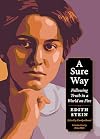
Summary: Essential writings on knowing God, the cross, the resurrection, women’s spirituality, and the way of the cross.
Edith Stein was born to an upper-middle-class Jewish family in Breslau, Prussia (now Wroclaw, Poland). An early feminist, Stein had a conversion experience while pursuing post-doctoral work with Edmund Husserl in 1916. After reading a biography of Saint Teresa of Avila, she sought baptism into the Catholic Church. Also, she sought to enter the monastic life but spiritual show more advisors encouraged her that she could best serve God in an academic career. However, the rise of Nazism led to the loss of her academic position. In 1935, she professed monastic vows at a Carmelite Monastery in Cologne. Later, as persecution against Jews intensified, she fled to the Netherlands. She was arrested on August 2, 1942, dying in the gas chambers of Auschwitz on August 9. Having adopted the name of Teresa Benedicta, She was beatified as a martyr in 1987 and canonized in 1998.
This Plough Spiritual Guide introduces a new generation to a collection of her essential writings, edited by Carolyn Brand. Zena Hitz introduces the collection, after a biography by Carolyn Brand. She contends that Stein addressed the sickness of her generation, affirming the “sure way” of following Christ on the way of the cross.
The rest of the book consists of Stein’s writings grouped under five headings. This is not a lightweight devotional but the substantive writing of a devote academic, a trained philosopher.
First, she addresses “Ways to Know God.” She allows for people to encounter God through nature, scripture, faith, and direct experience. Her passion is not for mere knowledge or faith but to encounter the living God, to see God. Yet often this involves the way of the cross, stillness and hiddenness. The final piece in this section offers her thoughts on the possibility of Christian philosophy.
The second subheading is “At the Foot of the Cross.” This includes a couple poetic reflections and her thoughts on the meaning of the cross. Specifically, she focuses on what it means for believers to take up the cross and die with Christ and to live by faith. Then the section concludes with two pieces on the dark night of the soul, paradoxically, an invitation for deeper communion with God.
“Light Breaks In” includes Stein’s writing on the two great holidays of Easter and Christmastide. “The Mystery of Sacrifice” traces the arc of Jesus Life from his Incarnation to the Sacrifice on the cross and ponders what it means to go the whole way with Jesus. She concludes with “The Summons of Christmas” which is to oneness with God, with others in God, and to extend that love to the world.
Stein did not cease to be a feminist upon conversion. However, “The Soul of Women” reveals relatively traditional distinctions between men whose essence is revealed in “action, work, and objective achievements. By contrast, women’s “deepest yearning is to achieve a loving union.” She argues in the final essay in this section that women will contribute most to the nation’s health in all areas of national life as they live into wholeness with God. I don’t think all women will agree with Stein’s gender distinctions and that these contribute to their flourishing.
Finally, “A World in Flames” reflects Stein’s response to the rise of Nazism. The first piece is noteworthy: her appeal to Pope Pius XI to advocate for the Jewish people. She wrote this when relieved from her academic position. The pope never responded. The title essay, “The World in Flames” once again expresses her confidence in the way of the cross. She writes:
“The world is in flames. The conflagration can also reach our house. But high above all flames towers the cross. They cannot consume it. It is the path from earth to heaven. It will lift the one who embraces it in faith, love, and hope into the bosom of the Trinity” (p. 123).
This was the faith Stein held onto when the flames indeed engulfed her house. Instead of fleeing Europe, she remained. These selections explained the mindset that met the horror of the holocaust, even Auschwitz by faith. This book is nothing more nor less than her call to discipleship, one worthy of standing alongside Bonhoeffer’s, The Call of Discipleship.
_______________________
Disclosure of Material Connection: I received a complimentary copy of this book from the publisher for review. show less
Edith Stein was born to an upper-middle-class Jewish family in Breslau, Prussia (now Wroclaw, Poland). An early feminist, Stein had a conversion experience while pursuing post-doctoral work with Edmund Husserl in 1916. After reading a biography of Saint Teresa of Avila, she sought baptism into the Catholic Church. Also, she sought to enter the monastic life but spiritual show more advisors encouraged her that she could best serve God in an academic career. However, the rise of Nazism led to the loss of her academic position. In 1935, she professed monastic vows at a Carmelite Monastery in Cologne. Later, as persecution against Jews intensified, she fled to the Netherlands. She was arrested on August 2, 1942, dying in the gas chambers of Auschwitz on August 9. Having adopted the name of Teresa Benedicta, She was beatified as a martyr in 1987 and canonized in 1998.
This Plough Spiritual Guide introduces a new generation to a collection of her essential writings, edited by Carolyn Brand. Zena Hitz introduces the collection, after a biography by Carolyn Brand. She contends that Stein addressed the sickness of her generation, affirming the “sure way” of following Christ on the way of the cross.
The rest of the book consists of Stein’s writings grouped under five headings. This is not a lightweight devotional but the substantive writing of a devote academic, a trained philosopher.
First, she addresses “Ways to Know God.” She allows for people to encounter God through nature, scripture, faith, and direct experience. Her passion is not for mere knowledge or faith but to encounter the living God, to see God. Yet often this involves the way of the cross, stillness and hiddenness. The final piece in this section offers her thoughts on the possibility of Christian philosophy.
The second subheading is “At the Foot of the Cross.” This includes a couple poetic reflections and her thoughts on the meaning of the cross. Specifically, she focuses on what it means for believers to take up the cross and die with Christ and to live by faith. Then the section concludes with two pieces on the dark night of the soul, paradoxically, an invitation for deeper communion with God.
“Light Breaks In” includes Stein’s writing on the two great holidays of Easter and Christmastide. “The Mystery of Sacrifice” traces the arc of Jesus Life from his Incarnation to the Sacrifice on the cross and ponders what it means to go the whole way with Jesus. She concludes with “The Summons of Christmas” which is to oneness with God, with others in God, and to extend that love to the world.
Stein did not cease to be a feminist upon conversion. However, “The Soul of Women” reveals relatively traditional distinctions between men whose essence is revealed in “action, work, and objective achievements. By contrast, women’s “deepest yearning is to achieve a loving union.” She argues in the final essay in this section that women will contribute most to the nation’s health in all areas of national life as they live into wholeness with God. I don’t think all women will agree with Stein’s gender distinctions and that these contribute to their flourishing.
Finally, “A World in Flames” reflects Stein’s response to the rise of Nazism. The first piece is noteworthy: her appeal to Pope Pius XI to advocate for the Jewish people. She wrote this when relieved from her academic position. The pope never responded. The title essay, “The World in Flames” once again expresses her confidence in the way of the cross. She writes:
“The world is in flames. The conflagration can also reach our house. But high above all flames towers the cross. They cannot consume it. It is the path from earth to heaven. It will lift the one who embraces it in faith, love, and hope into the bosom of the Trinity” (p. 123).
This was the faith Stein held onto when the flames indeed engulfed her house. Instead of fleeing Europe, she remained. These selections explained the mindset that met the horror of the holocaust, even Auschwitz by faith. This book is nothing more nor less than her call to discipleship, one worthy of standing alongside Bonhoeffer’s, The Call of Discipleship.
_______________________
Disclosure of Material Connection: I received a complimentary copy of this book from the publisher for review. show less
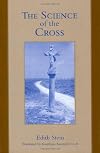
To help celebrate the fourth centenary of the birth of St. John of the Cross in 1542, Edith Stein received the task of preparing a study of his writings. She uses her skill as a philosopher to enter into an illuminating reflection on the difference between the two symbols of cross and night. Pointing out how entering the night is synonymous with carrying the cross, she provides a condensed presentation of John's thought on the active and passive nights, as discussed in The Ascent of Mount show more Carmeland The Dark Night. show less
Edith Stein is a captivating writer. Her pieces of theater and small poems reveal a deep familiarity with Scripture and a very deep understanding of human beings.
Her description of the four women saints she writes about is inspiring, and a saint writing about another saint is always beautiful.
Highly recommended!
Her description of the four women saints she writes about is inspiring, and a saint writing about another saint is always beautiful.
Highly recommended!
Despite the fact that Teresa Benedicta did not have time to edit the final manuscript for this book before she was hauled off to the death camps at Auschwitz, this is a brilliant, searching, and completely approachable and understandable study of the Spirituality of St. John of the Cross. A masterpiece of Carmelite Spirituality and sensibility.
Awards


You May Also Like


Associated Authors
Statistics
- Works
- 184
- Also by
- 5
- Members
- 2,160
- Popularity
- #11,902
- Rating
- 4.1
- Reviews
- 15
- ISBNs
- 202
- Languages
- 14
- Favorited
- 2
