
M. Basil Pennington (1931–2005)
Author of Centering Prayer: Renewing an Ancient Christian Prayer Form
About the Author
After his ordination in 1957, M. Basil Pennington spent several years studying in Rome and received and S.T.L. and a J.C.L. He assisted at the Second Vatican Council as a peritus and in the preparation of the new Code of Canon Law. He started Cistercian Publications in 1968 and founded the show more Institute of Cistercian Studies at Western Michigan University in 1973. He became known through his efforts to help the Church refind its contemplative dimension through the Centering Prayer movement. show less
Image credit: Spirituality and Practice
Series
Works by M. Basil Pennington
The Monks of Mount Athos: A Western Monks Extraordinary Spiritual Journey on Eastern Holy Ground (1978) 133 copies, 2 reviews
Seeking His Mind: 40 Meetings With Christ (Voice from the Monastery, 1) (2002) 128 copies, 2 reviews
Bernard of Clairvaux: A Lover Teaching the Way of Love. Selected Spiritual Writings (1997) 74 copies
Listen With Your Heart: Spiritual Living with the Rule of St. Benedict (Voices from the Monastery) (2007) 42 copies
Through the Year with the Saints: A Daily Companion for Private of Liturgical Prayer (1988) 31 copies
William of Saint Thierry: The Way to Divine Union : Selected Spiritual Writings (Spirituality Throughout the Ages) (1998) 30 copies
Bernard of Clairvaux: Studies Presented to Dom Jean Leclercq (Cistercian Studies : No 23) (1973) — Editor — 15 copies, 2 reviews
One yet two : monastic tradition, East and West : Orthodox-Cistercian Symposium, Oxford University, 26 August-1 September, 1973 (1976) 10 copies, 1 review
Saint Bernard of Clairvaux : studies commemorating the eighth centenary of his canonization (1977) 9 copies
The Cistercian spirit; a symposium in memory of Thomas Merton — Editor; Author — 3 copies
Thomas Merton and centering prayer 2 copies
How To Center Your Life 1 copy
Holy Mountain! 1 copy
V srdci ticha 1 copy
Trim Your Lamps 1 copy
O HOLY MOUNTAIN 1 copy
Associated Works
The Gift of Being Yourself: The Sacred Call to Self-Discovery (2004) — Foreword, some editions — 680 copies, 2 reviews
Surrender to Love: Discovering the Heart of Christian Spirituality [Expanded Edition] (2015) — Foreword — 150 copies
Engaging Scripture: Reading the Bible with Early Friends (2005) — Foreword, some editions — 76 copies, 3 reviews
A Challenge to Love: Gay and Lesbian Catholics in the Church (Challenge to Love, a Ppr) (1983) — Contributor — 59 copies
Aelred of Rievaulx: The Way of Friendship (Spirituality Through the Ages Series) (2001) — Editor — 44 copies
Jesus According To...: Contemporary Answers to Jesus' Haunting Question "Who Do You Say That I Am?" (1992) — Contributor — 10 copies
Tagged
Common Knowledge
- Canonical name
- Pennington, M. Basil
- Other names
- Pennington, Basil
- Birthdate
- 1931
- Date of death
- 2005-06-03
- Gender
- male
- Education
- Cathedral College of the Immaculate Conception (1951)
Pontifical University of St. Thomas Aquinas(S.T.L.|1959)
Pontifical University of the Gregorianum (J.C.B.|1962|J.C.L.|1963) - Occupations
- monk (Trappist)
Catholic priest
professor of theology, canon law and spirituality - Organizations
- St. Joseph's Abbey (Spencer ∙ MA)
Order of Cistercians of the Strict Observance (Trappists)
Roman Catholic Church (ordained 1957)
Studies in Formative Spirituality (international board of consultants)
Canon Law Society of America
Catholic Theological Society of America (show all 7)
Association of Cistercian Scholars - Cause of death
- car accident
- Nationality
- USA
- Birthplace
- Queens, New York, USA
- Places of residence
- Spencer, Massachusetts, USA
- Place of death
- Worcester, Massachusetts, USA
- Associated Place (for map)
- Massachusetts, USA
Members
Reviews

Trappist monk Pennington traces the rosary's long history and shows how it aids concentration and lends tangibility to spiritual practice. Vividly relating it to the Scriptures, Pennington takes readers step-by-step through the traditional 15 mysteries and explores alternative formats for individual and group use.
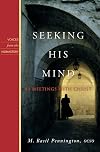
My wife and I read this devotional during the evenings of Lent. We sort of petered out at the end but I did enjoy the late Basil Pennington's reflections on the life of Christ.
Each of the entries in this book are based on Lectio Divinas Pennington did on passages from the life of Christ. They cover the whole arc of Jesus' earthly life. The reflections are presented under three categories: Beginnings, Teachings and Healings, and Passion & Resurrection.
For the most part Pennington's show more reflections are rather great and I gleaned some insights and learned to see particular scriptures in a different way. Though there is a certain unevenness to these. My wife and I read and let the reflections guide are evening prayers. But I found sometimes the reflections merely explicated Pennington's own views rather than helped us delve into the truth of the gospel. Thankfully some chapters were more nourishing than that.
Also occasionally these reflections seem directed specifically to fellow monks (but not always) so adjustments have to be made on how you read this.
Still it was good. show less
Each of the entries in this book are based on Lectio Divinas Pennington did on passages from the life of Christ. They cover the whole arc of Jesus' earthly life. The reflections are presented under three categories: Beginnings, Teachings and Healings, and Passion & Resurrection.
For the most part Pennington's show more reflections are rather great and I gleaned some insights and learned to see particular scriptures in a different way. Though there is a certain unevenness to these. My wife and I read and let the reflections guide are evening prayers. But I found sometimes the reflections merely explicated Pennington's own views rather than helped us delve into the truth of the gospel. Thankfully some chapters were more nourishing than that.
Also occasionally these reflections seem directed specifically to fellow monks (but not always) so adjustments have to be made on how you read this.
Still it was good. show less
The Monks of Mount Athos: A Western Monk's Extraordinary Spiritual Journey on Eastern Holy Ground by M. Basil Pennington
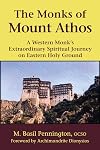
An entry by Father +Basil on 2 July, while visiting Gregoriou Monastery on the Holy Mountain, discloses the author's humility and candor. These qualities are difficult to sustain throughout a single text. However, Father Basil nurtures less resistance within himself toward the Lord Christ and risks importune rejections by monks on the Holy Mountain thanks to his sober view. On July 2, Father Basil records his embarrassment over offending monks of Gregoriou Monastery.
Just one day prior he had show more reached Gregoriou, which is proximal to Simonas Petras Monastery to the south along the western coastline of the Holy Mountain. There he had met with the Hegumen (abbot of the Monastery), Father Georgias, from whom Father Basil learned of resistance among the Monastery's Elders to a non-Orthodox man visiting them. The details concerning resistance from the Elders provide sufficient information about their point of view without belaboring the historical events of the prior three centuries of Jesuit and Dominican incursions in Greece.
It is clear, in my opinion, that Father Basil provides details of this brief visit to Gregoriou according to how he actually witnessed his place in Christ's Church. He "slipped away" from Gregoriou to cross the coastal range and return northward to Simonas Petras after he "...assisted at Orthros from the porch." He writes that he did not want "...to cause any further embarrssment to my host," which is a reference both to the pleasant Hegumen and all monks of Gregoriou Monastery.
While historical details of Latin abuses are noteworthy by way of absence in Father Basil's journal entries of 01 and 02 July, the author reports a poignant summary of the Hegumen's recommendation when Father Basil asked on 01 July to remain at Gregoriou for a week. One or more of the Elders had noted to the Hegumen that Father Basil looked Orthodox on the surface, and wondered why Father Basil was not Orthodox inwardly as well.
Trust among Father Basil and Gregoriou monks was impaired by bias, which the generous Hegumen disclosed on 01 July. Acknowledged disparity between Christ's priestly prayer of John's Gospel and such bias as the author encountered at Gregoriou -- disparity strikes author and his reader as less than "the fullness of love" in Christ.
How does a man of 45 years age (at the time of the visit) muster acceptance as this? Father Basil recounted a succinct part of St. Paul's first letter to the Church at Corinth: "Love is kind, patient, bears all things." Indeed, Love cannot be counted in the age of one, but rather in the multitude of theosis at work.
Filled by Christ is how this work of Love from Father Basil of blessed memory transports penitent to Pascha. There dawns an eternal Pascha in this book. And all are invited. show less
Just one day prior he had show more reached Gregoriou, which is proximal to Simonas Petras Monastery to the south along the western coastline of the Holy Mountain. There he had met with the Hegumen (abbot of the Monastery), Father Georgias, from whom Father Basil learned of resistance among the Monastery's Elders to a non-Orthodox man visiting them. The details concerning resistance from the Elders provide sufficient information about their point of view without belaboring the historical events of the prior three centuries of Jesuit and Dominican incursions in Greece.
It is clear, in my opinion, that Father Basil provides details of this brief visit to Gregoriou according to how he actually witnessed his place in Christ's Church. He "slipped away" from Gregoriou to cross the coastal range and return northward to Simonas Petras after he "...assisted at Orthros from the porch." He writes that he did not want "...to cause any further embarrssment to my host," which is a reference both to the pleasant Hegumen and all monks of Gregoriou Monastery.
While historical details of Latin abuses are noteworthy by way of absence in Father Basil's journal entries of 01 and 02 July, the author reports a poignant summary of the Hegumen's recommendation when Father Basil asked on 01 July to remain at Gregoriou for a week. One or more of the Elders had noted to the Hegumen that Father Basil looked Orthodox on the surface, and wondered why Father Basil was not Orthodox inwardly as well.
Trust among Father Basil and Gregoriou monks was impaired by bias, which the generous Hegumen disclosed on 01 July. Acknowledged disparity between Christ's priestly prayer of John's Gospel and such bias as the author encountered at Gregoriou -- disparity strikes author and his reader as less than "the fullness of love" in Christ.
How does a man of 45 years age (at the time of the visit) muster acceptance as this? Father Basil recounted a succinct part of St. Paul's first letter to the Church at Corinth: "Love is kind, patient, bears all things." Indeed, Love cannot be counted in the age of one, but rather in the multitude of theosis at work.
Filled by Christ is how this work of Love from Father Basil of blessed memory transports penitent to Pascha. There dawns an eternal Pascha in this book. And all are invited. show less

M. Basil Pennington’s The Eucharist Yesterday and Today viewed the Eucharist as new wine, rich with promise that can only burst old skins. This was seen as “breaking out of the bonds of our ecclesiastical past and enlivening the whole humanity through a Church that is not a confirming old sack, but a gushing source of life and love for every woman, child, and man on the face of the earth.”
Pennington describes Eucharist as the coming together to celebrate “a memoria, a sacramental show more memorial, not only a calling to mind but a making present of the passion, death, resurrection, and ascension of our Lord Jesus Christ.” Through this supreme act of all creation, Christ’s Passover draws to itself everything in creation - “That they may be one, Father, as you in me and I in you, that they may be one in us” for we are being made according to the image of the Creator.
Beginning of the Eucharist
Each Eucharist begins with a preparatory rite that involves purification and conversion. So when the president speaks the word of absolution we should know of what we are being absolved and receive the healing and purifying grace deep within our being. As a purified people of God gathered together, we constitute a holy place, an indwelling place for God himself. We are the gateway to heaven, there to celebrate in a more transcendent way.
It is explained when the officiating president prays for us. His prayer has been traditionally called a collect. He has to collect our prayers, the prayers of the community. So we must have time to pray, to lay before God our Lord the concerns that lie in our hearts, so that they may be collected. The priest then articulates in his collect what has been flowing from the hearts of the assembled gathering.
The Liturgy & Homily
The liturgy is a school: it effectively teaches us and leads us into reality if we are attentive to what is happening, what is being said. Once again Christ Jesus proclaims his Good News of salvation. As God is truly present in his Eucharist in the tabernacle, he is truly present in his Word on the lectern. How good is the Good News, and all that surrounds it should be good – the best!
According to Pennington the homily is the time to hear the Lord and prepare to respond. We assent to the notions, these ideas, the propositions of faith is a gift from the Lord. It requires on our part a certain humility which truthfully acknowledges that God does know more than we do and that it is wise to listen to him. We pray the creed that makes us aware of our dependence. God is the Maker, we are the made; he is the Savior, we are the saved. It makes us aware too how much we are loved: “for us and for our salvation.” It is the climactic moment which is called the Liturgy of the Word. This becomes a moment of communion when the leader of the assembly breaks the bread of the Word and shares its source of life - the living faith. Meanwhile, the people wait for their hungry souls to be filled. In the homily the priest is sharing the two-thousand-year-old story of the historical Jesus of yesterday, today, and the same forever.
The Nature of the Mass
The elaborate offertory rite that has been developed in the Middle Ages has been set aside and the Mass has been brought back to its simpler origins. “It is much richer – pregnant with symbolism and association. It takes us back to the first Mass, the Last Supper, and our Jewish origins, to the divine liberation from bondage, to salvation history.” Christ himself is all gift. The Eucharist is the great prayer of thanksgiving. This prayer always retains a few variables for great feasts and seasons. Meal and sacrifice are one, meant to bring about true communion. They were to make a memoria of what Jesus did on the night before he died, a ritual act that would reach into God’s now and make historically present the very act of Calvary – his supreme act of sacrificial love. But there is also participating love of every one of his members, his body, who have entered by faithful love into communion with his act of love.
Pennington saw heresies when they began to deny that the words of the institution brought about the real presence of the Christ-God in the host and the chalice, the consecrated species were held up to give the faithful a chance to proclaim their belief in the manifest act of adoration. This powerful visual and symbolic proclamation of holding the host and the chalice aloft for a moment gives our faith a chance to be called forth more fully and respond more completely.
It is only in this context of a full attitude, life and meditation that a priest can truly pray his priestly prayer at the Mass in a way that will bring forth from the people a wholehearted, empowered “Amen!” A good priest’s generosity and goodness as a person can and should always be affirmed. A positive word of encouragement the people must add, a suggestion or the expression of hope or expectation can have him preside to his fullest potential. show less
Pennington describes Eucharist as the coming together to celebrate “a memoria, a sacramental show more memorial, not only a calling to mind but a making present of the passion, death, resurrection, and ascension of our Lord Jesus Christ.” Through this supreme act of all creation, Christ’s Passover draws to itself everything in creation - “That they may be one, Father, as you in me and I in you, that they may be one in us” for we are being made according to the image of the Creator.
Beginning of the Eucharist
Each Eucharist begins with a preparatory rite that involves purification and conversion. So when the president speaks the word of absolution we should know of what we are being absolved and receive the healing and purifying grace deep within our being. As a purified people of God gathered together, we constitute a holy place, an indwelling place for God himself. We are the gateway to heaven, there to celebrate in a more transcendent way.
It is explained when the officiating president prays for us. His prayer has been traditionally called a collect. He has to collect our prayers, the prayers of the community. So we must have time to pray, to lay before God our Lord the concerns that lie in our hearts, so that they may be collected. The priest then articulates in his collect what has been flowing from the hearts of the assembled gathering.
The Liturgy & Homily
The liturgy is a school: it effectively teaches us and leads us into reality if we are attentive to what is happening, what is being said. Once again Christ Jesus proclaims his Good News of salvation. As God is truly present in his Eucharist in the tabernacle, he is truly present in his Word on the lectern. How good is the Good News, and all that surrounds it should be good – the best!
According to Pennington the homily is the time to hear the Lord and prepare to respond. We assent to the notions, these ideas, the propositions of faith is a gift from the Lord. It requires on our part a certain humility which truthfully acknowledges that God does know more than we do and that it is wise to listen to him. We pray the creed that makes us aware of our dependence. God is the Maker, we are the made; he is the Savior, we are the saved. It makes us aware too how much we are loved: “for us and for our salvation.” It is the climactic moment which is called the Liturgy of the Word. This becomes a moment of communion when the leader of the assembly breaks the bread of the Word and shares its source of life - the living faith. Meanwhile, the people wait for their hungry souls to be filled. In the homily the priest is sharing the two-thousand-year-old story of the historical Jesus of yesterday, today, and the same forever.
The Nature of the Mass
The elaborate offertory rite that has been developed in the Middle Ages has been set aside and the Mass has been brought back to its simpler origins. “It is much richer – pregnant with symbolism and association. It takes us back to the first Mass, the Last Supper, and our Jewish origins, to the divine liberation from bondage, to salvation history.” Christ himself is all gift. The Eucharist is the great prayer of thanksgiving. This prayer always retains a few variables for great feasts and seasons. Meal and sacrifice are one, meant to bring about true communion. They were to make a memoria of what Jesus did on the night before he died, a ritual act that would reach into God’s now and make historically present the very act of Calvary – his supreme act of sacrificial love. But there is also participating love of every one of his members, his body, who have entered by faithful love into communion with his act of love.
Pennington saw heresies when they began to deny that the words of the institution brought about the real presence of the Christ-God in the host and the chalice, the consecrated species were held up to give the faithful a chance to proclaim their belief in the manifest act of adoration. This powerful visual and symbolic proclamation of holding the host and the chalice aloft for a moment gives our faith a chance to be called forth more fully and respond more completely.
It is only in this context of a full attitude, life and meditation that a priest can truly pray his priestly prayer at the Mass in a way that will bring forth from the people a wholehearted, empowered “Amen!” A good priest’s generosity and goodness as a person can and should always be affirmed. A positive word of encouragement the people must add, a suggestion or the expression of hope or expectation can have him preside to his fullest potential. show less
You May Also Like


Associated Authors
Statistics
- Works
- 86
- Also by
- 8
- Members
- 3,869
- Popularity
- #6,548
- Rating
- 4.0
- Reviews
- 25
- ISBNs
- 147
- Languages
- 3
- Favorited
- 7