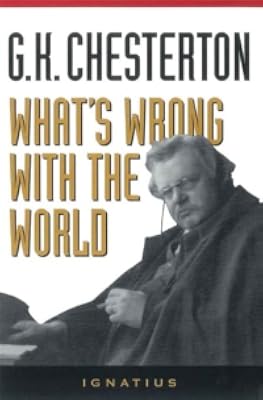
What's Wrong with the World
by G. K. Chesterton
On This Page
Description
During his lifetime, British author and thinker G.K. Chesterton gained a reputation as a top-rate intellectual and social critic. In this volume, Chesterton turns his attention to a series of major problems facing the world at the turn of the twentieth century, offering his one-of-a-kind take on each topic..
Tags
Recommendations




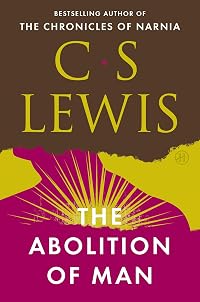






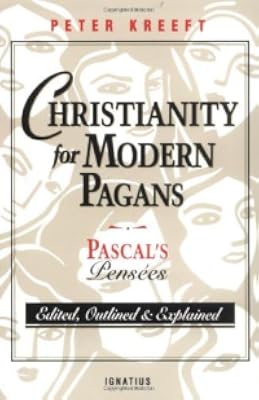


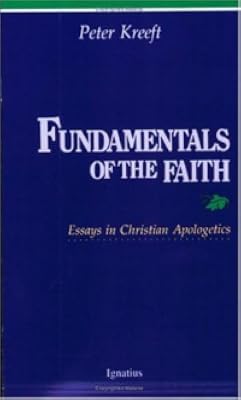
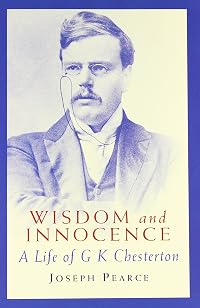


















Member Recommendations

ServusLibri The continued story of the results of some issues addressed by Chesterton.
Member Reviews
I didn't finish this, although it's good fun to read. Chesterton has a well deserved reputation for his humour, and you can't help the odd laugh. But he's just too far off the wall, and it's hard to understand sometimes whether he's being serious or just teasing the reader. I suspect the former. I don't know whether this kind of crypto-fascism is actually dangerous, or just too silly to take seriously. But some of the ideas are so appealing that you have to ask yourself why it appeals to so many people? Some of his social comment is very valid - I particularly like his description of the evolution of the socialist Hudge and the conservative Grudge. But how long can you put up with the claim that the solution to England's ills is to show more provide every Englishman with three acres and a cow? show less
Chesterton wrote almost a hundred years ago about the turmoil and issues that seized a changing English government and society in the early twentieth century. He talks of the issues brought about by militant feminists; the attack of sociology and social workers on the family; the arguments attending to creation of a public school system (England's not America’s definition of public schools); the growing separation of religion from literature, schooling, and government; and the expanding influence of Socialist views as proposed in the Fabian Society.
Many of the changes he argues against were implemented by their proponents, a political success but an operating failure. The result is that new proponents propose even further steps be show more taken in our day. In spite of, or perhaps because of, the lapse of time Chesterton’s observations and arguments seem to go more to the roots of the problems than many recent books of political analysis and argument. And they have the added strength of the author’s ability to add humor, insight, and humanity to his arguments. Time does create a disadvantage as well in that some of his references to people, events, and literature (and he has many) will not be familiar to a modern reader.
In short, if you want to better understand the origins and history of some of today’s political issues you ought to read this. I believe that if you are right leaning, conservative, or libertarian you’ll be happy with his views; or conversely unhappy from the other side. But from either side this is a mind expanding and a delightful read. show less
Many of the changes he argues against were implemented by their proponents, a political success but an operating failure. The result is that new proponents propose even further steps be show more taken in our day. In spite of, or perhaps because of, the lapse of time Chesterton’s observations and arguments seem to go more to the roots of the problems than many recent books of political analysis and argument. And they have the added strength of the author’s ability to add humor, insight, and humanity to his arguments. Time does create a disadvantage as well in that some of his references to people, events, and literature (and he has many) will not be familiar to a modern reader.
In short, if you want to better understand the origins and history of some of today’s political issues you ought to read this. I believe that if you are right leaning, conservative, or libertarian you’ll be happy with his views; or conversely unhappy from the other side. But from either side this is a mind expanding and a delightful read. show less
Basically a long essay, summarising what GKC thought were - sometimes the world's, but most often England's in particular - main problems society had at the time of writing (1910, between Queen Victoria and WWI). He often mentions in passing minor topics and opinions he dealt with in more detail in newspaper articles later collected in other books of his. Some of his argument may seem, from today's perspective, almost antediluvian; more often it's excruciatingly easy to apply his words to the world (and Britain) as we know it now, a century and a decade later.
Many observations in this book are applicable today as when it was written. We refuse to learn from history.
Muito bom.
BG-4
Sep 18, 2020Catalan
GR-3
Dec 7, 2020Catalan
Members
- Recently Added By
Lists

Entender el mundo
46 works; 1 member

1001 Books You Must Read Before You Die
1,448 works; 1,132 members
Author Information

798+ Works 59,652 Members
Gilbert Keith Chesterton was born in London, England, in 1874. He began his education at St Paul's School, and later went on to study art at the Slade School, and literature at University College in London. Chesterton wrote a great deal of poetry, as well as works of social and literary criticism. Among his most notable books are The Man Who Was show more Thursday, a metaphysical thriller, and The Everlasting Man, a history of humankind's spiritual progress. After Chesterton converted to Catholicism in 1922, he wrote mainly on religious topics. Chesterton is most known for creating the famous priest-detective character Father Brown, who first appeared in "The Innocence of Father Brown." Chesterton died in 1936 at the age of 62. (Bowker Author Biography) show less
Some Editions
Series
Belongs to Publisher Series
Work Relationships
Is contained in
The Collected Works of G. K. Chesterton, Vol. 04: What's Wrong with the World, The Superstition of Divorce, Eugenics and Other Evils, Divorce versus Democracy, Social Reform versus Birth Control by Gilbert Keith Chesterton
The Wit, Whimsy, and Wisdom of G. K. Chesterton, Volume 4: Heretics, Orthodoxy, What's Wrong with the World by G. K. Chesterton
Chesterton Classics Collection: Orthodoxy, Heretics, What’s Wrong With The World, What I Saw In America by G. K. Chesterton
G.K. Chesterton Trilogy: Orthodoxy, What's Wrong With The World & All Things Considered by G. K. Chesterton
Common Knowledge
- Canonical title
- What's Wrong with the World
- Original title
- What's Wrong with the World
- Original publication date
- 1910
- Quotations
- Government does not rest on force. Government is force...
Most of the Feminists would probably agree with me that womanhood is under a shameful tyranny in the shops and mills. But I want to destroy the tyranny. They want to destroy the womanhood. That is the only difference.
Theology and education are to each other like a love letter to the General Post Office.
We can now only avoid Socialism by a change as vast as Socialism. If we are to save property, we must distribute property… If we are to preserve the family we must revolutionize the nation.
Classifications
- Genres
- Nonfiction, Religion & Spirituality, General Nonfiction, Philosophy
- DDC/MDS
- 361.1 — Society, government, & culture Social problems and social services Social problems and services Social Problems
- LCC
- HN389 .C52 — Social sciences Social history and conditions. Social problems. Social reform Social history and conditions. Social problems. By region or country
- BISAC
Statistics
- Members
- 1,081
- Popularity
- 23,704
- Reviews
- 10
- Rating
- (3.97)
- Languages
- 7 — English, Estonian, French, Italian, Norwegian, Portuguese, Spanish
- Media
- Paper, Audiobook, Ebook
- ISBNs
- 105
- UPCs
- 1
- ASINs
- 31