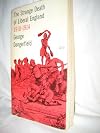
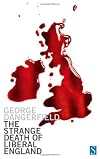
The Strange Death of Liberal England
by George Dangerfield
On This Page
Description
This book focuses on the chaos that overtook England on the eve of the First World War. Dangerfield weaves together the three wild strands of the Irish Rebellion (the rebellion in Ulster), the Suffragette Movement and the Labour Movement to produce a vital picture of the state of mind and the most pressing social problems in England at the time. The country was preparing even then for its entrance into the twentieth century and total war.Dangerfield argues that between the death of Edward show more VII and the First World War there was a considerable hiatus in English history. He states that 1910 was a landmark year in English history. In 1910 the English spirit flared up, so that by the end of 1913 Liberal England was reduced to ashes. From these ashes, a new England emerged in which the true prewar Liberalism was supported by free trade, a majority in Parliament, the Ten Commandments, but the illusion of progress vanished. That extravagant behavior of the postwar decade, Dangerfield notes, had begun before the war. The war hastened everything - in politics, in economics, in behavior - but it started nothing.George Dangerfield's wonderfully written 1935 book has been extraordinarily influential. Scarcely any important analyst of modern Britain has failed to cite it and to make use of the understanding Dangerfield provides. This edition is timely, since the year 2010 has seen a definitive resurrection of Liberal power. Subsequent to the General Election of July 2010 the government of the United Kingdom has been in the hands of a Conservative/Liberal Democrat coalition. The Deputy Prime Minister is the leader of the Liberal Democratic Party - the direct successor of the old Liberal Party examined by Dangerfield. Five Liberal Democrat members of Parliament were appointed to the Cabinet and there are Liberal Democrat ministers in all governmental departments. After decades of absence from government power, Liberalism seems to be back with a vengeance. show lessTags
Recommendations


















Member Reviews
This is an extremely well-written account of the issues which were bedevilling English society in the run-up to the Great War.
It is certainly an answer to the sentimental views of the war interrupting a golden afternoon of the late Edwardian / early Georgian period: Dangerfield highlights the ways in which the issues we tend to think of as part of the post-war changes -- Ireland, women's votes, the growing eclipse of the Liberals by Labour, trade unionism and radicalism -- were all present as a heady mixture leading into the war (and were suddenly suspended, in a burst of patriotism, on the outburst of war).
Well worth reading, and aimed at the general public of its time rather than the specialist (it does, now, require that one have a show more bit of general background to put it in context). If it has a weakness, it is that it is too short. show less
It is certainly an answer to the sentimental views of the war interrupting a golden afternoon of the late Edwardian / early Georgian period: Dangerfield highlights the ways in which the issues we tend to think of as part of the post-war changes -- Ireland, women's votes, the growing eclipse of the Liberals by Labour, trade unionism and radicalism -- were all present as a heady mixture leading into the war (and were suddenly suspended, in a burst of patriotism, on the outburst of war).
Well worth reading, and aimed at the general public of its time rather than the specialist (it does, now, require that one have a show more bit of general background to put it in context). If it has a weakness, it is that it is too short. show less
This is an exciting read, written with energy and humor, about a crazy time in UK politics, when the ruling Liberal Party muddled through four significant crises of which three had significant constitutional implications -- women's suffrage, the Irish push for Home Rule with the resulting army mutiny and stripping of power from the House of Lords (so I'm counting it as two crises), and the wave of strikes that swept the country. The personalities are closely and affectionately observed and the story is satisfyingly told, but what's missing from the book is a theory of why it was this set of crises that led to the death of the Liberal Party. The author doesn't rate any Labour party leaders particularly highly, and yet by the time the show more dust had settled after the war Labour had solidly taken over from the Liberals as the party that the Conservatives traded turns in power with. Why did that happen (instead of the UK turning into Canada with a large centrist party often squeezing out both the left and the right)? The book doesn't really address it, and you reach the end having greatly enjoyed the ride and educated about a lot of interesting issues of the time, but none the wiser on what purports to be its central question. show less
The book I sometimes say I would cut off one pinkie to have written. I love George Dangerfield and the way he writes history.
1099 The Strange Death of Liberal England, by George Dangerfield (read 9 Dec 1970) Because I was so impressed by Dangerfield's The Era of Good Feelings, I decided to read this. It is an account of England from 1910 to Aug 4, 1914--and is an odd book. Nothing like The Era of Good Feelings. One'd never know the two books were written by the same person. Much of this book deals with the Irish question. The account of the struggle over the House of Lords is, of course, fascinating, but it only takes up a portion of the early part of the book. Then a lot of time is given to the Parkhursts and Votes for Women, and that is very interesting. Their tactics were somewhat like today's [1970] crazies. The story of the trade union movement is not as show more interesting. The book ends with an account of Rupert Brooke: "He was buried on St. George's Day. by moonlight: and above his head....Standing beside that moonlit grave, one looks back. All the violence of the pre-war world has vanished, and in its place there glows, year into backward year, the diminishing vistas of that other England, the England where the Grantchester church clock stood at ten to three, where there was Beauty and Certainty and Quiet, and where nothing was real. Today we know it for what it was; but there are moments ...when we could almost find it in our hearts to envy those who saw it, and who never lived to see the new world." show less
What a gem this book is. Unfortunately, one needs an adequate grounding in British history, social history, and literature to fully 'get' it, but still, an excellent read.
How did the dominate Liberal Party die in England? How did Edwardian England die?
This book answers these questions and more.
This book answers these questions and more.
Ratings
Members
- Recently Added By
Published Reviews
added by booksaplenty1949
Lists

Modern Library 100 Best Nonfiction Books
100 works; 8 members
Author Information
10+ Works 974 Members
George Dangerfield's wonderfully written 1935 book has been extraordinarily influential. Scarcely any important analyst of modern Britain has tailed to cite it and to make use of the understanding Dangerfield provides. This edition is timely, since the year 2010 has seen a definitive resurrection of Liberal power. Subsequent to the General show more Election of July 2010 the government of the United Kingdom has been in the hands of a Conservative/Liberal Democrat coalition. The Deputy Prime Minister is the leader of the Liberal Democratic Partythe direct successor of the old Liberal Party examined by Dangerfield. Five Liberal Democrat members of Parliament were appointed to the Cabinet and there are Liberal Democrat ministers in all governmental departments. After decades of absence from government power, Liberalism seems to be back with a vengeance. George Dangerfield (1904-1986) was an English journalist, historian, and literary editor of Vanity Fair. Recipient of a Guggenheim Fellowship and a Pulitzer Prize, he is the author of numerous works including The Damnable Question: A Study of Anglo-Irish Relations, Chancellor Robert R. Livingston of New York, and The Era of Good Feelings. David Marsland is professor of sociology at the University of Buckingham and series editor of European Social Policy for Transaction Publishers. Some of his books include Seeds of Bankruptcy and Welfare or Welfare State? show less
Some Editions
Awards and Honors
Notable Lists
Common Knowledge
- Canonical title
- The Strange Death of Liberal England
- Original publication date
- 1935
- People/Characters
- H. H. Asquith; Winston Churchill; David Lloyd George
- Important places
- England, UK
- Important events
- 1910s
- Dedication
- For Frances G Wickes
- Original language
- English
Classifications
- Genres
- History, Nonfiction, General Nonfiction, Politics and Government
- DDC/MDS
- 941.083 — History & geography History of Europe British Isles Historical periods of British Isles 1837- Period of Victoria and House of Windsor 1910-1936 George V
- LCC
- DA576 .D3 — History of Europe, Asia, Africa and Oceania Great Britain History of Great Britain England History By period Modern, 1485- 20th century
- BISAC
Statistics
- Members
- 479
- Popularity
- 63,041
- Reviews
- 6
- Rating
- (4.06)
- Languages
- English
- Media
- Paper, Ebook
- ISBNs
- 16
- ASINs
- 19