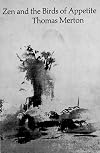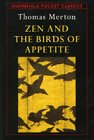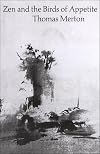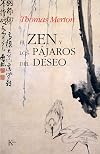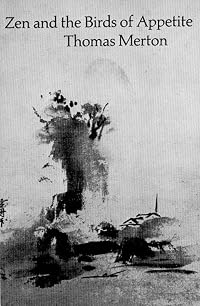
Zen and the Birds of Appetite
by Thomas Merton
On This Page
Description
"Zen enriches no one," Thomas Merton provocatively writes in his opening statement to Zen and the Birds of Appetite-one of the last books to be published before his death in 1968. "There is no body to be found. The birds may come and circle for a while... but they soon go elsewhere. When they are gone, the 'nothing,' the 'no-body' that was there, suddenly appears. That is Zen. It was there all the time but the scavengers missed it, because it was not their kind of prey." This gets at the show more humor, paradox, and joy that one feels in Merton's discoveries of Zen during the last years of his life, a joy very much present in this collection of essays. Exploring the relationship between Christianity and Zen, especially through his dialogue with the great Zen teacher D.T. Suzuki, the book makes an excellent introduction to a comparative study of these two traditions, as well as giving the reader a strong taste of the mature Merton. Never does one feel him losing his own faith in these pages; rather one feels that faith getting deeply clarified and affirmed. Just as the body of "Zen" cannot be found by the scavengers, so too, Merton suggests, with the eternal truth of Christ. show lessTags
Recommendations













Member Reviews
"Zen enriches no one," Thomas Merton provocatively writes in his opening statement to Zen and the Birds of Appetite—one of the last books to be published before his death in 1968. "There is no body to be found. The birds may come and circle for a while... but they soon go elsewhere. When they are gone, the 'nothing,' the 'no-body' that was there, suddenly appears. That is Zen. It was there all the time but the scavengers missed it, because it was not their kind of prey." This gets at the humor, paradox, and joy that one feels in Merton's discoveries of Zen during the last years of his life, a joy very much present in this collection of essays. Exploring the relationship between Christianity and Zen, especially through his dialogue show more with the great Zen teacher D.T. Suzuki, the book makes an excellent introduction to a comparative study of these two traditions, as well as giving the reader a strong taste of the mature Merton. Never does one feel him losing his own faith in these pages; rather one feels that faith getting deeply clarified and affirmed. Just as the body of "Zen" cannot be found by the scavengers, so too, Merton suggests, with the eternal truth of Christ. show less
I take it for granted that if you want to understand Zen, then reading the work of a Catholic monk is probably not the way to do it. Merton's account of a Zen which is radically divorceable from the Buddhist context in which it developed is almost certain to be appropriative. So it goes.
That said, Merton's account of a Zen Catholicism nonetheless remains a powerful vision of what a (completely orthodox, and perhaps at times too completely orthodox) Christian theological praxis centered on mysticism might look like--and has looked like over the ages, as Merton provides an extensive (if not quite comprehensive) overview of Catholic mysticism throughout history, and discuses how their insights fall in line with what he understands Zen to show more be. I stand convinced that there is even more need for Merton's (and the Saints') brand of experiential Zen Catholicism today, in an era when the modernist systematic theology and premodern superstition inherent in other forms of Christianity no longer speak to our postmodern times, then when Merton was writing half a century ago.
And while Merton's Zen Catholicism is focused on personal experience, it does not fall prey to the sort of radical individualism (ultimately narrowly focused on personal sin and individul salvation) which riddles and plagues Protestantism. Instead, the Church itself is able to play a key role both as the mystic Body of Christ and as the source of the Sacraments. Merton recognizes that "faith is the door to the full inner life of the Church, a life which includes not only access to an authoritative teaching but above all to a deep personal experience which is at once unique and yet shared by the whole Body of Christ, in the Spirit of Christ."
This book did and does much to confirm, deepen, and enrich my understanding of the rightful place of mysticism and mystic experience at the very center of Christianity (and, in particular, my own brand of liberal Anglo-Catholicism). show less
That said, Merton's account of a Zen Catholicism nonetheless remains a powerful vision of what a (completely orthodox, and perhaps at times too completely orthodox) Christian theological praxis centered on mysticism might look like--and has looked like over the ages, as Merton provides an extensive (if not quite comprehensive) overview of Catholic mysticism throughout history, and discuses how their insights fall in line with what he understands Zen to show more be. I stand convinced that there is even more need for Merton's (and the Saints') brand of experiential Zen Catholicism today, in an era when the modernist systematic theology and premodern superstition inherent in other forms of Christianity no longer speak to our postmodern times, then when Merton was writing half a century ago.
And while Merton's Zen Catholicism is focused on personal experience, it does not fall prey to the sort of radical individualism (ultimately narrowly focused on personal sin and individul salvation) which riddles and plagues Protestantism. Instead, the Church itself is able to play a key role both as the mystic Body of Christ and as the source of the Sacraments. Merton recognizes that "faith is the door to the full inner life of the Church, a life which includes not only access to an authoritative teaching but above all to a deep personal experience which is at once unique and yet shared by the whole Body of Christ, in the Spirit of Christ."
This book did and does much to confirm, deepen, and enrich my understanding of the rightful place of mysticism and mystic experience at the very center of Christianity (and, in particular, my own brand of liberal Anglo-Catholicism). show less
This little set of essays on Zen Buddhism by one of the great Catholic thinkers of this century, a Trappist monk often associated with peace theology, is challenging and unique. It is clear the Merton is well-informed about Zen and approaches it from an open mind, seeking affinities between his faith and that of the Zen masters. I half expected a syncretic approach but, for all of his acceptance of ideas and concepts of Zen, Merton never compromises his essentially Christian view of the world. Rather, he embraces Zen mysticism; its apophatic approach to the universe and divinity; its rejection of the world and self; and he finds parallels in Christian life and thought down through the ages. He also describes his discussions with D.T. show more Suzuki in a way which clearly shows his delight with the man and his ideas. The dialogue between the two men shows the similarities as well as some of the differences in their thinking.
While most of the book elucidates Zen philosophy and relates it to western Christian thinking, a chapter on Zen and art rounds things out nicely. For anyone interested in Zen or Christianity this book will definitely be of interest. It has, in my opinion, the added benefit of pointing out the many parallels between Christian mystical and ascetic practices and Zen without confounding or conflating them. show less
While most of the book elucidates Zen philosophy and relates it to western Christian thinking, a chapter on Zen and art rounds things out nicely. For anyone interested in Zen or Christianity this book will definitely be of interest. It has, in my opinion, the added benefit of pointing out the many parallels between Christian mystical and ascetic practices and Zen without confounding or conflating them. show less
Merton is helpful in elucidating how Zen practice offered what was missing from the Catholicism of my youth. It has to be said that the theological riches he draws upon, from John of the Cross to the Desert Fathers, were totally alien to the catechism I grew up with. Bummer.
Merton has some good, concise explanations of Zen where western Zen teachers get gauzy and circuitous. The dialogue with D.T. Suzuki disappointingly gets into the weeds, and Merton admits this. What a humble dude.
Merton has some good, concise explanations of Zen where western Zen teachers get gauzy and circuitous. The dialogue with D.T. Suzuki disappointingly gets into the weeds, and Merton admits this. What a humble dude.
This is the kind of book that requires a great deal of time to really digest what it has to say so to be fair it may deserve more than 3 stars. I do not, however, feel like reading this book was a waste of time. It was interesting see the author's attempt to separate Zen, Buddhism and Christianity (Catholicism) and, yet, show where they seemingly interconnect. Some other reviewers have noted that the ideas in this book were not completely fleshed out but, for me, that makes it all the more interesting. This seemingly allows the reader more room to mentally interact with the ideas that are presented. I did highlight quite a few passages so I am sure that I will return to this one here and there.
It is a shame that Fr. Merton died before his thoughts on Eastern religions and Christianity were fully germinated. Here Merton takes us on a tourist path through Zen, and shows places where he thinks there are commonalities between Zen and Christianity. He is not, here, working toward any synthesis.
A trappist monk once told that Merton would not have stayed in the Catholic church if he had not died. I don't know about that, but reading this and the Asian Journals gives an interesting picture of a man whose intelligence had a wide scope, and whose piety (that is a good word) an even wider scope.
A trappist monk once told that Merton would not have stayed in the Catholic church if he had not died. I don't know about that, but reading this and the Asian Journals gives an interesting picture of a man whose intelligence had a wide scope, and whose piety (that is a good word) an even wider scope.
Favorite Quotes:
"The real way to study Zen is to penetrate the outer shell and taste the inner kernel which cannot be defined."
"For Zen, from the moment fact is transferred to a statement it is falsified. One ceases to grasp the naked reality of experience and one grasps a form of words instead."
"Paradise is not the final goal of spiritual life. It is, in fact, only a return to the true beginning... Paradise cannot be opened to us except by a free gift of divine mercy."
The Author goes over several depictions of the higher power from religions including Christianity and Buddhism. He relates the experiences recorded with words of enlightened people. Mystical experiences are recounted with expressions which carried similar meanings from show more different backgrounds. The Void being aware of itself, and the idea of One with God and the Void are mentioned. A pure, direct experience in conscious connection is also mentioned. Terms including Avidya and Dukkha are gone over, and 10 forms of the word "Manifest" are written. [Read in 2007] show less
"The real way to study Zen is to penetrate the outer shell and taste the inner kernel which cannot be defined."
"For Zen, from the moment fact is transferred to a statement it is falsified. One ceases to grasp the naked reality of experience and one grasps a form of words instead."
"Paradise is not the final goal of spiritual life. It is, in fact, only a return to the true beginning... Paradise cannot be opened to us except by a free gift of divine mercy."
The Author goes over several depictions of the higher power from religions including Christianity and Buddhism. He relates the experiences recorded with words of enlightened people. Mystical experiences are recounted with expressions which carried similar meanings from show more different backgrounds. The Void being aware of itself, and the idea of One with God and the Void are mentioned. A pure, direct experience in conscious connection is also mentioned. Terms including Avidya and Dukkha are gone over, and 10 forms of the word "Manifest" are written. [Read in 2007] show less
Members
- Recently Added By
Lists

Best Sellers / Popular 1968
237 works; 5 members
Author Information

397+ Works 38,235 Members
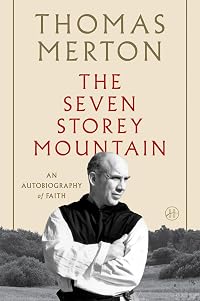
Born in France, Thomas Merton was the son of an American artist and poet and her New Zealander husband, a painter. Merton lost both parents before he had finished high school, and his younger brother was killed in World War II. Something of the ephemeral character of human endeavor marked all his works, deepening the pathos of his writings and show more drawing him close to Eastern, especially Buddhist, forms of monasticism. After an initial education in the United States, France, and England, he completed his undergraduate degree at Columbia University. His parents, nominally friends, had given him little religious guidance, and in 1938, he converted to Roman Catholicism. The following year he received an M.A. from Columbia University and in 1941, he entered Gethsemani Abbey in Kentucky, where he remained until a short time before his death. His working life was spent as a Trappist monk. At Gethsemani, he wrote his famous autobiography, "The Seven Storey Mountain" (1948); there he labored and prayed through the days and years of a constant regimen that began with daily prayer at 2:00 a.m. As his contemplative life developed, he still maintained contact with the outside world, his many books and articles increasing steadily as the years went by. Reading them, it is hard to think of him as only a "guilty bystander," to use the title of one of his many collections of essays. He was vehement in his opposition to the Vietnam War, to the nuclear arms race, to racial oppression. Having received permission to leave his monastery, he went on a journey to confer with mystics of the Hindu and Buddhist traditions. He was accidentally electrocuted in a hotel in Bangkok, Thailand, on December 10, 1968. (Bowker Author Biography) show less
Series
Belongs to Publisher Series
New Directions Paperbook (261)
Common Knowledge
- Original publication date
- 1968
- People/Characters
- D. T. Suzuki; Meister Eckhart; St. John of the Cross
- Canonical LCC
- BQ9266 .M468 1993
Classifications
- Genres
- Religion & Spirituality, Nonfiction, Philosophy, General Nonfiction
- DDC/MDS
- 294.3927 — Religion Other religions Dharmic religions Buddhism Buddhism - Branches and schools Mahayana Buddhism Zen Buddhism
- LCC
- BQ9266 .M468 — Philosophy, Psychology and Religion Buddhism Buddhism Modifications, schools, etc. Special modifications, sects, etc. Zen Buddhism
- BISAC
Statistics
- Members
- 839
- Popularity
- 32,787
- Reviews
- 13
- Rating
- (4.05)
- Languages
- 5 — English, Italian, Polish, Portuguese, Spanish
- Media
- Paper, Audiobook, Ebook
- ISBNs
- 10
- ASINs
- 6