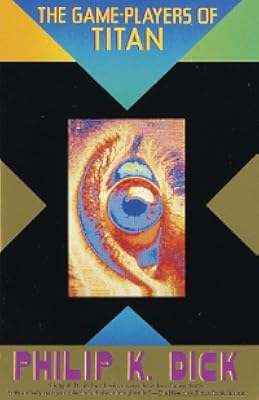
The Game-Players of Titan
by Philip K. Dick
On This Page
Description
Years ago, Earth and Titan fought a war and Earth lost. The planet was irradiated and most of the surviving population is sterile. The few survivors play an intricate and unending game called Bluff at the behest of the slug-like aliens who rule the planet. At stake in the game are two very important commodities: land and spouses. Pete Garden just lost his wife and Berkeley, California, but he has a plan to win them back. That is, if he isn't derailed by aliens, psychic traitors, or his new show more wife. The Game-Players of Titan is both satire and adventure, examining the ties that bind people together and the maddening peccadilloes of bureaucracy, whether the bureaucrats are humans or alien slugs. show lessTags
Recommendations








Member Recommendations
Member Reviews
Following on from my recent discovery of PKD and being so impressed by Do Androids Dream of Electric Sheep? I picked another of his works at random. I didn't know anything about The Game Players of Titan, or how it fits into his larger body of work when I started. Apparently it's one of his more minor works.
This novel is set on a post-apocalyptic Earth, where thanks to a nuclear war and a bomb dropped by The Red Chinese the majority of the population is infertile and dwindling. The secret to a long life has also been discovered, so many of the characters are in their hundreds, but look much younger thanks to cosmetic procedures. Earth is also now run by an hegemony of aliens from Titan, an amorphous race known as Vugs, who also have show more psychic talents including the ability to read minds. They are gambling obsessed and imposed a system where by land ownership is administered through The Game, in which the elite and lucky Bindmen play in gambling teams. Marriage is also now essentially bartered too, and dependant upon the 'luck' of a pairing (i.e. fertility). As if all this isn't enough, some humans have also developed psionic talents that include mind reading, predicting the future and telekinesis. These people are banned from The Game because they could use their abilities to cheat, many of them are unhappy about this because it means they will never be able to own land and become Bindmen.
The main character is Pete Garden, an alcoholic and substance abusing bipolar man with a tendency towards suicidal thoughts. At the start of the novel, after a binge, he has lost his favourite properly - Berkley - along with his wife Freya. He discovers that the player he lost Berkley too has now sold it onto notoriously corrupt and lucky (in every way) Bindman Jerome Luckman, who already owns most of the East Coast. While visiting Berkley and his old friend Joe Shilling, he meets a psionic mysteriously fertile woman named Pat McCain and also her teenage daughter Mary Ann, he is attracted to both of them. Later than night he gets a new wife on loan from another gambling group, Carol. Initially Pete has a plot with Joe to try to win Berkley back, but a murder complicates things.. and it all gets steady crazier from there!
As you've gathered I'm sure, there is a lot going on here! It took me a little while to get into it but I found the plot surrounding the murder sufficiently intriguing that I carried on to the end. I do continue to be astounded by how completely effortlessly and succinctly Dick builds these really quite complex science-fiction worlds! The plot did start to get a little bit confusing towards the end and I got the feeling maybe he was really making this up as he went along! At the same time though this is being told through Pete, who is a deeply paranoid character that spends a lot of time on a cocktail of drink and amphetamines.. I don't think Pete had any more of an idea of what was going on than I did!
My favourite thing in this novel though was the Rushmore Effect of the cars and other electrical appliances! Cars and toasters with personality. I particularly enjoyed Joe Shilling's grumpy old Max.
It is my no means a masterpiece, it's doesn't come close to Do Androids Dream .. but it was still really readable, and I enjoyed it! I've gotten very good at just giving up on books that don't capture me, so the fact I finished it should speak quite highly! show less
This novel is set on a post-apocalyptic Earth, where thanks to a nuclear war and a bomb dropped by The Red Chinese the majority of the population is infertile and dwindling. The secret to a long life has also been discovered, so many of the characters are in their hundreds, but look much younger thanks to cosmetic procedures. Earth is also now run by an hegemony of aliens from Titan, an amorphous race known as Vugs, who also have show more psychic talents including the ability to read minds. They are gambling obsessed and imposed a system where by land ownership is administered through The Game, in which the elite and lucky Bindmen play in gambling teams. Marriage is also now essentially bartered too, and dependant upon the 'luck' of a pairing (i.e. fertility). As if all this isn't enough, some humans have also developed psionic talents that include mind reading, predicting the future and telekinesis. These people are banned from The Game because they could use their abilities to cheat, many of them are unhappy about this because it means they will never be able to own land and become Bindmen.
The main character is Pete Garden, an alcoholic and substance abusing bipolar man with a tendency towards suicidal thoughts. At the start of the novel, after a binge, he has lost his favourite properly - Berkley - along with his wife Freya. He discovers that the player he lost Berkley too has now sold it onto notoriously corrupt and lucky (in every way) Bindman Jerome Luckman, who already owns most of the East Coast. While visiting Berkley and his old friend Joe Shilling, he meets a psionic mysteriously fertile woman named Pat McCain and also her teenage daughter Mary Ann, he is attracted to both of them. Later than night he gets a new wife on loan from another gambling group, Carol. Initially Pete has a plot with Joe to try to win Berkley back, but a murder complicates things.. and it all gets steady crazier from there!
As you've gathered I'm sure, there is a lot going on here! It took me a little while to get into it but I found the plot surrounding the murder sufficiently intriguing that I carried on to the end. I do continue to be astounded by how completely effortlessly and succinctly Dick builds these really quite complex science-fiction worlds! The plot did start to get a little bit confusing towards the end and I got the feeling maybe he was really making this up as he went along! At the same time though this is being told through Pete, who is a deeply paranoid character that spends a lot of time on a cocktail of drink and amphetamines.. I don't think Pete had any more of an idea of what was going on than I did!
My favourite thing in this novel though was the Rushmore Effect of the cars and other electrical appliances! Cars and toasters with personality. I particularly enjoyed Joe Shilling's grumpy old Max.
It is my no means a masterpiece, it's doesn't come close to Do Androids Dream .. but it was still really readable, and I enjoyed it! I've gotten very good at just giving up on books that don't capture me, so the fact I finished it should speak quite highly! show less
I'm an unabashed fan of PKD (1928-1982), in my opinion one of the most inventive science fiction writers of his generation, which was a very strong generation for sci fi.
Many of his books seem to be generated by a single central idea, off which he then spins speculative stories that often explore human psychology and social behaviours. What if androids were so convincing they didn't know they were androids? What if Hitler won World War II? What if God was a vast active living intelligence system orbiting Earth?
In the case of The Game Players of Titan, this idea might be described as "How could you bluff someone who can read your mind?"
To answer this, Dick creates a future post-apocalyptic scenario in which the earth's population has show more been decimated, aliens called vugs from Titan (the largest of Saturn's moons) rule in a kind of benevolent dictatorship, and the few of the remaining population who are land owners play a board game in which they can bluff each other to win and lose property - as well partners, with whom they hope to have "luck" to procreate and repopulate Earth.
Our hero, Pete Garden, is one such "bindman", who loses Berkeley in California and his wife in one disastrous Game. Events spin off from that night that introduce Garden to an underground of people with various telepathic, telekinetic and other psionic powers, vugs disguised as humans, various drugs and medications, murders and both terrestrial and extra-terrestrial mayhem, culminating in a session of the Game for the highest possible stakes.
In the process, we get to explore a range of questions related to psionics. Is it possible that, deep down, everyone is a bit telepathic? How do telepaths deal with reading the parts of people's minds that are usually deeply repressed? What happens when two telepaths read each other's minds? Is it possible to enhance or repress psionic powers through the use of pharmaceuticals?
As is often the case with Dick novels, the small details are often extremely entertaining and provocative. In this book, for example, the Rushmore Effect allows non-organic entities to speak, from elevators to flying cars to drug stores. Heat-needles are deadly weapons left over from the war that wiped out most of the population. Automated mobile newspaper vending machines are homeotropic, seeking out people to sell their products to. With the aid of medications, our hero has reached the not-unusual age of a very fit 140 years, which doesn't stop him being attracted to an 18 year old.
The Game Players of Titan is not regarded as one of PKD's major works, unlike the 23 short stories and novels that have been turned into TV episodes or movies like Blade Runner, Total Recall, Minority Report, or The Man in the High Castle.
Nevertheless, it's a great read - just 157 pages in paperback - that will take you to a future world as compelling and thought-provoking as anything dreamt up by Asimov, Bradbury, Heinlein or Clarke. show less
Many of his books seem to be generated by a single central idea, off which he then spins speculative stories that often explore human psychology and social behaviours. What if androids were so convincing they didn't know they were androids? What if Hitler won World War II? What if God was a vast active living intelligence system orbiting Earth?
In the case of The Game Players of Titan, this idea might be described as "How could you bluff someone who can read your mind?"
To answer this, Dick creates a future post-apocalyptic scenario in which the earth's population has show more been decimated, aliens called vugs from Titan (the largest of Saturn's moons) rule in a kind of benevolent dictatorship, and the few of the remaining population who are land owners play a board game in which they can bluff each other to win and lose property - as well partners, with whom they hope to have "luck" to procreate and repopulate Earth.
Our hero, Pete Garden, is one such "bindman", who loses Berkeley in California and his wife in one disastrous Game. Events spin off from that night that introduce Garden to an underground of people with various telepathic, telekinetic and other psionic powers, vugs disguised as humans, various drugs and medications, murders and both terrestrial and extra-terrestrial mayhem, culminating in a session of the Game for the highest possible stakes.
In the process, we get to explore a range of questions related to psionics. Is it possible that, deep down, everyone is a bit telepathic? How do telepaths deal with reading the parts of people's minds that are usually deeply repressed? What happens when two telepaths read each other's minds? Is it possible to enhance or repress psionic powers through the use of pharmaceuticals?
As is often the case with Dick novels, the small details are often extremely entertaining and provocative. In this book, for example, the Rushmore Effect allows non-organic entities to speak, from elevators to flying cars to drug stores. Heat-needles are deadly weapons left over from the war that wiped out most of the population. Automated mobile newspaper vending machines are homeotropic, seeking out people to sell their products to. With the aid of medications, our hero has reached the not-unusual age of a very fit 140 years, which doesn't stop him being attracted to an 18 year old.
The Game Players of Titan is not regarded as one of PKD's major works, unlike the 23 short stories and novels that have been turned into TV episodes or movies like Blade Runner, Total Recall, Minority Report, or The Man in the High Castle.
Nevertheless, it's a great read - just 157 pages in paperback - that will take you to a future world as compelling and thought-provoking as anything dreamt up by Asimov, Bradbury, Heinlein or Clarke. show less
Middle of the road Dick. A checklist of ideas he used in many books: southern California as the center of the universe, a suicidal main character, unhappy male/female relationships, blobby aliens called vugs, and talking cars with an attitude. We lost a war with the vugs, but the earth is undamaged. The population is greatly decreased, thanks to an unbelievably stupid move by the Red Chinese, and withering. Somehow, some people are telepathic or pre-cognitive, perhaps also as a side effect.Others, including the main character, are allowed to play the Game with each other, to win ownership of various cities, and/or trade wives, looking for "luck", i.e., a fertile union. Nothing really engages until nearly the midpoint for this short show more novel when Dick finally invokes his common move: calling into question what is real. Surprisingly this predictable step is still where the book works. It's where Dick was in his element.
OK for fans of Dick. Not for those who hate him. For beginners, I recommend Martian Time-Slip. show less
OK for fans of Dick. Not for those who hate him. For beginners, I recommend Martian Time-Slip. show less
I don't know, maybe I'm crazy, but I have read just about every "SF" novel PKD has written (some 30-odd books), and dammit, this one is probably close to my favorite. I know that Game Players of Titan is commonly dismissed as the more or less "failed" novel Dick wrote following on the heels of Man in the High Castle, however I beg to differ on the "failed" part ... it's just a completely different kind of novel than "High Castle", and for me, it's one of Dick's most thrilling examples of "a universe that falls apart two days later", to steal a quote -- a title, actually -- of a talk PKD gave in 1978.
This novel has Everything in it ... it's Dick's ultimate "kitchen sink" novel, with precogs, aliens, drugs, alternate and constantly show more changing realities, multiple (unreliable) narrators (mostly the unforgettably flaky and fucked-up Pete Garden), time travel, staggeringly imaginative and inventive bits in everything from the smallest details to the entire plot trajectory, and, neither last nor least, filled with drastic shifts and surprises in the story, places where Dick pulls the rug out from under the reader in a way that makes my head spin even on second and third reading.
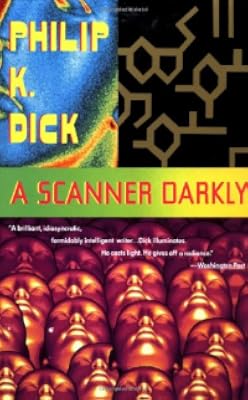
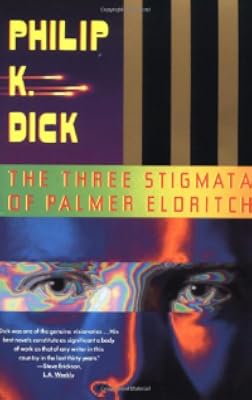
Does it all add up at the end, or even 1/2 or 2/3 of the way through? Well, no, of course not! But does everything ever "add up" in ANY of Dick's novels? Most decidedly NO, not even in The Man in the High Castle, certainly not in Valis or in Scanner Darkly or -- good heavens, Ubik? The Three Stigmata of Palmer Eldritch? The Simulacra (another personal favorite)? No, no, and absolutely not! But the way the world Dick creates falls apart in this book is, well, it's just epic ...
So give it a read with an open mind, and be ready for anything. show less
This novel has Everything in it ... it's Dick's ultimate "kitchen sink" novel, with precogs, aliens, drugs, alternate and constantly show more changing realities, multiple (unreliable) narrators (mostly the unforgettably flaky and fucked-up Pete Garden), time travel, staggeringly imaginative and inventive bits in everything from the smallest details to the entire plot trajectory, and, neither last nor least, filled with drastic shifts and surprises in the story, places where Dick pulls the rug out from under the reader in a way that makes my head spin even on second and third reading.
Does it all add up at the end, or even 1/2 or 2/3 of the way through? Well, no, of course not! But does everything ever "add up" in ANY of Dick's novels? Most decidedly NO, not even in The Man in the High Castle, certainly not in Valis or in Scanner Darkly or -- good heavens, Ubik? The Three Stigmata of Palmer Eldritch? The Simulacra (another personal favorite)? No, no, and absolutely not! But the way the world Dick creates falls apart in this book is, well, it's just epic ...
So give it a read with an open mind, and be ready for anything. show less
Power to the people! Unfortunately, in Philip K. Dick's 1962 novel The Game-Players of Titan, we're two hundred years into the future, the people are the entire human race and humans have anything but power – in the aftermath of Hinkle radiation and losing a war with the Titanians aka vugs from Planet Titan, the human population has been decimated, only a handful of couples can have kids and those vugs hold the real power.
This is a world of advanced technology with such things as The Rushmore Effect wherein elevators, medicine cabinets and flying automobiles are programed to answer questions by speaking the truth. It’s also a world where playing The Game is of central importance: those fortunate humans who play the Game are show more referred to as Bindmen. And the vugs? There are some vugs here on Earth to keep tabs on human activity, participation in the Game heading up the list. Vugs can manifest as either flies or humans, one can never be sure when one’s dealing with a vug. It’s the roll of the dice.
The Game-Players of Titan is one weird, wild, freaky fiction. PKD works his magic to scramble all sorts of spaced out madness into his speculative stew. To share a taste, here are a number of key ingredients:
The Game: board game that’s similar to Risk or Monopoly requiring a combination of skill and luck, where a spinner and a deck of cards are needed to play and players trade properties and wives back and forth. What’s particularly helpful for a game player: an ability to read other players, knowing when your opponent is or is not bluffing.
Pete Garden: an ordinary kind of guy with suicidal tendencies and gloomy, manic-depressive phases, a guy prone to addiction to liquor and especially drugs. Oh, yes, Pete can get extremely paranoid, frequently for good reason - he has hallucinations that we humans are all surrounded by vugs. Or, maybe he's actually seeing the truth? Even paranoids have enemies. I bet when he was a little kid, Pete saw the sippy cup as half empty. And you've has such bad luck playing the game recently, Pete! You lost Berkeley, California and also your latest wife. You need a three to get yourself a new wife – and you desperately want Berkeley back; you're willing to trade three small cities in Marin County. What you really need, Pete, is some luck - either in yourself or in a new Game playing partner.
Joe Shilling: Poor Joe! He lost big time to Lucky Luckman from New York City. Subsequently, he dropped from Bindman to a non-B (the major distinction in status in this brave new depopulated world). But thanks to his good buddy Pete, Joe can rejoin the game. Once at the table for the ultimate stakes, Joe shares a true gem of wisdom: the biggest enemies for a game player are greed and fear. Thus spoke Shilling. Lesson to last a lifetime.
Psychic Pat McClain: This PKD-style femme fatale is a telepath. Since this luscious lady can read minds, she is automatically disqualified from the Game, forever relegated to non-B status, a fact of life that makes her furious. There’s something funny about Pat – she refuses to submit to having her own mind read, such a curious stance for a mind-reader. Sounds like Pat might have something to hid from the Bindmen.
Mary Anne McClain: Holy psychokinesis! Mary Anne is Pat’s eighteen-year old daughter, a young lady having the power to invoke the Poltergeist effect, moving people and things through space and through walls. Oh, funky baby! I want you on my side. As do Pete and his fellow players.
Jerome Luckman: lucky guy at the Game: lucky guy at having children. Is there such a thing as too much luck? The fate of this New Yorker adds yet again another philosophic dimension to the novel.
Carol Holt: Pete's new wife. He did come up with a three, after all. Shortly following their marriage, turns out Carol is pregnant. Oh, lucky day for both Carol and Pete. Now our protagonist truly has the stakes raised as he gambles at the Game and takes his chances at life.
Dave Mutreaux: A pre-cog, that is, someone able to tell the future, another type of person excluded from the Game. And the players have an EEG Machine to detect if someone wishing to come to the table is a pre-cog. However, the more PKD develops his story, the more Dave and his pre-cog abilities rise in importance. In the game of life, always a good idea to befriend a person who can warn you of the consequences of possible bad decisions.
Vugs on Titan: There's the ultimate Game. It's Pete and his group versus the vug master game players on Titan. But alas, even if the vugs lose, those critters still wield tremendous power. The vugs just might take W.C. Fields seriously when he said, "It’s morally wrong to allow a sucker to keep his money."
Life, a Game of Chance: But seriously folks, there’s a great sense of play in The Game-Players of Titan. Who can Pete trust when appearances frequently differ so radically from reality? Whatever choices Pete makes depend so much on LUCK, big time. Pete recognizes we ordinary humans are at such a disadvantage - we can't see into the future, we can’t read other people’s minds, we simply have to take our chances.
In many ways, the challenges Pete and his fellow players face are similar to our own. No answers are provided (unlike VALIS and other PKD novels, The Game-Players of Titan does not even touch on theology). Decision making here is more in the spirit of gaming and game theory, of bluffing and calling bluff, of relying on skill and playing the odds, all along counting on a bit of luck. And please remember, no matter where you are on the game board or where you are in life, greed and fear will rarely work to your advantage.
Such a flaky, fun novel. One of the most enjoyable PKDs I've come across.
"Junk, like a billion golf balls, cascaded brightly, replacing the familiar reality of substantial forms. It was, Joe Schilling thought, like a fundamental breakdown of the act of perception itself... "I'm scared - what is this?" He did not understand and he reached out groping in the stream of atom-like sub-particles that surged everywhere. Is this the understructure of the universe itself? he wondered. The world outside of space and time, beyond the modes of cognition?" - Philip K. Dick, The Game-Players of Titan show less
This was a pretty exciting book to read with lots of action. The plot revolves around a dystopian Earth where an atomic war caused by the Red Chinese has resulted in the sterilization of the human race and with that, humans also fought a war with the Vugs of Titan and lost, leading to the Vugs as overseers of the human race. They've instituted a game called Bluff that Bindmen, or people who are property owners, must play, the stakes being property and wives. Our hero, Pete Garden has been married to 18 different women and in the first chapter, he loses Berkeley and another wife. And is pretty ticked about it. The person who won Berkeley sold it to an east coast Bindman who wants to dig his claws into California and flies out to show more participate in the game. And winds up murdered. The problem is, Pete can't remember what he did the day of the murder and his car has recorded the fact that he went to the deceased's hotel. Soon, the telepathic police are after him. Confusing things is the fact that six people in their Bluff group can't remember their days, so it could have been any of them. This leads to a crazy adventure featuring ESP, alcohol and lots of drugs, more murders, interplanetary travel, and more. Pete gets caught up in a deep secret and discovers there are Vugs all around him in human form. This leads to the group playing Bluff with the Vugs on Titan for ownership of the world, which I never got, and with them beating the Vugs. It's an open ended book, however, as we close with a Vug and a human wandering off to God knows where.
I'm giving this book four stars instead of five because even though it was exciting, I never really got why the aliens insisted they play a Monopoly-like game for real property and wives, other than to find pairs of humans who could reproduce. Even though they were trying to keep the population level down. And what does the property have to do with it? Additionally, we're never really given a good description of the Vugs, other than they might have been amoeba-like or slug-like. But are they small? Are they big? Where did they get their telekinesis from? And their technology? And love for games? None of this is explained. I think Dick could have filled in a lot more holes if he had tried. Still, it was a good book and I certainly recommend it, not only to PKD fans, but to anyone. show less
I'm giving this book four stars instead of five because even though it was exciting, I never really got why the aliens insisted they play a Monopoly-like game for real property and wives, other than to find pairs of humans who could reproduce. Even though they were trying to keep the population level down. And what does the property have to do with it? Additionally, we're never really given a good description of the Vugs, other than they might have been amoeba-like or slug-like. But are they small? Are they big? Where did they get their telekinesis from? And their technology? And love for games? None of this is explained. I think Dick could have filled in a lot more holes if he had tried. Still, it was a good book and I certainly recommend it, not only to PKD fans, but to anyone. show less
I saw that a critic had classified GPoT as a parodic meta-narrative. If so I believe this was my first parodic meta-narrative; I can't say that I'm a fan.
Set in a future dystopian version of the USA, the backstory for how things have reached their current condition is delivered in bits and pieces throughout the book, and a clear understanding was not given. Much detail is left to the reader's imagination.
There are too many elements of 1960's USA that remain in this future; their appearance is jarring. (I do of course recognize how hard it must be to write a story about the future that a reader 60 years into the future still finds futuristic).
There also is some action on another planet; that setting was minimally described and needed show more more definition.
The hero is a privileged jerk and acts irrationally.
The problem that needs to be resolved (the conflict) keeps evolving and evolving in a way that should increase the drama. I found no increase in dramatic tension.
The action in the climax requires some collaboration of the hero with others, which was an interesting premise.
The story builds toward a climax but then resolves that climax quite prematurely IMO.
The twist at the very end (final page) totally disappointed me. If in fact Dick intended this to be a parodic meta-narrative, the twist undercuts the impact of both parody and meta-narrative; it seems like a commercial move to me. show less
Set in a future dystopian version of the USA, the backstory for how things have reached their current condition is delivered in bits and pieces throughout the book, and a clear understanding was not given. Much detail is left to the reader's imagination.
There are too many elements of 1960's USA that remain in this future; their appearance is jarring. (I do of course recognize how hard it must be to write a story about the future that a reader 60 years into the future still finds futuristic).
There also is some action on another planet; that setting was minimally described and needed show more more definition.
The hero is a privileged jerk and acts irrationally.
The problem that needs to be resolved (the conflict) keeps evolving and evolving in a way that should increase the drama. I found no increase in dramatic tension.
The action in the climax requires some collaboration of the hero with others, which was an interesting premise.
The story builds toward a climax but then resolves that climax quite prematurely IMO.
The twist at the very end (final page) totally disappointed me. If in fact Dick intended this to be a parodic meta-narrative, the twist undercuts the impact of both parody and meta-narrative; it seems like a commercial move to me. show less
Members
- Recently Added By
Lists

Books Read in 2023
5,638 works; 147 members
Author Information

680+ Works 147,324 Members
Phillip Kindred Dick was an American science fiction writer best known for his psychological portrayals of characters trapped in illusory environments. Born in Chicago, Illinois, on December 16, 1928, Dick worked in radio and studied briefly at the University of California at Berkeley before embarking on his writing career. His first novel, Solar show more Lottery, was published in 1955. In 1963, Dick won the Hugo Award for his novel, The Man in the High Castle. He also wrote a series of futuristic tales about artificial creatures on the loose; notable of these was Do Androids Dream of Electric Sheep?, which was later adapted into film as Blade Runner. Dick also published several collections of short stories. He died of a stroke in Santa Ana, California, in 1982. (Bowker Author Biography) show less
Some Editions
Series
Belongs to Publisher Series
Work Relationships
Is contained in
Common Knowledge
- Canonical title*
- Das Globus-Spiel
- Original title
- The Game-Players of Titan
- Alternate titles
- Os jogadores de Titã
- Original publication date
- 1963-06-04
- People/Characters
- Pete Garden; Freya Garden; Pat McClain; Mary Anne McClain; Ben Luckman; Carol Garden (show all 8); Laird Sharp; Joe Schilling
- Important places
- California, USA; Titan; Berkeley, California, USA; New York, New York, USA; San Francisco, California, USA
- First words
- It had been a bad night, and when he tried to drive home he had a terrible argument with his car.
Tinha sido uma péssima noite e, quando quis conduzir até casa, teve uma tremenda discussão com o seu carro. - Mr. Garden, o senhor não se encontra em estado de conduzir. Faça o favor de usar o automec e de se estender no... (show all) banco da retaguarda. - Last words
- (Click to show. Warning: May contain spoilers.)Humming confidently to himself, Doctor Philipson drove the car toward Idaho, skimming across the dark night sky of Earth.
(Click to show. Warning: May contain spoilers.)Trauteando, confiante, para si próprio, o Dr. Philipson conduziu o veículorumo a Idaho, deslizando na noite escura do céu da Terra. - Original language
- Inglês
*Some information comes from Common Knowledge in other languages. Click "Edit" for more information.
Classifications
Statistics
- Members
- 1,358
- Popularity
- 17,666
- Reviews
- 22
- Rating
- (3.52)
- Languages
- 13 — Czech, Dutch, English, French, German, Hungarian, Italian, Japanese, Polish, Portuguese, Romanian, Spanish, Turkish
- Media
- Paper, Audiobook, Ebook
- ISBNs
- 43
- ASINs
- 21