On This Page
Description
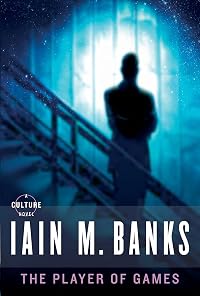
Fiction. Science Fiction. The Culture — a human/machine symbiotic society — has thrown up many great Game Players, and one of the greatest is Gurgeh. Jernau Morat Gurgeh. The Player of Games. Master of every board, computer and strategy. Bored with success, Gurgeh travels to the Empire of Azad, cruel and incredibly wealthy, to try their fabulous game. . .a game so complex, so like life itself, that the winner becomes emperor. Mocked, blackmailed, almost murdered, Gurgeh accepts the game, show more and with it the challenge of his life — and very possibly his death. show lessTags
Recommendations









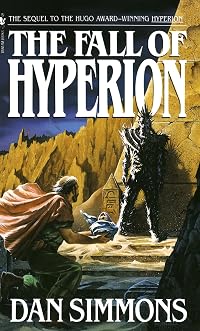


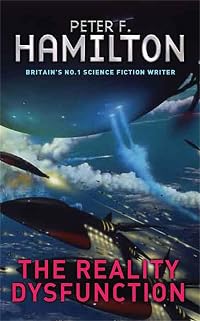
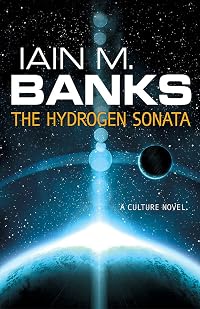
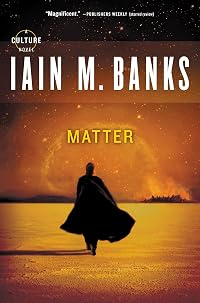
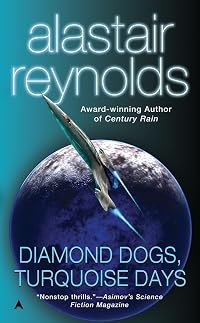
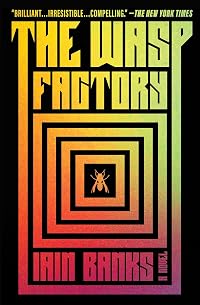
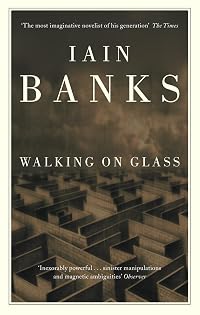

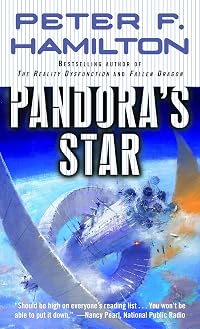






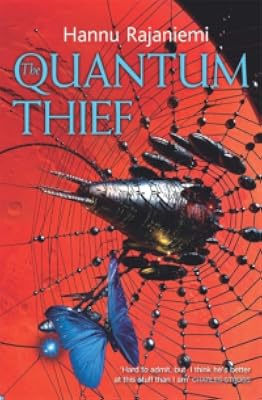
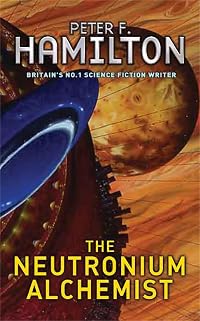
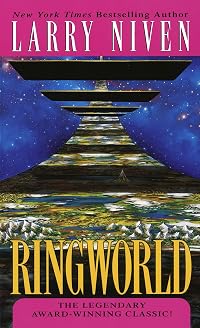
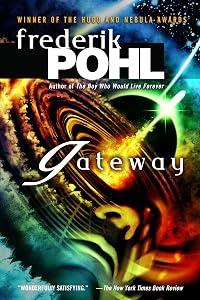

Member Recommendations

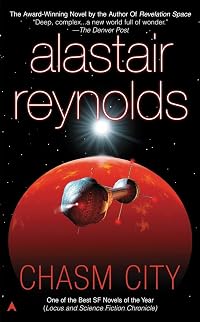
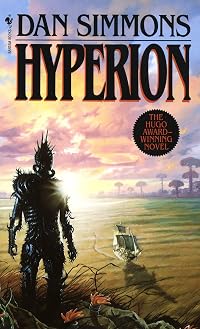
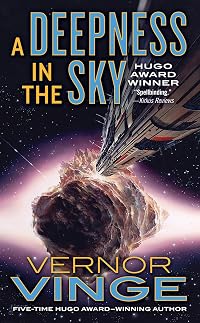
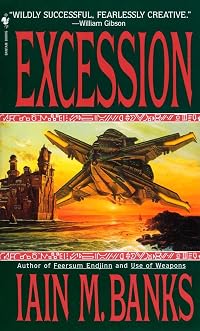
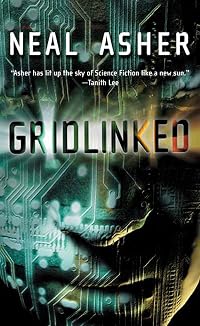
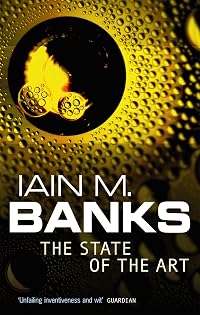
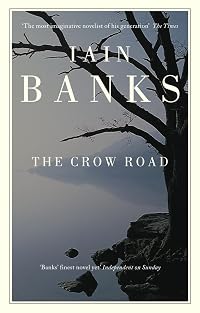
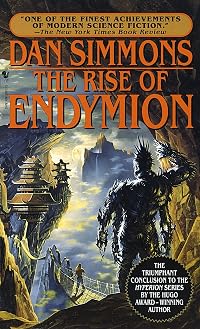
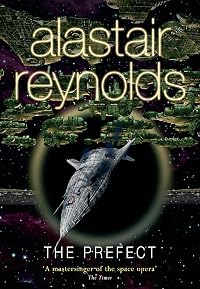
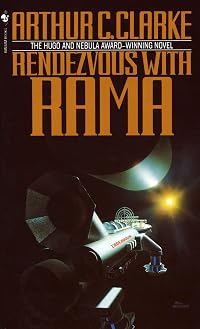
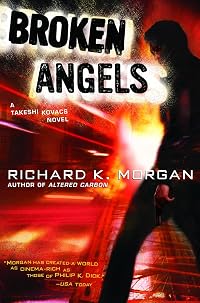
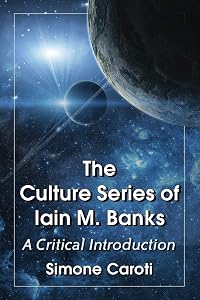
DisassemblyOfReason Another alien civilization wherein one's status as a game player has a direct relationship to one's status in society, and to which a human game player has been deliberately sent to play the game.
30
themulhern Two opposing cultures collide in both works. Urras = The Empire but their opposites (Annares and The Culture) have very little in common. Annares is determined by scarcity, the Culture by its lack.

loribee Love these two and they seem to be extensions of the same basic idea.
Member Reviews
More interesting than its predecessor, while still having an ambiguous relationship to The Culture which keeps it interesting. This time the protagonist is part of it, but still in many ways an unwitting microcosm to the macrocosm of The Culture storyline. Banks essentially pulls the same trick on you from another direction, although this felt more accomplished. Gurgeh's quest and navigation of The Empire keeps an incomprehensible game sounding pretty interesting, and also reveals a lot about the premises of The Culture civilization in contrast to a less savoury example. It's hard not to compare it to The Federation (from Star Trek), except ruled by mysterious AIs and their servitors, with the post scarcity society seeming to breed show more complacency and apathy (in the case of our protagonist at least), outside of their special interests. Though by the end you're once again wondering if they're actually "the good guys" or just a different way of controlling an empire. show less
An excellent almost outstanding novel, second in Banks series of Culture novels. Some novels grab you; this one grabbed me. I liked this much better than "Consider Phlebas". It is very well written. I'm not sure the WOW factor is as strong here, unless this is the first Culture novel one is reading. The characters are so much better drawn. We get a much better idea of what the Culture is like. The descriptions are so well done it was like I was watching a movie inside my head. The first novel now seems like almost a glimpse. I love the names of ships, I love the AI's, snarky and otherwise. I love the whole idea of the games being played here. On the downside, despite being well written, the story did seem too drawn out in places and show more momentum suffered. Also, as a personal thing, when idiomatic speech is used in a story like this, it is guaranteed to throw me out of the bubble. It may be cute, but having an AI open a conversation with "Hows Tricks?" ... show less
In the Culture, humanoids of all different planets have created a society where the needs of all are met, the rights of all are respected, and the only troubles come from beyond its borders. Biological life forms live in peace with drones and spaceships that are considered equals. Jernau Morat Gurgeh, having no need to work for anything besides his own pleasure, spends his time studying and playing games. Well respected as a competitor and well-renowned as the author of many papers, he gladly accepts the opportunity to play one of his best games against a young prodigy who's just arrived on the orbital where he lives. But as the game goes on, he falls into temptation, wanting not just to defeat her but to defeat her in a way no human show more has ever defeated another in that game before. A socially outcast drone offers its assistance, but he learns too late that it comes at a price. The drone wants to get back into Contact, the foreign intelligence organization it was kicked out of, and Contact wants Gurgeh. Soon, the game-player finds himself flying to an alien empire whose entire civilization is structured around the most complicated game he's ever known. An empire where a sex known as apex dominates both male and female, poverty is rampant, and the government has an appetite for conquest and cruelty. Contact wants to take it down, and for some reason, it seems to think that Gurgeh is the key.
This is the second book in Iain Banks' Culture series, the first of which is Consider Phlebas. I mentioned in my review of that book that I wasn't sure if reading that one was necessary in order to read this one, and indeed I found that this book has entirely different characters and a brand-new storyline. The connecting factor is the world itself, which means it isn't strictly necessary to read the first before the second. Having done so, however, I found that I had a head start understanding many of the world-building aspects, and I also started out with a healthy dose of suspicion for Contact and the machines that seem to run it. I think I would have had a different experience of reading this book without those preconceived ideas, and, while it's difficult to say whether I would have enjoyed it more or less for gaining my first impressions here and being surprised by certain things, I do think I'm glad that I read both in their proper order in the end.
This one is quite different from the first, with the main character coming from within the Culture rather than outside of it. Whereas the main character of the first book was a Changer and had awesome physical abilities because of that, this main character has physical abilities that suit him in a different way. The primary one he uses is the ability to use special glands to create brain-altering drugs that do things like boost his concentration or allow him to bypass the effects of alcohol. Notably for this story, he would also be able to change sex if he wanted to, a fact that has to be kept secret from the inhabitants of the empire whose entire social order would fall apart if males and females could become apexes at will.
I loved the contrast between the empire and the Culture, as well as the way the book is structured to invite the reader to compare both to our own society. There are obvious parallels between our world and the empire, and the existence of the apexes provides a great avenue for criticizing sexism while showing what it might hypothetically be like if both men and women were considered lesser. At the same time, however, the empire as a whole seems far nastier than our world as a whole, and I thought certain aspects of the Culture reflect some of the best parts of our world, or at least some of the things that we aspire to. Knowing that this book was written in the late 80's, it was also fascinating to consider the ways our world has changed since then, some of which are shown in the Culture. An easy example of this would be Gurgeh's acceptance of all types of sexuality. It was also interesting to see the depiction of sex changes, although these seemed to be done on a whim or for the purpose of wanting to procreate in a certain way rather than being connected to transgender characters.
I also liked the balance of this book, starting with a long opening section that gives us a chance to get to know the main character and the Culture and develop a sense of what this "native" environment is like before Gurgeh adapts to and is changed by the empire. There's also the fact that information is kept from the reader at the beginning and slowly fed throughout, in a manner that echoes Contact keeping information from Gurgeh. There's a very subtle feeling that he's being manipulated throughout, but that also is balanced by the fact that the machines doing the manipulating seem to genuinely care about his happiness and wellbeing. Or at least they're so willing to pretend they do that they will pull him out if he asks them to. This allows Gurgeh to still be the protagonist, the one driving the action, and the reader never gets the sense that accomplishing the mission is a foregone conclusion. In fact, it's unclear until the very end exactly what "accomplishing the mission" would even look like. It's a very well-structured plot that keeps you thinking and keeps you guessing without confusing or overwhelming you.
I must note, though, that there definitely are some portions that are quite disturbing. It becomes clear at a certain point that there are some things the author considers too much to be shown explicitly, therefore only hinting at them, but there certainly deserves to be a content warning for sexual violence, mutilation, torture, child abuse, and animal cruelty. There were even some parts that horrified me in a way that doesn't easily fall under any of the standard content warnings. This book sets out to really make you feel how awful the empire and its people are. For me, I think it was earned because it really makes you understand why Contact is doing this and how learning of all these horrors impacts and drives Gurgeh, as well as making you reflect on some bigger questions about what it might be justified for a civilization like the Culture to do in order to protect themselves from being conquered or at least attacked by such people, but it might be best to be prepared for that going in.
As in the last book, there is no group that's represented as perfectly angelic, and this book makes one question whether it's even possible for a civilization to be perfectly angelic and still survive. And if it falls because it failed to let go of those perfect standards, rather than making small compromises in order to preserve as much good as possible, was it even perfect? Is perfection even possible? This book seems to take the stance that there will always be some darkness, so don't go in expecting the Culture to be a utopia that never gets its hands dirty.
Overall, I would definitely recommend this book to anyone who can handle its content and is fascinated by the concept. As I said above, the book is well-written and well-executed. It's also an interesting study in a first-person narrator who spends most of the book telling the story in the omniscient style and occasionally pops in to break the fourth wall. It's a great representation of this type of sci fi novel, and I hope that you enjoy it, whether you want to try it on its own or in combination with Consider Phlebas. show less
This is the second book in Iain Banks' Culture series, the first of which is Consider Phlebas. I mentioned in my review of that book that I wasn't sure if reading that one was necessary in order to read this one, and indeed I found that this book has entirely different characters and a brand-new storyline. The connecting factor is the world itself, which means it isn't strictly necessary to read the first before the second. Having done so, however, I found that I had a head start understanding many of the world-building aspects, and I also started out with a healthy dose of suspicion for Contact and the machines that seem to run it. I think I would have had a different experience of reading this book without those preconceived ideas, and, while it's difficult to say whether I would have enjoyed it more or less for gaining my first impressions here and being surprised by certain things, I do think I'm glad that I read both in their proper order in the end.
This one is quite different from the first, with the main character coming from within the Culture rather than outside of it. Whereas the main character of the first book was a Changer and had awesome physical abilities because of that, this main character has physical abilities that suit him in a different way. The primary one he uses is the ability to use special glands to create brain-altering drugs that do things like boost his concentration or allow him to bypass the effects of alcohol. Notably for this story, he would also be able to change sex if he wanted to, a fact that has to be kept secret from the inhabitants of the empire whose entire social order would fall apart if males and females could become apexes at will.
I loved the contrast between the empire and the Culture, as well as the way the book is structured to invite the reader to compare both to our own society. There are obvious parallels between our world and the empire, and the existence of the apexes provides a great avenue for criticizing sexism while showing what it might hypothetically be like if both men and women were considered lesser. At the same time, however, the empire as a whole seems far nastier than our world as a whole, and I thought certain aspects of the Culture reflect some of the best parts of our world, or at least some of the things that we aspire to. Knowing that this book was written in the late 80's, it was also fascinating to consider the ways our world has changed since then, some of which are shown in the Culture. An easy example of this would be Gurgeh's acceptance of all types of sexuality. It was also interesting to see the depiction of sex changes, although these seemed to be done on a whim or for the purpose of wanting to procreate in a certain way rather than being connected to transgender characters.
I also liked the balance of this book, starting with a long opening section that gives us a chance to get to know the main character and the Culture and develop a sense of what this "native" environment is like before Gurgeh adapts to and is changed by the empire. There's also the fact that information is kept from the reader at the beginning and slowly fed throughout, in a manner that echoes Contact keeping information from Gurgeh. There's a very subtle feeling that he's being manipulated throughout, but that also is balanced by the fact that the machines doing the manipulating seem to genuinely care about his happiness and wellbeing. Or at least they're so willing to pretend they do that they will pull him out if he asks them to. This allows Gurgeh to still be the protagonist, the one driving the action, and the reader never gets the sense that accomplishing the mission is a foregone conclusion. In fact, it's unclear until the very end exactly what "accomplishing the mission" would even look like. It's a very well-structured plot that keeps you thinking and keeps you guessing without confusing or overwhelming you.
I must note, though, that there definitely are some portions that are quite disturbing. It becomes clear at a certain point that there are some things the author considers too much to be shown explicitly, therefore only hinting at them, but there certainly deserves to be a content warning for sexual violence, mutilation, torture, child abuse, and animal cruelty. There were even some parts that horrified me in a way that doesn't easily fall under any of the standard content warnings. This book sets out to really make you feel how awful the empire and its people are. For me, I think it was earned because it really makes you understand why Contact is doing this and how learning of all these horrors impacts and drives Gurgeh, as well as making you reflect on some bigger questions about what it might be justified for a civilization like the Culture to do in order to protect themselves from being conquered or at least attacked by such people, but it might be best to be prepared for that going in.
As in the last book, there is no group that's represented as perfectly angelic, and this book makes one question whether it's even possible for a civilization to be perfectly angelic and still survive. And if it falls because it failed to let go of those perfect standards, rather than making small compromises in order to preserve as much good as possible, was it even perfect? Is perfection even possible? This book seems to take the stance that there will always be some darkness, so don't go in expecting the Culture to be a utopia that never gets its hands dirty.
Overall, I would definitely recommend this book to anyone who can handle its content and is fascinated by the concept. As I said above, the book is well-written and well-executed. It's also an interesting study in a first-person narrator who spends most of the book telling the story in the omniscient style and occasionally pops in to break the fourth wall. It's a great representation of this type of sci fi novel, and I hope that you enjoy it, whether you want to try it on its own or in combination with Consider Phlebas. show less
The first Culture novel was an impressive introduction, but this second book (700 years later) is when the fun really begins. Gurgeh is a master of strategy games who is becoming bored with it all, until he is recruited for an unusual diplomatic mission. As a science fiction and strategy games fan I was "all in" with this premise, and Banks does not waste a single page indulging in it. This really delivers. He is masterful at squeezing the sponge for all it's worth, and I laughed often enough over dialogue or situations that I'm going to tag this as humour. Best of all it's entertainment with brains, loaded with cultural, political and social commentary.
"Far out in the uncharted backwaters of an unfashionable bit of a random Magellanic Cloud lies a small, unregarded little empire so primitive that its residents still don't have universal health care." Well, not really, but this could have been one way for "Player of Games" to open. The Culture that gives the Culture Novels its name can be a difficult thing to pin down, and Banks makes it easier, frankly, by moving the story to a place that hasn't attained its dizzying heights of cybernetic development. It's a nasty, backward place ruled by a ridiculous two-bit monarchy obsessed with symbolism and pomp, which means that it provides a pretty good opportunity for the author to talk about both the meaning of games and to comment on the show more more ridiculous trappings of earthly power. On the way, we're witness to some rather touching human-drone friendships, some rather smutty stage shows, and some pretty good gameplay, even if the game in question's too hopelessly complex to actually describe. As other reviewers have noted, Banks seemed to have a talent for making procedural paper-shuffling and long trips in space seem fascinating, so there's quite a lot of that here, too, along with a few of the requisite action set-pieces. Gurgeh, our main character, is too much of a chemically augmented gaming professional to seem relatable most of the time. It's the game that takes place on Ea -- and then on a pleasantly bizarre fire planet -- a highly symbolic, ritualized affair that serves as a cover for endless petty infighting and bare-knuckled brutality -- that, unfortunately, seems more familiar to this earthbound reader. The parallels are there to see, of course, but the author -- on purpose, I think -- doesn't really overanalyze and lets the analogy do the talking. Even so, it's a good read. show less
My second foray into the Culture books, and a very successful one it was! The first one was Matter – a great space opera that I had some issues with.Player of Games, on the other hand, is beautifully crafted. It is full of mindboggling ideas, moral and philosophical questions, takes a look at evolution of societies, and plays games with the reader and with the characters.
After a while, you can see where the book is going, but the journey and the destination are a pleasure: intellectually, plot- and characterwise ;), and as a space opera.
P.S. I would have loved to watch a game of Azad... Can’t someone invent it? The smartass AI:s are a delight as well.
After a while, you can see where the book is going, but the journey and the destination are a pleasure: intellectually, plot- and characterwise ;), and as a space opera.
P.S. I would have loved to watch a game of Azad... Can’t someone invent it? The smartass AI:s are a delight as well.
It's the first book where Iain Banks does not flood you with an incredibly amount of detail about The Culture. That is a major strength and also the only weakness I could find in this novel. It is rarely that I describe a book as flawless but this is one. Mind you the content might not appeal to everyone and I can even see how some people would find it incredibly boring. The Player of Games is one of the quintessential works of solipsism and can be compared to for example A Rebours by Huysmans.
A genius player of every game imaginable is recruited by the a secretive group within the hedonistic future society known as The Culture. This player by the name of Gurgeh is, other than the biggest egomaniac you will ever meet, an otherwise well show more adjusted but otherwise bored human being. He is asked to play the most difficult game in the known universe against the best players of The Empire, an antagonistic race of galactic conquerors. It soon becomes apparent that there is more at stake then just the pride of winning the most complex game ever imagined.
There are plots within sub plots but Iain Banks masterfully weaves it all together and leaves the final unraveling to the reader, which everyone inevitably will do due to the carefully planted pieces of information here and there. If you like books with massive amounts of characters and complex human interaction than this one is not for you. If you can deal with a novel that has a laser sharp focus on the subtle whims and wishes of those who live long enough to have seen everything, then you will be engrossed until the book swallows you up whole. show less
A genius player of every game imaginable is recruited by the a secretive group within the hedonistic future society known as The Culture. This player by the name of Gurgeh is, other than the biggest egomaniac you will ever meet, an otherwise well show more adjusted but otherwise bored human being. He is asked to play the most difficult game in the known universe against the best players of The Empire, an antagonistic race of galactic conquerors. It soon becomes apparent that there is more at stake then just the pride of winning the most complex game ever imagined.
There are plots within sub plots but Iain Banks masterfully weaves it all together and leaves the final unraveling to the reader, which everyone inevitably will do due to the carefully planted pieces of information here and there. If you like books with massive amounts of characters and complex human interaction than this one is not for you. If you can deal with a novel that has a laser sharp focus on the subtle whims and wishes of those who live long enough to have seen everything, then you will be engrossed until the book swallows you up whole. show less
Members
- Recently Added By
Lists

Best Science Fiction Novels
816 works; 430 members

NPRs your picks: top 100 Sci-Fi/Fantasy books
297 works; 80 members

Top Five Books of 2013
1,562 works; 721 members

Recommend the 20 best books you've read in the last five years
2,168 works; 606 members

Exploration of alternative economical systems
40 works; 3 members

Greatest Books
40 works; 3 members

Books Read in 2014
2,343 works; 86 members

Future Politics Political Science 300
18 works; 1 member

Blue Pyramid 1,276 Best Books of All Time
1,248 works; 32 members

Books Read in 2016
4,666 works; 199 members

TED 2013 Summer Reading List
190 works; 13 members

Books Read in 2018
4,360 works; 110 members

Overdue Podcast
806 works; 9 members

Books Read in 2021
5,361 works; 114 members

Mind Expanding Books by hackerkid
581 works; 8 members

Book Worlds We'd Like To Visit
322 works; 158 members

Books We Want To Read Again For The First Time
384 works; 160 members
Favorite Science Fiction
456 works; 218 members

1001 Books You Must Read Before You Die
1,448 works; 1,132 members
Talk Discussions
Past Discussions
THE PLAYER OF GAMES discussion (The Culture group read) in 75 Books Challenge for 2014 (March 2014)
Author Information

66+ Works 93,108 Members
Iain Banks was born in Fife in 1954 and was educated at Stirling University where he studied English Literature, Philosophy and Psychology. Banks came to widespread and controversial public note with the publication of his first novel, The Wasp Factory, in 1984. His first science fiction novel, Consider Phlebas, was published in 1987. He continued show more to write both mainstream fiction (as Iain Banks) and science fiction (as Iain M. Banks). Banks' mainstream fiction included The Wasp Factory (1984), Walking on Glass (1985), The Bridge (1986), Espedair Street (1987), Canal Dreams (1989), The Crow Road (1992), Complicity (1993), Whit (1995), A Song of Stone (1997), The Business (1999), Dead Air (2002) and The Steep Approach to Garbadale (2007). His final book, The Quarry, was released posthumously on June 20, 2013. Banks died on June 9, 2013 of terminal gall bladder cancer. (Bowker Author Biography) show less
Some Editions
Awards and Honors
Awards
Distinctions
Series

Work Relationships
Common Knowledge
- Canonical title*
- L'homme des jeux
- Original title
- The Player of Games
- Original publication date
- 1988
- People/Characters
- Jernau Morat Gurgeh; Mawhrin-Skel; Flere-Imsaho; Yay Meristinoux; Chamlis Amalk-ney; Emperor Nicosar (show all 9); Krowo; Hamin; Shohobohaum Za
- Important places
- Azad; Chiark Orbital; Ikroh, Chiark Orbital; Echronedal
- Dedication
- For James S Brown, who once said 'Azshashoshz.'
- First words
- This is the story of a man who went far away for a long time, just to play a game.
- Quotations
- Does Gurgeh really understand what he's done, and what might happen to him? Has it even begun to occur to him that he might have been tricked? And does he really know what he's let himself in for?
Of Course not! - Last words
- (Click to show. Warning: May contain spoilers.)Would I lie to you?
As ever,
Sprant Flere-Imsaho Wu-Handrahen Xato Trabiti
("Mawhrin-Skel") - Blurbers
- Gibson, William
- Original language
- English
- Canonical DDC/MDS
- 823.087625; 823.914
- Canonical LCC
- PR6052.A485
*Some information comes from Common Knowledge in other languages. Click "Edit" for more information.
Classifications
Statistics
- Members
- 7,176
- Popularity
- 1,627
- Reviews
- 224
- Rating
- (4.14)
- Languages
- 10 — Czech, English, Estonian, Finnish, French, German, Hungarian, Italian, Spanish, Portuguese (Portugal)
- Media
- Paper, Audiobook, Ebook
- ISBNs
- 43
- ASINs
- 17