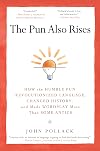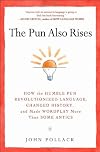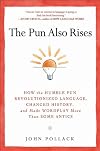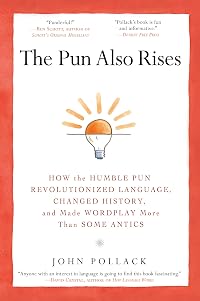
The Pun Also Rises: How the Humble Pun Revolutionized Language, Changed History, and Made Wordplay More Than Some Antics
by John Pollack
On This Page
Description
A funny, erudite, and provocative exploration of puns, the people who make them, and this derided wordplay's remarkable impact on history. The pun is commonly dismissed as the lowest form of wit, and punsters are often unpopular for their obsessive wordplay. But such attitudes are relatively recent developments. In The Pun Also Rises, John Pollack--a former World Pun Champion and presidential speechwriter for Bill Clinton--explains why such wordplay is significant: It both revolutionized show more language and played a pivotal role in making the modern world possible. Skillfully weaving together stories and evidence from history, brain science, pop culture, literature, anthropology, and humor, this is an authoritative yet playful exploration of a practice that is common, in one form or another, to virtually every language on earth.--From publisher description. show lessTags
Recommendations



Member Reviews
.
What did the canned ham say when he left the hospital?
“I’m cured!”
Oh my God, this book was fun. Fun and informative. I never knew there could be so much to say about puns. For one thing: how many different types of puns there are. The whole first section describes the assorted varieties of puns. I won’t go through them all, but here are just a few:
Tom Swifties: "Oh my shirt is so wrinkled", Tom exclaimed ironically.
Knock-knock jokes:
Wellerisms: “I see”, said the blind carpenter, as he picked up his hammer and saw.
Double entendres: (public service announcement) Our X-ray unit will give you an examination for tuberculosis and other diseases which you will receive show more free of charge.
Transpositional puns: Mae West famously said “It’s not the men in my life, it’s the life in my men.”
Feghoot: Mahatma Gandhi was known for walking hundreds of miles barefoot. Over time he developed incredibly thick calluses on his feet, stronger than the soles of many boots. He also ate lightly, and fasted often, which left him frail and gave him chronically bad breath. Do you know what this made him?
A super calloused fragile mystic hexed by halitosis.
And Daffynitions: “Flabbergasted” –to be appalled at how much weight one has gained.
That’s just a start. Hilarious examples are provided for all.
What’s the point of developing a taxonomy of puns? It has to do with exploring how the brain processes language. Believe it or not, some linguists at the University of Cincinnati have successfully programmed a computer to recognize puns. It still has a poor record predicting which puns will be funny though.
It turns out, puns aren’t just some antics with words; they tell us a lot about how the brain processes language. It occurs in a section of the brain called “Broca’s area”. As the brain is hearing a sentence, it tries to predict the meaning of the entire sentence before it is uttered… kind of like the predictive texting on a cellphone. Puns occur when words with multiple meanings, or similar sounds confound the brain’s guessing algorithm. As the brain listens, it makes a best guess on which meaning is intended, based on the context built up so far. In a pun, the end of the sentence changes the context, or reveals that the less-likely meaning was intended, or otherwise reveals to the brain that it needs to re-evaluate the sentence because there is unresolved complexity or ambiguity. Puns essentially make the brain do a double-take, because it isn’t confident its first-guess interpretation was correct.
This all happens in a matter of milliseconds. By the time you become conscious of the pun, the brain has settled on a final interpretation, but the interpretational pitfall or potential alternative meanings linger, and the conscious mind enjoys the sensation of having identified and successfully resolved these.
So take the pun:
W.C. Fields was asked “Do you consider clubs appropriate for children? Fields replied “Only when kindness fails.”
Before you get to the end, you take “clubs” to mean a place where drinking (and possibly stripping) occur, based on the context of W.C. Fields being a crusty old character. But then Field’s response changes the context, and makes you realize that “clubs” really meant something you beat a person with.
Okay, I hope I didn’t suck the fun out of puns with that last part; I just really enjoyed it.
Another fun bit which I never knew, is that there is a whole microcosm of bilingual puns, which you find in communities where a lot of people are proficient in two languages. Take this example, from a Polish community in America:
Q- How do you kill a Polish herring?
A- With a sledge hammer.
The joke there, if you knew Polish, is that the Polish word for herring is sledzh, which sounds like the English word “sledge”.
There are a bunch of these. I never knew.
Then there is a whole section on puns in many different cultures, and puns dating back to the earliest written languages. Many Native American and Polynesian cultures have developed punning to a more refined and respected art than the West. The oldest pun, as near as anybody can tell, is from Mesopotamia- an account of a heavy rain, but the word for “rain” and for “corn” are very similar, and the author jokes about people dodging ears of corn falling from the sky. Okay... perhaps I didn't tell it well. I really hope Manny chimes in on the thread to tell us that it’s much funnier in the original Mesopotamian-ese.
Do you ever tell puns when flirting with somebody? Pollack explains how humor definitely has a mate selection function. Not only does it demonstrate a certain verbal proficiency and intellectual capacity to construct a pun, but if you and your prospective mate both get the joke, it shows you share a certain amount of common knowledge to understand its contextual nuances. That implies a certain amount of shared understanding and perhaps compatibility. Take the Gandhi joke from above. To see any humor in it, you need to be familiar with the 1964 movie Mary Poppins. Unimpressed? That may not seem like much to go on, vis-a-vis mate selection in our day and age, but in cultures without the benefit of mass communication, this is more of a factor, and the text gives several examples where humor, especially puns, really do figure into courtship in those cultures.
My favorite part is the section which relates how puns have been used to transmit dissident or subversive messages in oppressive countries. The double meaning of a well-constructed pun can get past a distracted censor, or can be plausibly denied if it is told on the street among friends. Again, the examples here are a lot of fun:
Near the end of World War II, a popular joke in Germany was: “I recently acquired portraits of Hitler and Goering, but I’m not sure what to do with them; should they be hanged properly, or just put up against the wall?”
Then in 1989, after the crackdown on protesters in Tiananmen Square, it was common to see tiny bottles smashed on the street. This was a very passive-aggressive, pun-based expression of dissent against how the Tiananmen Square incident was handled. The nature of the pun is that the Chinese ideogram for “tiny bottle” was similar to the characters of Deng Xiaoping’s name (he being the leader who ordered the military in to break up the demonstrations), so smashing a tiny bottle was allegorically doing harm to Deng Xiaoping.
Fight the power.
*sigh* I’ll cut the review short here, before I give away the whole book. It’s a lot of fun, and there’s still a lot I haven’t spoiled yet. Get it! Read it!
-Thank you so much, karen! show less
What did the canned ham say when he left the hospital?
“I’m cured!”
Oh my God, this book was fun. Fun and informative. I never knew there could be so much to say about puns. For one thing: how many different types of puns there are. The whole first section describes the assorted varieties of puns. I won’t go through them all, but here are just a few:
Tom Swifties: "Oh my shirt is so wrinkled", Tom exclaimed ironically.
Knock-knock jokes:
Q- What has four wheels and flies?
A- A garbage truck
Wellerisms: “I see”, said the blind carpenter, as he picked up his hammer and saw.
Double entendres: (public service announcement) Our X-ray unit will give you an examination for tuberculosis and other diseases which you will receive show more free of charge.
Transpositional puns: Mae West famously said “It’s not the men in my life, it’s the life in my men.”
Feghoot: Mahatma Gandhi was known for walking hundreds of miles barefoot. Over time he developed incredibly thick calluses on his feet, stronger than the soles of many boots. He also ate lightly, and fasted often, which left him frail and gave him chronically bad breath. Do you know what this made him?
A super calloused fragile mystic hexed by halitosis.
And Daffynitions: “Flabbergasted” –to be appalled at how much weight one has gained.
That’s just a start. Hilarious examples are provided for all.
What’s the point of developing a taxonomy of puns? It has to do with exploring how the brain processes language. Believe it or not, some linguists at the University of Cincinnati have successfully programmed a computer to recognize puns. It still has a poor record predicting which puns will be funny though.
It turns out, puns aren’t just some antics with words; they tell us a lot about how the brain processes language. It occurs in a section of the brain called “Broca’s area”. As the brain is hearing a sentence, it tries to predict the meaning of the entire sentence before it is uttered… kind of like the predictive texting on a cellphone. Puns occur when words with multiple meanings, or similar sounds confound the brain’s guessing algorithm. As the brain listens, it makes a best guess on which meaning is intended, based on the context built up so far. In a pun, the end of the sentence changes the context, or reveals that the less-likely meaning was intended, or otherwise reveals to the brain that it needs to re-evaluate the sentence because there is unresolved complexity or ambiguity. Puns essentially make the brain do a double-take, because it isn’t confident its first-guess interpretation was correct.
This all happens in a matter of milliseconds. By the time you become conscious of the pun, the brain has settled on a final interpretation, but the interpretational pitfall or potential alternative meanings linger, and the conscious mind enjoys the sensation of having identified and successfully resolved these.
So take the pun:
W.C. Fields was asked “Do you consider clubs appropriate for children? Fields replied “Only when kindness fails.”
Before you get to the end, you take “clubs” to mean a place where drinking (and possibly stripping) occur, based on the context of W.C. Fields being a crusty old character. But then Field’s response changes the context, and makes you realize that “clubs” really meant something you beat a person with.
Okay, I hope I didn’t suck the fun out of puns with that last part; I just really enjoyed it.
Another fun bit which I never knew, is that there is a whole microcosm of bilingual puns, which you find in communities where a lot of people are proficient in two languages. Take this example, from a Polish community in America:
Q- How do you kill a Polish herring?
A- With a sledge hammer.
The joke there, if you knew Polish, is that the Polish word for herring is sledzh, which sounds like the English word “sledge”.
There are a bunch of these. I never knew.
Then there is a whole section on puns in many different cultures, and puns dating back to the earliest written languages. Many Native American and Polynesian cultures have developed punning to a more refined and respected art than the West. The oldest pun, as near as anybody can tell, is from Mesopotamia- an account of a heavy rain, but the word for “rain” and for “corn” are very similar, and the author jokes about people dodging ears of corn falling from the sky. Okay... perhaps I didn't tell it well. I really hope Manny chimes in on the thread to tell us that it’s much funnier in the original Mesopotamian-ese.
Do you ever tell puns when flirting with somebody? Pollack explains how humor definitely has a mate selection function. Not only does it demonstrate a certain verbal proficiency and intellectual capacity to construct a pun, but if you and your prospective mate both get the joke, it shows you share a certain amount of common knowledge to understand its contextual nuances. That implies a certain amount of shared understanding and perhaps compatibility. Take the Gandhi joke from above. To see any humor in it, you need to be familiar with the 1964 movie Mary Poppins. Unimpressed? That may not seem like much to go on, vis-a-vis mate selection in our day and age, but in cultures without the benefit of mass communication, this is more of a factor, and the text gives several examples where humor, especially puns, really do figure into courtship in those cultures.
My favorite part is the section which relates how puns have been used to transmit dissident or subversive messages in oppressive countries. The double meaning of a well-constructed pun can get past a distracted censor, or can be plausibly denied if it is told on the street among friends. Again, the examples here are a lot of fun:
Near the end of World War II, a popular joke in Germany was: “I recently acquired portraits of Hitler and Goering, but I’m not sure what to do with them; should they be hanged properly, or just put up against the wall?”
Then in 1989, after the crackdown on protesters in Tiananmen Square, it was common to see tiny bottles smashed on the street. This was a very passive-aggressive, pun-based expression of dissent against how the Tiananmen Square incident was handled. The nature of the pun is that the Chinese ideogram for “tiny bottle” was similar to the characters of Deng Xiaoping’s name (he being the leader who ordered the military in to break up the demonstrations), so smashing a tiny bottle was allegorically doing harm to Deng Xiaoping.
Fight the power.
*sigh* I’ll cut the review short here, before I give away the whole book. It’s a lot of fun, and there’s still a lot I haven’t spoiled yet. Get it! Read it!
-Thank you so much, karen! show less
The Pun Also Rises - How the Humble Pun Revolutionized Language, Changed History, and Made Wordplay More than Some Antics by John Pollack kicks off with a bang! Recalling his attendance at the eighteenth annual world pun championships, the author had me chuckling early on and it continued throughout the book.
Pollack explains many different types and styles of puns, why they're clever, why we find them funny and naturally how they've been decried by some circles throughout history. In basic terms, a pun is a phrase or word that contains layers or multiple meanings. Sometimes it can be a word that has multiple meanings, such as: "An architect in prison complained that the walls were not built to scale." Other times it can be a play on show more words or the sound of words, such as: "The excitement at the circus is in tents."
"So what's the alchemy at work here? How do the best puns manage to layer so much meaning, humor, even irony into just a few words? And why in the world is punning so intrinsic to human expression that it sparks such mischievous delight?" Page xxiv
There are many different types of puns and early on in the book Pollack also takes pains to say:
"And while linguists have defined the pun's principal forms, its many variations actually defy easy categorization." Page xxiv
Pollack outlines the many ways we can manipulate language for our own amusement and the entertainment and enjoyment of others. The author explains that puns fall into two principal categories, homophonic puns and homographic puns. Homophonic puns are those using words that sound alike (such as 'in tents' and 'intense') and homographic puns involve a word that is spelled the same but contains more than one meaning. There are also paradigmatic puns requiring the listener to grasp a greater context in order to get the joke, and syntagmatic puns where a sequence of similar or identical words are used. A great example of a syntagmatic pun is provided:
"The wedding was beautiful. The bride was in tears, and the cake was in tiers, too." Page 12
It was fun to visit spoonerisms in the book, which is when a person speaking transposes letters or words in a sentence that still manages to makes sense, but in a new and funny way. A well known example from the Oxford don after which spoonerisms are named, occurred when he met Queen Victoria and thanks to a slip of the tongue, said "a half-warmed fish" instead of "a half-formed wish". Whoops!
Pollack gives the reader two definitions of puns from a 1719 essay by Thomas Sheridan the first of which was an absolute highlight of the book. Sheridan described the physical definition of punning as the:
"art of harmonious jingling upon words, which, passing in at the ears, and falling upon the diaphragma, excites a titillary motion in those parts; and this, being conveyed by the animal spirits into the muscles of the face, raises the cockles of the heart." Page 81
Brilliant! I just love this description!
As soon as I started reading this book, I began to notice puns everywhere. I've noticed copious puns showing up in news headlines and articles and they're definitely a firm favourite of the TV host of Lego Masters.
John Pollack clearly loves puns and provides a detailed history in The Pun Also Rises. I'll admit much of the content was a little dry, however Pollack keeps whetting our appetite by weaving in clever little puns throughout the content. I chuckled at the 'harmonious jingling upon words' reading this, and finished the book with a newfound appreciation for this linguistic talent.
So, where do you sit when it comes to puns? Chuckleworthy or groan inducing? show less
Pollack explains many different types and styles of puns, why they're clever, why we find them funny and naturally how they've been decried by some circles throughout history. In basic terms, a pun is a phrase or word that contains layers or multiple meanings. Sometimes it can be a word that has multiple meanings, such as: "An architect in prison complained that the walls were not built to scale." Other times it can be a play on show more words or the sound of words, such as: "The excitement at the circus is in tents."
"So what's the alchemy at work here? How do the best puns manage to layer so much meaning, humor, even irony into just a few words? And why in the world is punning so intrinsic to human expression that it sparks such mischievous delight?" Page xxiv
There are many different types of puns and early on in the book Pollack also takes pains to say:
"And while linguists have defined the pun's principal forms, its many variations actually defy easy categorization." Page xxiv
Pollack outlines the many ways we can manipulate language for our own amusement and the entertainment and enjoyment of others. The author explains that puns fall into two principal categories, homophonic puns and homographic puns. Homophonic puns are those using words that sound alike (such as 'in tents' and 'intense') and homographic puns involve a word that is spelled the same but contains more than one meaning. There are also paradigmatic puns requiring the listener to grasp a greater context in order to get the joke, and syntagmatic puns where a sequence of similar or identical words are used. A great example of a syntagmatic pun is provided:
"The wedding was beautiful. The bride was in tears, and the cake was in tiers, too." Page 12
It was fun to visit spoonerisms in the book, which is when a person speaking transposes letters or words in a sentence that still manages to makes sense, but in a new and funny way. A well known example from the Oxford don after which spoonerisms are named, occurred when he met Queen Victoria and thanks to a slip of the tongue, said "a half-warmed fish" instead of "a half-formed wish". Whoops!
Pollack gives the reader two definitions of puns from a 1719 essay by Thomas Sheridan the first of which was an absolute highlight of the book. Sheridan described the physical definition of punning as the:
"art of harmonious jingling upon words, which, passing in at the ears, and falling upon the diaphragma, excites a titillary motion in those parts; and this, being conveyed by the animal spirits into the muscles of the face, raises the cockles of the heart." Page 81
Brilliant! I just love this description!
As soon as I started reading this book, I began to notice puns everywhere. I've noticed copious puns showing up in news headlines and articles and they're definitely a firm favourite of the TV host of Lego Masters.
John Pollack clearly loves puns and provides a detailed history in The Pun Also Rises. I'll admit much of the content was a little dry, however Pollack keeps whetting our appetite by weaving in clever little puns throughout the content. I chuckled at the 'harmonious jingling upon words' reading this, and finished the book with a newfound appreciation for this linguistic talent.
So, where do you sit when it comes to puns? Chuckleworthy or groan inducing? show less
In The Pun Also Rises, John Pollack argues, "Undoubtedly, the most stubborn critics of the pun will probably never concede its catalytic, creative importance...But those who declaim puns categorically fail to grasp the intrinsic relationship between language, imagination, play and progress. To argue against all puns indiscriminately makes about as much sense as arguing against eating any meals while traveling, based on the fact that quality can be unpredictable" (pg. 150). Pollack's examination of the pun looks at the origins of wordplay, the general types of puns, the effects of language on the human brain, the history of puns in the English language, and modern reactions to puns, all with examples throughout. For those interested in show more the history of wordplay or language, this will delight and educate. Pollack's writing is delight at the end of the tunnel for those who only receive groans for their punning efforts. show less
The idea of linguistic history titillates me intellectually, but I must admit to not having a lot of luck with it in practice. My linguistics courses in general while in college were universally boring. But deep down inside, I knew that linguistics could be absolutely fascinating if put in the right hands. This book definitely proves that. A historical and cultural look at the role of puns, The Pun Also Rises informed, entertained, and challenged me.
First, the challenging part. I have always thought - despite popular belief - that puns were a mark of genius. While some puns are rather ridiculous and easily understood, many are intellectually complex and require a higher intellect to grok. Reading this book validated that thought, and show more not only did I definitely not understand some of the puns used, but I am pretty sure there were puns I didn't even recognize as puns. I like this for some reason.
Pollack clearly loves language. I say clearly because not only does he directly state that he loves language, but the way the book is written demonstrates a conscious manipulation of word usage and sentence structure. In other words, I enjoyed his style. He maintains a humorous, informative, intellectual, and witty tone throughout - a style I think of as a "academic chic". I love that perfect balance between geek and cool in writing.
I definitely recommend picking this one up if you are interested in linguistics, like some funny in your books, or like a cultural history type of read. show less
First, the challenging part. I have always thought - despite popular belief - that puns were a mark of genius. While some puns are rather ridiculous and easily understood, many are intellectually complex and require a higher intellect to grok. Reading this book validated that thought, and show more not only did I definitely not understand some of the puns used, but I am pretty sure there were puns I didn't even recognize as puns. I like this for some reason.
Pollack clearly loves language. I say clearly because not only does he directly state that he loves language, but the way the book is written demonstrates a conscious manipulation of word usage and sentence structure. In other words, I enjoyed his style. He maintains a humorous, informative, intellectual, and witty tone throughout - a style I think of as a "academic chic". I love that perfect balance between geek and cool in writing.
I definitely recommend picking this one up if you are interested in linguistics, like some funny in your books, or like a cultural history type of read. show less
This is a deep dive into the world of puns. Pollack explores the history of the pun as well as their employment in modern-day writing and speaking. Along the way, he touches on knock-knock jokes, shaggy dog stories, spoonerisms, and wordplay of all sorts. He even talks about puns in the Bible and in Shakespeare's work as well. There is a tad bit of vulgarity/sexual innuendo as he occasionally references off-color puns from ancient history to newspaper headlines to puns from The O. Henry Pun-Off World Championships. While a little dry at moments, this is an overall interesting and punny exploration of wordplay throughout human history.
I always suspected that punsters are mentally superior and that punning is a vital part of language and thinking. But until I read John Pollack's book, I had no proof. Now I do. John combines meticulous research, a great sense of humor, and top-notch story-telling ability to give make his case that wordplay is more than just some antics. A must-read for punsters and language lovers.
The Pun Also Rises (April 2011, Gotham Books; an imprint of The Penguin Group), by John Pollack, has the subtitle: How the Humble Pun Revolutionized Language, Changed History, and Made Word Play More than Some Antics. This subtitle pretty much summarizes what this book is about.
I knew of Pollack's fondness of punning from Pollack's first book, Cork Boat (a memoir, published in 2004, mainly about his quest to build a boat made of 165,231 corks and sail it down the Douro River in Portugal). I also lived in his hometown of Ann Arbor for several years, and I actually recall reading the news about him winning a world championship in punning.
In fact, The Pun Also Rises starts with a blow-by-blow account of Pollack's climb to the top of that show more particular championship. I enjoyed this introductory chapter -- I laughed so much through it. I wish I could be this clever and funny. Pollack slyly peppers puns of his own throughout the text of this book. About William Prynne, a Puritan lawyer who in the 1600s criticized the Catholic Church and the pope in form of puns, and got in trouble for it:
"Rumors swept London that Prynne had died from the pun-
ishment, but it was too early to print this rebel's epitaph."
(Page 69 of The Pun Also Rises)
I am not sure if it was intentional or not, but the line break made the word "punishment" stand out. Pun or not? Maybe.
Some stories that Pollack shares with us are funny, such as the one about Samuel Johnson, that of dictionary fame and being biographed (is that a word?) by Boswell.
"As recounted in the Punster's Pocket-book or The Art of Punning, an 1826 collection of puns, Johnson and Boswell were walking past London's Old Bailey and noticed a raucous crowd gathering. At Johnson's instigation, Boswell asked someone at the edge of the crowd what was going on. The stranger reported that a man was to be hanged. And the condemned man's name? A certain Mr. Vowel.
"Well", a satisfied Johnson replied, "it is very clear, Bozzy, that it is neither U nor I".
Apparently, Johnson had no problem with capital punishment."
(Page 89, The Pun Also Rises)
Chapter Two, titled Labs and Retrievers: How the Brain Fetches Meaning from Sound, was perhaps the only disappointment for me. This chapter concentrates on the biology of appreciating puns; and discusses the cochlea, etc. etc. Being deaf myself, I'm here to tell you that deaf people-- that of the signing deaf population -- can and do appreciate puns in sign language without needing to hear. However, most sign language puns -- those that come directly to my mind -- overlap with spoken language words or names.
I would love to know whether Pollack came across information on sign language puns andor wordplay in his research on this book!
Overall, I found The Pun Also Rises an extremely informative and entertaining book. I especially recommend this book to anyone who loves language and words. What avid reader doesn't :-)?
"....if puns seem, at times to confuse, they actually enlighten us through both laughter and insight. They keep us from taking ourselves too seriously, and sharpen our capacity for creative thinking."
(page 152, The Pun Also Rises) show less
I knew of Pollack's fondness of punning from Pollack's first book, Cork Boat (a memoir, published in 2004, mainly about his quest to build a boat made of 165,231 corks and sail it down the Douro River in Portugal). I also lived in his hometown of Ann Arbor for several years, and I actually recall reading the news about him winning a world championship in punning.
In fact, The Pun Also Rises starts with a blow-by-blow account of Pollack's climb to the top of that show more particular championship. I enjoyed this introductory chapter -- I laughed so much through it. I wish I could be this clever and funny. Pollack slyly peppers puns of his own throughout the text of this book. About William Prynne, a Puritan lawyer who in the 1600s criticized the Catholic Church and the pope in form of puns, and got in trouble for it:
"Rumors swept London that Prynne had died from the pun-
ishment, but it was too early to print this rebel's epitaph."
(Page 69 of The Pun Also Rises)
I am not sure if it was intentional or not, but the line break made the word "punishment" stand out. Pun or not? Maybe.
Some stories that Pollack shares with us are funny, such as the one about Samuel Johnson, that of dictionary fame and being biographed (is that a word?) by Boswell.
"As recounted in the Punster's Pocket-book or The Art of Punning, an 1826 collection of puns, Johnson and Boswell were walking past London's Old Bailey and noticed a raucous crowd gathering. At Johnson's instigation, Boswell asked someone at the edge of the crowd what was going on. The stranger reported that a man was to be hanged. And the condemned man's name? A certain Mr. Vowel.
"Well", a satisfied Johnson replied, "it is very clear, Bozzy, that it is neither U nor I".
Apparently, Johnson had no problem with capital punishment."
(Page 89, The Pun Also Rises)
Chapter Two, titled Labs and Retrievers: How the Brain Fetches Meaning from Sound, was perhaps the only disappointment for me. This chapter concentrates on the biology of appreciating puns; and discusses the cochlea, etc. etc. Being deaf myself, I'm here to tell you that deaf people-- that of the signing deaf population -- can and do appreciate puns in sign language without needing to hear. However, most sign language puns -- those that come directly to my mind -- overlap with spoken language words or names.
I would love to know whether Pollack came across information on sign language puns andor wordplay in his research on this book!
Overall, I found The Pun Also Rises an extremely informative and entertaining book. I especially recommend this book to anyone who loves language and words. What avid reader doesn't :-)?
"....if puns seem, at times to confuse, they actually enlighten us through both laughter and insight. They keep us from taking ourselves too seriously, and sharpen our capacity for creative thinking."
(page 152, The Pun Also Rises) show less
Members
- Recently Added By
Published Reviews
ThingScore 50
"Jumping from linguistics to neuroscience to history to marketing to punning in other languages, Pollack somehow manages to keep his thesis together: that punning adds some needed levity to our daily struggle with the complex task of resolving ambiguous information — the job of making sense of the world."
added by jodi
“The Pun Also Rises,” like the first words of this review, should be funnier.
added by dtw42
Lists

Amusing Book Titles
146 works; 39 members
Author Information

4 Works 642 Members
Common Knowledge
- Original publication date
- 2011
- Epigraph
- Language, be it remembered, is not an abstract construction of the learned, or of dictionary-makers, but is something arising out of the work, needs, ties, joys, affections, tastes of long generations of humanity, and has its... (show all) bases broad and low, close to the ground. Its final decisions are made by the masses, people nearest the concrete, having the most to do with actual land and sea. It permeates us all, the past as well as the present, and is the grandest triumph of the human intellect. --Walt Whitman
- Dedication
- To the 10th Street Gang
- Blurbers
- Schott, Ben; Crystal, David; Hallock, Gary; Lederer, Richard
- Original language
- English
Classifications
- DDC/MDS
- 808.7 — Literature & rhetoric Literature, rhetoric & criticism Rhetoric and collections of literary texts from more than two literatures Rhetoric of humor and satire
- LCC
- PN6231 .W64 .P65 — Language and Literature Literature (General) Literature (General) Collections of general literature Wit and humor
- BISAC
Statistics
- Members
- 380
- Popularity
- 82,357
- Reviews
- 19
- Rating
- (3.51)
- Languages
- English
- Media
- Paper, Audiobook, Ebook
- ISBNs
- 6
- ASINs
- 6