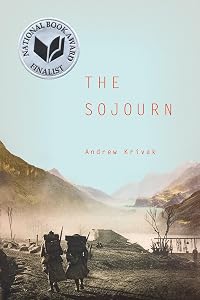
The Sojourn
by Andrew Krivak
On This Page
Description
National Book Award FinalistChautauqua Prize Winner
Dayton Literary Peace Prize Winner
"Some writers are good at drawing a literary curtain over reality, and then there are writers who raise the veil and lead us to see for the first time. Krivak belongs to the latter. The Sojourn, about a war and a family and coming-of-age, does not present a single false moment of sentimental creation. Rather, it looks deeply into its characters' lives with wisdom and humanity, and, in doing so, helps us show more experience a distant past that feels as if it could be our own." —National Book Award judges' citation
The Sojourn is the story of Jozef Vinich, who was uprooted from a 19th-century mining town in Colorado by a family tragedy and returns with his father to an impoverished shepherd's life in rural Austria-Hungary. When World War One comes, Jozef joins his adopted brother as a sharpshooter in the Kaiser's army, surviving a perilous trek across the frozen Italian Alps and capture by a victorious enemy.
A stirring tale of brotherhood, coming-of-age, and survival, that was inspired by the author's own family history, this novel evokes a time when Czechs, Slovaks, Austrians, and Germans fought on the same side while divided by language, ethnicity, and social class in the most brutal war to date. It is also a poignant tale of fathers and sons, addressing the great immigration to America and the desire to live the American dream amid the unfolding tragedy in Europe.
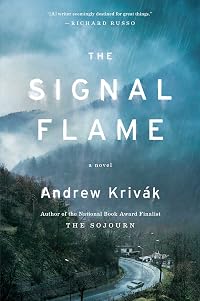
Andrew Krivak is the author of three novels: The Bear, a Mountain Book Competition winner; The Signal Flame, a Chautauqua Prize finalist; and The Sojourn, a National Book Award finalist and winner of both the Chautauqua Prize and Dayton Literary Peace Prize. He lives with his wife and three children in Somerville, Massachusetts, and Jaffrey, New Hampshire.
. show less
Tags
Recommendations






Member Reviews
This novel, Andrew Krivak's THE SOJOURN, simply blew me away. I come to it several years late, but no matter. There is some flat-out beautiful writing in this book, which shows echoes and influences from THE ODYSSEY to ALL QUIET ON THE WESTERN FRONT, to COLD MOUNTAIN. But make no mistake: THE SOJOURN is a very special kind of work, so much more than just another war novel.
The book jacket says Krivak is the grandson of Slovak immigrants, but that alone can certainly not account for the beautiful prose styling and the historical accuracy in these pages. This guy has done his homework, both in studying literature and history. In THE SOJOURN, Krivak gives us the story of Jozef Vinich, who spends much of his early life trying to find his show more proper place. Born in 1899 to dirt-poor Slovak immigrant parents in Colorado, following a family tragedy, Jozef returns as a very small child to the Austria-Hungary of his parents. His father is a shepherd in the mountain country there, and Jozef learns outdoor skills that serve him well when he is conscripted into the army - on the German side - during World War I. He serves as a sniper, a specialty which will leave him with nightmares for years to come. Using special long rifles with optical sights, he is trained "to make head shots, and aimed for the teeth." Later he is demoted by a vengeful officer back into the regular infantry where he mixes with raw young recruits who see "battle for the first time, and wept, wet themselves, or tried to run." Weakened by famine, flu and dysentery, Jozef is wounded and captured by the Italians, and spends several months in a Sardinian island prison, before his release at the war's end. His journey through Italy, across mountains and still-hostile territory, back to his home, now the newly-formed Czechoslovakia, is Homeric in its scope and difficulties. Young Jozef is not sure anymore who he is or where his allegiances should lie, "a boy raised among Carpathian peasants in a Magyar culture, professing loyalty in a poor school to a Habsburg, and speaking a language in secret they spoke in a land called America."
He joins forces during his months-long journey with a young, pregnant Gypsy girl. The scene in which she gives birth is as movingly gripping and gritty as any you're likely to find in modern prose. Here's part of it -
"I saw the gush of fluids then and moved around quickly to take the child from her and keep it from strangling. The head had crowned and with each push more of the face emerged, though there was no wiping away or staunching of blood, so much blood it was, as though the child must swim through it as both test and augury, for she had torn, as I had seen sheep tear when the lamb was large or ill-positioned, and I knew later, when the bleeding wouldn't stop, that something had ruptured inside."
I cannot emphasize enough what a beautifully-written and important book THE SOJOURN is. Read it. My highest recommendation.
- Tim Bazzett, author of the memoir, BOOKLOVER show less
The book jacket says Krivak is the grandson of Slovak immigrants, but that alone can certainly not account for the beautiful prose styling and the historical accuracy in these pages. This guy has done his homework, both in studying literature and history. In THE SOJOURN, Krivak gives us the story of Jozef Vinich, who spends much of his early life trying to find his show more proper place. Born in 1899 to dirt-poor Slovak immigrant parents in Colorado, following a family tragedy, Jozef returns as a very small child to the Austria-Hungary of his parents. His father is a shepherd in the mountain country there, and Jozef learns outdoor skills that serve him well when he is conscripted into the army - on the German side - during World War I. He serves as a sniper, a specialty which will leave him with nightmares for years to come. Using special long rifles with optical sights, he is trained "to make head shots, and aimed for the teeth." Later he is demoted by a vengeful officer back into the regular infantry where he mixes with raw young recruits who see "battle for the first time, and wept, wet themselves, or tried to run." Weakened by famine, flu and dysentery, Jozef is wounded and captured by the Italians, and spends several months in a Sardinian island prison, before his release at the war's end. His journey through Italy, across mountains and still-hostile territory, back to his home, now the newly-formed Czechoslovakia, is Homeric in its scope and difficulties. Young Jozef is not sure anymore who he is or where his allegiances should lie, "a boy raised among Carpathian peasants in a Magyar culture, professing loyalty in a poor school to a Habsburg, and speaking a language in secret they spoke in a land called America."
He joins forces during his months-long journey with a young, pregnant Gypsy girl. The scene in which she gives birth is as movingly gripping and gritty as any you're likely to find in modern prose. Here's part of it -
"I saw the gush of fluids then and moved around quickly to take the child from her and keep it from strangling. The head had crowned and with each push more of the face emerged, though there was no wiping away or staunching of blood, so much blood it was, as though the child must swim through it as both test and augury, for she had torn, as I had seen sheep tear when the lamb was large or ill-positioned, and I knew later, when the bleeding wouldn't stop, that something had ruptured inside."
I cannot emphasize enough what a beautifully-written and important book THE SOJOURN is. Read it. My highest recommendation.
- Tim Bazzett, author of the memoir, BOOKLOVER show less
This coming-of-age novel focuses on the randomness of sudden death. “One never knows from where the blow will fall and that, always, in the midst of life we are in death.” A mother trapped in the path of a train throws her baby into a river to save him. A young boy falls on a mountain trail dropping his rifle and accidentally kills a hunting companion. And, especially, two young men spend much of their war as snipers. "We were trained to make head shots and aimed for the teeth.” “We might kill them, one at a time, with a silence that terrified them more than anything because it held nothing of the glory they imagined they’d find in battle."
Jozef Vinich, the narrator of Andrew Krivak’s excellent war novel, THE SOJOURN, tells show more of a childhood in a Colorado mining town, a return to a shepherd’s life on the far edge of the Austro-Hungarian Empire, and exploits as a sniper in WWI. Despite a calm and matter-of-fact narrative voice, death and the brutalities of war are never far away in this story.
Bored with life in his isolated village, Jozef longs for wartime glory and the chance to see the world. He and his friend Zlee volunteer for the army and are assigned as snipers because of the sharpshooting skills they honed while tending sheep in the Carpathians. This provides an escape from the gruesomeness of the trenches and an illusion that death is a game, but comes at great cost for both boys. They are instructed to kill by a grizzled veteran “from the top down in order to leave an army leaderless and demoralized.” Krivak conveys the shear horror of what these young men will do in the words of their mentor—“You must find the soldier of rank, and find in yourselves the will to remain calm, silent, and alert. Then kill as though it were your only chance to live.”
Jozef and Zlee trek across the Italian Alps to hunt down an enemy sniper whose skillset may surpass theirs. This mission has unfortunate consequences for both of them and results in Jozef’s ultimate capture. He is sent to a POW camp in Sardinia where he ends the war as a disillusioned and broken man. After a long trek he finds his way to a home that never really was one.
Krivak depicts abundant violence and death with a simple and direct tone. He is especially good at conveying the ethnic and national divisions that led to the war and the place that America held as a refuge for Europeans. The brotherhood that exists between Jozef and Zlee, as well as the tension between Jozef and his father are also well realized. This slim novel deals with the contradictions of the human spirit but offers no answers. show less
Jozef Vinich, the narrator of Andrew Krivak’s excellent war novel, THE SOJOURN, tells show more of a childhood in a Colorado mining town, a return to a shepherd’s life on the far edge of the Austro-Hungarian Empire, and exploits as a sniper in WWI. Despite a calm and matter-of-fact narrative voice, death and the brutalities of war are never far away in this story.
Bored with life in his isolated village, Jozef longs for wartime glory and the chance to see the world. He and his friend Zlee volunteer for the army and are assigned as snipers because of the sharpshooting skills they honed while tending sheep in the Carpathians. This provides an escape from the gruesomeness of the trenches and an illusion that death is a game, but comes at great cost for both boys. They are instructed to kill by a grizzled veteran “from the top down in order to leave an army leaderless and demoralized.” Krivak conveys the shear horror of what these young men will do in the words of their mentor—“You must find the soldier of rank, and find in yourselves the will to remain calm, silent, and alert. Then kill as though it were your only chance to live.”
Jozef and Zlee trek across the Italian Alps to hunt down an enemy sniper whose skillset may surpass theirs. This mission has unfortunate consequences for both of them and results in Jozef’s ultimate capture. He is sent to a POW camp in Sardinia where he ends the war as a disillusioned and broken man. After a long trek he finds his way to a home that never really was one.
Krivak depicts abundant violence and death with a simple and direct tone. He is especially good at conveying the ethnic and national divisions that led to the war and the place that America held as a refuge for Europeans. The brotherhood that exists between Jozef and Zlee, as well as the tension between Jozef and his father are also well realized. This slim novel deals with the contradictions of the human spirit but offers no answers. show less
Another stunning debut. I shake my head in wonder at these initial offerings – that they can be so deep and moving, so complete and polished. The Sojourn plunges us into the unfathomable catastrophe of The Great War, and renders real the experience of a young soldier, a trained sharpshooter in the service of Charles, the last Habsburg emperor. This is war, as waged by a single soldier and a few of his comrades, as directed by the foolish and obsolete powers that be. History’s most horrific meat grinder.
Jozef is born to Czech parents in 1899, in Pueblo, Colorado, but grows up in the “far northwestern corner” of Austria-Hungary when his widowed father flees to the Old Country. The story of his youth, idyllic while he works as a show more shepherd with his father, brutal and petty when he attends school, reminds me strongly of Jeffrey Lent’s descriptions of bucolic labor in In the Fall. Author Andrew Krivak employs the same unvarnished language to describe the high refinement of a man’s skills in shaping, and being shaped by, nature. These passages impress upon us the almost superhero heights these skills can rise to.
The war ends all that. Deployed as a skilled marksman for a time, Jozef at length becomes just another infantryman, fodder for cannon fire. Mr. Krivak portrays his sojourn into Europe during its most terrifying and hopeless war in magisterial language: he lets the carnage and waste speak for themselves while he captures it through Jozef’s eyes. This book will take its place among the classics that deal with this war, it has to. This is plainly why it was a finalist for the 2011 National Book Award, and for the Julia Ward Howe Book Award given by the Boston Authors Club. It won the Chautauqua Prize and the Dayton Literary Peace Prize, all of which is richly deserved.
Mr. Krivak places his war-as-waste theme in the perfect frame of young Jozef’s life. He sustains the story with a plot that never flags and never runs into the outlandish. He exercises firm control over the elements of the story, and never intrudes in its ghastly and memorable events. An excellent and highly recommended debut work. Superb!
http://bassoprofundo1.blogspot.com/2015/01/the-sojourn-by-andrew-krivak.html show less
Jozef is born to Czech parents in 1899, in Pueblo, Colorado, but grows up in the “far northwestern corner” of Austria-Hungary when his widowed father flees to the Old Country. The story of his youth, idyllic while he works as a show more shepherd with his father, brutal and petty when he attends school, reminds me strongly of Jeffrey Lent’s descriptions of bucolic labor in In the Fall. Author Andrew Krivak employs the same unvarnished language to describe the high refinement of a man’s skills in shaping, and being shaped by, nature. These passages impress upon us the almost superhero heights these skills can rise to.
The war ends all that. Deployed as a skilled marksman for a time, Jozef at length becomes just another infantryman, fodder for cannon fire. Mr. Krivak portrays his sojourn into Europe during its most terrifying and hopeless war in magisterial language: he lets the carnage and waste speak for themselves while he captures it through Jozef’s eyes. This book will take its place among the classics that deal with this war, it has to. This is plainly why it was a finalist for the 2011 National Book Award, and for the Julia Ward Howe Book Award given by the Boston Authors Club. It won the Chautauqua Prize and the Dayton Literary Peace Prize, all of which is richly deserved.
Mr. Krivak places his war-as-waste theme in the perfect frame of young Jozef’s life. He sustains the story with a plot that never flags and never runs into the outlandish. He exercises firm control over the elements of the story, and never intrudes in its ghastly and memorable events. An excellent and highly recommended debut work. Superb!
http://bassoprofundo1.blogspot.com/2015/01/the-sojourn-by-andrew-krivak.html show less
A perfect little novel, exhibit #99 that those 600 page behemoths are just wasting everyone's time.
This is the first in a trilogy (so far, I guess), I read the third one from Librarything Early Reviewers. The publisher enclosed this copy, and I went out and purchased the one between.
Multigenerational saga of men (mostly) in combat, shuttling across the Atlantic, emigrating to the US, then leaving in a hurry back to Austria.
I had folks around Pueblo in the 1890s, I wonder if they knew of the opening train accident, if it is based on an actual event?
This is the first in a trilogy (so far, I guess), I read the third one from Librarything Early Reviewers. The publisher enclosed this copy, and I went out and purchased the one between.
Multigenerational saga of men (mostly) in combat, shuttling across the Atlantic, emigrating to the US, then leaving in a hurry back to Austria.
I had folks around Pueblo in the 1890s, I wonder if they knew of the opening train accident, if it is based on an actual event?
The rhythm of Andrew Krivak's writing forces his readers to slow down. The Sojourn pulled me in and kept me turning the pages because its subject matter and setting are fascinating. But I had to work to read it. Here's an example of a typical sentence pulled from about halfway through the novel:
But among the Austrian and German troops we fell in with that autumn in Kobarid, we felt the camaraderie of skill and demeanor, and so began to believe again in the possibility of victory in that war, after having lost so many battles, a victory we would soon find out, that was being mapped out in the mountains above the plateau the generals had conceded to their enemy in order to save themselves and their imperial army.
I might enjoy sentences show more such as this if they were used in moderation, but Krivak rarely breaks his rhythm with shorter phrases.
The novel follows the life of Jozef Vinich, who was born in Colorado but raised in Austria-Hungry. He and his adopted brother, learn to shoot with great skill because they are hunters from an early age. When World War 1 begins, their skills as sharpshooters are highly valued. The scenes from the battles and from long marches in harsh environments bring a very clear picture of a struggle to survive, but Krivak also shows the guilt surviving can bring.
I said that I had ceased to think of life or death because it seemed that I was destined to serve out the sentence of one for having delivered so well the sentence of the other, and that I saw the dead every night before I went to sleep as though they were still alive and standing before me.
The Sojourn is not a book to curl up with on a rainy day. But for readers who enjoy history and who like to work at what they read, it's a good one.
Steve Lindahl – author of Motherless Soul and White Horse Regressions show less
But among the Austrian and German troops we fell in with that autumn in Kobarid, we felt the camaraderie of skill and demeanor, and so began to believe again in the possibility of victory in that war, after having lost so many battles, a victory we would soon find out, that was being mapped out in the mountains above the plateau the generals had conceded to their enemy in order to save themselves and their imperial army.
I might enjoy sentences show more such as this if they were used in moderation, but Krivak rarely breaks his rhythm with shorter phrases.
The novel follows the life of Jozef Vinich, who was born in Colorado but raised in Austria-Hungry. He and his adopted brother, learn to shoot with great skill because they are hunters from an early age. When World War 1 begins, their skills as sharpshooters are highly valued. The scenes from the battles and from long marches in harsh environments bring a very clear picture of a struggle to survive, but Krivak also shows the guilt surviving can bring.
I said that I had ceased to think of life or death because it seemed that I was destined to serve out the sentence of one for having delivered so well the sentence of the other, and that I saw the dead every night before I went to sleep as though they were still alive and standing before me.
The Sojourn is not a book to curl up with on a rainy day. But for readers who enjoy history and who like to work at what they read, it's a good one.
Steve Lindahl – author of Motherless Soul and White Horse Regressions show less
This novel is so understated that it could easily be overlooked. The fascinating part of it for me is the brilliant use of language to perfectly reflect the persona and experience of the protagonist, Jozef. What the heck do I mean? Jozef moves from the United States to his parents' native Yugoslavia with his father after his mother dies tragically. Father and son are astute, powerfully strong, men of few words and who rarely express emotion openly. The language of the novel is stark and simple, except when intense emotion erupts at which point the prose reflects the feelings beautifully. I know, I know......was it a good story? Yes, very. There are several powerfully developed characters as well. Set during WWI, Jozef becomes a sniper show more along with his adopted brother, Zlee. You will have to read it to find out the rest! show less
Jozef Ondrej Vinich, born in Pueblo, Colorado in in 1899, is taken by his father to Austria-Hungary as an infant after his mother dies. His shepherd father teaches Jozef to hunt, stalk, observe and shoot. He and Klee, another boy basically raised by his father as brothers, join the Army during WWI and are trained as snipers. Klee is killed and the remainder of Jozef’s war is pure hardship. He is captured and interned in Sicily as a prisoner of war.
After he’s released Jozef returns home after a long and arduous trip. His father has died but has stashed some gold in a cave for him. Jozef returns to America, wondering “what would await me there in the country in which I was born but had never belonged.”
This is a beautifully show more written book with the feel of one that will continue to grow in repute. show less
After he’s released Jozef returns home after a long and arduous trip. His father has died but has stashed some gold in a cave for him. Jozef returns to America, wondering “what would await me there in the country in which I was born but had never belonged.”
This is a beautifully show more written book with the feel of one that will continue to grow in repute. show less
Members
- Recently Added By
Published Reviews
ThingScore 88
... Andrew Krivak, nominated for a National Book Award for The Sojourn, has created a gripping and harrowing war story that has the feel of a classic. Jozef evolves convincingly from an eager young soldier indifferent to the lives he takes, to a wreck of a man who fully understands all that has been lost in the endless fighting. Like all classic war stories, this one can't help but make you show more wonder about the futility of war and the devastation it leaves in its path... show less
added by Jcambridge
“Charged with emotion and longing . . . this lean, resonant debut [is] an undeniably powerful accomplishment.”
added by blpbooks
Lists

World War I books
32 works; 8 members

National Book Award Finalists - Fiction
377 works; 12 members
Author Information

8 Works 1,192 Members
Awards and Honors
Awards
Common Knowledge
- Original title
- The Sojourn
- Original publication date
- 2011-04-19
- People/Characters
- Jozef Vinich
- Important places
- Austria; Hungary; Colorado, USA; Austro-Hungarian Empire
- Important events
- World War I
- Epigraph
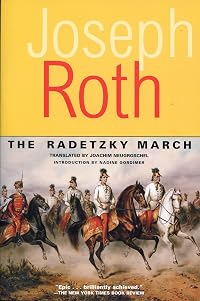
- . . . That was how things were back then. Anything that grew took its time growing, and anything that perished took a long time to be forgotten. But everything that had once existed left its traces, and people lived on memori... (show all)es just as they now live on the ability to forget quickly and emphatically. —Joseph Roth, The Radetzky March
It's difficult with the weight of the rifle.
Leave it — under the oak.
—David Jones, In Parenthesis - Dedication
- For Irene
- First words
- She rises before sunup without waking her husband or the child still asleep in the Moses basket at their bedside and walks through the dark of the small shack into the kitchen.
- Quotations
- p.144
After a time, I asked, “What is left to be afraid of?’
And he said, “the possibility that a life itself may prove to be the most worthy struggle. Not the whole sweeping vale of tears that Rome and her priest... (show all)s want us to sacrifice ourselves to daily so that she lives in splendor, but one single moment in which we die so that someone else lives. That ls it, and it is fearful because it cannot be seen, planned, or even known. It is simply lived. If there be purpose, it happens of a moment within us, and lasts a lifetime without us, like water opening and closing in a wake. - Publisher's editor
- Goldman, Erika
- Blurbers
- Russell, Mary Doria; Cohen, Leah Hager; Smee, Sebastian
Classifications
Statistics
- Members
- 417
- Popularity
- 74,400
- Reviews
- 37
- Rating
- (3.84)
- Languages
- English
- Media
- Paper, Audiobook, Ebook
- ISBNs
- 3
- ASINs
- 1