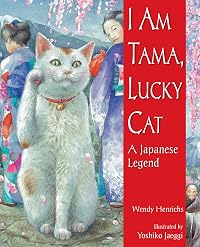
I Am Tama, Lucky Cat: A Japanese Legend
by Wendy Henrichs
On This Page
Description
A retelling of the traditional Japanese tale describing the origins of the beckoning cat and how it came to be a symbol of good luck.Tags
Recommendations
































Member Reviews
I am big on both mythology and Japanese culture, so when I came across I am Tama, the Lucky Cat on netGalley, I just couldn't walk away from the opportunity to review this book! I am super excited to post about this wonderful children's picture book and share my thoughts with fellow book lovers. If you're a mom (or dad) and you're wondering which book would make a good bedtime story, wonder no more! Wendy Henrichs' picture book will be perfect for your children! (and honestly, not only for children, I myself enjoyed reading it a lot!).
If I were to compare this book to a meal, it would definitely be my grannie's soothing chicken soup. She cooks it for me whenever I feel sick or a bit under the weather. It tastes of happiness, safety show more and love. Good, good feelings. That's how I felt while reading I am Tama, the Lucky Cat.
I thought Wendy Henrichs did a really great job in turning this brilliant and heart-warming Japanese legend into a picture book for children. I can not imagine anyone who would not enjoy it! She managed to create a book, that is informative to the children without the didactic feeling of a textbook.
Speaking about the book, it's impossible not to mention gorgeous illustrations by Yoshiko Jaeggi, as they are an inseparable part of it. The details are breath-taking, soft and dreamy colors draw your attention to each illustration, making you not want to turn the page. Ms. Jaeggi is most definitely a brilliant and talented illustrator, I am looking forward to seeing more of her work. Her paintings of Sakura trees were absolutely phenomenal.
I don't have children (yet), but I feel that this book is a necessity, I will be adding it to my collection as soon as it's published in August of 2011. I hope to see more of Wendy Henrichs work! show less
If I were to compare this book to a meal, it would definitely be my grannie's soothing chicken soup. She cooks it for me whenever I feel sick or a bit under the weather. It tastes of happiness, safety show more and love. Good, good feelings. That's how I felt while reading I am Tama, the Lucky Cat.
I thought Wendy Henrichs did a really great job in turning this brilliant and heart-warming Japanese legend into a picture book for children. I can not imagine anyone who would not enjoy it! She managed to create a book, that is informative to the children without the didactic feeling of a textbook.
Speaking about the book, it's impossible not to mention gorgeous illustrations by Yoshiko Jaeggi, as they are an inseparable part of it. The details are breath-taking, soft and dreamy colors draw your attention to each illustration, making you not want to turn the page. Ms. Jaeggi is most definitely a brilliant and talented illustrator, I am looking forward to seeing more of her work. Her paintings of Sakura trees were absolutely phenomenal.
I don't have children (yet), but I feel that this book is a necessity, I will be adding it to my collection as soon as it's published in August of 2011. I hope to see more of Wendy Henrichs work! show less
Have you ever wondered about the "Lucky Cat"? You know...that little kitty depicted in oh-so-many statues, figurines and other touristy type items when seeking something Japanese that is seemingly less traditional and more fun. Bet you thought that he was JUST a cute little cat? Guess again.
Maneki Neko, or the Beckoning Cat as is his formal name, stems from a Japanese legend of old where a lone monk staying in a less than idyllic temple (it had seen much better days) takes in this lonely furry soul offering the best of his meager belongings to another happy and content. The story continues on in a similar, unassuming tone showing us that if we do for others first and live to meet their needs over our own, good fortune will smile upon us show more and take care of the rest. A wonderful lesson if I do say so myself, but living it is much harder than it sounds....definitely something to strive for though, each and every day.
Let the learning continue! Did you know that the raised paw depicted on the Lucky Cat image isn't merely to make him seem irresistibly adorable? Nope. It's actually a traditional Japanese greeting meaning "Come to me!" (hence, one reason that the cat came upon the name he was given). Aside from learning more about this ancient legend, you get to experience the beauty of Japan through the work of the illustrator....and WOW is it amazing! I love how the scenery was created with a blurred edge, leaving the main characters of each scene in clear, sharp focus. The color palette simply begs the eyes to explore each image's rich beauty without detracting from the story being told.
In short, a wondrous story with beautiful images to spark the imagination of the young and the young at heart. It may have been created for younger readers, but I'll bet you anything that adults get just as much out of this read as the kiddos. Highly recommended by yours truly, show less
Maneki Neko, or the Beckoning Cat as is his formal name, stems from a Japanese legend of old where a lone monk staying in a less than idyllic temple (it had seen much better days) takes in this lonely furry soul offering the best of his meager belongings to another happy and content. The story continues on in a similar, unassuming tone showing us that if we do for others first and live to meet their needs over our own, good fortune will smile upon us show more and take care of the rest. A wonderful lesson if I do say so myself, but living it is much harder than it sounds....definitely something to strive for though, each and every day.
Let the learning continue! Did you know that the raised paw depicted on the Lucky Cat image isn't merely to make him seem irresistibly adorable? Nope. It's actually a traditional Japanese greeting meaning "Come to me!" (hence, one reason that the cat came upon the name he was given). Aside from learning more about this ancient legend, you get to experience the beauty of Japan through the work of the illustrator....and WOW is it amazing! I love how the scenery was created with a blurred edge, leaving the main characters of each scene in clear, sharp focus. The color palette simply begs the eyes to explore each image's rich beauty without detracting from the story being told.
In short, a wondrous story with beautiful images to spark the imagination of the young and the young at heart. It may have been created for younger readers, but I'll bet you anything that adults get just as much out of this read as the kiddos. Highly recommended by yours truly, show less
I Am Tama, Lucky Cat is based on a Japanese legend and it reads like a fable. Tama arrives at a temple looking for food and shelter. What she finds is a poor monk willing to share the few things he has. Tama feels like a lucky cat for having found this master and his broken temple. They share everything and Tama helps by keeping their small food supply free from mice and warming her master with her fur coat. The monk feels blessed, having been found by a rare black and orange colored Japanese Bobcat.
During a storm, Tama inexplicably runs out of their beat up shelter. The place needed a major overhaul. The monk calls her back but Tama sits at the gate of the temple and washes her face. According to Japanese lore, a cat washing her face show more is foreshadowing the arrival of visitors. Soon, a samurai warrior, riding a white, steed arrives at the temple looking for shelter. Upon seeing the shape of the temple, the warrior decides to take shelter under one of the blooming cherry trees. Soon he sees Tama with her right paw up in her sign of welcome and the warrior leaves the tree to see her. As he gets to the temple gate, a lightning bolt hits the tree he had staken shelter under.
The warrior believes Tama to be a lucky cat; she saved his live and the life of his horse. Forever grateful the warrior fixes the temple bringing it back to its former glory. He makes sure the monk and Tama never want for another thing. The warrior also brings in new people to worship at the temple. Tama is truly a lucky cat for the warrior and for the monk and his temple.
The cat with its right paw held up is a common symbol in Japan. Many Japanese businesses will have such a cat figurine to beckon customers inside. The legend of the Beckoning Cat, called Maneki Neko in Japanese, is more than a legend. In Japan, there is a place called The Beckoning Cat Temple, which bears a gravestone and a shrine to the lucky cat. Also buried there is the warlord who was the real warrior in the story.
The illustrations have an oriental look and feel. The portrait of the lightning striking is magnificent. It looks more like a museum piece than an illustration for a children’s book. That page alone is worth getting the book. This is a well-written story from the cat’s point of view. It is a fast read and could easily become your child’s favorite nighttime story.
Note: received from netgalley, courtesy of the publisher show less
During a storm, Tama inexplicably runs out of their beat up shelter. The place needed a major overhaul. The monk calls her back but Tama sits at the gate of the temple and washes her face. According to Japanese lore, a cat washing her face show more is foreshadowing the arrival of visitors. Soon, a samurai warrior, riding a white, steed arrives at the temple looking for shelter. Upon seeing the shape of the temple, the warrior decides to take shelter under one of the blooming cherry trees. Soon he sees Tama with her right paw up in her sign of welcome and the warrior leaves the tree to see her. As he gets to the temple gate, a lightning bolt hits the tree he had staken shelter under.
The warrior believes Tama to be a lucky cat; she saved his live and the life of his horse. Forever grateful the warrior fixes the temple bringing it back to its former glory. He makes sure the monk and Tama never want for another thing. The warrior also brings in new people to worship at the temple. Tama is truly a lucky cat for the warrior and for the monk and his temple.
The cat with its right paw held up is a common symbol in Japan. Many Japanese businesses will have such a cat figurine to beckon customers inside. The legend of the Beckoning Cat, called Maneki Neko in Japanese, is more than a legend. In Japan, there is a place called The Beckoning Cat Temple, which bears a gravestone and a shrine to the lucky cat. Also buried there is the warlord who was the real warrior in the story.
The illustrations have an oriental look and feel. The portrait of the lightning striking is magnificent. It looks more like a museum piece than an illustration for a children’s book. That page alone is worth getting the book. This is a well-written story from the cat’s point of view. It is a fast read and could easily become your child’s favorite nighttime story.
Note: received from netgalley, courtesy of the publisher show less
In many Asian restaurants around my city (and probably yours) you will find the Lucky Cat, a figurine of a cat with it’s paw raised in a wave. I’ve always wondered what it was about and my friends would always say that it brings luck.
I am Tama, Lucky Cat, tells the tale of the Lucky Cat. It is beautifully illustrated and the story itself is sweet and charming. It is based on the Maneki Neko, and illustrates one of the many stories of origin of the sculpture. It is a great way to understand the legend (or at least one of the many legends) behind the familiar icon.
This is a very quick read for parents and children to read together. I would recommend it for all children, especially as a tool for broadening cultural boundaries.
I am Tama, Lucky Cat, tells the tale of the Lucky Cat. It is beautifully illustrated and the story itself is sweet and charming. It is based on the Maneki Neko, and illustrates one of the many stories of origin of the sculpture. It is a great way to understand the legend (or at least one of the many legends) behind the familiar icon.
This is a very quick read for parents and children to read together. I would recommend it for all children, especially as a tool for broadening cultural boundaries.
I Am Tama tells the ancient story of Tama the lucky cat. Tama was alone in the cold world when he came upon a monastery. Tama sat in the doorway and waited with his right pay upheld. He became the monk’s friend and companion. But the monastery was in disrepair. One night, there was a terrible rainstorm. Tama ran out into the night. A passing samurai warrior saw Tama and realized Tama was gesturing to him to come in. He did and just in time; a large limb from a cherry tree fell where the warrior had been. To thank the monastery, the warrior devoted himself to it.
“Each spring, when the cherry trees flower once again, I sit in the grand doorway of our beautiful temple and watch their blossoms dance to the ground. With my paw upheld, I show more proudly beckon to all who come to worship. I am Tama, Lucky Cat.” show less
“Each spring, when the cherry trees flower once again, I sit in the grand doorway of our beautiful temple and watch their blossoms dance to the ground. With my paw upheld, I show more proudly beckon to all who come to worship. I am Tama, Lucky Cat.” show less
I Am Tama, Lucky Cat Traditional Fantasy
Written by Wendy Henrichs, Illustrated by Yoshiko Jaeggi
“I am Tama, Lucky Cat” is a popular Japanese Ledged about a cat who sought refuge at an old temple on a cold winters night. The monk inside said he was very lucky to be visited by a Japanese bobtail and named the cat Tama. Tama and the monk became very closed and lived a happy life. One day Tama left the temple during a thunderstorm and came across a warlord. The warlord noticed Tama and asked if she was a beckoning cat. As he moved closer, a tree snapped and fell in the place he once stood. The warlord appreciated Tama as a lucky cat as well. I had actually seen the beckoning cat in Asian food resturants and always wondered what they show more stood for or how they became a thing. This book, “I am Tama, Lucky Cat” answered my question. I also loved the illustration page during the thunderstorm of Raijin, the g-d of thunder and Raiju, the g-od of lightning. The illustrations depicted two evil looking creatures striking down upon a tree. This picture really caught my attention because the creatures looked so fierce and mythical. Finally, I liked the onomonopia. Henrichs wrote sounds such as “CRACK!”, “CREAK!” and “THUD!” that gave the reader the sounds in their head. Overall, I thought this was a good Japanese Ledged. The main idea was how Tama became a Lucky Cat and saved a warlord’s life. If the cat had not come out during the thunderstorm, the warlord would have been crushed by the tree. This is why Tama is known as a lucky cat and there are often statues of the lucky cat in the Japanese/Asian culture. show less
Written by Wendy Henrichs, Illustrated by Yoshiko Jaeggi
“I am Tama, Lucky Cat” is a popular Japanese Ledged about a cat who sought refuge at an old temple on a cold winters night. The monk inside said he was very lucky to be visited by a Japanese bobtail and named the cat Tama. Tama and the monk became very closed and lived a happy life. One day Tama left the temple during a thunderstorm and came across a warlord. The warlord noticed Tama and asked if she was a beckoning cat. As he moved closer, a tree snapped and fell in the place he once stood. The warlord appreciated Tama as a lucky cat as well. I had actually seen the beckoning cat in Asian food resturants and always wondered what they show more stood for or how they became a thing. This book, “I am Tama, Lucky Cat” answered my question. I also loved the illustration page during the thunderstorm of Raijin, the g-d of thunder and Raiju, the g-od of lightning. The illustrations depicted two evil looking creatures striking down upon a tree. This picture really caught my attention because the creatures looked so fierce and mythical. Finally, I liked the onomonopia. Henrichs wrote sounds such as “CRACK!”, “CREAK!” and “THUD!” that gave the reader the sounds in their head. Overall, I thought this was a good Japanese Ledged. The main idea was how Tama became a Lucky Cat and saved a warlord’s life. If the cat had not come out during the thunderstorm, the warlord would have been crushed by the tree. This is why Tama is known as a lucky cat and there are often statues of the lucky cat in the Japanese/Asian culture. show less
This book contains richly detailed illustrations that accurately portray life in an ancient Japanese village and monastery. There is also an author's note at the end that explains the origins of the Tama cat legend. This book could be used in the classroom to spark a discussion about giving and the concept of "what goes around, comes around."
Members
- Recently Added By
Published Reviews
ThingScore 50
I was reading Japanese religion story for the first time and I loved Tama cat.
I liked graphics and use of blue colour throughout just added charm to the book.
I dont know why but i felt good and happy reading the book as adult.I am sure kids
will enjoy it way more than me.
I wish there were few more stories of Tama Cat.The book just ended very soon.
I liked graphics and use of blue colour throughout just added charm to the book.
I dont know why but i felt good and happy reading the book as adult.I am sure kids
will enjoy it way more than me.
I wish there were few more stories of Tama Cat.The book just ended very soon.
added by alpa_dedhia
Lists

A Child's Book Tour of Japan
58 works; 4 members

My Wishlist - Children's
185 works; 4 members

al.vick-wishlist-Children's
462 works; 3 members
Author Information
3 Works 174 Members
All Editions
Awards and Honors
Notable Lists
Common Knowledge
- Original publication date
- 2011
- Important places
- Japan
- Last words
- (Click to show. Warning: May contain spoilers.)I am Tama, Lucky Cat.
- Original language
- English
Classifications
Statistics
- Members
- 150
- Popularity
- 218,231
- Reviews
- 9
- Rating
- (4.24)
- Languages
- English
- Media
- Paper
- ISBNs
- 2