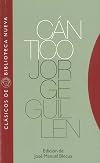
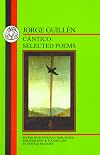
Cántico
by Jorge Guillén
On This Page
Description
Jorge Guillen belongs to a brilliant cluster of Spanish poets, a generation once defined by Salinas, one of its members, as "born under a lyrical star". Towards the end of his life Guillen's most famous work "Cantico" - the fruit of some 30 years of labour - was recognized as a masterpiece and stands alongside the poetical works of Lorca, Alberti and Cernuda. Most usefully translated as a hymn or song of praise, "Cantico" is an antidote to today's world of doubts, fears, conflicts and show more seductive philosophies of despair. The attitude to life it holds out to its readers is summed up in the epitaph on Guillen's tomb in the English cemetery in Malaga: "Aqui yace un enamorado de la vida" ("Here lies a lover of life"). show lessTags
Recommendations


















Member Reviews
8498150450
Lo atractivo para mí de estos poemas es su optimismo y alegría. No tanto porque sean poemas "festivos", sino por la insistencia de Guillén en la felicidad profunda que da simplemente el ser. Para él, la mera existencia es un milagro, una maravilla. La visión de las cosas, de cualquier cosa (una sombra de hojas en la mesa, un sillón, un lápiz y, por supuesto, los seres queridos, en especial los hijos pequeños) deja atónito al poeta, fascinado por su simple presencia. Por eso utiliza casi siempre, con algunas excepciones, las formas clásicas, con lo que los poemas adquieren una sonoridad especial que atrae; esto se combina con el gusto por las frases o los versos breves, de ritmo cortante. El pasmo metafísico del autor a veces show more llega hasta lo religioso y otras se queda en lo filosófico, pero en todo caso es un ejemplo de alegría profunda. show less
Sep 11, 2011Spanish
1
Ratings
Members
- Recently Added By
Lists

España en cien libros
100 works; 1 member
Author Information

99+ Works 480 Members
Guillen's poetry celebrates this life and things of this world. In Cantico, first published in 1928 and then substantially revised numerous times by the poet, he exalts the pure joy of being: "To be, nothing more. And that suffices." This enthusiasm for life was sustained until Clamor (three volumes published in 1957, 1960, and 1963), when the show more brutal realities of the modern world broke into his joyous vision. Even so, Guillen remained optimistic about the future, and in his poem Goodbye, Goodbye, Europe, he speaks of escaping the old decaying world to an "innocent new world," a reference to the United States where he taught in universities for many years. Guillen's style is concentrated, economical, disciplined and polished, showing the influence of classical forms as well as of the gongorist style. His is a "pure poetry" from which he has attempted to remove all nonpoetic elements, such as narrative and anecdote. He has translated Paul Valery and Paul Claudel into Spanish. (Bowker Author Biography) show less
Some Editions
Awards and Honors
Notable Lists
Series
Belongs to Publisher Series
Classifications
Statistics
- Members
- 180
- Popularity
- 182,639
- Reviews
- 4
- Rating
- (3.81)
- Languages
- English, Portuguese, Spanish
- Media
- Paper
- ISBNs
- 12
- ASINs
- 3