Grand Expectations: The United States, 1945-1974
by James T. Patterson
On This Page
Description
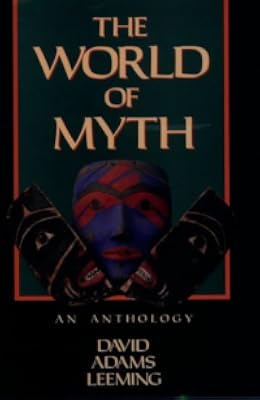
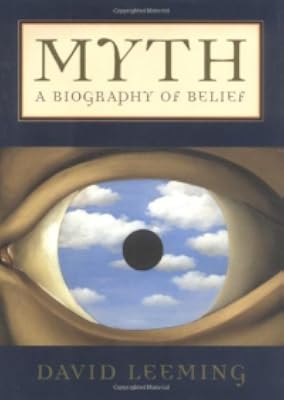
Hercules, Zeus, Thor, Gilgamesh--these are the figures that leap to mind when we think of myth. But to David Leeming, myths are more than stories of deities and fantastic beings from non-Christian cultures. Myth is at once the most particular and the most universal feature of civilization, representing common concerns that each society voices in its own idiom. Whether an Egyptian story of creation or the big-bang theory of modern physics, myth is metaphor, mirroring our deepest sense of show more ourselves in relation to existence itself. show lessTags
Recommendations




















Member Reviews
Hercules, Zeus, Thor, Gilgamesh--these are the figures that leap to mind when we think of myth. But to David Leeming, myths are more than stories of deities and fantastic beings from non-Christian cultures. Myth is at once the most particular and the most universal feature of civilization, representing common concerns that each society voices in its own idiom. Whether an Egyptian story of creation or the big-bang theory of modern physics, myth is metaphor, mirroring our deepest sense of ourselves in relation to existence itself. Now, in The World of Myth, Leeming provides a sweeping anthology of myths, ranging from ancient Egypt and Greece to the Polynesian islands and modern science. We read stories of great floods from the ancient show more Babylonians, Hebrews, Chinese, and Mayans; tales of apocalypse from India, the Norse, Christianity, and modern science; myths of the mother goddess from Native American Hopi culture and James Lovelock's Gaia. Leeming has culled myths from Aztec, Greek, African, Australian Aboriginal, Japanese, Moslem, Hittite, Celtic, Chinese, and Persian cultures, offering one of the most wide-ranging collections of what he calls the collective dreams of humanity. More important, he has organized these myths according to a number of themes, comparing and contrasting how various societies have addressed similar concerns, or have told similar stories. In the section on dying gods, for example, both Odin and Jesus sacrifice themselves to renew the world, each dying on a tree. Such traditions, he proposes, may have their roots in societies of the distant past, which would ritually sacrifice their kings to renew the tribe. In The World of Myth, David Leeming takes us on a journey "not through a maze of falsehood but through a marvellous world of metaphor," metaphor for "the story of the relationship between the known and the unknown, both around us and within us." Fantastic, tragic, bizarre, sometimes funny, the myths he presents speak of the most fundamental human experience, a part of what Joseph Campbell called "the wonderful song of the soul's high adventure."
Source: Publisher, Oxford 1991 ebook edition show less
Source: Publisher, Oxford 1991 ebook edition show less
This anthology was more than just a collection of myths. There were lists of suggested further reading and of the sources for the different sections. The book was organized by types of myths and Leeming spent some time explaining these types and wrote a short introduction to each featured story. While I was familiar with many of the stories there were also a number that I was seeing for the first time. A good book for those who want more than just a retelling of some myths but aren't ready for the rather dense writings of authors like Joseph Campbell.
Excellent book on the topic.
Ratings
Members
- Recently Added By
Lists

Little Library finds
87 works; 2 members

Books About Non-Abrahamic Religions
98 works; 2 members
Author Information
24 Works 2,410 Members
James T. Patterson is an American historian, and Ford Foundation Professor of History emeritus at Brown University. He wrote "Grand Expectations: the United States, 1945-1974," which received the 1997 Bancroft Prize in American history. (The Bancroft prize is one of the most prestigious honors a book of history can received and was established at show more Columbia University in 1948. It's considered to be on par with the Pulitzer Prize because an anonymous jury of peers judges it.) "Grand Expectations" is an interpretation of the explosive growth, high expectations and unusual optimism that Americans experienced after World War II that went into the 1960's. It follows the social, economic and cultural trends, and foreign policy issues, which became less optimistic after the assassinations, the Vietnam War and Watergate. (Bowker Author Biography) show less
Common Knowledge
- Canonical title
- Grand Expectations: The United States, 1945-1974
- Original publication date
- 1996
- Original language
- English
Classifications
- Genres
- Nonfiction, Religion & Spirituality, History
- DDC/MDS
- 201.3 — Religion The Bible & Christianity Religious mythology, general classes of religion, interreligious relations and attitudes, social theology Mythology and mythological foundations
- LCC
- BL311 .L328 — Philosophy, Psychology and Religion Religions. Mythology. Rationalism Religions. Mythology. Rationalism The myth. Comparative mythology
- BISAC
Statistics
- Members
- 487
- Popularity
- 62,203
- Reviews
- 3
- Rating
- (3.57)
- Languages
- English
- Media
- Paper, Audiobook, Ebook
- ISBNs
- 10
- ASINs
- 5