Mark Twain's Best
by Mark Twain 
On This Page
Description
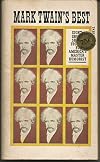
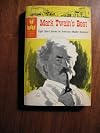
Eight great stories by America's master humorist.Tags
Recommendations



















Member Reviews
Twain has more success with the short form than with Connecticut Yankee, if you ask me. He's free to separate his social satire from his humour, so they don't undercut each other. "The McWilliamses And The Burglar Alarm" is my pick for funniest, and you can read it online at http://www.mtwain.com/The_McWilliamses_And_The_Burglar_Alarm/0.html
8 short stories from Twain. Not his best, but two of the stories are an interesting study of Twain's view of religions.
From "The Diary of Adam and Eve" - one of Adam's early entries:
"Wednesday: Built me a shelter against the rain, but could not have it to myself in peace. The new creature intruded. When I tried to put it out it shed water out of the holes it looks with, and wiped it away with the back of its paws, and made a noise such as some of the other animals make when they are in distress. I wish it would not talk; it is always talking.... And this new sound is so close to me; it is right at my shoulder, right at my ear, first on one side and then on the other ... " pg. 48
From "The Mysterious Stranger" - Satan describes human nature:
"I know your race. It is made up of sheep. It is governed by minorities, seldom or never by majorities. It show more suppresses its feelings and its beliefs and follows the handful that makes the most noise. Sometimes the noisy handful is right, sometimes wrong; but no matter, the crowd follows it. The vast majority of the race, whether savage or civilized, are secretly kind-hearted and shrink from inflicting pain, but in the presence of the aggressive and pitiless minority they don't dare to assert themselves ....
"There has never been a just [war], never an honorable one .... I can see a million years ahead, and this rule will never change .... The loud little handful - as usual - will shout for the war. The pulpit will - warily and cautiously - object - at first; the great, big dull bulk of the nation will rub its sleepy eyes and try to make out why there should be a war, and will say, earnestly and indignantly, 'It is unjust and dishonorable, and there is no necessity for it.' Then the handful will shout louder. A few fair men on the other side will argue and reason against the war with speech and pen, and at first will have a hearing and be applauded; but it will not last long; those others will outshout them, and presently the anti-war audiences will thin out and lose popularity. Before long you will see this curious thing: the speakers stoned from the platform, and free speech strangled by hordes of furious men who in their secret hearts are still at one with those stoned speakers - as earlier - but do not dare to say so. And now the whole nation - pulpit and all - will take up the war-cry, and shout itself hoarse, and mob any honest man who ventures to open his mouth; and presently such mouths will cease to open. Next the statesmen will invent cheap lies, putting the blame upon the nation that is attacked, and every man will be glad of those conscience-soothing falsities, and will diligently study them, and refuse to examine any refutations of them; and thus he will by and by convince himself that the war is just, and will thank God for the better sleep he enjoys after this process of grotesque self-deception." pp 234-236 show less
"Wednesday: Built me a shelter against the rain, but could not have it to myself in peace. The new creature intruded. When I tried to put it out it shed water out of the holes it looks with, and wiped it away with the back of its paws, and made a noise such as some of the other animals make when they are in distress. I wish it would not talk; it is always talking.... And this new sound is so close to me; it is right at my shoulder, right at my ear, first on one side and then on the other ... " pg. 48
From "The Mysterious Stranger" - Satan describes human nature:
"I know your race. It is made up of sheep. It is governed by minorities, seldom or never by majorities. It show more suppresses its feelings and its beliefs and follows the handful that makes the most noise. Sometimes the noisy handful is right, sometimes wrong; but no matter, the crowd follows it. The vast majority of the race, whether savage or civilized, are secretly kind-hearted and shrink from inflicting pain, but in the presence of the aggressive and pitiless minority they don't dare to assert themselves ....
"There has never been a just [war], never an honorable one .... I can see a million years ahead, and this rule will never change .... The loud little handful - as usual - will shout for the war. The pulpit will - warily and cautiously - object - at first; the great, big dull bulk of the nation will rub its sleepy eyes and try to make out why there should be a war, and will say, earnestly and indignantly, 'It is unjust and dishonorable, and there is no necessity for it.' Then the handful will shout louder. A few fair men on the other side will argue and reason against the war with speech and pen, and at first will have a hearing and be applauded; but it will not last long; those others will outshout them, and presently the anti-war audiences will thin out and lose popularity. Before long you will see this curious thing: the speakers stoned from the platform, and free speech strangled by hordes of furious men who in their secret hearts are still at one with those stoned speakers - as earlier - but do not dare to say so. And now the whole nation - pulpit and all - will take up the war-cry, and shout itself hoarse, and mob any honest man who ventures to open his mouth; and presently such mouths will cease to open. Next the statesmen will invent cheap lies, putting the blame upon the nation that is attacked, and every man will be glad of those conscience-soothing falsities, and will diligently study them, and refuse to examine any refutations of them; and thus he will by and by convince himself that the war is just, and will thank God for the better sleep he enjoys after this process of grotesque self-deception." pp 234-236 show less
Ratings
Members
- Recently Added By
Author Information

2,747+ Works 208,487 Members
Mark Twain was born Samuel L. Clemens in Florida, Missouri on November 30, 1835. He worked as a printer, and then became a steamboat pilot. He traveled throughout the West, writing humorous sketches for newspapers. In 1865, he wrote the short story, The Celebrated Jumping Frog of Calaveras County, which was very well received. He then began a show more career as a humorous travel writer and lecturer, publishing The Innocents Abroad in 1869, Roughing It in 1872, and, Gilded Age in 1873, which was co-authored with Charles Dudley Warner. His best-known works are The Adventures of Tom Sawyer, Mississippi Writing: Life on the Mississippi, and The Adventures of Huckleberry Finn. He died of a heart attack on April 21, 1910. (Bowker Author Biography) show less
Mark Twain has a Legacy Library. Legacy libraries are the personal libraries of famous readers, entered by LibraryThing members from the Legacy Libraries group.
All Editions
Work Relationships
Contains
Common Knowledge
- Original language
- English
Classifications
Statistics
- Members
- 355
- Popularity
- 88,589
- Reviews
- 3
- Rating
- (3.90)
- Languages
- English
- Media
- Paper
- ISBNs
- 1
- ASINs
- 15