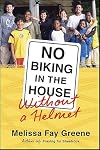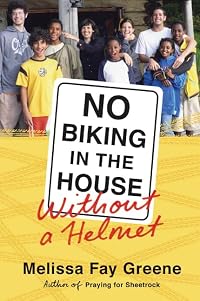
No Biking in the House Without a Helmet
by Melissa Fay Greene
On This Page
Description
With four children of their own, Atlanta journalist Greene (There Is No Me Without You) and her husband, a criminal defense attorney, gradually adopted five more--one from Bulgaria and four from Ethiopia--to create a roiling, largehearted family unit.Tags
Recommendations
















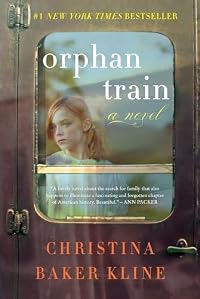
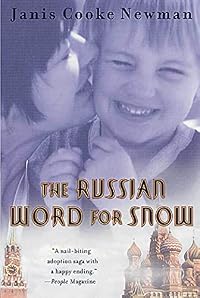
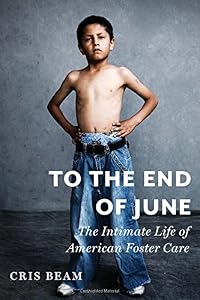




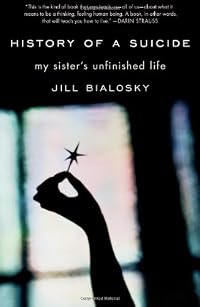



Member Recommendations


beyondthefourthwall In-depth, interesting, compassionate memoirs of fostering and adoption.
beyondthefourthwall Touching memoirs of family and international adoption.
Member Reviews
When Melissa Fay Greene was in her mid-forties and beginning to see the edges of the empty nest on her horizon, she wondered if she could squeeze one more child in before her child-bearing years were officially over. She and her criminal defense attorney husband, Donny, both felt like they weren't quite ready to give up the joys of parenting. As it turns out, while her child-bearing years were, in fact, over, her parenting years had only just begun. After much internet research and some freelance writing about the work of international adoption doctors, Melissa traveled to Bulgaria to meet the boy who would be her first adopted son, Jesse. But the couple didn't stop there, when her heart and her writing took her to Africa where she saw show more the far-reaching effects of the HIV/AIDS crisis leaving unfathomable numbers of both healthy and well children orphaned, Greene knew she and her family could make even more space for children who had no place to go.
No Biking in the House Without a Helmet is jam packed with the trials of trying to create a family from children from around the globe, but it's packed with enough heart and humor that more than make up for the hardships. Greene balances her funniest family anecdotes with her more serious struggles to make her adopted children feel loved and appreciated without letting her biological children fall by the wayside as well as her fierce determination that her adopted children not lose touch with their original countries and cultures even as they live their new lives in the U.S. With a family so large and diverse, Greene often worries that she has traded in a family for just another group home where there's not quite enough love to go around, and not enough unity to constitute a family, but No Biking is proof-positive that, ultimately, those worries are unfounded.
Greene tells her story with honesty and manages to capture the individuality of each of her children and how they come together as a family all without ever succumbing to cheesiness. She captures the joy of a child at being welcomed into a new family but never oversimplifies the challenges of creating a new life for a child that once had a family or spent their entire childhood in an institution. By the end of the book, I was totally captured by this woman and her family who had the courage, determination, and more than enough love to spare to open their hearts and homes to children in need from across the globe and how even though it wasn't always easy, with love and a very good sense of humor they make their decidedly unique family work. show less
No Biking in the House Without a Helmet is jam packed with the trials of trying to create a family from children from around the globe, but it's packed with enough heart and humor that more than make up for the hardships. Greene balances her funniest family anecdotes with her more serious struggles to make her adopted children feel loved and appreciated without letting her biological children fall by the wayside as well as her fierce determination that her adopted children not lose touch with their original countries and cultures even as they live their new lives in the U.S. With a family so large and diverse, Greene often worries that she has traded in a family for just another group home where there's not quite enough love to go around, and not enough unity to constitute a family, but No Biking is proof-positive that, ultimately, those worries are unfounded.
Greene tells her story with honesty and manages to capture the individuality of each of her children and how they come together as a family all without ever succumbing to cheesiness. She captures the joy of a child at being welcomed into a new family but never oversimplifies the challenges of creating a new life for a child that once had a family or spent their entire childhood in an institution. By the end of the book, I was totally captured by this woman and her family who had the courage, determination, and more than enough love to spare to open their hearts and homes to children in need from across the globe and how even though it wasn't always easy, with love and a very good sense of humor they make their decidedly unique family work. show less
It may be a cliche to say that you laughed so hard you cried, except that I did while reading this book. Several times. Greene tells the story of how her family created itself with such wonderful humor that you can't help but fall in love with them all.
Of course, a book like this can't be all sunshine and smiles, and Greene doesn't pull her punches when relating stories of family tribulation. Nor does she leave us in any doubt that children around the world face horrifying poverty and hunger every day.
If this book has a flaw, it's that it's a little uneven. In the midst of discussing the process of adopting one child, the narrative jumps back to relate an anecdote involving an older child, or Green's own childhood. These leaps never show more detract from the overall story, but the transitions are sometimes jarring.
Another cliche: this book is both hysterical and heartbreaking. But mostly it is about how family bonds are about love and effort more than blood. show less
Of course, a book like this can't be all sunshine and smiles, and Greene doesn't pull her punches when relating stories of family tribulation. Nor does she leave us in any doubt that children around the world face horrifying poverty and hunger every day.
If this book has a flaw, it's that it's a little uneven. In the midst of discussing the process of adopting one child, the narrative jumps back to relate an anecdote involving an older child, or Green's own childhood. These leaps never show more detract from the overall story, but the transitions are sometimes jarring.
Another cliche: this book is both hysterical and heartbreaking. But mostly it is about how family bonds are about love and effort more than blood. show less
At some point parents are faced with the prospect of the "empty nest syndrome". Some parents deal with it by moving to a big city (like my husband and I did- don't worry though, we told the kids and gave them our new address), some take up new hobbies, and Melissa Fay Greene and her husband met the challenge by adopting children from Bulgaria and Ethiopia, as told in No Biking in the House Without a Helmet.
The Samuels (Don is a criminal defense attorney, Melissa a writer) had four children, and their oldest of four Molly was heading off to college, when Melissa began to think what life would be like when they weren't bringing cupcakes, providing emergency phone numbers, or giving standing ovations at the school play.
The introduction to show more the book is hilarious, with Greene recounting her son answering the telephone and yelling "Daddy, it's for you! I think it's a criminal!" Another funny anecdote concerns Greene "helping too much with homework", and groaning "when the teacher's memo (for the science fair project) comes home, glancing at my calendar to see when I'll have time to get it done." When her sixth-grade son's friend calls late at night, she tells him "Lee's asleep. But what did you get for "How does Montesquieu show that self-interest can overawe justice in human affairs?" Lee came home a few days later and informed his mother that she got a 74 on that homework.
After having a miscarriage, adoption is discussed. Greene gets on her computer and finds several adoption websites where you can see photos of children available for adoption.
"Some adoption agencies offered "delivery." You could adopt without leaving your desk! "I'd better be careful not to hit accidentally hit Send," I told Donny. "We could open the door one day and find some little kid standing there with a suitcase."
While Greene writes with warm humor, she also writes movingly of her travels first to Bulgaria and later to Ethiopia to bring home two children. She is honest about the challenges faced bringing into their family children who didn't speak English.
She inspired her oldest son Lee, and he spent one summer volunteering in the same orphanage from where they got Helen. That chapter of the book was so lovely, this bright, caring young man sharing his talents and time with these kids who adored him. Greene was a little too inspiring though, and Lee called home and asked his parents to take in two older boys who had no one else, and whose chances for adoption were small.
The Samuels are a normal family; they love, they laugh, the fight. They went through a particularly bumpy time for awhile when two of the teenage boys were literally fighting and it affected the entire family.
Greene is a wonderful writer: honest, empathetic and funny. I fell in love with the Samuel family, no more so than when one of their biological children bemoaned the fact that if they adopted two more Ethiopians he would move farther down the list as fastest runner in the family.
This is a beautiful book, a testament to the strength of a loving family, with all the laughs and frustrations that being part of that family entails. show less
The Samuels (Don is a criminal defense attorney, Melissa a writer) had four children, and their oldest of four Molly was heading off to college, when Melissa began to think what life would be like when they weren't bringing cupcakes, providing emergency phone numbers, or giving standing ovations at the school play.
The introduction to show more the book is hilarious, with Greene recounting her son answering the telephone and yelling "Daddy, it's for you! I think it's a criminal!" Another funny anecdote concerns Greene "helping too much with homework", and groaning "when the teacher's memo (for the science fair project) comes home, glancing at my calendar to see when I'll have time to get it done." When her sixth-grade son's friend calls late at night, she tells him "Lee's asleep. But what did you get for "How does Montesquieu show that self-interest can overawe justice in human affairs?" Lee came home a few days later and informed his mother that she got a 74 on that homework.
After having a miscarriage, adoption is discussed. Greene gets on her computer and finds several adoption websites where you can see photos of children available for adoption.
"Some adoption agencies offered "delivery." You could adopt without leaving your desk! "I'd better be careful not to hit accidentally hit Send," I told Donny. "We could open the door one day and find some little kid standing there with a suitcase."
While Greene writes with warm humor, she also writes movingly of her travels first to Bulgaria and later to Ethiopia to bring home two children. She is honest about the challenges faced bringing into their family children who didn't speak English.
She inspired her oldest son Lee, and he spent one summer volunteering in the same orphanage from where they got Helen. That chapter of the book was so lovely, this bright, caring young man sharing his talents and time with these kids who adored him. Greene was a little too inspiring though, and Lee called home and asked his parents to take in two older boys who had no one else, and whose chances for adoption were small.
The Samuels are a normal family; they love, they laugh, the fight. They went through a particularly bumpy time for awhile when two of the teenage boys were literally fighting and it affected the entire family.
Greene is a wonderful writer: honest, empathetic and funny. I fell in love with the Samuel family, no more so than when one of their biological children bemoaned the fact that if they adopted two more Ethiopians he would move farther down the list as fastest runner in the family.
This is a beautiful book, a testament to the strength of a loving family, with all the laughs and frustrations that being part of that family entails. show less
When the number of children hit nine, Greene took a break from reporting. She trained her journalist's eye upon events at home. Fisseha was riding a bike down the basement stairs; out on the porch, a squirrel was sitting on Jesse's head; vulgar posters had erupted on bedroom walls; the insult niftam (the Amharic word for "snot") had led to fistfights; and four non-native-English-speaking teenage boys were researching, on Mom's computer, the subject of "saxing." "At first I thought one of our trombone players was considering a change of instrument," writes Greene. "Then I remembered: they can’t spell." Using the tools of her trade, she uncovered the true subject of the "saxing" investigation, inspiring the chapter "Everything You show more Always Wanted to Know About Sex, but Couldn’t Spell." A celebration of parenthood; an ingathering of children, through birth and out of loss and bereavement; a relishing of moments hilarious and enlightening---No Biking in the House Without a Helmet is a loving portrait of a unique twenty first-century family as it wobbles between disaster and joy. Selected Reading Questionnaire. show less
I had the pleasure of meeting Melissa Faye Greene at the Austin Jewish Book Fair in November. She was there to sign No Biking in the House Without a Helmet (Sarah Crichton Books, 2011) and to provide the opening address. No Biking is a memoir chronicling how she and her family of six (mom, dad, four kids) adopted five orphans from overseas—one Bulgarian-Romani and four Ethiopian—over a period of eight years.
Gotta love this woman, gotta read her book. Smart, witty, warm—in person and in print. Greene is an award-winning journalist best known for her books on the civil rights movement and the African HIV/AIDS pandemic. NYU’s journalism department named Praying for Sheetrock one of the top 100 works of journalism in the 20th show more Century. But at the lectern, she’s a poet-performer. She belongs on the Chauttauqua lecture circuit of yore, delighting audiences with her wisdom and charm.
For Greene, writing in the first person was both unfamiliar and uncomfortable. Clearly, she overcame those obstacles. But this memoir is no bildungsroman in that it’s not about her. It’s about her family—the decisions they made, the antics they performed, and the travails they passed through. Greene readily acknowledges the depression she slipped into and the seemingly insurmountable challenges presented by children whose starts in life were so tenuous. With the clear-headedness that comes with her profession, she observes her surroundings, arms herself with information, weighs possible outcomes, and soldiers on.
At the lectern, Greene is something of a comedian. Many of the funny stories she shared in Austin came verbatim from the book. There’s Jesse, the first adoptee, taunting Helen, the second, that if she doesn’t remove her underpants when she bathes in the mikveh to be converted, her butt won’t be Jewish. There’s Greene’s biological daughter, Lily, at age two, waving good-bye to a strip of plastic ribbon whipping in the wind at a gas station as Lily imagines this stop was the much anticipated family trip to Disney World and the ribbon, Tinkerbell. There’s Fisseha, the second Ethiopian adoptee, who spears a flying Frisbee with a bicycle safety flag pole and teaches the neighborhood kids to make slingshots and whips from tree bark and plants.
Yet, in the book, Greene’s hilarity is tempered by her encounters with the chilling circumstances from which she plucks these new additions and the baggage that comes with them. Jesse was separated from his parents in infancy and lived the first four years of his life in an institution, making it especially hard for him to learn to play or to feel safe. The other children who lost their parents to AIDS were held and loved when young, but they are old enough to remember and to miss the families and homeland left behind. But as Greene writes, “The power of the human mind to repair itself is a remarkable thing.”
I don’t believe I would have read this memoir if I hadn’t heard Greene speak. Her audience is international adoptive families as well as readers of her previous books who want to know more about this journalist’s life. As a thoroughbred skeptic, I’m not inclined to believe anyone could assume the burden of adopting five challenging children without some hidden—possibly unhealthy—motive. Yet, from what I’ve read and what I’ve seen, I can only conclude that she’s the real thing . . . the genuine article. And the human community is lucky to have her—as journalist, mother, wife, and human being. show less
Gotta love this woman, gotta read her book. Smart, witty, warm—in person and in print. Greene is an award-winning journalist best known for her books on the civil rights movement and the African HIV/AIDS pandemic. NYU’s journalism department named Praying for Sheetrock one of the top 100 works of journalism in the 20th show more Century. But at the lectern, she’s a poet-performer. She belongs on the Chauttauqua lecture circuit of yore, delighting audiences with her wisdom and charm.
For Greene, writing in the first person was both unfamiliar and uncomfortable. Clearly, she overcame those obstacles. But this memoir is no bildungsroman in that it’s not about her. It’s about her family—the decisions they made, the antics they performed, and the travails they passed through. Greene readily acknowledges the depression she slipped into and the seemingly insurmountable challenges presented by children whose starts in life were so tenuous. With the clear-headedness that comes with her profession, she observes her surroundings, arms herself with information, weighs possible outcomes, and soldiers on.
At the lectern, Greene is something of a comedian. Many of the funny stories she shared in Austin came verbatim from the book. There’s Jesse, the first adoptee, taunting Helen, the second, that if she doesn’t remove her underpants when she bathes in the mikveh to be converted, her butt won’t be Jewish. There’s Greene’s biological daughter, Lily, at age two, waving good-bye to a strip of plastic ribbon whipping in the wind at a gas station as Lily imagines this stop was the much anticipated family trip to Disney World and the ribbon, Tinkerbell. There’s Fisseha, the second Ethiopian adoptee, who spears a flying Frisbee with a bicycle safety flag pole and teaches the neighborhood kids to make slingshots and whips from tree bark and plants.
Yet, in the book, Greene’s hilarity is tempered by her encounters with the chilling circumstances from which she plucks these new additions and the baggage that comes with them. Jesse was separated from his parents in infancy and lived the first four years of his life in an institution, making it especially hard for him to learn to play or to feel safe. The other children who lost their parents to AIDS were held and loved when young, but they are old enough to remember and to miss the families and homeland left behind. But as Greene writes, “The power of the human mind to repair itself is a remarkable thing.”
I don’t believe I would have read this memoir if I hadn’t heard Greene speak. Her audience is international adoptive families as well as readers of her previous books who want to know more about this journalist’s life. As a thoroughbred skeptic, I’m not inclined to believe anyone could assume the burden of adopting five challenging children without some hidden—possibly unhealthy—motive. Yet, from what I’ve read and what I’ve seen, I can only conclude that she’s the real thing . . . the genuine article. And the human community is lucky to have her—as journalist, mother, wife, and human being. show less
Several other reviewers have mentioned the strengths of this book, and I mostly agree with them. Many of the anecdotes that Greene relates are funny, and well told. She is clear about the ongoing difficulties of parenting children adopted at older ages. Her personality comes through as being warm and friendly. On the other hand, the narrative is strongly anecdotal, without a strong connecting thread holding it together. She also seems to randomly throw in stories about her biological children so that they won't feel left out. (All of the children seem charming, and she is explicit that they gave permission for each story in the book.)
The reason I brought this down to 1 star is simple - child trafficking. I have adopted older children. I show more also worked at an adoption agency for 5 years, during which time I watched the Ethiopia program. It started strong, with lots of children being cleared for adoption and leaving the country. Then those children started telling stories that didn't match their paperwork. The US Embassy in Addis Ababa started asking questions. At this writing, there are no reputable agencies who continue to facilitate adoptions from Ethiopia. Too many children were trafficked, birth parents were deceived about where their children were going and why, too many questions about the people who "found" children for orphanages.
Four of Greene's children were adopted from Ethiopia, and each story has huge red flags all over it. The only time in the entire book that someone asks if they did wrong, she brushes it off as no big deal. She's wrong. Selling children is always a big deal. I'm amazed that a prize winning journalist is so clueless about the ethics of international adoption (she never mentions the subject, the controversies, the very real arguments that divide the field). I'm appalled that the mother of internationally adoption children wouldn't care about the ethics of the situation. I urge interested readers to consult websites like PEAR (Parents for Ethical Adoption Reform) and this blog post (http://scoopingitup.blogspot.com/p/considering-ethiopian-international-or.html) for the other side of this issue. show less
The reason I brought this down to 1 star is simple - child trafficking. I have adopted older children. I show more also worked at an adoption agency for 5 years, during which time I watched the Ethiopia program. It started strong, with lots of children being cleared for adoption and leaving the country. Then those children started telling stories that didn't match their paperwork. The US Embassy in Addis Ababa started asking questions. At this writing, there are no reputable agencies who continue to facilitate adoptions from Ethiopia. Too many children were trafficked, birth parents were deceived about where their children were going and why, too many questions about the people who "found" children for orphanages.
Four of Greene's children were adopted from Ethiopia, and each story has huge red flags all over it. The only time in the entire book that someone asks if they did wrong, she brushes it off as no big deal. She's wrong. Selling children is always a big deal. I'm amazed that a prize winning journalist is so clueless about the ethics of international adoption (she never mentions the subject, the controversies, the very real arguments that divide the field). I'm appalled that the mother of internationally adoption children wouldn't care about the ethics of the situation. I urge interested readers to consult websites like PEAR (Parents for Ethical Adoption Reform) and this blog post (http://scoopingitup.blogspot.com/p/considering-ethiopian-international-or.html) for the other side of this issue. show less
Award winning journalist Melissa Fay Greene and her husband already had four biological children when they decided to adopt a little boy from Bulgaria. Rather than accept the "empty nest" that their home threatened to become when the oldest children headed off to college, the couple kept adopting. The next child was a little girl from Ethiopia. By the time Greene and her husband were finished adopting, their family included a total of nine kids from three continents.
The Bottom Line: Melissa Fay Greene's writing style is approachable for most readers. She writes with humor, tenderness, and honesty as she covers both the joys and the challenges of raising a large family. Recommended for everyone interested in the study of families. Also, show more for potential adoptive parents.
For the complete review, including Book Club notes, please visit the Mini Book Bytes Book Review Blog. show less
The Bottom Line: Melissa Fay Greene's writing style is approachable for most readers. She writes with humor, tenderness, and honesty as she covers both the joys and the challenges of raising a large family. Recommended for everyone interested in the study of families. Also, show more for potential adoptive parents.
For the complete review, including Book Club notes, please visit the Mini Book Bytes Book Review Blog. show less
Members
- Recently Added By
Author Information

7 Works 1,590 Members
Melissa Fay Greene was a paralegal with Legal Services in McIntosh County, Georgia, when the events that make up her award-winning book Praying for Sheetrock (1991) took place. A recipient of the National Book Critics Circle Award, and a National Book Award finalist, Praying for Sheetrock is set in the early 1970s, when the struggle for civil show more rights that had been going on for years in other parts of the U.S. finally came to McIntosh County. Greene's next book, The Temple Bombing (1996) was the winner of the 1996 Southern Book Critics Award, was named a New York Times Notable Book, and was also a National Book Award finalist. It concerns the 1958 bombing of the Temple, the oldest synagogue in Atlanta. (Bowker Author Biography) show less
Common Knowledge
- Original publication date
- 2011-04-12
Classifications
- Genres
- Nonfiction, Biography & Memoir, General Nonfiction
- DDC/MDS
- 362.734092 — Social sciences Social problems and social services Social problems of and services to groups of people Child welfare Adoption Adopted Children
- LCC
- HV874.82 .G75 .A3 — Social sciences Social pathology. Social and public welfare. Criminology Social pathology. Social and public welfare. Protection, assistance and relief Special classes Children Destitute, neglected, and abandoned
- BISAC
Statistics
- Members
- 168
- Popularity
- 192,850
- Reviews
- 14
- Rating
- (3.95)
- Languages
- English
- Media
- Paper, Audiobook, Ebook
- ISBNs
- 7
- ASINs
- 5