On This Page
Tags
Recommendations


















Member Reviews
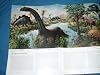
This is a beautifully illustrated book, especially the part about dinosaurs, that I couldn't stop looking at as a child. My daughter finds it fascinating as well; however, scientifically it is well out of date.
Many years ago when I had just graduated from college with a degree in English and a head stuffed full of Shakespeare and such, I taught school. My students were all way below average - some couldn't even read and write - and in the 9th grade! I had no training in special education or other areas that would be appropriate for them. I finally gave up on the school material and used this book (selectively) as my daily text. The kids really enjoyed it, and I hope they learned a little something. I remember one night at a PTA gathering a huge man came up to me and said, "Are you the teacher who has been teaching my son about dinosaurs and such?" I gulped, and, fearing for my life, said I was. Instead of the violence I was expecting, he show more shook my hand and thanked me. This is a fine book, and it got me through a very difficult year. show less
Proof that everything is getting smaller:
The planet is well past its half-life. 2 billion years ago, after the surface cooled, the sea filled and drifted for a billion years. Then in a 50 million year outburst, plants carpeted the land, and fungus covered the planet. Ferns as tall as modern trees, and trees taller than the tallest redwoods today. Fungus as big as a house.
500 million years ago, the Cambrian dawned with first life. From slugs in the sea, it soon was over-run by dinosaurs who ruled for 50 million years. The apogee was attained with Tyrannosaurus rex, 50 feet long, 20 feet tall. Pteranodon, with a wingspread of 27 feet. Sea turtles, the archelons, 25 feet long.
Among the mammals, the biggest land animal was the Mastondon show more with the Mammoth coming in 2d at 10 feet. Megatherium was a sloth that stood 20 feet. Gigantocamelus was larger than 3 modern camels put together. The Amphicyon dog and the Dire Wolf as big as a horse. Castoroides, a beaver the size of a bear. The horse, eohippus, alone, was smaller than he came to be. The Giant Sloth as big as a bear. Diatryma, a running flesh-eating bird 7 feet tall. Moa, 18 feet tall, taller than an ostrich at 8 feet. Brontops, a 14 foot horned beast twice the size of a rhino, and teleoceras, an immense amphibious rhino. Agriotherium was an enormous bear, 4 feet at the shoulder. Smilodon, the saber-toothed lion, with 6 inch fangs, and larger than the biggest tiger today. Teratornis, a condor with 12 foot wingspan--the largest flying bird in the history of life.
We have puzzled over the Great Dying -- dinosaurs 75 million years earlier, and the great mammals after them in the recent late Pleistocene, all dying quickly.
The second puzzle, is why is everything getting smaller?
This planet is tired, exhausted, depleted, worn down. show less
The planet is well past its half-life. 2 billion years ago, after the surface cooled, the sea filled and drifted for a billion years. Then in a 50 million year outburst, plants carpeted the land, and fungus covered the planet. Ferns as tall as modern trees, and trees taller than the tallest redwoods today. Fungus as big as a house.
500 million years ago, the Cambrian dawned with first life. From slugs in the sea, it soon was over-run by dinosaurs who ruled for 50 million years. The apogee was attained with Tyrannosaurus rex, 50 feet long, 20 feet tall. Pteranodon, with a wingspread of 27 feet. Sea turtles, the archelons, 25 feet long.
Among the mammals, the biggest land animal was the Mastondon show more with the Mammoth coming in 2d at 10 feet. Megatherium was a sloth that stood 20 feet. Gigantocamelus was larger than 3 modern camels put together. The Amphicyon dog and the Dire Wolf as big as a horse. Castoroides, a beaver the size of a bear. The horse, eohippus, alone, was smaller than he came to be. The Giant Sloth as big as a bear. Diatryma, a running flesh-eating bird 7 feet tall. Moa, 18 feet tall, taller than an ostrich at 8 feet. Brontops, a 14 foot horned beast twice the size of a rhino, and teleoceras, an immense amphibious rhino. Agriotherium was an enormous bear, 4 feet at the shoulder. Smilodon, the saber-toothed lion, with 6 inch fangs, and larger than the biggest tiger today. Teratornis, a condor with 12 foot wingspan--the largest flying bird in the history of life.
We have puzzled over the Great Dying -- dinosaurs 75 million years earlier, and the great mammals after them in the recent late Pleistocene, all dying quickly.
The second puzzle, is why is everything getting smaller?
This planet is tired, exhausted, depleted, worn down. show less
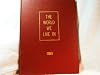
Raccolta di articoli comparsi su Epoca nel 1956. A cura delle redazioni di Life, Epoca e Lincoln Barnett, pagine riccamente illustrate, alcune pieghevoli per poter ospitare le pregevoli illustrazioni, panoramiche e di grande formato.
Jan 15, 2021 (Edited)Italian
Ratings
Members
- Recently Added By
Author Information

Awards and Honors
Distinctions
Series

Common Knowledge
- Canonical title
- The World We Live In
- Original title
- The world we live in
- Disambiguation notice
- This work refers to the original (1955) collection of Life magazine articles. Please keep the later three-volume editions and the abridged version "for younger readers" seperate.
Classifications
Statistics
- Members
- 228
- Popularity
- 142,529
- Reviews
- 4
- Rating
- (4.28)
- Languages
- 5 — Danish, English, French, German, Norwegian (Bokmål)
- Media
- Paper
- ISBNs
- 1
- ASINs
- 11