On This Page
Description
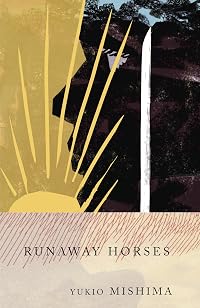
Yukio Mishima's Runaway Horses is the second novel in his masterful tetralogy, The Sea of Fertility. Again we encounter Shigekuni Honda, who narrates this epic tale of what he believes are the successive reincarnations of his childhood friend Kiyoaki Matsugae. In 1932, Shigeuki Honda has become a judge in Osaka. Convinced that a young rightist revolutionary, Isao, is the reincarnation of his friend Kiyoaki, Honda commits himself to saving the youth from an untimely death. Isao, driven show more to patriotic fanaticism by a father who instilled in him the ethos of the ancient samurai, organizes a violent plot against the new industrialists who he believes are usurping the Emperor's rightful power and threatening the very integrity of the nation. Runaway Horses is the chronicle of a conspiracy -- a novel about the roots and nature of Japanese fanaticism in the years that led to war. show lessTags
Recommendations


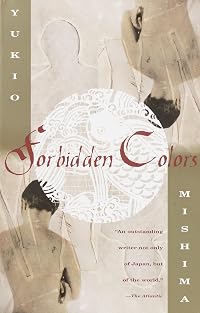




Member Recommendations

Member Reviews
I read this novel decades ago. Mishima committed seppuku on Nov. 25th, 1970, after failing to exhort military cadets to action. His ritual suicide offered a tragic and frightening parallel to his novels, especially this one, Runaway Horses. Mishima was a craftsman of language, but also briliantly connected reified objects to reincarnation. A peeled orange in the ocean electrified the spine today no less than years ago when I first read him. Today, older, wiser, I found the philosophy behind Mishima's work disturbing. I understand a different value system in Japan, but the glorificaltion of honor to the extent of ritual suicide cannot help but disturb anyone who reflects on it. Though I admire Mishima as a writer, I offer a lower rating show more than I would have earlier. A rigid code of honor accompanied by seppuku seems a dangerous zeitgeist which could destroy individuals, countries and our planet. Isao worries how aging could attentuate youthful purity. In his view, it is better to die young than face such attenuated purity. Let us reverse it and a better world for all of us. show less
The tale of a young band of brave friends who just want to kill everybody possible, most of all themselves, and of the variously twisted grown-ups who want to make various kinds of metaphoric love to their beautiful, nihilistic leader. Any of you who’ve read Mishima’s Spring Snow and were trying to decide whether to continue with later volumes in the series (do—this one’s better) will recall the beautiful nihilist Kiyoaki, who comes back in this one in some surprising ways, but whose death at the end of the last volume was clearly necessary—if he’d hung around after the end of his little tragic love story, he’d have sucked all the air out of the room in this one, which is concerned with stupider but more consequential, show more grimmer and more fascinating matters (teenage assassins, the relation between purity and decadence, whether believing without acting is really believing at all). Kiyo had to die so that Runaway Horses could live, the craft and conventionality of that book give way to the apocalyptic stormclouds of this guy.
We begin with Shigekuni Honda, Kiyo’s best friend from last time, now all grown up, career in law, Apollonian yet desiccated, never had a real spontaneous feeling in his life (or so he thinks himself—I think the idea that passion has to burn burn burn you up is a holdover from when we died at thirty of tb and suchlike). “'Once again he (Honda) found himself believing that, just as he had never contracted venereal disease, neither had he ever experienced emotional arousal.”
Honda meets-by-chance Isao Iinuma, the son of Kiyo’s old teacher, and just as Iinuma senior (now a prominent uyoku or “right-wing personality,” a kind of Japanese protoversion of Glenn Beck or somebody who runs something called the “Academy of Patriotism” and is entirely corrupted) loved Kiyo, Honda sees young kendo stud Isao bathing under a waterfall and not only loses whatever papery thing passes for his heart but also, based on Kiyo’s ravings on his deathbed two decades before and a distinctive pattern of moles shared by the boys, decides that Isao is Kiyo reborn, with his degenerate tendencies burned away.
So the boy with murder in his heart, his dad the boss thug, the lawyer groping toward true life, a backing cast each eager to prove themselves pure too in this purity-obsessed time. A powderkeg! It feels like it could explode and the spirit world could burst in on us at any moment, which is kind of a cheap feeling when it actually is gonna burst in, but a hard one to maintain when it isn't, which I take to be the case here.
Isao gives Honda his favourite book, about the Shinpuuren rebellion of the Meiji era (reproduced in full), as a testament to his ethic. (He loves himself more than the Emperor, if only he realized it.) Honda enters into a kind of gay ghost marriage with the boy, but only in his heart, because telling people things is not H.’s style. It’s perverse. It’s especially perverse how rational he stays even as he descends into quiet, reasonable madness. Let me pause to quote one of the cadets in the Shield Society founded by Mishima: “Mishima-sensei climbed down the ladder of reason to be with us.” (He committed seppuku after failing to inspire a rising similar to the one that is the focus of Isao and his friends here. He wishes he was an Isao. He hates whatever part of him is a Honda, whatever part a Sawa.)
How bout some more? “by the time the work is completed I will have to resign myself to the eternal impossibility of a gorgeous, heroic end. To give up becoming a hero or to abandon a masterpiece—this decision is drawing near and the prospect fills me with anxiety. […]
“I can hear the people say: "But you are dwelling in the past. Attempts to become the kind of active hero you speak of are futile after thirty at the latest and you are forty-five. Why not stop playing the old maid who hides behind thick make-up, give up life and action and concentrate on literature?"
“Yet I am still as strong and energetic as a young man, at forty-two, still just young enough to become a hero. Takamori Saigo (a nineteenth century fanatic who committed seppuku) died a hero's death at fifty. ... If I act now I am still in time. On the other hand there is still important work. ...
Just want to give you a sense of what kind of psychosexual aesthetic sense we’re dealing with here. There are much cool scenes of Isao wrapping the other young devotees around his finger, and of this crafty, ugly middle-ager, Sawa, forcing himself in with the dishonourable yet effective tactics of the older man. I was glad Sawa got his way. He’s like the balding art space owner who goes to all the hipster parties and hits on the young girls. You're older and smarter and by most measures much more interesting and impressive, and yet somehow they have all the power. And he doesn't even have some death of the ego thing to fall back on, because that's way too Buddhist and he chose to be an extreme Shinto nationalist and obsessed with his beautiful parabola. I thought he’d be the one to make murder happen if any, but I underestimated Isao’s will to power. It’s weird reading a fascist book by a fascist writer with this kind of deep, subtle sense of human sentiment. You always get tricked into thinking he’s not ultimately on Isao’s side.
Like, here are some moments of crystalline rightness: "'We'll do it! We'll do it!' (Serikawa) shouted, kicking about and scattering the shells that littered the floor. He gripped Isao's hand firmly and shook it. As usual, he was on the verge of tears. This young man affected Isao like a match girl who uses blatant emotional appeal to force a sale. It was a manifestation he had little need for at the moment."
"Dreams somehow turn one into a slovenly figure. A soiled collar, the back of the shirt wrinkled as though slept in, trousers baggy--something similar overtakes the garment of the spirit." Isao starts dreaming soon after, of course.
"She did not grumble. She did not wear a sad expression. Nor did she punish him by putting on a brave cheerfulness."
"Since (Toin's) hatred had its root in fear, it kept growing."
Mishima's "purity thing" has its roots in fear too, and its compelling power keeps growing. show less
We begin with Shigekuni Honda, Kiyo’s best friend from last time, now all grown up, career in law, Apollonian yet desiccated, never had a real spontaneous feeling in his life (or so he thinks himself—I think the idea that passion has to burn burn burn you up is a holdover from when we died at thirty of tb and suchlike). “'Once again he (Honda) found himself believing that, just as he had never contracted venereal disease, neither had he ever experienced emotional arousal.”
Honda meets-by-chance Isao Iinuma, the son of Kiyo’s old teacher, and just as Iinuma senior (now a prominent uyoku or “right-wing personality,” a kind of Japanese protoversion of Glenn Beck or somebody who runs something called the “Academy of Patriotism” and is entirely corrupted) loved Kiyo, Honda sees young kendo stud Isao bathing under a waterfall and not only loses whatever papery thing passes for his heart but also, based on Kiyo’s ravings on his deathbed two decades before and a distinctive pattern of moles shared by the boys, decides that Isao is Kiyo reborn, with his degenerate tendencies burned away.
So the boy with murder in his heart, his dad the boss thug, the lawyer groping toward true life, a backing cast each eager to prove themselves pure too in this purity-obsessed time. A powderkeg! It feels like it could explode and the spirit world could burst in on us at any moment, which is kind of a cheap feeling when it actually is gonna burst in, but a hard one to maintain when it isn't, which I take to be the case here.
Isao gives Honda his favourite book, about the Shinpuuren rebellion of the Meiji era (reproduced in full), as a testament to his ethic. (He loves himself more than the Emperor, if only he realized it.) Honda enters into a kind of gay ghost marriage with the boy, but only in his heart, because telling people things is not H.’s style. It’s perverse. It’s especially perverse how rational he stays even as he descends into quiet, reasonable madness. Let me pause to quote one of the cadets in the Shield Society founded by Mishima: “Mishima-sensei climbed down the ladder of reason to be with us.” (He committed seppuku after failing to inspire a rising similar to the one that is the focus of Isao and his friends here. He wishes he was an Isao. He hates whatever part of him is a Honda, whatever part a Sawa.)
How bout some more? “by the time the work is completed I will have to resign myself to the eternal impossibility of a gorgeous, heroic end. To give up becoming a hero or to abandon a masterpiece—this decision is drawing near and the prospect fills me with anxiety. […]
“I can hear the people say: "But you are dwelling in the past. Attempts to become the kind of active hero you speak of are futile after thirty at the latest and you are forty-five. Why not stop playing the old maid who hides behind thick make-up, give up life and action and concentrate on literature?"
“Yet I am still as strong and energetic as a young man, at forty-two, still just young enough to become a hero. Takamori Saigo (a nineteenth century fanatic who committed seppuku) died a hero's death at fifty. ... If I act now I am still in time. On the other hand there is still important work. ...
Just want to give you a sense of what kind of psychosexual aesthetic sense we’re dealing with here. There are much cool scenes of Isao wrapping the other young devotees around his finger, and of this crafty, ugly middle-ager, Sawa, forcing himself in with the dishonourable yet effective tactics of the older man. I was glad Sawa got his way. He’s like the balding art space owner who goes to all the hipster parties and hits on the young girls. You're older and smarter and by most measures much more interesting and impressive, and yet somehow they have all the power. And he doesn't even have some death of the ego thing to fall back on, because that's way too Buddhist and he chose to be an extreme Shinto nationalist and obsessed with his beautiful parabola. I thought he’d be the one to make murder happen if any, but I underestimated Isao’s will to power. It’s weird reading a fascist book by a fascist writer with this kind of deep, subtle sense of human sentiment. You always get tricked into thinking he’s not ultimately on Isao’s side.
Like, here are some moments of crystalline rightness: "'We'll do it! We'll do it!' (Serikawa) shouted, kicking about and scattering the shells that littered the floor. He gripped Isao's hand firmly and shook it. As usual, he was on the verge of tears. This young man affected Isao like a match girl who uses blatant emotional appeal to force a sale. It was a manifestation he had little need for at the moment."
"Dreams somehow turn one into a slovenly figure. A soiled collar, the back of the shirt wrinkled as though slept in, trousers baggy--something similar overtakes the garment of the spirit." Isao starts dreaming soon after, of course.
"She did not grumble. She did not wear a sad expression. Nor did she punish him by putting on a brave cheerfulness."
"Since (Toin's) hatred had its root in fear, it kept growing."
Mishima's "purity thing" has its roots in fear too, and its compelling power keeps growing. show less
After finishing Yukio Mishima's Spring Snow I knew that I was going to be continuing with the rest of his books in The Sea of Fertility tetralogy and would most likely pursue his other works as well. Runaway Horses is the second volume in the sequence and like Spring Snow was translated into English by Michael Gallagher who has once again done a great job of it. Runaway Horses captures the early years of the Shōwa period in Japan (1926-1989), particularly the rise of ultra-nationalism. The Westernization and modernization first begun during the Meiji era (1868-1912)--also important to the story of Runaway Horses--has dramatically increased and there are those who demand Japan return to itself and who are willing to resort to violence show more to make this happen.
In 1932, nearly twenty years after the death of his beloved friend Kiyoaki, Shigekuni Honda is now an established and respected judge at the Osaka Court of Appeals. While attending a kendo tournament he meets an intense young man by the name of Isao Iinuma, a promising and skilled athlete who also happens to be the son of Kiyoaki's former tutor Shigeyuki Iinuma. As the book progresses, Honda becomes more and more convinced that Isao is actually the reincarnation of his friend Kiyoaki. But Isao is definitely his own man. A student at his father's Academy of Patriotism, his ideals and fervor extend far beyond his indoctrination at school. Inspired by The League of the Divine Wind (a pamphlet recounting the Shimpūren Rebellion), Isao is determined to initiate the return of honor and purity to Japan and in doing so sacrifice his own life.
It is not absolutely necessary to have read Spring Snow before reading Runaway Horses although it will certainly enhance the experience. The books, just like Kiyoaki and Isao, are very different while somehow still retaining a sense of commonality at their core. Each book's style captures the personalities of their respective protagonists remarkably well; where Spring Snow is rather romantic, Runaway Horses is much more aggressive in its approach. The portrayal of Isao, a passionate young man who is also a violent extremist, is exceptional--terrifying and even inspiring despite his naïveté. I certainly don't necessarily agree with him or his methods, but the devotion to his ideals and his charismatic nature shines through and makes for quite an impact.
Runaway Horses was somewhat slow to start, but by the end of the book I was completely invested. The emotional intensity and its buildup is tremendous. Like Spring Snow the book feels ominous from the very beginning; something tragic is going to happen and there is nothing to do but watch how the story plays out. Even expecting this, Mishima is able to throw in some painful twists as peoples' motivations and actions are made clear. Runaway Horses stands pretty well on its own although certain scenes, particularly the dream sequences, serve mostly to lead into the next book, The Temple of Dawn. It is interesting to note that while reincarnation is important to the tetralogy overall, and to Honda in particular, it isn't central to Isao's story who is mostly unaware of it. I was unaccountably thrilled that the son of Kiyoaki's tutor Iinuma was the character chosen as his reincarnation--it just seems so perfectly appropriate to me. And I won't hesitate to admit that I am very much looking forward to reading The Temple of Dawn.
Experiments in Reading show less
In 1932, nearly twenty years after the death of his beloved friend Kiyoaki, Shigekuni Honda is now an established and respected judge at the Osaka Court of Appeals. While attending a kendo tournament he meets an intense young man by the name of Isao Iinuma, a promising and skilled athlete who also happens to be the son of Kiyoaki's former tutor Shigeyuki Iinuma. As the book progresses, Honda becomes more and more convinced that Isao is actually the reincarnation of his friend Kiyoaki. But Isao is definitely his own man. A student at his father's Academy of Patriotism, his ideals and fervor extend far beyond his indoctrination at school. Inspired by The League of the Divine Wind (a pamphlet recounting the Shimpūren Rebellion), Isao is determined to initiate the return of honor and purity to Japan and in doing so sacrifice his own life.
It is not absolutely necessary to have read Spring Snow before reading Runaway Horses although it will certainly enhance the experience. The books, just like Kiyoaki and Isao, are very different while somehow still retaining a sense of commonality at their core. Each book's style captures the personalities of their respective protagonists remarkably well; where Spring Snow is rather romantic, Runaway Horses is much more aggressive in its approach. The portrayal of Isao, a passionate young man who is also a violent extremist, is exceptional--terrifying and even inspiring despite his naïveté. I certainly don't necessarily agree with him or his methods, but the devotion to his ideals and his charismatic nature shines through and makes for quite an impact.
Runaway Horses was somewhat slow to start, but by the end of the book I was completely invested. The emotional intensity and its buildup is tremendous. Like Spring Snow the book feels ominous from the very beginning; something tragic is going to happen and there is nothing to do but watch how the story plays out. Even expecting this, Mishima is able to throw in some painful twists as peoples' motivations and actions are made clear. Runaway Horses stands pretty well on its own although certain scenes, particularly the dream sequences, serve mostly to lead into the next book, The Temple of Dawn. It is interesting to note that while reincarnation is important to the tetralogy overall, and to Honda in particular, it isn't central to Isao's story who is mostly unaware of it. I was unaccountably thrilled that the son of Kiyoaki's tutor Iinuma was the character chosen as his reincarnation--it just seems so perfectly appropriate to me. And I won't hesitate to admit that I am very much looking forward to reading The Temple of Dawn.
Experiments in Reading show less
A creepy book for sure. Isao is just crazy to commit suicide in a blaze of glory, to purify the world somehow. It is so far from any mode of thought that I can find in myself... but this whole book just wallows in it. I trust that this is not an utter fabrication of Mishima, but reflective of some facet of Japanese culture. So the book is a way to learn a bit about Japan. But surely Japan is a part of the world, and this mode of thought is not exclusive to Japan. Actually, this book seems horribly relevant to the USA in 2020. There is definitely a current of violent loyalty to authoritarian purity in order to return to some past greatness. I still can't say that I understand this mode of thought, despite having wallowed in it for 400 show more pages. But maybe I have got a bit more familiarity. That's something. show less
Another beautifully written book, but depressing. Reading about ultra rightwing teenagers in 1930s Japan who are obsessed with their own brand of moral purity to the extent that they would commit suicide against a backdrop of current affairs that include Islamic fundamentalism, Russian imperialism, political nationalism in the UK, and the right to bear arms gone mad in the US was hard.
I think I know where David Mitchell got his reincarnation idea from for the Ghostwritten/number9dream/Cloud Atlas story arcs, though.
I think I know where David Mitchell got his reincarnation idea from for the Ghostwritten/number9dream/Cloud Atlas story arcs, though.
With Mishima's second installment in his Sea of Fertility tetralogy, we see the protagonist of Spring Snow reincarnated in the character of Isao, whose passion embodies political ideology rather than romantic love. Isao's passion in a way seems even more vehement. It is so strong that it alienates him from humanity, and we realize that his commitment to 'purity' must inevitably resolve itself in death. The tenor of Isao's character, especially when described by Honda, reaches that note of tragic beauty that permeates Spring Snow, but it does not do so effectively enough for the novel to reach the same overall grandeur as its predecessor. What is most remarkable about this work is how closely it mirrors Mishima's own actions a few years show more later, and the insight it may give into his own internal character. The deafening resonance of this books final pages is altogether equal to the tragic pallor of the first novel's end, and the end of the author's own mythos. show less
This is an intense, complex novel written by one of Japan's foremost modern writers as the second book in the Sea of Fertility tetralogy. Considered as the strongest book in the series, it is set in the early 1930s and deals with Japanese fanaticism in the years that led to war. The story revolves around a young patriot-fanatic, steeped in bushido (samurai code of conduct), who believes that Japan's integrity is being corrupted by a group of leading industrialists who have usurped the Emperor's power. His inspiration is driven by the story of the League of the Divine Wind, a group of samurai in the late 1900s who opposed the reforms and changes in the society including what they believed to be a dilution of the samurai code, brought show more about by Japan's opening up to the West.
Isao, the hero in this novel, believes that the only way to restore the Emperor to his rightful place and to purge the evil that has permeated society, is to follow the steps of the League -- eliminate the corrupt business leaders and the sacrificing of lives of pure instruments, young men as himself whose purity of purpose and single-minded devotion to the Emperor were without peer. Isao is characterized almost as divine in his utter simplicity of belief and determination to achieve perfection through seppuku. On the other hand, these, combined with his naiveté made for a dangerous and volatile mix.
This is my first Mishima, and i find his writing superb, masterly. The tetralogy is composed of different stories about the several reincarnations of one person, each time with a focus on a different theme. Each book, though, is stand-alone. The presence of certain personalities and subtle layers of interrelationships between people and between events provide the link to the different phases/stories, and give context to the overall story and character development. How Mishima adeptly interweaves all these is simply first-rate.
This novel immensely fascinated me because it mirrors Mishima's ideology and the events he instigated along the course of his adult life, highlighting in a coup attempt he led aimed at restoring the powers of the Emperor, which ended in his own long dreamed-of seppuku. It was, for him, the most fitting last act to a life devoted to mythifying himself. show less
Isao, the hero in this novel, believes that the only way to restore the Emperor to his rightful place and to purge the evil that has permeated society, is to follow the steps of the League -- eliminate the corrupt business leaders and the sacrificing of lives of pure instruments, young men as himself whose purity of purpose and single-minded devotion to the Emperor were without peer. Isao is characterized almost as divine in his utter simplicity of belief and determination to achieve perfection through seppuku. On the other hand, these, combined with his naiveté made for a dangerous and volatile mix.
This is my first Mishima, and i find his writing superb, masterly. The tetralogy is composed of different stories about the several reincarnations of one person, each time with a focus on a different theme. Each book, though, is stand-alone. The presence of certain personalities and subtle layers of interrelationships between people and between events provide the link to the different phases/stories, and give context to the overall story and character development. How Mishima adeptly interweaves all these is simply first-rate.
This novel immensely fascinated me because it mirrors Mishima's ideology and the events he instigated along the course of his adult life, highlighting in a coup attempt he led aimed at restoring the powers of the Emperor, which ended in his own long dreamed-of seppuku. It was, for him, the most fitting last act to a life devoted to mythifying himself. show less
Members
- Recently Added By
Published Reviews
"The text itself is marred. Mishima failed to make Isao a character interesting enough to hold our attention."
added by GYKM
"A modern masterpiece."
added by GYKM
"Mishima's diction is self-consciously intellectual; his prose is filled with words drawn from the whole history of the Japanese language used in an effort to enrich the texture of his diction" [...] "However the translation we are offered of the first two volumes is in quite pedestrian English."
added by GYKM
Lists

Japanese Literature
230 works; 40 members

Good Buddhist Novels
30 works; 4 members

Philip Ward's Lifetime Reading Plan
592 works; 22 members

sea of fertility tetralogy
4 works; 1 member

Favorite Books in Translation
320 works; 133 members

NTS Book Channel
316 works; 1 member
Author Information

276+ Works 27,258 Members
Yukio Mishima, the pseudonym for Hiraoka Kimitake, was born in Tokyo in 1925. His work covers many styles: poetry, essays, modern Kabuki ja Noh drama, and novels. Among his masterpieces are The Temple of the Golden Pavilion, and the four-volume novel Sea of Fertility, which outlines the Japanese experience in the 20th century. Each of the four show more volumes in this series has a distinct title--Spring Snow, Runaway Horses, The Temple of Dawn, and Five Signs of a God's Decay--and they were published over a six-year period, from 1965-1970. Mishima's plays include Tenth Day Chrysanthemum, and the Kabuki piece The Moon Like a Drawn Bow. Although Mishima was been nominated three times for the Nobel Prize for Literature, he never received it. Nevertheless, he is considered by many critics as one of the most important Japanese novelists of the 20th century. Yukio Mishima died by his own hand in 1970, committing seppuku (ritual disembowelment). (Bowker Author Biography) show less
Some Editions
Awards and Honors
Notable Lists
Series

Belongs to Publisher Series
Work Relationships
Is contained in
Has the adaptation
Common Knowledge
- Canonical title
- Runaway Horses
- Original title
- 奔馬; Honba
- Alternate titles
- Chevaux Echappes (French) (French)
- Original publication date
- 1969; 1973 (English: Gallagher) (English: Gallagher)
- People/Characters
- Shigekuni Honda; Isao Iinuma
- Important places
- Japan
- Important events
- May 15 Incident; Shōwa era; 1930s; 1932; 1933
- Related movies
- Mishima: A Life in Four Chapters (1985 | IMDb)
- Quotations
- Perfect purity is possible if you turn your life into a line of poetry written with a splash of blood.
The instant that the blade tore open his flesh, the bright disk of the sun soared up and exploded behind his eyelids. - Original language
- Japanese
Classifications
- Genres
- Fiction and Literature, General Fiction
- DDC/MDS
- 895.635 — Literature & rhetoric Literatures of other languages Literatures of East and Southeast Asia Japanese Japanese fiction 1945–2000
- LCC
- PL833 .I7 .H6613 — Language and Literature Languages and literatures of Eastern Asia, Africa, Oceania Languages of Eastern Asia, Africa, Oceania Japanese language and literature Japanese literature Individual authors and works
- BISAC
Statistics
- Members
- 1,476
- Popularity
- 15,872
- Reviews
- 20
- Rating
- (4.08)
- Languages
- 10 — Chinese, Dutch, English, French, German, Italian, Japanese, Russian, Spanish, Turkish
- Media
- Paper, Ebook
- ISBNs
- 35
- ASINs
- 14