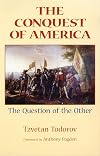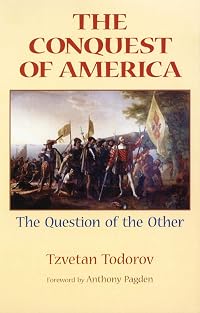
The Conquest of America: The Question of the Other
by Tzvetan Todorov
On This Page
Description
A fascinating study of cultural confrontation in the New World, with implications far beyond sixteenth-century America, The Conquest of America has become a classic in its field. It offers an original interpretation of the discovery of America by Columbus and of the subsequent conquest, colonization, and destruction of Mexico and the Caribbean by the Spaniards at the beginning of the modern era.Using sixteenth-century sources, the distinguished French writer and critic Tzvetan Todorov show more examines the beliefs and behavior of both the Spanish conquistadors and the Aztecs, adversaries in a clash of cultures that resulted in the neat extermination of Mesoamerica's Indian population.Absorbing, intelligent, and responsible in its call for a much-needed dialogue between different cultures, The Conquest of America evokes a drama that set the pattern for much of the history of Western colonialism. show lessTags
Recommendations

















Member Reviews
It is always difficult to know how to judge books that were published several decades ago. There is a lot wrong with this book, but it was revolutionary enough when it was published to have influenced the field ever since. So first the positive moves:
Todorov was one of the first people to portray Christopher Columbus as anything other than a genius and a hero. In The Conquest of America he comes off as a religious fanatic trying to raise money for a Crusade no one is interested, and as dead set on imposing his vision of reality on the world despite all empirical evidence (as for instance, when he lands on yet another island and insists that he has found the mainland even though the inhabitants keep saying it is an island. He makes his show more whole crew swear an oath that it is the mainland and that anyone who says otherwise will have their tongue cut off.) Todorov is also one of the first people to move beyond the idea that because Cortez had guns and horses he had to win, even though he was vastly outnumbered.
And the negatives:
In order to determine why Cortez won even though he was so badly outnumbered, Todorov turns to semiotics--the study of signs and symbols. He is especially interested in language. Basically, his argument is that because the Aztecs do not have a phonetic alphabet they are unable to improvise. Aztec communication is ritualized and directed at the world, Spanish communication is improvisational and directed at man. Thus Cortez is able to understand the Aztecs better than they are able to understand him enabling him to use their rituals and symbols against the Aztecs and ultimately triumph. The problem with this is that it is the same old Europeans are more rational/smarter/advanced than the Aztecs therefore they won argument wrapped up in new paper. It takes the Conquistadors post facto descriptions of the invasion at face value. show less
Todorov was one of the first people to portray Christopher Columbus as anything other than a genius and a hero. In The Conquest of America he comes off as a religious fanatic trying to raise money for a Crusade no one is interested, and as dead set on imposing his vision of reality on the world despite all empirical evidence (as for instance, when he lands on yet another island and insists that he has found the mainland even though the inhabitants keep saying it is an island. He makes his show more whole crew swear an oath that it is the mainland and that anyone who says otherwise will have their tongue cut off.) Todorov is also one of the first people to move beyond the idea that because Cortez had guns and horses he had to win, even though he was vastly outnumbered.
And the negatives:
In order to determine why Cortez won even though he was so badly outnumbered, Todorov turns to semiotics--the study of signs and symbols. He is especially interested in language. Basically, his argument is that because the Aztecs do not have a phonetic alphabet they are unable to improvise. Aztec communication is ritualized and directed at the world, Spanish communication is improvisational and directed at man. Thus Cortez is able to understand the Aztecs better than they are able to understand him enabling him to use their rituals and symbols against the Aztecs and ultimately triumph. The problem with this is that it is the same old Europeans are more rational/smarter/advanced than the Aztecs therefore they won argument wrapped up in new paper. It takes the Conquistadors post facto descriptions of the invasion at face value. show less
A truly wonderful book. A semiotician's view on the historical developments of a clash of two cultures. Some of the historical claims Todorov made were absolutely astounding, like the total victim numbers, which in his estimate is far greater than most believe. Also his use of the arguments by Bartolome de las Casas where the Christian monk who had lived with the natives convincingly justifies their sacrificial practices. This part especially I thought relevant for modern inter-cultural, inter-religious understanding.
I had to read this for a seminar on multiculturalism. It advances a very provocative theory about the Spanish colonials' contact with natives after the discovery of America, and the destruction of their native cultures.
E’ da ragazzo che penso che non debba mai parlare di scoperta dell’America, ma di conquista delle Americhe. E che sogno di scrivere un libro di quelli con la storia con i se; se oggi si parlasse di scoperta dell’Europa da parte degli americani, come sarebbe il mondo? La storia è fatta di vinti e vincitori; e sono i secondi a scriverla; vedi la questione, a me molto cara, dell’Unità d’Italia che io leggo come una conquista militare da parte di una delle peggiori monarchie d’Italia. Ma non divaghiamo; il libro è estremamente interessante e tratta, con dovizia da storico, pur essendo l’autore un filosofo bulgaro, dei primi secoli di insediamenti europei in America. Bellissima ed originale l’intestazione dei capitoli: show more scoprire, dedicato a Colombo; conquistare, dedicato a Cortes; amare, ispirato alle riflessioni di Los Cases; e conoscere, utilizzando gli scritti di Duran. Una scansione delle tappe dell’annessione di un territorio, o anzi di un continente, e dello sterminio di interi popoli. Sicuramente il più grande genocidio della storia. Il libro è profondo e richiede, per essere compreso fino in fondo, una conoscenza di base dei fatti, di cui sono privo. Ma, comunque, è estremamente interessante. show less
Apr 18, 2019Italian
Il libro è suddiviso in quattro parti. Nella prima, Scoprire, Todorov analizza il comportamento di Cristoforo Colombo di fronte agli abitanti delle prime isole scoperte nel Mar dei Caraibi. È il momento di una comprensione ingenua, nel quale un Colombo ermeneuta interpreta i segni provenienti dalla natura per i propri fini e dà nomi a luoghi e popolazioni indigene per appropriarsene.
Nella seconda parte, Conquistare, l'autore analizza il livello della conoscenza dell'altro a cui giungono i due comandanti contrapposti: Hernán Cortés in campo spagnolo e l'imperatore Montezuma degli Aztechi. Mentre Cortés giungerà ad un alto livello di comprensione dei rituali e delle regole sociali azteche, Montezuma finirà col non agire show more nell'incertezza sulla cosa giusta da fare. In questa parte del libro, l'autore confronta due sistemi culturali, quello europeo, di comunicazione tra gli uomini, e quello azteco, di comunicazione con il mondo e con il divino - una comunicazione rituale che si basa sulla tradizione e che lascia spiazzate le popolazioni indigene di fronte alla novità rappresentata dalla conquista.
Nella terza parte, Amare, Todorov confronta la comprensione della cultura del Nuovo Mondo cui giungono gli europei. I principali personaggi a confronto in questa sezione sono Hernán Cortés e Bartolomé de Las Casas. Sebbene il primo giunga ad una conoscenza superiore della cultura indiana, la utilizza per distruggere le società amerindie. Las Casas invece agisce per proteggere le popolazioni indigene e, verso la fine della sua vita, giunge a rinnegare l'essenza stessa dell'evangelizzazione cristiana.
La quarta parte, Conoscere, è invece dedicata ai due principali studiosi, Diego Durán e Bernardino de Sahagún, che permetteranno la conservazione della conoscenza della cultura indigena. Entrambi monaci, il primo domenicano, il secondo francescano, imparano la lingua indigena, il nahuatl, e nelle loro opere riportano la versione degli indigeni sulle ultime vicende storiche. Nonostante il loro punto di vista non possa essere assente, riescono a fornire le versioni più fedeli del pensiero indigeno ed a permetterne la conservazione della cultura. show less
Nella seconda parte, Conquistare, l'autore analizza il livello della conoscenza dell'altro a cui giungono i due comandanti contrapposti: Hernán Cortés in campo spagnolo e l'imperatore Montezuma degli Aztechi. Mentre Cortés giungerà ad un alto livello di comprensione dei rituali e delle regole sociali azteche, Montezuma finirà col non agire show more nell'incertezza sulla cosa giusta da fare. In questa parte del libro, l'autore confronta due sistemi culturali, quello europeo, di comunicazione tra gli uomini, e quello azteco, di comunicazione con il mondo e con il divino - una comunicazione rituale che si basa sulla tradizione e che lascia spiazzate le popolazioni indigene di fronte alla novità rappresentata dalla conquista.
Nella terza parte, Amare, Todorov confronta la comprensione della cultura del Nuovo Mondo cui giungono gli europei. I principali personaggi a confronto in questa sezione sono Hernán Cortés e Bartolomé de Las Casas. Sebbene il primo giunga ad una conoscenza superiore della cultura indiana, la utilizza per distruggere le società amerindie. Las Casas invece agisce per proteggere le popolazioni indigene e, verso la fine della sua vita, giunge a rinnegare l'essenza stessa dell'evangelizzazione cristiana.
La quarta parte, Conoscere, è invece dedicata ai due principali studiosi, Diego Durán e Bernardino de Sahagún, che permetteranno la conservazione della conoscenza della cultura indigena. Entrambi monaci, il primo domenicano, il secondo francescano, imparano la lingua indigena, il nahuatl, e nelle loro opere riportano la versione degli indigeni sulle ultime vicende storiche. Nonostante il loro punto di vista non possa essere assente, riescono a fornire le versioni più fedeli del pensiero indigeno ed a permetterne la conservazione della cultura. show less
Mar 20, 2020Italian
Trata-se de um livro magnífico. Todas as escolas de ensino médio deveriam ter ao menos um exemplar na biblioteca.
Jul 28, 2007Portuguese
2
el encuentro entre la cultura prehispanica y la europea
Oct 6, 2022Spanish
Members
- Recently Added By
Lists

Books Read in 2015
3,299 works; 126 members

Blue Pyramid 1,276 Best Books of All Time
1,248 works; 32 members
Author Information

Tzvetan Todorov was born in Sofia, Bulgaria on March 1, 1939. He did his undergraduate studies at the University of Sofia and then moved to France to pursue postgraduate work. He completed his doctorate at the School for Advanced Studies in the Social Sciences in 1966 and he began teaching at the National Center for Scientific Research in 1968. In show more 1983, he helped found the Center for Arts and Language Research, involving scholars from both institutions. He was a literary theorist and historian. He wrote numerous books including The Fantastic: A Structural Approach to a Literary Genre, The Conquest of America: The Question of the Other, On Human Diversity, Facing the Extreme: Moral Life in the Concentration Camps, A French Tragedy: Scenes of Civil War Summer 1944, The New World Disorder: Reflections of a European, and Fear of the Barbarians: Beyond the Clash of Civilizations. He died of multiple system atrophy, a progressive brain disorder, on February 7, 2017 at the age of 77. (Bowker Author Biography) show less
Some Editions
Series
Belongs to Publisher Series
Common Knowledge
- Canonical title*
- La conquête de l'Amérique. La question de l'Autre
- Original title
- La conquête de l'Amérique. La question de l'Autre
- Original publication date
- 1982; 1984 (English translation) (English translation); 1987 (Spanish) (Spanish)
- People/Characters
- Christopher Columbus; Hernán Cortés; Cuauhtemoc; Bernal Diaz del Castillo; Diego Durán; Bartolomé de Las Casas (show all 11); Moctezuma II; Bernardino de Sahagún; Ginés de Sepúlveda; La Malinche; Albar Nuñez Cabeza de Vaca
- Important places
- USA; Mexico City, Mexico; Spain; Yucatán, México
- Important events
- Conquest of Mexico
- Epigraph
- The captain Alonso López de Avila, brother-in-law of the _adelantado_ Montejo, captured, during the war in Bacalán, a young Indian woman of lovely and gracious appearance. She had promised her husband, fearful lest they sho... (show all)uld kill him in the war, not to have relations with any other man but him, and so no persuasion was sufficient to prevent her from taking her own life to avoid being defiled by another man; and because of this they had her thrown to the dogs.
Diego de Landa, _Relación de las cosas de Yucatán_, 32 - Dedication
- I dedicate this book to the memory of a Mayan woman devoured by dogs.
- Quotations
- And if, at this moment, I am 'drawing the moral' of my history, it is with no thought of yielding up and 'fixing' its meaning - a narrative is not reducible to a maxim - but because I find it more honest to formulate some of ... (show all)the impressions it makes upon me, since I too am one of its readers.
*Some information comes from Common Knowledge in other languages. Click "Edit" for more information.
Classifications
Statistics
- Members
- 742
- Popularity
- 38,201
- Reviews
- 7
- Rating
- (3.90)
- Languages
- 10 — English, Estonian, French, German, Italian, Malay, Norwegian (Bokmål), Polish, Portuguese, Spanish
- Media
- Paper, Ebook
- ISBNs
- 33
- ASINs
- 6