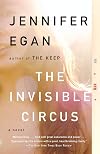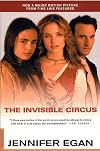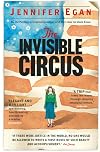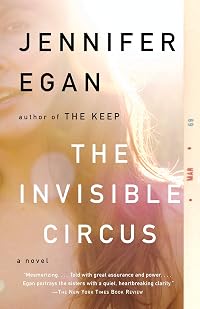
The Invisible Circus
by Jennifer Egan
On This Page
Description
In Jennifer Egan's highly acclaimed first novel, the political drama and familial tensions of the 1960s form a backdrop for the world of eighteen-year-old Phoebe O'Connor. Phoebe is obsessed with the memory and death of her sister Faith, a beautiful idealistic hippie who died in Italy in 1970. In order to find out the truth about Faith's life and death, Phoebe retraces her steps from San Francisco across Europe-a quest that yields both complex and disturbing revelations about family, love, show more and Faith's lost generation. show lessTags
Recommendations



Member Recommendations
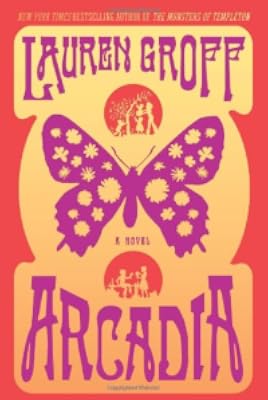
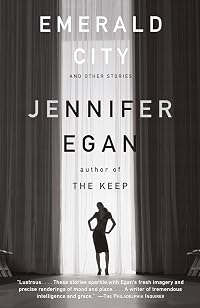
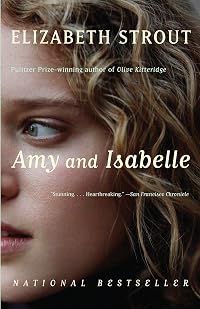
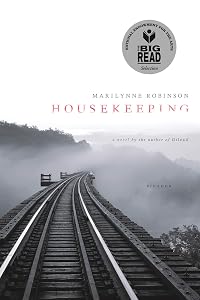
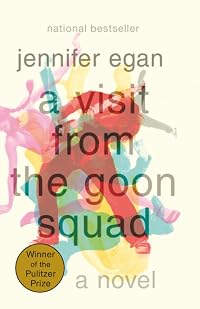
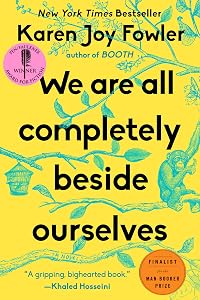
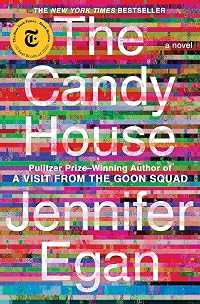
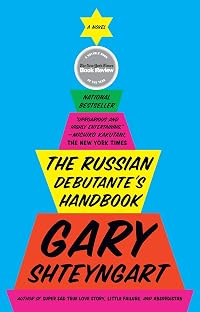
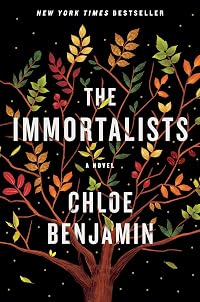
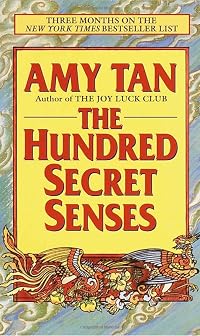
thelittlematchgirl both books tell the story of a young woman left behind by the death of an activist family member.
Member Reviews
I fought this book for a while. I'm not sure why. My goal was to reject it. A first novel--I'm too good for that, I thought. The 60s! I lived through that--there's nothing left to say about it. In the end, I lost the fight.
Phoebe starts off stuck in a familiar place, thinking she's the only one who's ever been there and simultaneously thinking she's never been anywhere. It's the kind of angst which has no solution inside of its self-definition. She goes looking in the totally wrong direction for relief--thinking there was somewhere outside of herself she needed to get to. What she finds is both unpredictable and inevitable. There! I didn't spoil anything!
Unlike many novels, films, tv shows, the psychology of the characters never seemed show more false, or only put there to make the story work. I believed everyone and everything. The tricks I expected to find, the places where I could point my finger and say, "nice plot device," freeing me from the spell, were absent. I was forced to go along with Phoebe on her quest, even as the other characters tried to stop her. We all failed. Like Phoebe, we are survivors so we had to fail and then we had to figure out what to do with our failure. Ms. Egan took the risks and didn't fail. show less
Phoebe starts off stuck in a familiar place, thinking she's the only one who's ever been there and simultaneously thinking she's never been anywhere. It's the kind of angst which has no solution inside of its self-definition. She goes looking in the totally wrong direction for relief--thinking there was somewhere outside of herself she needed to get to. What she finds is both unpredictable and inevitable. There! I didn't spoil anything!
Unlike many novels, films, tv shows, the psychology of the characters never seemed show more false, or only put there to make the story work. I believed everyone and everything. The tricks I expected to find, the places where I could point my finger and say, "nice plot device," freeing me from the spell, were absent. I was forced to go along with Phoebe on her quest, even as the other characters tried to stop her. We all failed. Like Phoebe, we are survivors so we had to fail and then we had to figure out what to do with our failure. Ms. Egan took the risks and didn't fail. show less
Egan is always on my "must read" list, so I went back to her first novel, not expecting much. If only all first novels were so good! Egan has a special talent for describing & defining & illustrating close relationships that are off-kilter, permanently or temporarily. Her characters' actions & emotions are coherent unto themselves. You think you might know & understand them. Dialogue spot on. Situations interesting. Filled with good stuff, not just overlong location descriptions. Wish I wrote that!
Think The Lovely Bones, but from the perspective of a living, and seriously disturbed, bratty youngest child. Jennifer Egan's novel might have been written first, but I know which I prefer.
Phoebe O'Connor is eighteen in late 1970's San Francisco, living with her widowed mother and trying to deal with the death of her idolised older sister, Faith. After learning a few home truths, Phoebe sets off on a lone trip to Europe, tracing Faith's last steps and seeking either ghosts or answers. In Germany, she runs into her sister's old boyfriend, nicknamed 'Wolf', who agrees to join Phoebe's pilgrimage to the Italian cliffs where Faith fell to her death. The two fall into a depraved physical relationship, shagging constantly for a good quarter show more of the book I could have lived without, before Wolf decides to tell Phoebe more uncomfortable revelations about her sister.
Phoebe is desperately unlikeable from the start, selfish and immature, but I found the first, San Francisco-based part of the story still quite easy and interesting to read. Then Phoebe throws a tantrum because her mother tells her that (a) her father, who was obsessed with Faith, was actually a terrible amateur artist, and (b) she's fallen in love with her boss and finally moving on with her life, putting the family home on the market, and the whole novel started sliding down hill from there. There's a trite, 'finding religion' passage, a 'taking acid' stream of consciousness chapter, wall to wall introspection, and then Wolf, who is obviously obsessed with the youthful mirror of the late love of his life. I telegraphed his 'confession' very early on, but all the blather about Faith's involvement in terrorism even managed to dampen that climax.
So, watch the film with Cameron Diaz for a potted version of this miserable tale, but otherwise I recommend reading The Lovely Bones or Tales of the City. show less
Phoebe O'Connor is eighteen in late 1970's San Francisco, living with her widowed mother and trying to deal with the death of her idolised older sister, Faith. After learning a few home truths, Phoebe sets off on a lone trip to Europe, tracing Faith's last steps and seeking either ghosts or answers. In Germany, she runs into her sister's old boyfriend, nicknamed 'Wolf', who agrees to join Phoebe's pilgrimage to the Italian cliffs where Faith fell to her death. The two fall into a depraved physical relationship, shagging constantly for a good quarter show more of the book I could have lived without, before Wolf decides to tell Phoebe more uncomfortable revelations about her sister.
Phoebe is desperately unlikeable from the start, selfish and immature, but I found the first, San Francisco-based part of the story still quite easy and interesting to read. Then Phoebe throws a tantrum because her mother tells her that (a) her father, who was obsessed with Faith, was actually a terrible amateur artist, and (b) she's fallen in love with her boss and finally moving on with her life, putting the family home on the market, and the whole novel started sliding down hill from there. There's a trite, 'finding religion' passage, a 'taking acid' stream of consciousness chapter, wall to wall introspection, and then Wolf, who is obviously obsessed with the youthful mirror of the late love of his life. I telegraphed his 'confession' very early on, but all the blather about Faith's involvement in terrorism even managed to dampen that climax.
So, watch the film with Cameron Diaz for a potted version of this miserable tale, but otherwise I recommend reading The Lovely Bones or Tales of the City. show less
This is Jennifer Egan’s first novel, and from what I could gather, her suceeding works were somewhat bolder and more unconvential in their treatment of the novel form than this one, which is basically a straightforward realistic narrative about a girl growing up and stepping out of the shadow of her older sister who had been determining all her previous life.
The Invisible Circus has “first novel” written all over it: While it is very cleverly constructed, there is a certain awkwardness in the way it shows off its themes, makes its motifs and imagery rather too obvious and blatant; it is trying a bit too hard to impress its readers, putting one in mind of an over-eager puppy. But then, just as with cute puppies, we tend to be show more lenient towards first novels and look on their good sides first, of which The Invisible Circus indeed has many, by far outweighing the few small niggles.
The novel’s first part takes place at home in San Francisco and is centred around the memories Phoebe, the novel’s protagonist, retains of her father and the way he always favoured her elder sister Faith and ends with her mother destroying the image of him Phoebe always had held; in the second part Phoebe is travelling through Europe following the traces of Faith and it ends with Phoebe throwing her sister’s picture and postcards into the Seine; finally, the third part (taking up about half of the novel) is about Phoebe almost literally becoming her sister and ends with her letting go of Faith after learning the truth about her and, in a way, finding herself. The novel’s latter half falls somewhat apart, at least in contrast to the tightly structured first one, and I think I stumbled across several editorial oversights in that part, too (and they must have been quite glaring if I noticed them), unless there is some problem with the e-book missing parts which I suppose is also possible.
The Invisible Circus captures the mood and atmosphere of the late seventies and their sixties-nostalgia perfectly (one nice touch is how Phoebe is so wrapt up in her pining for the Sixties past that she completely misses the exciting things happening in her present – there is only a single, very brief mention of a punk during her stay in London and she barely even notices him). Egan also paints a very vivid picture of both the heady enthusiasm and the utter cluelessness of youth, of what it feels like to pass the threshold into adulthood, both the joy and pain of it. I think The Invisible Circus works even better as a coming-of-age story than as period portrait, Jennifer Egan’s depiction of Phoebe’s growing-pangs so keen and intense at times that it got under my skin and made me feel outright uncomfortable.
Despite some minor flaws, I liked The Invisible Circus very much. In fact, now that I am writing this, I cannot help but notice that those flaws I mentioned earlier, classical first novel flaws, are also a sign of a novelist growing into her craft, growing up as a novelist – in fact, there does seem to be a very marked analogy between the novel and its protagonist, both struggling to stand on their own feet, to find their own voice (which makes me wonder whether there might be some writing idol whose overwhelming influence The Invisible Circus tries to escape?). So maybe the flaws are not flaws at all, but a kind of metafictional mimesis, form imitating subject matter. In either case, this is as a very impressive debut, and Jennifer Egan another author I will have to read more of. show less
The Invisible Circus has “first novel” written all over it: While it is very cleverly constructed, there is a certain awkwardness in the way it shows off its themes, makes its motifs and imagery rather too obvious and blatant; it is trying a bit too hard to impress its readers, putting one in mind of an over-eager puppy. But then, just as with cute puppies, we tend to be show more lenient towards first novels and look on their good sides first, of which The Invisible Circus indeed has many, by far outweighing the few small niggles.
The novel’s first part takes place at home in San Francisco and is centred around the memories Phoebe, the novel’s protagonist, retains of her father and the way he always favoured her elder sister Faith and ends with her mother destroying the image of him Phoebe always had held; in the second part Phoebe is travelling through Europe following the traces of Faith and it ends with Phoebe throwing her sister’s picture and postcards into the Seine; finally, the third part (taking up about half of the novel) is about Phoebe almost literally becoming her sister and ends with her letting go of Faith after learning the truth about her and, in a way, finding herself. The novel’s latter half falls somewhat apart, at least in contrast to the tightly structured first one, and I think I stumbled across several editorial oversights in that part, too (and they must have been quite glaring if I noticed them), unless there is some problem with the e-book missing parts which I suppose is also possible.
The Invisible Circus captures the mood and atmosphere of the late seventies and their sixties-nostalgia perfectly (one nice touch is how Phoebe is so wrapt up in her pining for the Sixties past that she completely misses the exciting things happening in her present – there is only a single, very brief mention of a punk during her stay in London and she barely even notices him). Egan also paints a very vivid picture of both the heady enthusiasm and the utter cluelessness of youth, of what it feels like to pass the threshold into adulthood, both the joy and pain of it. I think The Invisible Circus works even better as a coming-of-age story than as period portrait, Jennifer Egan’s depiction of Phoebe’s growing-pangs so keen and intense at times that it got under my skin and made me feel outright uncomfortable.
Despite some minor flaws, I liked The Invisible Circus very much. In fact, now that I am writing this, I cannot help but notice that those flaws I mentioned earlier, classical first novel flaws, are also a sign of a novelist growing into her craft, growing up as a novelist – in fact, there does seem to be a very marked analogy between the novel and its protagonist, both struggling to stand on their own feet, to find their own voice (which makes me wonder whether there might be some writing idol whose overwhelming influence The Invisible Circus tries to escape?). So maybe the flaws are not flaws at all, but a kind of metafictional mimesis, form imitating subject matter. In either case, this is as a very impressive debut, and Jennifer Egan another author I will have to read more of. show less
Nicely written, but not very compelling despite being a sad story that is mostly about loss and family history. Losing someone too early turns them into imaginary superhumans in the minds of those left behind. I did not feel for the protagonist, nor for anyone else, for that matter.
A chamada da quarta capa o livro me pareceu interessante e me levou a comprar. Uma decepção; descobri um romance que deveria ser classificado como juvenil desses para garotas adolescentes. Explora as relações entre a mãe suas filhas e entre as duas irmãs, enquanto as três disputam a atenção do pai. Quando o pai morre a uma filha se suicida o livro passa a ser a "saga" de caçula para descobrir a verdade sobre sua irmã morta. O que começou como um romance água com açúcar ganha ares de literatura engajada e psicológica. Não recomendo. Só terminei pela curiosidade sobre o final altamente elogiado nos clips da quarta capa. Não vou estragar a surpresa de quem mesmo sabendo ruim se dispor à leitura. O livro é monótono mas show more como romance de estreia da autora valeu as duas estrelas, se fosse um autor mais experiente daria no máximo meia estrela. show less
A wonderful novel detailing one woman's search for the truth behind her sister's suicide. In the process she grows up and faces some uncomfortable truths about her family's past. On her journey through Europe, retracing her sisters steps, she comes to terms with the fact that "truth" is not always a "fun" thing...
Members
- Recently Added By
Lists

Books Read in 2021
5,361 works; 114 members
Author Information

14+ Works 20,233 Members
Jennifer Egan was born in Chicago, Illinois on September 6, 1962. She attended the University of Pennsylvania and St. John's College, Cambridge. She is the author of The Invisible Circus, Look at Me, Emerald City and Other Stories, The Keep, and Manhattan Beach, which won the Andrew Carnegie Medal for Excellence in Fiction in 2018. Her title, A show more Visit from the Goon Squad, won both the 2011 Pulitzer Prize and the 2011 National Book Critics Circle Award for fiction. Her short stories have appeared in numerous publications including The New Yorker, Harpers, and Granta. She is a recipient of a Guggenheim Fellowship, a National Endowment for the Arts Fellowship, and a Dorothy and Lewis B. Cullman Fellowship. Her non-fiction articles appear frequently in the New York Times Magazine and have won a number of awards. (Bowker Author Biography) show less
Some Editions
Series
Belongs to Publisher Series
Serie Piper (3750)
Work Relationships
Is abridged in
Common Knowledge
- Canonical title
- The Invisible Circus
- Original title
- The Invisible Circus
- Original publication date
- 1995
- People/Characters
- Phoebe O'Connor; Faith O'Connor; Wolf; Barry 'Bear' O'Connor
- Epigraph
- ". . . for the present age, which prefers the picture to the thing pictured, the copy to the original, imagination to reality, or the appearance to the essence . . . illusion alone is sacred to this age, but truth profane . .... (show all) . so that the highest degree of illusion is to it the highest degree of sacredness." - Ludwig Fuerbach
"Exultation is the going/Of an inland soul to sea,/Past the houses - past the headlands-/
Into deep Eternity- . . . (Emily Dickinson) - Dedication
- For my mother, Kay Klimpton and my brother, Graham Kimpton.
- First words
- She's missed it, Pheobe knew by the silence.
- Last words
- (Click to show. Warning: May contain spoilers.)And Faith would be there, waiting for Phoebe to climb into her lap.
- Blurbers
- Conroy, Pat
Classifications
Statistics
- Members
- 828
- Popularity
- 33,317
- Reviews
- 22
- Rating
- (3.42)
- Languages
- 7 — Dutch, English, French, German, Italian, Portuguese, Swedish
- Media
- Paper, Audiobook, Ebook
- ISBNs
- 29
- ASINs
- 7