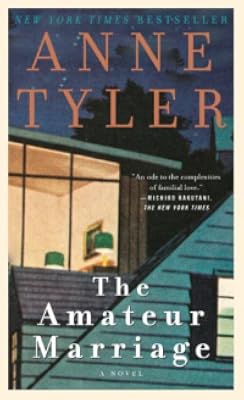
The Amateur Marriage
by Anne Tyler
On This Page
Description
Fiction. Literature. HTML:From the inimitable Anne Tyler, a rich and compelling novel about a mismatched marriage—and its consequences, spanning three generations.They seemed like the perfect couple—young, good-looking, made for each other. The moment Pauline, a stranger to the Polish Eastern Avenue neighborhood of Baltimore (though she lived only twenty minutes away), walked into his mother’s grocery store, Michael was smitten. And in the heat of World War II fervor, they are show more propelled into a hasty wedding. But they never should have married.
Pauline, impulsive, impractical, tumbles hit-or-miss through life; Michael, plodding, cautious, judgmental, proceeds deliberately. While other young marrieds, equally ignorant at the start, seemed to grow more seasoned, Pauline and Michael remain amateurs. In time their foolish quarrels take their toll. Even when they find themselves, almost thirty years later, loving, instant parents to a little grandson named Pagan, whom they rescue from Haight-Ashbury, they still cannot bridge their deep-rooted differences. Flighty Pauline clings to the notion that the rifts can always be patched. To the unyielding Michael, they become unbearable.
From the sound of the cash register in the old grocery to the counterculture jargon of the sixties, from the miniskirts to the multilayered apparel of later years, Anne Tyler captures the evocative nuances of everyday life during these decades with such telling precision that every page brings smiles of recognition. Throughout, as each of the competing voices bears witness, we are drawn ever more fully into the complex entanglements of family life in this wise, embracing, and deeply perceptive novel. show less
Tags
Recommendations

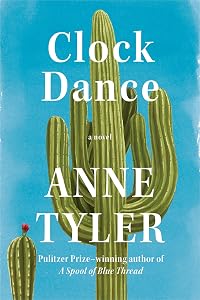
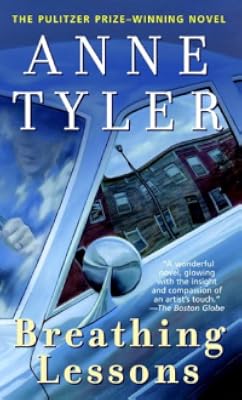

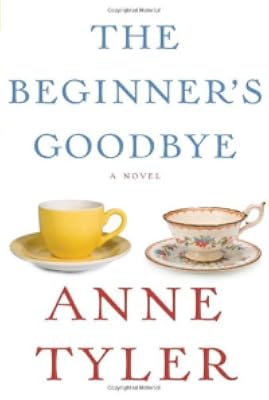

Member Recommendations

by anonymous user
Member Reviews
(via Goodreads)
It has been awhile since I wrote a book review. Writing reviews was my escape from course work and the slog of writing my dissertation. Well, dissertation complete, properly hooded, and trying to figure out what to do with the rest of my life (for now, I chose not to enter academia), I found creating a new life takes a tremendous amount of time, worry, fear, and instability. I often felt like I was fast approaching the edge of a cliff, and, no matter how hard I fought to turn and run the other direction, the edge kept coming closer and closer. I continued to read but with no stomach for pushing myself to use my voice to exercise it and make it stronger. Instead, I developed an uncertain voice that kept squeaking with show more frustration and potential failure. Then to my profound surprise, once I peeked over the edge of the cliff I discovered the drop was only a few, manageable feet. I believe I scrambled safely down the side of the unknown finding solid footing within a pleasant valley.
What has any of my story have to do with a review of "The Amateur Marriage"? Well, having never been married I feel my approach and subsequent scramble down the cliff was as close as I come to relating to Michael and Pauline - two WWII era kids who jump off a cliff into marriage and spend a great deal of time, worry, fear, and instability in an effort to come to a feeling of solid footing. And that search for reliability is the best I can do in terms of a fair and supportive review for this book.
I realize I've no idea what I am talking about when I talk about a good marriage never having been married. Yet, I feel I have been around enough people to get an idea of what a good, mediocre, or bad relationship looks like. The relationship of Michael and Pauline Anton is (was?) a bad relationship. I found myself getting incredibly mad at the characters for simply not learning to be friends, blinded by their enormous striving to "be married" within ideas of what a marriage should be (both individuals holding different ideas of marriage, ideas they never shared with each other, choosing to push each other to frustration and anger). And, do not get me started on the topic of the daughter, Lindy! The result was an aggravating story that brought me much too much discomfort for empathy.
And yet, the lack of empathy I felt, the overwhelming sense of frustration at the story, is perhaps the best compliment I offer to the author, Anne Tyler. Taking a step out of the story, I realize Tyler brought me into the story completely - solid footing, however discomforting, within the pleasant literary valley. I do not know if there is a better compliment to an author. Is there one? I lost myself in the frustrated lives of Michael and Pauline. That is good storytelling and why Tyler is a Pulitzer-Prize-winning author. show less
It has been awhile since I wrote a book review. Writing reviews was my escape from course work and the slog of writing my dissertation. Well, dissertation complete, properly hooded, and trying to figure out what to do with the rest of my life (for now, I chose not to enter academia), I found creating a new life takes a tremendous amount of time, worry, fear, and instability. I often felt like I was fast approaching the edge of a cliff, and, no matter how hard I fought to turn and run the other direction, the edge kept coming closer and closer. I continued to read but with no stomach for pushing myself to use my voice to exercise it and make it stronger. Instead, I developed an uncertain voice that kept squeaking with show more frustration and potential failure. Then to my profound surprise, once I peeked over the edge of the cliff I discovered the drop was only a few, manageable feet. I believe I scrambled safely down the side of the unknown finding solid footing within a pleasant valley.
What has any of my story have to do with a review of "The Amateur Marriage"? Well, having never been married I feel my approach and subsequent scramble down the cliff was as close as I come to relating to Michael and Pauline - two WWII era kids who jump off a cliff into marriage and spend a great deal of time, worry, fear, and instability in an effort to come to a feeling of solid footing. And that search for reliability is the best I can do in terms of a fair and supportive review for this book.
I realize I've no idea what I am talking about when I talk about a good marriage never having been married. Yet, I feel I have been around enough people to get an idea of what a good, mediocre, or bad relationship looks like. The relationship of Michael and Pauline Anton is (was?) a bad relationship. I found myself getting incredibly mad at the characters for simply not learning to be friends, blinded by their enormous striving to "be married" within ideas of what a marriage should be (both individuals holding different ideas of marriage, ideas they never shared with each other, choosing to push each other to frustration and anger). And, do not get me started on the topic of the daughter, Lindy! The result was an aggravating story that brought me much too much discomfort for empathy.
And yet, the lack of empathy I felt, the overwhelming sense of frustration at the story, is perhaps the best compliment I offer to the author, Anne Tyler. Taking a step out of the story, I realize Tyler brought me into the story completely - solid footing, however discomforting, within the pleasant literary valley. I do not know if there is a better compliment to an author. Is there one? I lost myself in the frustrated lives of Michael and Pauline. That is good storytelling and why Tyler is a Pulitzer-Prize-winning author. show less
In 2019 I attempted to read this and couldn't make it through the first chapter. This time I found it engrossing and perceptive. Needless to say, much has happened in the years between 2017 and 2023...in the world and in my life...
Therefore, many of the events and themes resonate with me now... especially the regrets and disappointment one feels as one ages:
"It was thinking that made her nights so long. All the bad old thoughts came crowding to the front of her mind. She had lived her life wrong; she'd made a big mess of it."
"He wished he had inhabited more of his life, used it better, filled it fuller."
It is definitely not a happy book, and would probably be better enjoyed by readers who have been married a long time and have ever show more wondered"What were the issues they'd quarreled about?" or had children tear their parent's hearts out with comments such as " 'just the five of us'; like that was something to be desired, and I'll never forget how claustrophobic that made me feel. Just the five of us in this wretched tangled knot, inward-turned, stunted, like a trapped fox chewing its own leg off."
So much for family togetherness!
But as Michael says of him and Pauline, "We did the best we could. We did our darnedest. We were just...unskilled; we never quite got the hand of things. It wasn't for lack of trying."
The family conflicts seem so familiar to a long-term marriage, and the ending is both poignant and heartbreaking. show less
Therefore, many of the events and themes resonate with me now... especially the regrets and disappointment one feels as one ages:
"It was thinking that made her nights so long. All the bad old thoughts came crowding to the front of her mind. She had lived her life wrong; she'd made a big mess of it."
"He wished he had inhabited more of his life, used it better, filled it fuller."
It is definitely not a happy book, and would probably be better enjoyed by readers who have been married a long time and have ever show more wondered"What were the issues they'd quarreled about?" or had children tear their parent's hearts out with comments such as " 'just the five of us'; like that was something to be desired, and I'll never forget how claustrophobic that made me feel. Just the five of us in this wretched tangled knot, inward-turned, stunted, like a trapped fox chewing its own leg off."
So much for family togetherness!
But as Michael says of him and Pauline, "We did the best we could. We did our darnedest. We were just...unskilled; we never quite got the hand of things. It wasn't for lack of trying."
The family conflicts seem so familiar to a long-term marriage, and the ending is both poignant and heartbreaking. show less
Superficially, I could detest some of the self-centered behaviors exemplified by these characters but Tyler’s magic lies exactly in the simplistic way that she can portray complex family dynamics, personalities, betrayals and attachments within a family, etc., in a way that leaves you heartbroken but also ...like you can understand the common threads of their behavior. It was hard knowing who to side with, who to root for... Pauline was temperamental and difficult but her husband also played a part and the children paid a price. Yet, in hindsight, they did the best they could considering...mistakes that beget regret that beget resentment but then maybe weren’t complete mistakes after all...hard to say.
This is certainly a well-written novel, covering the beginning, ending and beyond of a truly "amateur marriage" between two young people just as World War II is involving America, caught up in the insecurity and romance of a country at war. The two soon enough find themselves to be a mismatch, with Pauline's high-spirited impulsiveness at odds with Michael's rigid nature. After many years, the quarrels have damaged their relationship beyond their ability to patch. I had often wondered about the apparent durability of the many "quickie" marriages that took place during World War II, and it may be that the durability often stems from convention, not happiness. This is a fine portrait of two people trapped together for decades before they show more see the nature of their cage. But the book as a whole is dreary and joyless, matching the marriage of Michael and Pauline. The frequent jumps ahead in years are sometimes jarring, too. It is hard to feel a lot of sympathy for either Michael or Pauline. The wistful imagining of Michael near the end of his life about what might have happened had Pauline lived longer doesn't do much to alleviate the sadness that permeates the story. This one is worthy of reading pretty much for Anne Tyler's masterful prose, and her ability to portray human emotion, even when the emotions are sadness and regret. show less
Did you get married to the human that your hormones were clamoring for? (Guilty. Resolved by divorce.) And then found out you made a mistake? At least my mistake has been a good provider. Something that should be taught starting in elementary school: a checklist to see if your friends live by mutual mores; how to choose a partner to create new humans with. Ok. On to this book.
I had so many laugh out loud moments. I don't know where the author got her material, but this was high comedy. But it was also sad. It was a portrayal of characters that is all-too realistic, and ends up creating deeply flawed, unhappy human beings because people make babies when they get married, regardless of whether they're compatible or not.
Pauline is an show more airhead riding the streetcar days after Pearl harbor, when she jumps off and cuts her head. Her girlfriends breathlessly bundle her into a nearby Polish grocery for a band-aid, and the owner's son cleans and bandages her cut. That was apparently enough reason for them to become boyfriend-girlfriend. The rah-rah atmosphere of neighborhood residents (and the whole country) causes the boy named Michael to enlist, and Pauline to gush over his patriotic fervor. He never makes it to the front; he is resentful and disgusted with the uncomfortable conditions and demanding physical training of bootcamp. Pauline sends him letters how she is going dancing with the local soldiers and he gets so furious that he tries to strangle his bunkmate who had an unrelenting cough, with a pillow. The cough-er returns the favor by (accidentally) shooting Michael in the ass. Michael is sent home walking with a cane. Now they marry and make three children. And the misery begins. show less
I had so many laugh out loud moments. I don't know where the author got her material, but this was high comedy. But it was also sad. It was a portrayal of characters that is all-too realistic, and ends up creating deeply flawed, unhappy human beings because people make babies when they get married, regardless of whether they're compatible or not.
Pauline is an show more airhead riding the streetcar days after Pearl harbor, when she jumps off and cuts her head. Her girlfriends breathlessly bundle her into a nearby Polish grocery for a band-aid, and the owner's son cleans and bandages her cut. That was apparently enough reason for them to become boyfriend-girlfriend. The rah-rah atmosphere of neighborhood residents (and the whole country) causes the boy named Michael to enlist, and Pauline to gush over his patriotic fervor. He never makes it to the front; he is resentful and disgusted with the uncomfortable conditions and demanding physical training of bootcamp. Pauline sends him letters how she is going dancing with the local soldiers and he gets so furious that he tries to strangle his bunkmate who had an unrelenting cough, with a pillow. The cough-er returns the favor by (accidentally) shooting Michael in the ass. Michael is sent home walking with a cane. Now they marry and make three children. And the misery begins. show less
Anne Tyler is one of a hand-full of writers who can write about the same location and the same kind of characters and never feel cliched or irrelevant. All her characters are so whole and authentic that as I read I keep thinking, "I know this person" or "OMG, that is me".
That is Tyler, in general, now for this novel specifically. Pauline and Michael (the members of the aforesaid amateur marriage) are two very flawed opposites, entangled in a death-grip and unable to communicate on any meaningful level. They cannot be happy together, but they are afraid that they will not be able to be happy apart. At some point I decided that what binds them to one another is the convenience of having someone to blame for their own show more shortcomings.
Underneath some rank hostility, unbelievable indifference to the other's feelings, and insurmountable differences, there is a current of honest affection that persists to the last page of the book. They have had an amateur marriage because they enter into it without any idea of what they are really committing to and they never crack the secret code that might have made it a happy one. Still, I couldn't help asking myself, aren't all marriages amateur. Who knows what they will encounter, how they will deal with each other's quirks and needs, if they can juggle the responsibilities of aging parents and children and living in a house with intimates who sometimes feel like strangers. If you haven't experienced any of that, you can count yourself lucky indeed. show less
That is Tyler, in general, now for this novel specifically. Pauline and Michael (the members of the aforesaid amateur marriage) are two very flawed opposites, entangled in a death-grip and unable to communicate on any meaningful level. They cannot be happy together, but they are afraid that they will not be able to be happy apart. At some point I decided that what binds them to one another is the convenience of having someone to blame for their own show more shortcomings.
Underneath some rank hostility, unbelievable indifference to the other's feelings, and insurmountable differences, there is a current of honest affection that persists to the last page of the book. They have had an amateur marriage because they enter into it without any idea of what they are really committing to and they never crack the secret code that might have made it a happy one. Still, I couldn't help asking myself, aren't all marriages amateur. Who knows what they will encounter, how they will deal with each other's quirks and needs, if they can juggle the responsibilities of aging parents and children and living in a house with intimates who sometimes feel like strangers. If you haven't experienced any of that, you can count yourself lucky indeed. show less
Anne Tyler's The Amateur Marriage is not so much a novel as a really long argument. Michael is a good boy from a Polish neighborhood in Baltimore; Pauline is a harum-scarum, bright-cheeked girl who blows into Michael's family's grocery store at the outset of World War II. She appears with a bloodied brow, supported by a gaggle of girlfriends. Michael patches her up, and neither of them are ever the same. Well, not the same as they were before, but pretty much the same as everyone else. After the war, they live over the shop with Michael's mother till they've saved enough to move to the suburbs. There they remain with their three children, until the onset of the sixties, when their eldest daughter runs away to San Francisco. Their show more marriage survives for a while, finally crumbling in the seventies. If this all sounds a tad generic, Tyler's case isn't helped by the characteristics she's given the two spouses. Him: repressed, censorious, quiet. Her: voluble, emotional, romantic. Mars, meet Venus. What marks this couple, though, and what makes them come alive, is their bitter, unproductive, tooth-and-nail fighting. Tyler is exploring the way that ordinary-seeming, prosperous people can survive in emotional poverty for years on end. She gets just right the tricks Michael and Pauline play on themselves in order to stay together: "How many times," Pauline asks herself, "when she was weary of dealing with Michael, had she forced herself to recall the way he'd looked that first day? The slant of his fine cheekbones, the firming of his lips as he pressed the adhesive tape in place on her forehead." Only in antogonism do Michael and Pauline find a way to express themselves. show less
Members
- Recently Added By
Published Reviews
ThingScore 75
added by TimoMakinen
Lists

Favourite Women's Prize for Fiction, Orange & Bailey's Prize contenders
132 works; 52 members

Best 21st Century Books (So Far)
670 works; 86 members
Author Information

65+ Works 56,152 Members
Anne Tyler was born in Minneapolis, Minnesota on October 25, 1941. She graduated from Duke University at the age of 19 and completed graduate work in Russian studies at Columbia University. Before becoming a full-time author, she worked as a librarian and bibliographer. Her first novel, If Morning Ever Comes, was published in 1964. Her other works show more include Saint Maybe, Back When We Were Grownups, Digging to America, Noah's Compass, The Beginner's Goodbye, A Spool of Blue Thread, and Vinegar Girl. She has won several awards including the PEN Faulkner Award in 1983 for Dinner at the Homesick Restaurant, the 1985 National Book Critics Circle Award for The Accidental Tourist, and the 1988 Pulitzer Prize for Breathing Lessons. The Accidental Tourist was adapted into a 1988 movie starring William Hurt and Geena Davis. In 2018 her title, Clock Dance, made the bestsellers list. (Bowker Author Biography) Anne Tyler was born in Minneapolis, Minnesota, and grew up in Raleigh, North Carolina. "Back When We Were Grownups" is her 15th novel; her 11th, "Breathing Lessons", won the Pulitzer Prize in 1988. She is a member of the American Academy of Arts & Letters. She lives in Baltimore, Maryland. (Publisher Provided) show less
Some Editions
Awards and Honors
Series
Belongs to Publisher Series
Les ales esteses (176)
Otavan kirjasto (166)
Common Knowledge
- Canonical title
- The Amateur Marriage
- Original title
- The Amateur Marriage
- Original publication date
- 2004
- Important places
- Maryland, USA; Baltimore, Maryland, USA
- First words
- Anyone in the neighborhood could tell you how Michael and Pauline first met.
- Quotations
- He must have caught sight of Pauline from the street; you could tell by his artificial start of surprise. ‘Oh! Pauline! It’s you!’ He said. (He’d never have made an actor.)
- Last words
- (Click to show. Warning: May contain spoilers.)He began to walk faster, hurrying toward the bend
- Publisher's editor
- Jones, Judith
Classifications
Statistics
- Members
- 3,216
- Popularity
- 5,372
- Reviews
- 81
- Rating
- (3.59)
- Languages
- 12 — Catalan, Danish, Dutch, English, Finnish, French, German, Italian, Portuguese, Spanish, Swedish, Turkish
- Media
- Paper, Audiobook, Ebook
- ISBNs
- 69
- ASINs
- 16