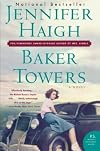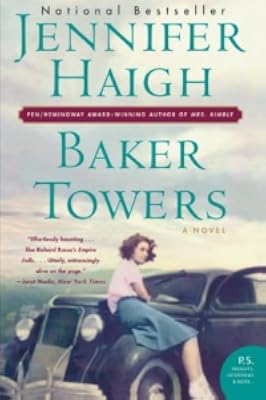
Baker Towers
by Jennifer Haigh
On This Page
Description
For the people of Bakerton, and the five children of the Novak family, the years after World War II will alter their lives in unforeseen and irrevocable ways. Dorothy is a fragile beauty hooked on romance. Brilliant Joyce, the family's keystone, is bitterly aware of the life she might have had elsewhere. Sandy, the youngest boy, sails through life on looks and charm. George, the veteran, is driven to escape the life he was born to through selfishness and hard work. And Lucy, the volatile show more baby, is a confused girl with a voracious need for love. Both a family saga and a love letter to a time and place long past, Baker Towers is a feat of imagination from a writer of enormous power and skill.. show less
Tags
Recommendations





Member Recommendations
Member Reviews
I absolutely LOVED Jennifer Haigh's novel, BAKER TOWERS (2005). I don't know how I missed out on it when it was a national bestseller seventeen years ago, but I'm so glad it finally found me. It's the story of the Novak family and how they and various other folks lived, loved and died in the coal mining town of Bakerton, Pennsylvania. Its depictions of small town life are so on the money that I often found myself relating and remembering. Here's a small sample -
"It was an exercise performed in small towns everywhere: the tracing back through generations, the connecting of in-laws and distant cousins, names familiar from church or school ... It could nor accurately be called gossip; there was nothing malicious in the talk. It was simply show more the female way of ordering the world, a universe where everyone was important and all activities worthy of notice."
Reading this, I remembered lying under the dining room table as a kid, reading comics with my brothers, while above us our grandma, mother and aunts discussed the latest births, deaths or marriages, and how all the principals were related or connected.
Or, about opening day of deer season, when, at the local high school, "All the boys, and a few girls, were absent." Yeah, here in my town too, where there's NO school on opening day. Or, when one of the Novak neighbors "sprinkled the tomatoes with sugar," I immediately thought of my dad, who ate his tomatoes that way, and had put me off tomatoes for nearly twenty years, until I tried them with salt, and found I loved them. Little stuff like this really rang true. But BAKER TOWERS, taken all together, is about bigger stuff too. I was especially drawn to the descriptions of the importance of religion in the lives of the miners' families, and the different parishes divided by nationality - Italian, Polish, Slovak, Ukrainian, and more.
The story covers several decades in the Novaks' lives, but I especially loved the part about the War years, with the oldest daughter moving to Washington, becoming part of a civilian army of workers for the war effort, living in cramped boarding house rooms and getting a first look at a wider world outside of Bakerton. I was reminded of a couple other home front novels - Marge Piercy's GONE TO SOLDIERS, a national bestseller from decades back, and another beautifully written novel called TILL MY BABY COMES HOME (2016), by Jean Ross Justice (the widow of former Poet Laureate, Donald Justice), published posthumously, and completely neglected.
Ms Haigh's novel has already been much reviewed and lavishly praised over the years, and rightfully so. BAKER TOWERS is a fascinating look at a town and it people, well researched, thoughtfully portrayed, and deeply moving. I didn't want it to end; it was that good. I cannot recommend this book highly enough. I'll say it again. I LOVED this book!
- Tim Bazzett, author of the memoir, BOOKLOVER show less
"It was an exercise performed in small towns everywhere: the tracing back through generations, the connecting of in-laws and distant cousins, names familiar from church or school ... It could nor accurately be called gossip; there was nothing malicious in the talk. It was simply show more the female way of ordering the world, a universe where everyone was important and all activities worthy of notice."
Reading this, I remembered lying under the dining room table as a kid, reading comics with my brothers, while above us our grandma, mother and aunts discussed the latest births, deaths or marriages, and how all the principals were related or connected.
Or, about opening day of deer season, when, at the local high school, "All the boys, and a few girls, were absent." Yeah, here in my town too, where there's NO school on opening day. Or, when one of the Novak neighbors "sprinkled the tomatoes with sugar," I immediately thought of my dad, who ate his tomatoes that way, and had put me off tomatoes for nearly twenty years, until I tried them with salt, and found I loved them. Little stuff like this really rang true. But BAKER TOWERS, taken all together, is about bigger stuff too. I was especially drawn to the descriptions of the importance of religion in the lives of the miners' families, and the different parishes divided by nationality - Italian, Polish, Slovak, Ukrainian, and more.
The story covers several decades in the Novaks' lives, but I especially loved the part about the War years, with the oldest daughter moving to Washington, becoming part of a civilian army of workers for the war effort, living in cramped boarding house rooms and getting a first look at a wider world outside of Bakerton. I was reminded of a couple other home front novels - Marge Piercy's GONE TO SOLDIERS, a national bestseller from decades back, and another beautifully written novel called TILL MY BABY COMES HOME (2016), by Jean Ross Justice (the widow of former Poet Laureate, Donald Justice), published posthumously, and completely neglected.
Ms Haigh's novel has already been much reviewed and lavishly praised over the years, and rightfully so. BAKER TOWERS is a fascinating look at a town and it people, well researched, thoughtfully portrayed, and deeply moving. I didn't want it to end; it was that good. I cannot recommend this book highly enough. I'll say it again. I LOVED this book!
- Tim Bazzett, author of the memoir, BOOKLOVER show less
Baker Towers is one of those books you "cozy up" with on a winter day and read it all the way through. Bakerton, PA, is a coal mining town made up of various cultures such as the Italians, English, Irish, Hungarians, and the collective known as the Slavish. The men ended up in the coal mines while most of the women found their way to the local dress factory. Life for most in Bakerton is pretty routine: marriage, children, the coal mines, or the dress factory. There were very few who broke the mold.
Haigh introduces us to life in Bakerton through the eyes of the Novak family. Stanley Novak is Polish and his wife, Rose, is Italian. They live in company housing on what is known as "Polish Hill." The older siblings are George and Dorothy show more soon after there is the serious and very rigid Joyce and the strikingly handsome blond, Sandy. The youngest and most "Italian" looking of the bunch is, Lucy. As we read how the Novak family grows and deals with hardships we see the same happen with Bakerton the town. Haigh does a remarkable job of drawing you into the Bakerton community.
Baker Towers is a beautiful novel about family and community. Haigh captivates the reader with the rise and fall of both. The long suffering of Joyce's character and her sheer determination to keep her family on solid ground while her own dreams suffer is remarkable. Sandy steals your heart in the first few pages. He is the elusive rebel that you long to appear but who surfaces when you least expect it. Haigh in this well paced novel details the lives of the Bakerton residents and families in such a way that you feel as if they are your neighbors.
I truly hated for Baker Towers to end. Haigh kept the reader connected to this community with her subtle details of each family and individuals. The details never overwhelmed but those interesting tidbits kept me turning pages. Of course, in classic Haigh fashion, Bakerton is a majority Catholic community. Haigh is a solid storyteller and she writes with such compassion and gentleness. Her character development is impeccable. Jennifer Haigh is rapidly becoming one of my favorite authors and it started with her 2011 novel, Faith.
Make sure you read my upcoming review of News From Heaven: The Bakerton Stories a collection of new short stories by Jennifer Haigh that are centered around the fictional town of Bakerton, PA.
Copy provided by the publisher. In no way does this influence my review. The opinions I have expressed are my own. show less
Haigh introduces us to life in Bakerton through the eyes of the Novak family. Stanley Novak is Polish and his wife, Rose, is Italian. They live in company housing on what is known as "Polish Hill." The older siblings are George and Dorothy show more soon after there is the serious and very rigid Joyce and the strikingly handsome blond, Sandy. The youngest and most "Italian" looking of the bunch is, Lucy. As we read how the Novak family grows and deals with hardships we see the same happen with Bakerton the town. Haigh does a remarkable job of drawing you into the Bakerton community.
Baker Towers is a beautiful novel about family and community. Haigh captivates the reader with the rise and fall of both. The long suffering of Joyce's character and her sheer determination to keep her family on solid ground while her own dreams suffer is remarkable. Sandy steals your heart in the first few pages. He is the elusive rebel that you long to appear but who surfaces when you least expect it. Haigh in this well paced novel details the lives of the Bakerton residents and families in such a way that you feel as if they are your neighbors.
I truly hated for Baker Towers to end. Haigh kept the reader connected to this community with her subtle details of each family and individuals. The details never overwhelmed but those interesting tidbits kept me turning pages. Of course, in classic Haigh fashion, Bakerton is a majority Catholic community. Haigh is a solid storyteller and she writes with such compassion and gentleness. Her character development is impeccable. Jennifer Haigh is rapidly becoming one of my favorite authors and it started with her 2011 novel, Faith.
Make sure you read my upcoming review of News From Heaven: The Bakerton Stories a collection of new short stories by Jennifer Haigh that are centered around the fictional town of Bakerton, PA.
Copy provided by the publisher. In no way does this influence my review. The opinions I have expressed are my own. show less
I was expecting Baker Towers to be about the experience of working in a coal mine, since it takes place in a mining town. But this is the forties when gender roles were more clearly defined than they are today and Jennifer Haigh opted to emphasize the experience of the women. I was left with a clear understanding of how to clean a miner's clothes, but not how to dig coal. In some ways this choice made the book unique, but it also revealed how life in a coal town was like life in countless other small towns.
The story is centered on the Novak family. The miners in Bakerton are mostly Italian and Polish immigrants. Stanley Novak is Polish and his wife, Rose, is Italian, so this family has both traditions in their heritage. Most of the show more story is about their children, second generation immigrants.
Stanley dies early on in the book leaving Rose to raise her five children. Of those five, the two boys, George and Sandy, leave town. George goes off to fight in the war and Sandy, who misses the fighting because he is younger, goes off to find a life more exciting than the one he had in Barkerton. Haigh tells us a little about George's life and next to nothing about Sandy's. The story is mostly about Dorothy, Joyce, and Lucy, who have very different personalities, intriguing relationships, and daily problems with which most readers can identify. Here's a section discussing Dorothy's limited opportunities:
She [Dorothy] sewed sleeves at the Bakerton Dress Company, a low brick building at the other end of town. Each morning Rose watched the neighborhood women tramp there like a civilian army. A few even wore trousers, their hair tied back with kerchiefs. What precisely they did inside the factory, Rose understood only vaguely. The noise was deafening, Dorothy said; the floor manager made her nervous, watching her every minute. After seven months she still hadn't made production. Rose worried, said nothing. For an unmarried woman, the factory was the only employer in town. If Dorothy were fired she'd be forced to leave, take the train to New York City and find work as a housemaid or cook. Several girls from the neighborhood had done this – quit school at fourteen to become live-in maids for wealthy Jews. The Jews owned stores and drove cars; they needed Polish-speaking maids to wash their many sets of dishes. A few Bakerton girls had even settled there, found city husbands; but for Dorothy this seemed unlikely. Her Polish was sketchy, thanks to Stanley's rules. And she was terrified of men. At church, in the street, she would not meet their eyes.
I also read Faith by Jennifer Haigh. I liked that novel a bit more than this one, because it expanded into a large issue I found interesting. But this is still a five star book. It's well written and presents an honest picture of the lives of young women in small town America.
Steve Lindahl – author of Motherless Soul and White Horse Regressions show less
The story is centered on the Novak family. The miners in Bakerton are mostly Italian and Polish immigrants. Stanley Novak is Polish and his wife, Rose, is Italian, so this family has both traditions in their heritage. Most of the show more story is about their children, second generation immigrants.
Stanley dies early on in the book leaving Rose to raise her five children. Of those five, the two boys, George and Sandy, leave town. George goes off to fight in the war and Sandy, who misses the fighting because he is younger, goes off to find a life more exciting than the one he had in Barkerton. Haigh tells us a little about George's life and next to nothing about Sandy's. The story is mostly about Dorothy, Joyce, and Lucy, who have very different personalities, intriguing relationships, and daily problems with which most readers can identify. Here's a section discussing Dorothy's limited opportunities:
She [Dorothy] sewed sleeves at the Bakerton Dress Company, a low brick building at the other end of town. Each morning Rose watched the neighborhood women tramp there like a civilian army. A few even wore trousers, their hair tied back with kerchiefs. What precisely they did inside the factory, Rose understood only vaguely. The noise was deafening, Dorothy said; the floor manager made her nervous, watching her every minute. After seven months she still hadn't made production. Rose worried, said nothing. For an unmarried woman, the factory was the only employer in town. If Dorothy were fired she'd be forced to leave, take the train to New York City and find work as a housemaid or cook. Several girls from the neighborhood had done this – quit school at fourteen to become live-in maids for wealthy Jews. The Jews owned stores and drove cars; they needed Polish-speaking maids to wash their many sets of dishes. A few Bakerton girls had even settled there, found city husbands; but for Dorothy this seemed unlikely. Her Polish was sketchy, thanks to Stanley's rules. And she was terrified of men. At church, in the street, she would not meet their eyes.
I also read Faith by Jennifer Haigh. I liked that novel a bit more than this one, because it expanded into a large issue I found interesting. But this is still a five star book. It's well written and presents an honest picture of the lives of young women in small town America.
Steve Lindahl – author of Motherless Soul and White Horse Regressions show less
the writing here is stellar. it might seem a little slow moving or slow paced, but i think it just reflects the life in a mining town, with little that changes or moves year to year. still, we get a lot from the family and the way they navigate staying or leaving, the expectations of the time, the neighborhood pockets (segregated by religion and ethnicity), and far more about how the women lived than we might usually see from this kind of story.
this is beautifully written and i will seek out more by this author.
"As a toddler, she'd been desperately attached to a doll she'd named after herself..."
this is beautifully written and i will seek out more by this author.
"As a toddler, she'd been desperately attached to a doll she'd named after herself..."
Audio book performed by Anna Fields.
3.5*** rounded up to 4****
Adapted from the book jacket: Bakerton is a company town built on coal, a town of church festivals and ethnic neighborhoods, hunters’ breakfasts and firemen’s parades. The looming black piles of mine dirt (are called) Baker Towers; they are local landmarks, clear evidence that the mines are booming. The mines were not named for Bakerton; Bakerton was named for the mines. This is an important distinction. It explains the order of things. Born and raised on Bakerton’s Polish Hill, the five Novak children come of age during wartime.
My reaction:
This is the kind of character-driven literary fiction that I love to read and discuss with my F2F book club. Haigh focuses on the show more Novak family to tell the story of America in the years following World War II. It’s a microcosm of American life, that encompasses many of the issues faced by the nation during the 1930s through 1970s.
The five Novaks are as different as night and day. The oldest, Georgie, serves in the Pacific during World War II, but after the war he moves away with his new wife, rarely returning home. Next is Dorothy, a pretty but insecure young woman who takes a job in Washington D.C., but falters. Joyce is the middle child, smart and driven, always helping out and taking charge of the household when her widowed mother is unable to cope. Sandy is the family charmer, relying on his good looks and smooth talk to get by in life; like his older brother, he leaves home and rarely returns. And finally, there is Lucy, who is showered with affection and seems unable to grow out of her role as the baby of the family.
Through the lens of this family the reader watches the changes in America as the town prospers in the post-war era, deals with changes in American manufacturing, and begins an inevitable decline. The residents face the changing expectations as women get a taste of “important” work during the war and chafe against restrictions when the men return. Haigh mentions the changes outside Bakerton – the death of FDR, the Eisenhower years, the assassination of President Kennedy, Neil Armstrong’s historic walk on the moon, etc – but the changes within the town have greater impact, from getting a phone or car, to a long strike for better conditions and wages at the mine.
I do not usually round up when awarding half-stars, but I will in this case because it’s a discussion-worthy book.
Anna Fields does a fine job performing the audio book. She has a good pace and enough skill as a voice artist to differentiate the many characters. show less
3.5*** rounded up to 4****
Adapted from the book jacket: Bakerton is a company town built on coal, a town of church festivals and ethnic neighborhoods, hunters’ breakfasts and firemen’s parades. The looming black piles of mine dirt (are called) Baker Towers; they are local landmarks, clear evidence that the mines are booming. The mines were not named for Bakerton; Bakerton was named for the mines. This is an important distinction. It explains the order of things. Born and raised on Bakerton’s Polish Hill, the five Novak children come of age during wartime.
My reaction:
This is the kind of character-driven literary fiction that I love to read and discuss with my F2F book club. Haigh focuses on the show more Novak family to tell the story of America in the years following World War II. It’s a microcosm of American life, that encompasses many of the issues faced by the nation during the 1930s through 1970s.
The five Novaks are as different as night and day. The oldest, Georgie, serves in the Pacific during World War II, but after the war he moves away with his new wife, rarely returning home. Next is Dorothy, a pretty but insecure young woman who takes a job in Washington D.C., but falters. Joyce is the middle child, smart and driven, always helping out and taking charge of the household when her widowed mother is unable to cope. Sandy is the family charmer, relying on his good looks and smooth talk to get by in life; like his older brother, he leaves home and rarely returns. And finally, there is Lucy, who is showered with affection and seems unable to grow out of her role as the baby of the family.
Through the lens of this family the reader watches the changes in America as the town prospers in the post-war era, deals with changes in American manufacturing, and begins an inevitable decline. The residents face the changing expectations as women get a taste of “important” work during the war and chafe against restrictions when the men return. Haigh mentions the changes outside Bakerton – the death of FDR, the Eisenhower years, the assassination of President Kennedy, Neil Armstrong’s historic walk on the moon, etc – but the changes within the town have greater impact, from getting a phone or car, to a long strike for better conditions and wages at the mine.
I do not usually round up when awarding half-stars, but I will in this case because it’s a discussion-worthy book.
Anna Fields does a fine job performing the audio book. She has a good pace and enough skill as a voice artist to differentiate the many characters. show less
This is a good book that becomes great; or maybe it was always great, and it just snuck up on me. I lingered over this novel, picking it up and now, since the chapters vary in length and POV. It was easy to dip in and out of the Novaks' lives, but Haigh's writing style and gentle characterizations kept me coming back.
Set in Bakerton, a coal-mining town in Western Pennsylvania, Haigh paints a picture of the Novak family, Polish-Italian immigrants who struggle to chart their own existence in a place where most people live and die in the mines. Beginning in the 1940s, with World War II looming in the background, the story travels about twenty years or so. This isn't a quiet novel, not exactly -- there's plenty of characters and plenty of show more life happening -- but the book doesn't race along with a single plot line. One hundred pages in, I wondered when the story would start; about 200 pages in, I worried about the story ending.
The story of the Novaks is familiar but that isn't a bad thing. Haigh shares with us an American narrative that has become mythologized; in her hands, I see myself, my family, my relatives, my neighbors in the Novak's story. My only complaint (but that's too strong a word since I'm not actually unhappy) was the shifting focus -- I would have rather the novel stayed with one of the Novak kids rather than shift focus -- but Haigh's writing kept me going on.
This is a novel that lingers with the reader. A week after finishing, I find myself still chewing over scenes or characters, and I've more than once wished there was a sequel of sorts so I could remain with the Novaks. If you want something meaty but not heavy or hard, consider this -- it is easy to get into and it's moving without soul-crushing. show less
Set in Bakerton, a coal-mining town in Western Pennsylvania, Haigh paints a picture of the Novak family, Polish-Italian immigrants who struggle to chart their own existence in a place where most people live and die in the mines. Beginning in the 1940s, with World War II looming in the background, the story travels about twenty years or so. This isn't a quiet novel, not exactly -- there's plenty of characters and plenty of show more life happening -- but the book doesn't race along with a single plot line. One hundred pages in, I wondered when the story would start; about 200 pages in, I worried about the story ending.
The story of the Novaks is familiar but that isn't a bad thing. Haigh shares with us an American narrative that has become mythologized; in her hands, I see myself, my family, my relatives, my neighbors in the Novak's story. My only complaint (but that's too strong a word since I'm not actually unhappy) was the shifting focus -- I would have rather the novel stayed with one of the Novak kids rather than shift focus -- but Haigh's writing kept me going on.
This is a novel that lingers with the reader. A week after finishing, I find myself still chewing over scenes or characters, and I've more than once wished there was a sequel of sorts so I could remain with the Novaks. If you want something meaty but not heavy or hard, consider this -- it is easy to get into and it's moving without soul-crushing. show less
In this book, the author does for southwestern Pa. coal country what Richard Russo did for upstate N.Y./ New England mill towns in his book Empire Falls.
Located in Bakerton, Pa. (aka West Carroll) during the 50's & 60's, the author does a very authentic job of capturing those small towns in that time period. It's an area I'm familiar with. The story of the Novak family could be one of many families in that place and time. Men go underground in the mine or off to war while the women are left to sustain themselves and their families. The family members struggle to adapt to changing economic realities as jobs disappear and education assumes greater importance.
There are a couple technical glitches. For example she sites a young man with a show more transistor radio in Washington, D.C. the week of the D-Day invasion in 1944. Transistors weren't developed until 1947 and weren't commercially available in radios until the mid 1950's. And there is mention of an eye procedure that starts out as radiation treatment in the 1950's (believable) which somehow flips to a laser treatment (not possible for that time period) in the story. But I attribute those glitches to a poor editor and give high marks to the author for giving us a great family saga.
I give it 3.5 stars. show less
Located in Bakerton, Pa. (aka West Carroll) during the 50's & 60's, the author does a very authentic job of capturing those small towns in that time period. It's an area I'm familiar with. The story of the Novak family could be one of many families in that place and time. Men go underground in the mine or off to war while the women are left to sustain themselves and their families. The family members struggle to adapt to changing economic realities as jobs disappear and education assumes greater importance.
There are a couple technical glitches. For example she sites a young man with a show more transistor radio in Washington, D.C. the week of the D-Day invasion in 1944. Transistors weren't developed until 1947 and weren't commercially available in radios until the mid 1950's. And there is mention of an eye procedure that starts out as radiation treatment in the 1950's (believable) which somehow flips to a laser treatment (not possible for that time period) in the story. But I attribute those glitches to a poor editor and give high marks to the author for giving us a great family saga.
I give it 3.5 stars. show less
Members
- Recently Added By
Lists

Best Books With Sisters
130 works; 30 members

Best family sagas
244 works; 34 members
Five star books
1,755 works; 108 members

Deena's Favorites--How Many have you read?
102 works; 3 members

Books About Girls
219 works; 17 members

Books Read in 2012
816 works; 31 members
Author Information

19+ Works 5,241 Members
Jennifer Haigh was born in Barnesboro, Pennsylvania. She attended Dickinson College in Carlisle, Pennsylvania and earned a Master of Fine Arts degree from the Iowa Writers' Workshop in 2002. Her novel, Mrs. Kimble, won the PEN/Hemingway Award for outstanding debut fiction in 2003. Her other works include Baker Towers, which won the 2006 PEN/L. L. show more Winship Award for outstanding book by a New England author, The Condition, and Faith. (Bowker Author Biography) show less
Some Editions
Awards and Honors
Awards
Series
Belongs to Publisher Series
Common Knowledge
- Canonical title
- Baker Towers
- Original publication date
- 2005-01-04
- People/Characters
- George Novak; Dorothy Novak; Joyce Novak; Sandy Novak; Lucy Novak; Rose Novak (show all 11); Stanley Novak; Viola Peale; Patsy Sturgis; Chick Rowsey; Marion Novak
- Important places
- Bakerton, Pennsylvania, USA; Washington, D.C., USA
- Important events
- World War II
- Epigraph
- If grief could burn out Like a sunken coal, The heart would rest quiet. - Philip Larkin All the brothers were valiant, and all the sisters virtuous. - Inscription on a Tomb in Westminster Abbey ... (show all) The family is the country of the heart. - Giuseppe Mazzini, The Duties of Man
- Dedication
- In memory of my father, Jay Wasilko
- First words
- Softly the snow falls. In the blue morning light a train winds through the hills. The engine pulls a passenger car, brightly lit. Then a dozen blind coal cars, rumbling dark.
- Last words
- (Click to show. Warning: May contain spoilers.)The green covered, but did not fill, the dark world that lay beneath.
Classifications
Statistics
- Members
- 829
- Popularity
- 33,152
- Reviews
- 44
- Rating
- (3.67)
- Languages
- 6 — Danish, Dutch, English, French, German, Italian
- Media
- Paper, Audiobook, Ebook
- ISBNs
- 26
- ASINs
- 7