
Paulette Jiles (1943–2025)
Author of News of the World
About the Author
Paulette Jiles is a poet, memoirist, and novelist, born in 1943, and based in San Antonio, Texas. She is the author of a memoir entitled, Cousins. Her novels include Enemy Woman, Stormy Weather, The Color of Lightning, Lighthouse Island, and News of the World. (Bowker Author Biography)
Image credit: Photo by Jill Gann
Works by Paulette Jiles
Sitting in the Club Car Drinking Rum and Karma-Kola: A Manual of Etiquette for Ladies Crossing Canada by Train (1986) 55 copies, 2 reviews
Associated Works
Tagged
Common Knowledge
- Legal name
- Jiles, Paulette Kay
- Birthdate
- 1943-04-04
- Date of death
- 2025-07-09
- Gender
- female
- Education
- University of Missouri, Kansas City (BA|1968)
- Occupations
- poet
novelist
journalist
memoirist - Organizations
- Canadian Broadcasting Corporation
- Awards and honors
- Governor General's Award for English Poetry (1984)
Pat Lowther Memorial Award (1985)
Gerald Lampert Award (1985)
Rogers Writers' Trust Fiction Prize (2002) - Agent
- Liz Darhansoff
- Nationality
- Canada
USA (birth) - Birthplace
- Salem, Missouri, USA
- Places of residence
- Salem, Missouri, USA (birthplace)
Toronto, Ontario, Canada
San Antonio, Texas, USA
Utopia, Texas, USA - Associated Place (for map)
- USA
Members
Reviews
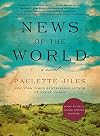
When I saw Paulette Jiles had a new book I jumped at the chance to read it. Her novels often explore historical periods but with a poetic bent. Her books are unlike any others I have read. She does a great deal of research, and then dramatizes conflicts among people in the era about which she is reporting with an unstinting yet lyrical eye. She also employs a distinctive style of showing dialogue without any distinguishing punctuation, which makes it more a part of the narrative flow.
This show more novel takes place in Texas in 1870. In 1870, the population of Texas was 818,579 (ten years later, it would almost double, approaching 1.5 million people). Oddly, there was something of a line at the 100th meridian between the Texas with newspapers and the Texas without newspapers. [The 100th meridian is approximately down the vertical middle of the United States and so also down the middle of Texas.]
The main protagonist of this novel is Captain Jefferson Kyle Kidd, 71, who lived through three wars, and now travels around North Texas reading newspapers to any comers who pay a dime a piece to hear the news. Originally, he had a vague hope that by spreading “true knowledge” about the world, he might in some way help make the world a more peaceful place. By age 65, he gave up that illusion, but he knew he did add something to people’s lives: in that time without television or movies, “he took them away to far places and strange peoples. Into mythic forms of thought and the structures of fairy tales.”
The author shares much of what the Captain would have read to his audiences, from the search for Ancient Troy in Turkey to the attempts of explorers to get to the North Pole, to tales of shipwrecks, inventions, and natural disasters. He tried to avoid news about anything that might start fighting among the listeners, especially in the volatile political atmosphere of the post-Civil War South. [From May 1865 to March 1870 before Texas was readmitted to the Union, there was an occupying army from the North in Texas. Even so, in the state elections in this time, many from the prewar power structure were reinstated, and got into bitter conflict with Unionists.]
On one such trip through northern Texas doing readings, the Captain is asked to deliver a ten-year-old girl named Johanna back to her relatives near San Antonio. She had been abducted by the Kiowa when she was six, and a man named Britt Johnson was hired to retrieve her. But while Johnson managed to get Johanna from the tribe, he did not want to take the risk of traveling through Texas with a small blond girl because he was black; the Captain would be trusted because not only was he white, but he was an old man.
The Captain agreed, and so began the odyssey of the Captain and Johanna across Texas, with the Captain doing occasional newspaper readings to pay for the trip. The two of them faced a number of perils, because in 1870, lawlessness was rampant in much of Texas, with bands of brigands roaming through the state.
There was also a constant threat of raids by tribes of Native Americans, in particular the Comanches. The 1867 Treaty of Medicine Lodge Creek established a reservation for the Comanches, Kiowas, and Kiowa Apaches, but the southwestern natives were not interested in staying penned in on reservations. [The U.S. Army fought them and their cultural values and beliefs, and by 1875 the Comanche population had been reduced to just over 1,500.]
Johanna, sullen and sad and quiet at first, comes to understand that the Captain is on her side and wants to protect her from all the various dangers. She begins to call him Kontah, the Kiowa name for grandfather. But Johanna in some ways was not like other captives. As the author explains in an Afterword about child captives from the Texas frontier:
“They apparently became Indian in every way and rarely readjusted when returned to their non-native families. They always wished to return to their adoptive families, even when they had been with their Indian families for less than a year.”
[It is possible Jiles was inspired by the story of a 9-year-old pioneer girl named Cynthia Ann Parker who was kidnapped during a Comanche raid in North Texas in 1836. She became a ward of the chief and eventually, a full member of the Comanches. She married a highly respected Comanche chief and gave birth to three children, including Quanah Parker — who would grow up to become the last and greatest Comanche leader.]
Indeed, Johanna often thinks about her life before, when her people “followed water, lived with every contingency, were brave in the face of enemies, who could go without food or water or money or shoes or hats and did not care that they had neither mattresses nor chairs nor oil lamps.”
The Captain knew that Johanna would never again be like other white people, and he found himself adopting Johanna’s worldview rather than trying to force her to conform to non-native ways. Neither fashionable dresses nor bank accounts, he learns from her, are what matters. Rather, “the baseline of human life was courage.”
Courage and character are consistent themes in Jiles’ books. Here, both come into play not only during their trip to San Antonio, but also when the time comes for the Captain to deliver Johanna to her aunt and uncle.
Evaluation: Jiles is an adept writer who improbably describes scenes of violence and destruction with a poetic eloquence that somehow adds to the horror rather than “beautifying” it. But she also lends her poetic hand to the pain, naivety, and hope of love, resulting in an unforgettable stories. This short novel is no exception. show less
This show more novel takes place in Texas in 1870. In 1870, the population of Texas was 818,579 (ten years later, it would almost double, approaching 1.5 million people). Oddly, there was something of a line at the 100th meridian between the Texas with newspapers and the Texas without newspapers. [The 100th meridian is approximately down the vertical middle of the United States and so also down the middle of Texas.]
The main protagonist of this novel is Captain Jefferson Kyle Kidd, 71, who lived through three wars, and now travels around North Texas reading newspapers to any comers who pay a dime a piece to hear the news. Originally, he had a vague hope that by spreading “true knowledge” about the world, he might in some way help make the world a more peaceful place. By age 65, he gave up that illusion, but he knew he did add something to people’s lives: in that time without television or movies, “he took them away to far places and strange peoples. Into mythic forms of thought and the structures of fairy tales.”
The author shares much of what the Captain would have read to his audiences, from the search for Ancient Troy in Turkey to the attempts of explorers to get to the North Pole, to tales of shipwrecks, inventions, and natural disasters. He tried to avoid news about anything that might start fighting among the listeners, especially in the volatile political atmosphere of the post-Civil War South. [From May 1865 to March 1870 before Texas was readmitted to the Union, there was an occupying army from the North in Texas. Even so, in the state elections in this time, many from the prewar power structure were reinstated, and got into bitter conflict with Unionists.]
On one such trip through northern Texas doing readings, the Captain is asked to deliver a ten-year-old girl named Johanna back to her relatives near San Antonio. She had been abducted by the Kiowa when she was six, and a man named Britt Johnson was hired to retrieve her. But while Johnson managed to get Johanna from the tribe, he did not want to take the risk of traveling through Texas with a small blond girl because he was black; the Captain would be trusted because not only was he white, but he was an old man.
The Captain agreed, and so began the odyssey of the Captain and Johanna across Texas, with the Captain doing occasional newspaper readings to pay for the trip. The two of them faced a number of perils, because in 1870, lawlessness was rampant in much of Texas, with bands of brigands roaming through the state.
There was also a constant threat of raids by tribes of Native Americans, in particular the Comanches. The 1867 Treaty of Medicine Lodge Creek established a reservation for the Comanches, Kiowas, and Kiowa Apaches, but the southwestern natives were not interested in staying penned in on reservations. [The U.S. Army fought them and their cultural values and beliefs, and by 1875 the Comanche population had been reduced to just over 1,500.]
Johanna, sullen and sad and quiet at first, comes to understand that the Captain is on her side and wants to protect her from all the various dangers. She begins to call him Kontah, the Kiowa name for grandfather. But Johanna in some ways was not like other captives. As the author explains in an Afterword about child captives from the Texas frontier:
“They apparently became Indian in every way and rarely readjusted when returned to their non-native families. They always wished to return to their adoptive families, even when they had been with their Indian families for less than a year.”
[It is possible Jiles was inspired by the story of a 9-year-old pioneer girl named Cynthia Ann Parker who was kidnapped during a Comanche raid in North Texas in 1836. She became a ward of the chief and eventually, a full member of the Comanches. She married a highly respected Comanche chief and gave birth to three children, including Quanah Parker — who would grow up to become the last and greatest Comanche leader.]
Indeed, Johanna often thinks about her life before, when her people “followed water, lived with every contingency, were brave in the face of enemies, who could go without food or water or money or shoes or hats and did not care that they had neither mattresses nor chairs nor oil lamps.”
The Captain knew that Johanna would never again be like other white people, and he found himself adopting Johanna’s worldview rather than trying to force her to conform to non-native ways. Neither fashionable dresses nor bank accounts, he learns from her, are what matters. Rather, “the baseline of human life was courage.”
Courage and character are consistent themes in Jiles’ books. Here, both come into play not only during their trip to San Antonio, but also when the time comes for the Captain to deliver Johanna to her aunt and uncle.
Evaluation: Jiles is an adept writer who improbably describes scenes of violence and destruction with a poetic eloquence that somehow adds to the horror rather than “beautifying” it. But she also lends her poetic hand to the pain, naivety, and hope of love, resulting in an unforgettable stories. This short novel is no exception. show less

This is the story of Simon (a fiddler) towards the end and right after the American Civil War, in Texas. This was a fascinating time in history, and Jiles does an amazing job with the historical facts and the sense of place. I loved the descriptions of San Antonio.
She also gives us wonderful characters, Simon is feisty, but has a tenderhearted side, and a longing for home and family. Doris, his love interest, an Irish immigrant in a difficult situation, has more grit and guile than meets show more the eye.
I think that [News of the World], Jiles' earlier book, set in a similar time, is better, but this is very close to as good. show less
She also gives us wonderful characters, Simon is feisty, but has a tenderhearted side, and a longing for home and family. Doris, his love interest, an Irish immigrant in a difficult situation, has more grit and guile than meets show more the eye.
I think that [News of the World], Jiles' earlier book, set in a similar time, is better, but this is very close to as good. show less
 This review was written for LibraryThing Early Reviewers.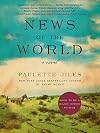
It's 1870, and Jefferson Kyle Kidd ("Captain" Kidd) needs money. His traveling gig, reading the news from multiple newspapers to crowds who pay a dime a head, is barely keeping him alive these days. The Texas economy is in ruins, the Blue Coats are in charge of everything, and some in the audiences are more interested in stirring up trouble than in being entertained by news from New York, Philadelphia or London. So reluctantly he agrees to take on the task of transporting a white child, who show more was orphaned and abducted by a Kiowa band years ago, 400 miles to an aunt and uncle. The US government pays well for such undertakings. Captain Kidd very quickly regrets agreeing to the job, gold coin notwithstanding. The girl does not remember any English, has fully assimilated into Kiowa ways, and shows no inclination to adapt to living within walls; she might just be dangerous, and the journey certainly will be with. She turns out to have some useful skills, however, and the two travelers begin to develop a fondness for each other under treacherous conditions. The whole question of the appropriateness of trying to re-introduce an assimilated white captive to "civilized" society is subtly explored in the context of a darned good adventure story. show less
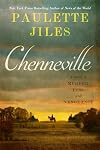
Chenneville by Paulette Jiles is a story of revenge as an ex-union soldier takes up a search for the man that murdered his sister and her family.
John Chenneville returns home o Missouri from the Civil War a changed man, after surviving being hit by debris and being nursed in a military hospital for a year. He learns of the death of his younger sister, her baby and her husband at the hands of A. J. Dodd. As he takes up the search, his prey takes to the trail leaving him to follow. Heading show more into Texas Chenneville follows Dodd. When Dodd doubles back and murders a telegraph operator, Chenneville is accused of the crime and now travels with being a wanted man. He meets and falls in love with another telegraph operator, Belle who knows he is not guilty. Between hunting Dodd and avoiding the law, Chenneville continues his hunt for justice.
Chenneville is an exciting read about one man’s hunt across a vast region of Missouri, Arkansas, Oklahoma and Texas for a feral cold-blooded killer. The story comes alive through the authors vivid and descriptive writing. And although I have preferred some of this authors other work more, this was still a very good read. show less
John Chenneville returns home o Missouri from the Civil War a changed man, after surviving being hit by debris and being nursed in a military hospital for a year. He learns of the death of his younger sister, her baby and her husband at the hands of A. J. Dodd. As he takes up the search, his prey takes to the trail leaving him to follow. Heading show more into Texas Chenneville follows Dodd. When Dodd doubles back and murders a telegraph operator, Chenneville is accused of the crime and now travels with being a wanted man. He meets and falls in love with another telegraph operator, Belle who knows he is not guilty. Between hunting Dodd and avoiding the law, Chenneville continues his hunt for justice.
Chenneville is an exciting read about one man’s hunt across a vast region of Missouri, Arkansas, Oklahoma and Texas for a feral cold-blooded killer. The story comes alive through the authors vivid and descriptive writing. And although I have preferred some of this authors other work more, this was still a very good read. show less
Lists
To Read (1)
Awards


You May Also Like


Associated Authors
Statistics
- Works
- 21
- Also by
- 1
- Members
- 6,830
- Popularity
- #3,576
- Rating
- 4.0
- Reviews
- 460
- ISBNs
- 142
- Languages
- 10
- Favorited
- 7

