

William Kent Krueger
Author of Ordinary Grace
About the Author
William Kent Krueger grew up in the Cascade Mountains of Oregon. A former logger, construction worker, freelance journalist, & researcher in childhood development, he is the author of two other acclaimed Cork O'Connor novels, "Iron Lake" & "Boundary Waters". (Publisher Provided) William Kent show more Krueger was born in Torrington, Wyoming on November 16, 1950. He attended Stanford University for one year before losing his academic scholarship for participation in a takeover of the president's office in protest of what he saw as the University's complicity in weapons production during the Vietnam War. He wrote short stories and sketches for many years. His first novel, Iron Lake, won the Anthony Award for Best First Novel, the Barry Award for Best First Novel, the Minnesota Book Award, and the Loft-McKnight Fiction Award. He writes the Cork O'Connor series. In 2005 and 2006, he won back-to-back Anthony Awards for best novel. Ordinary Grace won the Edgar Award for Best Novel in 2014. (Bowker Author Biography) show less
Image credit:
www.vjbooks.com
Series
Works by William Kent Krueger
The William Kent Krueger Collection #1: Iron Lake, Boundary Waters, and Purgatory Ridge (2012) 12 copies
The World of Cork O'Connor: A Look Behind the Pages of the Beloved Mystery Series (2016) 8 copies, 1 review
William Kent Krueger Collection #5: Tamarack County, Windigo Island, and Manitou Canyon (2017) 3 copies
The William Kent Krueger Collection #4: Vermilion Drift, Northwest Angle, and Trickster's Point (2015) 2 copies
The William Kent Krueger Reader's Companion: A Collection of Excerpts from the Cork O'Connor Novels (2012) 1 copy
Atria Mystery Sampler 2016 1 copy
(Cork O'Connor series) 1 copy
Copper Creek 1 copy
Before Swine 1 copy
Cork O'Connor 1-14 1 copy
Associated Works
Death Do Us Part: New Stories about Love, Lust, and Murder (2006) — Contributor — 136 copies, 2 reviews
The Silence of the Loons: Thirteen Tales of Mystery by Minnesota's Premier Crime Writers (2005) — Contributor — 58 copies, 1 review
Reader's Digest Select Editions 2000 v01 #247: Black Notice / Eddie's Bastard / Boundary Waters / The Innocents Within (2000) — Contributor — 49 copies
Resort to Murder: Thirteen More Tales of Mystery by Minnesota's Premier Writers (2007) — Contributor — 46 copies, 1 review
Private Investigations: Mystery Writers on the Secrets, Riddles, and Wonders in Their Lives (2020) — Contributor — 29 copies, 4 reviews
Thriller: An Anthology of New Mystery Short Stories (The Music and Murder Mystery Series) (2023) — Contributor — 13 copies, 1 review
Reader's Digest Select Editions: The Woods • Written in Bone • Thunder Bay • White City (2007) — Contributor — 7 copies
Reader's Digest Select Editions: The Woods • Written in Bone • Dear John • Thunder Bay (2007) — Contributor — 4 copies, 1 review
Reader's Digest Select Editions: Crossfire | Heaven's Keep | The Shadows in the Street | Stillwater Creek — Contributor — 4 copies
Válogatott könyvek: Kapcsolat a Fehér Házban / Eddie fattyúja / Vágóhíd / Hajsza a tavak vidékén (2001) 2 copies
Livros Condensados: Traição na Casa Branca | O Jogo do Silêncio | Os Inocentes de Espírito | O Vento Sobre a Água (2000) 2 copies
Tagged
Common Knowledge
- Birthdate
- 1950-11-16
- Gender
- male
- Occupations
- logger
construction worker
journalist - Organizations
- Minnesota Crime Wave
- Agent
- Jane Jordan Browne
Katy Holmgren
Danielle Egan-Miller - Nationality
- USA
- Birthplace
- Torrington, Wyoming, USA
- Places of residence
- Hood River, Oregon, USA
Cascade Mountains, Oregon, USA
St. Paul, Minnesota, USA - Associated Place (for map)
- USA
Members
Reviews
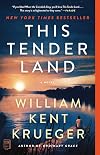
Marvelous, evocative tale of four orphans on the run in Depression-era America, who take to the rivers of Minnesota in an attempt to travel to St. Louis and the possibility of a home two of them barely remember and two have never known.
For 13-year-old Odie, his 17-year-old brother Albert, their mute Native American friend, Mose, and six-year-old Emmy, the journey is as much internal as external as the self-styled "Vagabonds" navigate many kinds of troubled waters. Leaving behind a corrupt show more Indian Training School / unofficial orphanage and fleeing from violence they could neither control nor avoid, they must use their wits and varied talents simply to survive.
Comparisons to "Huckleberry Finn" are inevitable; in fact author Krueger forthrightly admits he was inspired by Twain's classic. And as in the older work, the children meet many people along their journey, some helping them, some hoping to gain something for themselves. But the shadow of the Great Depression is never far from this story, as Odie in particular meets other wanderers, each struggling against the odds to survive and succeed, and as he says, "With every turn of the river, we were changing, becoming different people, and for the first time I understood that the journey we were on wasn't just about getting to Saint Louis."
Not every reader will embrace everything the novel offers. Two of the characters have what old country grannies would call "Second Sight"; others undergo about-face conversions from behaviors which in reality are seldom changed. There are coincidental meetings galore, familiar characters turning up in unfamiliar places, plus one final key plot point sure to make readers of Dickens nod their heads knowingly. (And again, Krueger gives props to his inspirations.) There's also a spiritual undercurrent, played out largely through Odie's coming of age.
As Krueger says in the Epilogue, "There is a river that runs through time and the universe, vast and inexplicable, a flow of spirit that is at the heart of all existence, and every molecule of our being is a part of it. And what is God but the whole of that river?"
Readers who will let that river flow through them will find a satisfying read here, peopled with many well-drawn characters (along with a few more shallowly developed players), and a lot of fine emotional scenery along the way. show less
For 13-year-old Odie, his 17-year-old brother Albert, their mute Native American friend, Mose, and six-year-old Emmy, the journey is as much internal as external as the self-styled "Vagabonds" navigate many kinds of troubled waters. Leaving behind a corrupt show more Indian Training School / unofficial orphanage and fleeing from violence they could neither control nor avoid, they must use their wits and varied talents simply to survive.
Comparisons to "Huckleberry Finn" are inevitable; in fact author Krueger forthrightly admits he was inspired by Twain's classic. And as in the older work, the children meet many people along their journey, some helping them, some hoping to gain something for themselves. But the shadow of the Great Depression is never far from this story, as Odie in particular meets other wanderers, each struggling against the odds to survive and succeed, and as he says, "With every turn of the river, we were changing, becoming different people, and for the first time I understood that the journey we were on wasn't just about getting to Saint Louis."
Not every reader will embrace everything the novel offers. Two of the characters have what old country grannies would call "Second Sight"; others undergo about-face conversions from behaviors which in reality are seldom changed. There are coincidental meetings galore, familiar characters turning up in unfamiliar places, plus one final key plot point sure to make readers of Dickens nod their heads knowingly. (And again, Krueger gives props to his inspirations.) There's also a spiritual undercurrent, played out largely through Odie's coming of age.
As Krueger says in the Epilogue, "There is a river that runs through time and the universe, vast and inexplicable, a flow of spirit that is at the heart of all existence, and every molecule of our being is a part of it. And what is God but the whole of that river?"
Readers who will let that river flow through them will find a satisfying read here, peopled with many well-drawn characters (along with a few more shallowly developed players), and a lot of fine emotional scenery along the way. show less

This is the 21st book in the series involving Cork O’Connor - now about to turn 60 - the part-Irish, part-Anishinaabe (Ojibwe) Indian ex-sheriff of the small town of Aurora, Minnesota in Tamarack County. While no longer formally serving in law enforcement, Cork now occasionally works as a private investigator.
This installment begins as Cork receives a call from his son Stephen, who is doing nonprofit work for unjustly incarcerated inmates. Stephen has been asked to look into the case of show more an Ojibwe man, Axel Boshey, whom his father sent to prison 20 years earlier. At the time, Cork, working on his first murder investigation as sheriff of Tamarack County, didn’t totally believe Axel committed the brutal murder, but Axel confessed. Recently Axel recanted his confession, and Cork is determined to find out what really happened and who was responsible.
The book has two parts. The first takes place in the past, and in the second, present-day Cork revisits what he did back then. He is driven by guilt and regret that he may have sent the wrong person to prison.
The more Cork tries to uncover the secrets and lies from the past, the more danger he himself faces from those bent on hiding the truth.
Evaluation: Although this is part of a series, it is quite possible to read this installment without feeling lost. On the contrary, Krueger manages to pull you into the O’Connor family immediately. Krueger is a good writer, and I love how he integrates Native American culture and an appreciation for the landscape into his stories. In addition, the continuing unwarranted and irrational prejudice toward Native Americans is a recurring theme of Krueger’s, and lends passion to his stories.
Whether you come to his novels for the murder-mystery aspect, the depiction of a strong, loving family, or the insights into Native American culture, his books are a rewarding reading experience. show less
This installment begins as Cork receives a call from his son Stephen, who is doing nonprofit work for unjustly incarcerated inmates. Stephen has been asked to look into the case of show more an Ojibwe man, Axel Boshey, whom his father sent to prison 20 years earlier. At the time, Cork, working on his first murder investigation as sheriff of Tamarack County, didn’t totally believe Axel committed the brutal murder, but Axel confessed. Recently Axel recanted his confession, and Cork is determined to find out what really happened and who was responsible.
The book has two parts. The first takes place in the past, and in the second, present-day Cork revisits what he did back then. He is driven by guilt and regret that he may have sent the wrong person to prison.
The more Cork tries to uncover the secrets and lies from the past, the more danger he himself faces from those bent on hiding the truth.
Evaluation: Although this is part of a series, it is quite possible to read this installment without feeling lost. On the contrary, Krueger manages to pull you into the O’Connor family immediately. Krueger is a good writer, and I love how he integrates Native American culture and an appreciation for the landscape into his stories. In addition, the continuing unwarranted and irrational prejudice toward Native Americans is a recurring theme of Krueger’s, and lends passion to his stories.
Whether you come to his novels for the murder-mystery aspect, the depiction of a strong, loving family, or the insights into Native American culture, his books are a rewarding reading experience. show less

Set in 1958 in the small Minnesota town of Jewel, Krueger once again employs his skills in portraying Native culture and family relationships to explore what happened after the discovery of the body of the town’s powerful, wealthy and not-much-liked landowner, Jimmy Quinn, found floating in the Alabaster River.
Sheriff Brody Dern battles his own demons as he investigates the crime and tries to stop townspeople from lynching the main suspect, Noah Bluestone. Noah was a Native WWII veteran show more who returned to Jewel after the war with a Japanese wife, Kyoko. Both of them worked for Quinn, but Noah was recently fired. Noah and his wife formed the perfect intersection of prejudices for the townspeople. Even though nobody liked Jimmy Quinn, they held even more fear and hatred of Native Americans (fed by popular culture, Krueger emphasizes), and for the Japanese, the recent enemy of the US in the war. Brody Dern has his hands full.
Charlotte “Charlie” Bauer is an attorney in town. She is nearing 60 and now retired, but still defends the defenseless from time to time. Noah won’t defend himself, so she insists on doing what she can for him.
An Epilogue, narrated by Charlie, is set around 30 years later. It is Charlie who manages to uncover the secrets of the town and thereby gets answers to what really happened. She observes:
“Our lives and the lives of those we love merge to create a river whose current carries us forward from our beginning to our end. Because we are only one part of the whole, the river each of us remembers is different, and there are many versions of the stories we tell about the past. In all of them there is truth, and in all of them a good deal of innocent misremembering.”
Evaluation: Krueger has yet to disappoint as an author and as a sensitive observer of the human condition. This moving book will affect even the most stoic of readers, and would make an excellent choice for book clubs. show less
Sheriff Brody Dern battles his own demons as he investigates the crime and tries to stop townspeople from lynching the main suspect, Noah Bluestone. Noah was a Native WWII veteran show more who returned to Jewel after the war with a Japanese wife, Kyoko. Both of them worked for Quinn, but Noah was recently fired. Noah and his wife formed the perfect intersection of prejudices for the townspeople. Even though nobody liked Jimmy Quinn, they held even more fear and hatred of Native Americans (fed by popular culture, Krueger emphasizes), and for the Japanese, the recent enemy of the US in the war. Brody Dern has his hands full.
Charlotte “Charlie” Bauer is an attorney in town. She is nearing 60 and now retired, but still defends the defenseless from time to time. Noah won’t defend himself, so she insists on doing what she can for him.
An Epilogue, narrated by Charlie, is set around 30 years later. It is Charlie who manages to uncover the secrets of the town and thereby gets answers to what really happened. She observes:
“Our lives and the lives of those we love merge to create a river whose current carries us forward from our beginning to our end. Because we are only one part of the whole, the river each of us remembers is different, and there are many versions of the stories we tell about the past. In all of them there is truth, and in all of them a good deal of innocent misremembering.”
Evaluation: Krueger has yet to disappoint as an author and as a sensitive observer of the human condition. This moving book will affect even the most stoic of readers, and would make an excellent choice for book clubs. show less
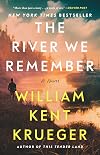
The River We Remember - Krueger
4.5 stars
Maybe the first thing to know about this book is that it is a story about wounded people. Every important character in this story is burdened with emotional scars. Lot’s of trigger warnings for this book; war torture/trauma, child abuse, incest, rape, infidelity, alchoholism, current and historical racism. The writing also drips with pathos and nostalgia. Krueger piles it on. I want to be annoyed with the soap opera melodrama of it. I would like to show more dismiss the book completely.
Much as I was tempted to put the book down, I couldn’t. There was nothing false about Krueger’s characters. Men did return from WW2 with deep emotional scars. The citizens of small towns do harbor deep resentments that lead to violence. Family violence isn’t unknown in isolated locations. His characters walk right off the page, living, breathing, suffering. I still resented the heavy foreshadowing of tragedy. (And in some ways, I felt the tragic ending was too contrived and too convenient.) There are characters who embody loyalty and honor, but there are no comic characters to add any lightness to the plot.
Krueger’s nostalgic writing adds a kind of poetry. He also has a gift for the description of time and place. I spent 400 or so pages on an actual visit to Jewel, Minnesota in 1958. His physical descriptions of the natural world are vivid, while the river is a metaphor that flows through the lives of his characters. I liked his characters. I enjoyed the setting. I appreciated his epilogue that provided a redemptive ending to the book. show less
4.5 stars
Maybe the first thing to know about this book is that it is a story about wounded people. Every important character in this story is burdened with emotional scars. Lot’s of trigger warnings for this book; war torture/trauma, child abuse, incest, rape, infidelity, alchoholism, current and historical racism. The writing also drips with pathos and nostalgia. Krueger piles it on. I want to be annoyed with the soap opera melodrama of it. I would like to show more dismiss the book completely.
Much as I was tempted to put the book down, I couldn’t. There was nothing false about Krueger’s characters. Men did return from WW2 with deep emotional scars. The citizens of small towns do harbor deep resentments that lead to violence. Family violence isn’t unknown in isolated locations. His characters walk right off the page, living, breathing, suffering. I still resented the heavy foreshadowing of tragedy. (And in some ways, I felt the tragic ending was too contrived and too convenient.) There are characters who embody loyalty and honor, but there are no comic characters to add any lightness to the plot.
Krueger’s nostalgic writing adds a kind of poetry. He also has a gift for the description of time and place. I spent 400 or so pages on an actual visit to Jewel, Minnesota in 1958. His physical descriptions of the natural world are vivid, while the river is a metaphor that flows through the lives of his characters. I liked his characters. I enjoyed the setting. I appreciated his epilogue that provided a redemptive ending to the book. show less
Lists
1960s (1)
Summer 2026 (1)
Carole's List (1)
Summer 2025 (1)
Coming of Age (1)
Indie Next Picks (1)
Awards


You May Also Like


Associated Authors
Statistics
- Works
- 46
- Also by
- 36
- Members
- 23,131
- Popularity
- #914
- Rating
- 4.0
- Reviews
- 1,201
- ISBNs
- 391
- Languages
- 7
- Favorited
- 32