

Mary Doria Russell
Author of The Sparrow
About the Author
Image credit: Courtesy of the author
Series
Works by Mary Doria Russell
2000 1 copy
Associated Works
Tagged
Common Knowledge
- Birthdate
- 1950-08-19
- Gender
- female
- Education
- University of Illinois (BA | Cultural Anthropology)
Northeastern University (MA | Social Anthropology)
University of Michigan (PhD | Biological Anthropology) - Occupations
- novelist
paleoanthropologist - Awards and honors
- John W. Campbell Award (Best New Writer, 1998)
- Agent
- Jane Dystel
- Nationality
- USA
- Birthplace
- Elmhurst, Illinois, USA
- Places of residence
- Chicago, Illinois, USA
Lyndhurst, Cleveland, Ohio, USA - Associated Place (for map)
- Illinois, USA
Members
Discussions
Ellen (ebt1002) Reads On in 2016 - Chapter 10 in 75 Books Challenge for 2016 (October 2016)
!/4 way through THE SPARROW and am already blown away in Science Fiction Fans (May 2014)
Reviews
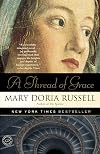
As usual, MDR provides an engrossing, multi-layered narrative full of complex characters caught up in moral quagmires, in a vivid historical setting. This is one of those books that the reader ought to approach only when time enough can be set aside to get thoroughly immersed in the multiple viewpoints. Disguise and alternative identities play a big role, and it was a bit daunting to keep everyone sorted at first. Having read and loved Russell's work before, I trusted her to make the effort show more worthwhile, and it was. A Thread of Grace winds through the satanic tapestry of the Nazi occupation of Italy during the last two years of WWII. Thousands of Jews, both Italian citizens and refugees from Eastern Europe, were protected by families in small towns and country villages in Italy throughout the war, and it is estimated that as many as 80% of the Jews who escaped through Italy across the Alps or hid "in plain sight" there survived. This novel is the story of some who did, some who did not, and the Italians who helped them. As painful to read as any account of those awful years, factual or fictional, this at least provides counterpoint to the depravity of the Nazi mindset. I say read it, even if it breaks your heart, because it is affirmative in many ways. show less
4.5 stars. I think Russell resonates with me because, like her, I was raised Catholic; and I was extensively educated by Jesuits. that background gave me a keen sensitivity to human suffering and a consciousness that western religion can never live up to its own expectations or rules in the face of suffering. The Sparrow hit me hard in light of all this, and when I recently learned she’d written some historical fiction about Doc Holiday and the Earps, I thought, excellent, let me see what show more she does with it. And what she’s done is masterful. This isn’t at all a book about guns or gunfighting, though I enjoy both topics. It’s a snapshot of an era and milieu as revealed by the character of a few women and men. It’s outstanding. show less
DOC, Mary Doria Russell's novel of Doc Holliday in Dodge City, a couple years BEFORE the notorious shootout at the OK Corral in Tombstone, was, quite simply, a fascinating read.
Painstakingly researched and beautifully written, it was a book I hated to put down, but since it ran nearly 400 pages, I was forced to take breaks occasionally, which gave me time to consider all the historical and biographical information woven so expertly and seamlessly into the story of one year in the life of Dr. show more John Henry Holliday in wild and wooly Dodge City, Kansas. His early association with the Earp brothers and Bat Masterson is prominently featured, and we learn that Holliday was actually closer to Morgan Earp than he ever was to Wyatt, who is presented here as honest, humorless, stolid, dependable, and maybe just a bit on the dim side, if not illiterate. Younger brother Morgan, on the other hand, enjoyed books and often discussed Dostoevsky, Dickens and other writers with Doc, an educated 'southern gentleman' starved for such talk.
I've seen most of the movies about the Earps and Doc Holliday, and was a kid fan of the fifties TV show, "Wyatt Earp." ("Long live his fame / And long live his glory / And long may his story be told!")
Strong-jawed actor Hugh O'Brien as Wyatt Earp was presented as a dandy, with black frock coat, flat brimmed hat, string tie and gold brocade vest, etc. Well, according to Russell, that would better describe Dodge's Sherrif Bat Masterson, a short fat dandy who made money on the side by promoting, refereeing and betting on illegal bare-knuckle boxing matches outside the city limits. (And yeah, I remember actor Gene Barry too, tall, slim and miscast as Masterson in that TV show.) About the only thing the TV show got right about Wyatt was his stern, unsmiling demeanor, which, we learn from Russell, was partly because as a child he was brutally beaten by his violent father, leaving him without any front teeth.
Doc fixed this, by making Wyatt a bridge, finally allowing him to smile and even laugh a little without feeling self-conscious. (And didja know that such bridges and dental devices in those times (1878) were often fashioned from real human teeth gathered from the battlefields of the Civil War?) And remember that cool long-barreled Buntline Special six-shooter O'Brien's Wyatt packed? Nope. Pure fiction, according to Russell. (Shucks, all of us kids wanted one of those guns.)
A surprise character here, to me, was comic song-and-dance man, Eddie Foy, who was playing that year at the Comique ('Commie-Q') Saloon in Dodge. His inclusion in DOC brought back memories of that classic fifties film, THE SEVEN LITTLE FOYS, starring Bob Hope as Foy.
So there is plenty of myth-busting by Russell in DOC, but it's handled in a most enjoyable and educational way. And didja know that Doc Holliday was actually a not-too-distant cousin of Margaret Mitchell, and that she actually used parts of the Holliday family history in writing GONE WITH THE WIND? Now THAT I found very interesting.
But the real, beating heart of DOC is found in the portrayal of his off-and-on years-long relationship with the fiery, high-born, highly educated, multi-lingual Hungarian prostitute, Maria Katarina Harony, or 'Kate.' Because the real John Henry Holliday is revealed in this relationship - the delicate boy who lost his mother to tuberculosis, the same insidious disease which would take Doc's own life after years of suffering. Doc and Kate were kindred souls who, by turns, comforted and tortured each other. And the scenes of Doc's 'bad spells' with the disease are disturbingly, graphically grim, as well as heartbreakingly ineffably sad, particularly when you know that it's a battle he cannot win.
But I go on and on, about a book that's already been reviewed and praised hundreds and hundreds of times. And most deservedly so. I absolutely LOVED this book and the way it made frontier Kansas come alive and countless disparate historical figures come together. Mary Doria Russell is one helluva writer. Very highly recommended. show less
Painstakingly researched and beautifully written, it was a book I hated to put down, but since it ran nearly 400 pages, I was forced to take breaks occasionally, which gave me time to consider all the historical and biographical information woven so expertly and seamlessly into the story of one year in the life of Dr. show more John Henry Holliday in wild and wooly Dodge City, Kansas. His early association with the Earp brothers and Bat Masterson is prominently featured, and we learn that Holliday was actually closer to Morgan Earp than he ever was to Wyatt, who is presented here as honest, humorless, stolid, dependable, and maybe just a bit on the dim side, if not illiterate. Younger brother Morgan, on the other hand, enjoyed books and often discussed Dostoevsky, Dickens and other writers with Doc, an educated 'southern gentleman' starved for such talk.
I've seen most of the movies about the Earps and Doc Holliday, and was a kid fan of the fifties TV show, "Wyatt Earp." ("Long live his fame / And long live his glory / And long may his story be told!")
Strong-jawed actor Hugh O'Brien as Wyatt Earp was presented as a dandy, with black frock coat, flat brimmed hat, string tie and gold brocade vest, etc. Well, according to Russell, that would better describe Dodge's Sherrif Bat Masterson, a short fat dandy who made money on the side by promoting, refereeing and betting on illegal bare-knuckle boxing matches outside the city limits. (And yeah, I remember actor Gene Barry too, tall, slim and miscast as Masterson in that TV show.) About the only thing the TV show got right about Wyatt was his stern, unsmiling demeanor, which, we learn from Russell, was partly because as a child he was brutally beaten by his violent father, leaving him without any front teeth.
Doc fixed this, by making Wyatt a bridge, finally allowing him to smile and even laugh a little without feeling self-conscious. (And didja know that such bridges and dental devices in those times (1878) were often fashioned from real human teeth gathered from the battlefields of the Civil War?) And remember that cool long-barreled Buntline Special six-shooter O'Brien's Wyatt packed? Nope. Pure fiction, according to Russell. (Shucks, all of us kids wanted one of those guns.)
A surprise character here, to me, was comic song-and-dance man, Eddie Foy, who was playing that year at the Comique ('Commie-Q') Saloon in Dodge. His inclusion in DOC brought back memories of that classic fifties film, THE SEVEN LITTLE FOYS, starring Bob Hope as Foy.
So there is plenty of myth-busting by Russell in DOC, but it's handled in a most enjoyable and educational way. And didja know that Doc Holliday was actually a not-too-distant cousin of Margaret Mitchell, and that she actually used parts of the Holliday family history in writing GONE WITH THE WIND? Now THAT I found very interesting.
But the real, beating heart of DOC is found in the portrayal of his off-and-on years-long relationship with the fiery, high-born, highly educated, multi-lingual Hungarian prostitute, Maria Katarina Harony, or 'Kate.' Because the real John Henry Holliday is revealed in this relationship - the delicate boy who lost his mother to tuberculosis, the same insidious disease which would take Doc's own life after years of suffering. Doc and Kate were kindred souls who, by turns, comforted and tortured each other. And the scenes of Doc's 'bad spells' with the disease are disturbingly, graphically grim, as well as heartbreakingly ineffably sad, particularly when you know that it's a battle he cannot win.
But I go on and on, about a book that's already been reviewed and praised hundreds and hundreds of times. And most deservedly so. I absolutely LOVED this book and the way it made frontier Kansas come alive and countless disparate historical figures come together. Mary Doria Russell is one helluva writer. Very highly recommended. show less

A heartbreaking follow-up to the brilliant Doc, but I'm not even remotely sorry to have read this. Not least because I found unexpected solace for recent happenings in one of Epitaph's themes: "Without justice, there is only revenge." (As said by a Mexican official urging the US government to curb the border violence against Mexican citizens...before the Mexican citizenry and government have no choice but to take the matter into their own hands.)
Lists
Monastic life (1)
Off on a Quest (1)
1990s (1)
First Novels (1)
Read This Next (1)
Unread books (1)
To Read (1)
Nineties (1)
Put a Bird On It (1)
Christianity (2)
Female Author (2)
Carole's List (2)
Overdue Podcast (1)
Five star books (1)
Favourite Books (1)
Shelf 101 (1)
THE WAR ROOM (1)
Awards


You May Also Like


Associated Authors
Statistics
- Works
- 8
- Also by
- 1
- Members
- 17,782
- Popularity
- #1,238
- Rating
- 4.0
- Reviews
- 1,089
- ISBNs
- 105
- Languages
- 8
- Favorited
- 112
