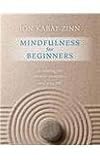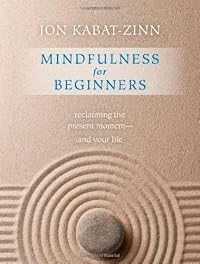
Mindfulness for Beginners
by Jon Kabat-Zinn
On This Page
Description
What if you could profoundly change your life just by becoming more mindful of your breathing? According to Jon Kabat-Zinn, you can. What if paying attention on purpose (and nonjudgmentally) could improve your health? Again, according to Dr. Kabat-Zinn—it can.On Mindfulness for Beginners, this internationally known scientist, bestselling author, and teacher who brought mindfulness meditation into the mainstream of medicine and society gives you immediate access to a practice that can show more potentially add years to your life, and will certainly enhance the quality of your moments and your years.
Join Dr. Kabat-Zinn to:
- Explore five guided meditations that lead you breath-by-breath into the essence of Mindfulness-Based Stress Reduction (MBSR), a program offered in medical clinics and hospitals around the world
- Cultivate the Seven Key Attitudinal Factors of MBSR—qualities of heart and mind that lay the foundation for mindfulness practice and for seeing and accepting things as they are as a first step to working wisely and compassionately with stress, pain, illness, and sorrow as well as life's joys and pleasures
- Free yourself from limiting perspectives, and become more intimate with your own boundless awareness
- You're already in the perfect moment for inhabiting this liberating awareness, which is always available, teaches Jon Kabat-Zinn. With Mindfulness for Beginners, he invites you to cultivate mindfulness as if your life depended on it, which it surely does, and experience the magnitude and beauty of who you already are.
- Apply an understanding of the concept of mindfulness
- Utilize simple guided meditations led by Kabat-Zinn
- List the ethical and attitudinal foundations necessary to cultivating mindfulness
- Assess how we can choose where to focus our awareness
- Plan to use mindfulness to help us develop compassion and insight into our true nature
Tags
Recommendations






Member Reviews
Apparently, Jon Kabat-Zinn is an, or the, expert within the field of mindfulness.
A CD containing guided meditations accompanies the book. I have to say I was unable to meditate while listening to these though Jon Kabat-Zinn seemed to be saying some sensible/inspiring things. I was not disturbed by any thoughts as he suggested I would be, but I was disturbed by his bla bla blabbings (that’s what they felt like when I was attempting to meditate).
When beginning the book I was seeking some practical/precise instructions about how to “do” mindfulness but didn’t feel these were provided. At the end, however, we were given the texts of the meditations on the CD, which was what I was looking for in the first place. They just came too show more late. I had needed these instructions BEFORE listening to the CD. But how is one supposed to meditate quietly with mindfulness while listening to someone bla bla blabbing, no matter how insightful the content of what is said?
The book is well-written and interesting though more abstract, cerebral and philosophical than what I was looking for. The chapters were pleasantly short.
The author mentions opening to “an interior stillness”. Again, why would he think one could do that with someone constantly talking in one’s ear?
A basic exercise of mindfulness is paying attention to the sensations of breathing in the body. What is important is not the breath, but awareness of the breath.
I recall when I was four that I suddenly became aware of my breathing and thought that I needed to consciously breathe, otherwise I would die. Nobody had ever talked to me about breathing and nobody ever did.
But I didn’t die and I eventually realized, as the author states, that “we are being breathed”– the body breathes itself.
We are given a definition of mindfulness – “paying attention on purpose in the present moment and non-judgmentally”.
Mindfulness is “what arises when you pay attention --- in the present moment”. “And what arises is nothing other than awareness itself.” We need to learn “the being mode of mind”.
We should avoid being “more of a human doing than a human being”.
Mindfulness reminds us that it is possible to shift from a doing mode through the application of attention and awareness.
For years I have been doing Holosync meditation, which involves listening to a series of special mp3s that help to synchronize the two halves of the brain. The purpose and effect of doing this form of meditation , reportedly 8 times as strong as ordinary meditation, are the obtaining of more AWARENESS.
And now I got hold of this book on mindfulness which also turns out to be all about AWARENESS.
“What is most important --- is the awareness that feels and knows directly, without thinking, that breathing is going on in this moment, that hearing is going on in this moment, that thoughts are moving through the sky-like space of the mind at this moment.”
We’re informed about Mindfulness-Based Stress Reduction (MBSR) for those facing stress, pain, illness and disease. This is something one can do oneself instead of relying on a lacking health care system.
We are advised to bring an affectionate quality to our attention.
The author reminds us that “there is no place to go, nothing to do, nothing to attain”.
The guided meditations consist of 1) Eating Meditation (which I gave a miss) 2) Mindfulness of Breathing 3) Mindfulness of the Body as a whole 4) Mindfulness of Sounds, Thoughts and Emotions and 5) Mindfulness of Pure Awareness.
The final meditation is sometimes referred to as “objectless attention”, “choiceless awareness” or “open presence”. We do nothing but rest in choiceless awareness, moment by moment. This practice of choiceless awareness is “an occasion to let yourself be invited into the receptive, empty, spacious, knowing quality of awareness”. It is an invitation to “dwell --- in this timeless moment we call ‘now’ --- and wake up to the actuality of who we are”.
As stated, I didn’t get anything out of the spoken meditations, but learnt how to do them through the texts.
Altogether, this book introduces us to the practice of mindfulness and tells us, finally, how to “do” it. It is a deep book and, personally, I would need to re-read it at least once.
I may also take a gander at some of the author’s other books. show less
A CD containing guided meditations accompanies the book. I have to say I was unable to meditate while listening to these though Jon Kabat-Zinn seemed to be saying some sensible/inspiring things. I was not disturbed by any thoughts as he suggested I would be, but I was disturbed by his bla bla blabbings (that’s what they felt like when I was attempting to meditate).
When beginning the book I was seeking some practical/precise instructions about how to “do” mindfulness but didn’t feel these were provided. At the end, however, we were given the texts of the meditations on the CD, which was what I was looking for in the first place. They just came too show more late. I had needed these instructions BEFORE listening to the CD. But how is one supposed to meditate quietly with mindfulness while listening to someone bla bla blabbing, no matter how insightful the content of what is said?
The book is well-written and interesting though more abstract, cerebral and philosophical than what I was looking for. The chapters were pleasantly short.
The author mentions opening to “an interior stillness”. Again, why would he think one could do that with someone constantly talking in one’s ear?
A basic exercise of mindfulness is paying attention to the sensations of breathing in the body. What is important is not the breath, but awareness of the breath.
I recall when I was four that I suddenly became aware of my breathing and thought that I needed to consciously breathe, otherwise I would die. Nobody had ever talked to me about breathing and nobody ever did.
But I didn’t die and I eventually realized, as the author states, that “we are being breathed”– the body breathes itself.
We are given a definition of mindfulness – “paying attention on purpose in the present moment and non-judgmentally”.
Mindfulness is “what arises when you pay attention --- in the present moment”. “And what arises is nothing other than awareness itself.” We need to learn “the being mode of mind”.
We should avoid being “more of a human doing than a human being”.
Mindfulness reminds us that it is possible to shift from a doing mode through the application of attention and awareness.
For years I have been doing Holosync meditation, which involves listening to a series of special mp3s that help to synchronize the two halves of the brain. The purpose and effect of doing this form of meditation , reportedly 8 times as strong as ordinary meditation, are the obtaining of more AWARENESS.
And now I got hold of this book on mindfulness which also turns out to be all about AWARENESS.
“What is most important --- is the awareness that feels and knows directly, without thinking, that breathing is going on in this moment, that hearing is going on in this moment, that thoughts are moving through the sky-like space of the mind at this moment.”
We’re informed about Mindfulness-Based Stress Reduction (MBSR) for those facing stress, pain, illness and disease. This is something one can do oneself instead of relying on a lacking health care system.
We are advised to bring an affectionate quality to our attention.
The author reminds us that “there is no place to go, nothing to do, nothing to attain”.
The guided meditations consist of 1) Eating Meditation (which I gave a miss) 2) Mindfulness of Breathing 3) Mindfulness of the Body as a whole 4) Mindfulness of Sounds, Thoughts and Emotions and 5) Mindfulness of Pure Awareness.
The final meditation is sometimes referred to as “objectless attention”, “choiceless awareness” or “open presence”. We do nothing but rest in choiceless awareness, moment by moment. This practice of choiceless awareness is “an occasion to let yourself be invited into the receptive, empty, spacious, knowing quality of awareness”. It is an invitation to “dwell --- in this timeless moment we call ‘now’ --- and wake up to the actuality of who we are”.
As stated, I didn’t get anything out of the spoken meditations, but learnt how to do them through the texts.
Altogether, this book introduces us to the practice of mindfulness and tells us, finally, how to “do” it. It is a deep book and, personally, I would need to re-read it at least once.
I may also take a gander at some of the author’s other books. show less
Mindfulness for Beginners
Reclaiming the Present Moment
and Your Life
by Jon Kabat-Zinn
Gentle, relaxing and understandable this 166 page teacher really caught my attention. Not just for the easy concepts, but also the format in general was a treasure to review because I didn't end up feeling stupid even once. It was a pleasure to slow down and learn with supportive energy all around me.
I didn't feel hurried or pressured to conform to a particular belief, I was encouraged to just tap the existing strength I already had inside me. Each topic was just what I needed at the time. Everything from beginners mind to an interesting chapter called "Hell Realms".
There is also an accompanying 5 track CD that walked me through connecting to show more mindfulness my favorite was with my breath and made so much sense. I would recommend this much needed well presented gem to anyone wanting a better connection to slowing down and being. Thanks Jon, this was fabulous and oh so helpful.
Love & Light,
Riki Frahmann show less
Reclaiming the Present Moment
and Your Life
by Jon Kabat-Zinn
Gentle, relaxing and understandable this 166 page teacher really caught my attention. Not just for the easy concepts, but also the format in general was a treasure to review because I didn't end up feeling stupid even once. It was a pleasure to slow down and learn with supportive energy all around me.
I didn't feel hurried or pressured to conform to a particular belief, I was encouraged to just tap the existing strength I already had inside me. Each topic was just what I needed at the time. Everything from beginners mind to an interesting chapter called "Hell Realms".
There is also an accompanying 5 track CD that walked me through connecting to show more mindfulness my favorite was with my breath and made so much sense. I would recommend this much needed well presented gem to anyone wanting a better connection to slowing down and being. Thanks Jon, this was fabulous and oh so helpful.
Love & Light,
Riki Frahmann show less
This is a book I often see recommended as a gateway to Mindfulness, a first taste so to speak, and it works well enough for that purpose. [a: Jon Kabat-Zinn|8750|Jon Kabat-Zinn|https://images.gr-assets.com/authors/1348913704p2/8750.jpg] takes the reader step by step through the process of cultivating mindfulness, why it is generally seen as being helpful, who it might work for, who it wouldn't. While the practice is rooted in Buddhism, and the book touches upon it a fair bit, it is still secular enough to appeal to non-spiritualists in my opinion.
I would especially view this book as valuable for the extensive bibliography at the end of the book for further reading, most of it categorized well by topic, and some with more information by show more the author as to why he recommends it.
All in all, this was a very interesting read and a book I would like to pick up again. I will be reading more by this author for certain, as well. show less
I would especially view this book as valuable for the extensive bibliography at the end of the book for further reading, most of it categorized well by topic, and some with more information by show more the author as to why he recommends it.
All in all, this was a very interesting read and a book I would like to pick up again. I will be reading more by this author for certain, as well. show less
Jon's voice is so calm and relaxing. I think this is a good and kind introduction that lets you know this practice is easy and hard at the same time. He promotes being kind to yourself, and that difficulty in focusing is normal and should be noted, but not admonished, then bring the attention back no matter how many times it takes. a good listen if you're needing some calming and reassurance in general.
This was a good introduction to the concept of mindfulness, especially with regard to meditation. Kabat-Zinn does a great job of speaking casually and explaining the concepts in a way that's easy to understand. There are also a few meditation exercises in the end of the book.
A much saner and down-to-earth exposition of the powers of mindfulness than some of the earlier books I've read on the subject.
Ah, I get it; I think. I couldn’t help but think of a hybrid Mr Rogers and Bob Ross reading.
Members
- Recently Added By
Author Information

95+ Works 11,753 Members
Featured in Bill Moyer's PBS Special Healing and the Mind, Jon Kabat-Zinn, PhD. is executive director at the Center for Mindfulness in Medicine, Health Care and Society at the University of Massachusetts Medical Center. He is the founder and former director of the UMMC Stress Reduction Clinic and an associate professor of medicine in the division show more of preventive and behavioral medicine. Using mindfulness meditation, Kabat-Zinn works to help people reduce stress and deal with chronic pain, and a variety of illnesses, particularly breast cancer. He was a trainer for the 1984 U.S. Men's Olympic Rowing Team and is especially interested in reducing the stress-related problems in the inner city and in prison populations. Kabat-Zinn's books include: Full Catastrophe Living: Using the Wisdom of Your Body and Mind to Face Stress, Pain and Illness (1991); Wherever You Go, There You Are: Mindfulness Meditation in Everyday Life (1994), Everyday Blessings: The Inner Work of Mindful Parenting (1997), which was co-authored with his wife, Myla, and Meditation Is Not What You Think: Mindfulness and why it is so important. (Bowker Author Biography) show less
Classifications
- Genres
- Nonfiction, Religion & Spirituality, General Nonfiction
- DDC/MDS
- 158.12 — Philosophy and Psychology Psychology Applied psychology Personal improvement and analysis Personal improvement and analysis through meditation
- LCC
- BF637 .M4 .K227 — Philosophy, Psychology and Religion Psychology Psychology Applied psychology
- BISAC
Statistics
- Members
- 658
- Popularity
- 43,567
- Reviews
- 14
- Rating
- (3.67)
- Languages
- 9 — Catalan, Danish, Dutch, English, German, Italian, Polish, Portuguese (Portugal), Spanish
- Media
- Paper, Audiobook, Ebook
- ISBNs
- 25
- UPCs
- 2
- ASINs
- 8