On This Page
Description
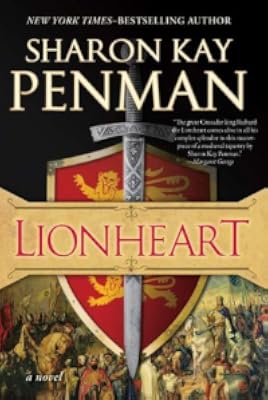
Richard, the second surviving son of Henry Plantagenet and Eleanor of Aquitaine, inherits the throne from his brother, before embarking on the Third Crusade, a conflict that is complicated by the schemes of his usurping brother, John.Tags
Recommendations


Member Reviews
This novel has many qualities that define the best of historical fiction. First, Penman has an evident respect for history and well-researched knowledge of the periods she depicts. Her characters don't sound like reality tv stars nor is her history risible such as that of Philippa Gregory. In this novel of Richard the Lionhearted and his war in the Holy Land, Penman quotes primary sources such as medieval chroniclers who were witnesses to the Third Crusade from both sides, Frank and Saracen. She has a way with the telling detail, whether sexual practices, medicine, cuisine or details of dress or siege warfare that brings another age and land to life. And as with her other books, I greatly appreciate her afterwards that detail what show more liberties she took with history.
Most crucially Penman doesn't just write historical characters as modern people in dress up. She's a great tour guide into that foreign land--a century long past--and in that regard I rank her with the best writers of historical fiction such as Mary Renault and Robert Graves. She writes of a mindset alien and alienating to contemporary sensibilities yet manages to still make her characters sympathetic. This is no mean feat given medieval views on warfare, religious tolerance and the status of women.
This is particularly so when it comes to the title character. We see Richard from a multiplicity of views, although rarely his own. There are dozens of point of view characters here in a sprawling book spanning around 600 pages covering from July of 1189 to August 1192, from the time Richard becomes King to when he leaves the Holy Land. We're taken from Normandy to Sicily to Cyprus and then on to Palestine. And the portrait that emerged of Richard was more complex and intriguing than I expected. Penman's is a rounded picture, that neither glosses over his flaws nor paints over his virtues. This is a king who doesn't hesitate to force women into unwanted marriages nor to slaughter men who surrendered to him when required out of military necessity, who has a bad temper, holds grudges and can be ruinously stubborn. But this is also a man who can be generous and has a good sense of humor, who others willingly follow into battle because he shares their hardships, is reckless with his life but careful of the lives of his men, and who displayed an undaunted courage that earned him the sobriquet "lionhearted" even before he became a king, let alone a crusader. Nor as depicted here is he a narrow-minded religious bigot, but someone who respected his adversaries and tried to come to terms with them in ways his fellow crusaders did not.
There are also other fascinating portraits here, from famous figures such as Eleanor of Aquitaine to more obscure figures such as Henri, Count of Champagne. I finished this book better understanding the Third Crusade and why it was a qualified failure, from the point of view of the European crusaders. We get some sense of their foes as well, but primarily from the Eurocentric point of view--we never really get inside the heads of the defending Muslims.
I'd definitely recommend this book to anyone interested in the period, King Richard the Lionhearted of England, or who enjoys Penman's work. As to the reason I don't give this top marks... Well, Sharon Kay Penman has formidable competition--from Sharon Kay Penman. Her biographical novel of Richard III, The Sunne in Splendour, and of King John's daughter Joanna, Here Be Dragons, are two of my favorite novels and would certainly make my top twenty list of favorite historical fiction, and Here Be Dragons is high on my list of the most moving love stories I've ever read. I didn't find Lionheart as moving or impressive as those novels. Nor do I find Penman as remarkable a stylist as Hilary Mantel of Wolf Hall or Dorothy Dunnett of Game of Kings. But that is to set a very high bar, and I'm sure few, if any, historical novels published this year will be as good as Lionheart. show less
Most crucially Penman doesn't just write historical characters as modern people in dress up. She's a great tour guide into that foreign land--a century long past--and in that regard I rank her with the best writers of historical fiction such as Mary Renault and Robert Graves. She writes of a mindset alien and alienating to contemporary sensibilities yet manages to still make her characters sympathetic. This is no mean feat given medieval views on warfare, religious tolerance and the status of women.
This is particularly so when it comes to the title character. We see Richard from a multiplicity of views, although rarely his own. There are dozens of point of view characters here in a sprawling book spanning around 600 pages covering from July of 1189 to August 1192, from the time Richard becomes King to when he leaves the Holy Land. We're taken from Normandy to Sicily to Cyprus and then on to Palestine. And the portrait that emerged of Richard was more complex and intriguing than I expected. Penman's is a rounded picture, that neither glosses over his flaws nor paints over his virtues. This is a king who doesn't hesitate to force women into unwanted marriages nor to slaughter men who surrendered to him when required out of military necessity, who has a bad temper, holds grudges and can be ruinously stubborn. But this is also a man who can be generous and has a good sense of humor, who others willingly follow into battle because he shares their hardships, is reckless with his life but careful of the lives of his men, and who displayed an undaunted courage that earned him the sobriquet "lionhearted" even before he became a king, let alone a crusader. Nor as depicted here is he a narrow-minded religious bigot, but someone who respected his adversaries and tried to come to terms with them in ways his fellow crusaders did not.
There are also other fascinating portraits here, from famous figures such as Eleanor of Aquitaine to more obscure figures such as Henri, Count of Champagne. I finished this book better understanding the Third Crusade and why it was a qualified failure, from the point of view of the European crusaders. We get some sense of their foes as well, but primarily from the Eurocentric point of view--we never really get inside the heads of the defending Muslims.
I'd definitely recommend this book to anyone interested in the period, King Richard the Lionhearted of England, or who enjoys Penman's work. As to the reason I don't give this top marks... Well, Sharon Kay Penman has formidable competition--from Sharon Kay Penman. Her biographical novel of Richard III, The Sunne in Splendour, and of King John's daughter Joanna, Here Be Dragons, are two of my favorite novels and would certainly make my top twenty list of favorite historical fiction, and Here Be Dragons is high on my list of the most moving love stories I've ever read. I didn't find Lionheart as moving or impressive as those novels. Nor do I find Penman as remarkable a stylist as Hilary Mantel of Wolf Hall or Dorothy Dunnett of Game of Kings. But that is to set a very high bar, and I'm sure few, if any, historical novels published this year will be as good as Lionheart. show less
 This review was written for LibraryThing Early Reviewers.
I don't often write reviews, but I had to make an exception for this one. Although I'm an avid fan of Penman's writing (she will be sorely missed!), I was dreading a book entirely about the Crusades. I was expecting endless battle scenes without as much of the personal, human element that I adore in her writing.
I couldn't have been more wrong. In fact, the level of intrigue, interpersonal grievances and grudges, barbed conversations and glorious, glorious banter in "Lionheart" actually made me want to stand up and cheer.
I went into this novel expecting to emerge as I'd entered-- fairly neutral on Richard himself, the titular Lionheart. However, I found myself genuinely cheering him on, sympathising with his plight, and even being show more somewhat blown away by the sheer audacity, spirit and courage of this (Penman's own words) "medieval rock star".
Bloody brilliant, this book. Easily a 10/10. show less
I couldn't have been more wrong. In fact, the level of intrigue, interpersonal grievances and grudges, barbed conversations and glorious, glorious banter in "Lionheart" actually made me want to stand up and cheer.
I went into this novel expecting to emerge as I'd entered-- fairly neutral on Richard himself, the titular Lionheart. However, I found myself genuinely cheering him on, sympathising with his plight, and even being show more somewhat blown away by the sheer audacity, spirit and courage of this (Penman's own words) "medieval rock star".
Bloody brilliant, this book. Easily a 10/10. show less
Richard I, or Lionheart, has inherited the throne of England. But he is a warrior king, and almost immediately he sets off on the Third Crusade to face off with Saladin and attempt to retake Jerusalem. Along the way he marries Berengaria, is reunited with his sister Joanna, and squabbles with co-crusader Philippe Capet of France. Meanwhile, little brother John is getting restive in England. Even the warrior king has a tough time fighting battles on multiple fronts.
Given that most of my knowledge of Richard comes from "the ransom years", or "the Ivanhoe/Robin Hood years", this was a very interesting book, showing the king during the Crusade itself. Life as a Crusader is captured very vividly here, and Penman does a good job of showing show more the complexity of life for those who live in the area full-time and who have adopted some of the local customs. Richard is given a very nuanced portrait; indeed, Penman herself notes in the author's note that the research for this book dramatically changed her view of him from single-minded, arrogant warrior to a skilled battle commander who cared deeply for the welfare of his soldiers, but was reckless about his own safety, and a man who fought his enemies but still respected their courage (and was not averse to adopting some of their more effective battle techniques).
While the battle scenes and campaigning were interesting, I was less interested in the scenes involving the women of the court, or at least some of them. The women-centred scenes focused more on their sex lives than I would have liked, and some scenes I actually skipped over (like Richard and Berengaria's wedding night). Fortunately the scenes are fairly short and lend themselves well to skimming if you'd rather get back to the battles. And the female characters themselves are interesting, especially Joanna.
This book is worth reading if you've been following the Plantagenets from the beginning, or if you're interested in just Richard and the Crusades. (The prologue summarizes the events of the previous couple of books, so if you haven't read Penman's other books you will still receive sufficient context to bring you up to speed.) show less
Given that most of my knowledge of Richard comes from "the ransom years", or "the Ivanhoe/Robin Hood years", this was a very interesting book, showing the king during the Crusade itself. Life as a Crusader is captured very vividly here, and Penman does a good job of showing show more the complexity of life for those who live in the area full-time and who have adopted some of the local customs. Richard is given a very nuanced portrait; indeed, Penman herself notes in the author's note that the research for this book dramatically changed her view of him from single-minded, arrogant warrior to a skilled battle commander who cared deeply for the welfare of his soldiers, but was reckless about his own safety, and a man who fought his enemies but still respected their courage (and was not averse to adopting some of their more effective battle techniques).
While the battle scenes and campaigning were interesting, I was less interested in the scenes involving the women of the court, or at least some of them. The women-centred scenes focused more on their sex lives than I would have liked, and some scenes I actually skipped over (like Richard and Berengaria's wedding night). Fortunately the scenes are fairly short and lend themselves well to skimming if you'd rather get back to the battles. And the female characters themselves are interesting, especially Joanna.
This book is worth reading if you've been following the Plantagenets from the beginning, or if you're interested in just Richard and the Crusades. (The prologue summarizes the events of the previous couple of books, so if you haven't read Penman's other books you will still receive sufficient context to bring you up to speed.) show less
This book opens in 1189, and Richard the Lionheart, son of Henry II of England and Eleanor of Aquitaine, has recently taken the throne. Immediately, he sets out on the Third Crusade, with a determination to conquer Jerusalem.
This was the first of Sharon Kay Penman's books that I have read, but I certainly will not be the last. If there is one word to describe my reaction to this book, it would be: impressed. Very, truly impressed. Penman is obviously a seasoned, masterful writer. If her other books are even half as good (which I am willing to bet that they are), I'll be happy to read them all.
The scope of the world that she covers in this book is expansive - and the world that comes across to the reader is fascinating. It is some of show more the most realistic historical fiction that I have ever read.
She uses a large number of characters to tell the story, allowing us to see the complex, controversial time of the Crusades from differing perspectives. The story is illustrated with plenty of points of view - both the Saracen's and the Templar's. While the story is never strictly told from an Arab's view, Penman subtly highlights the injustices of war.
With all of these eyes to look through, the book feels so much more filled out than others I have read on the topic. Other authors would have trouble keeping such an enormous cast under control, but Penman does so effortlessly.
She has a way of immersing her story - and her readers - in a vividly real historical world. I felt that I learned as much from this book as I would a non-fiction volume.
Another thing that made me appreciate this book was that, well, I found myself appreciating it. Let me explain. I usually cannot stand military / war stories. True, the further back in time, the more likely I am to be able to bear it, but war stories and soldiers simply do not interest me. Perhaps I have read too many. Who knows.
However, this book pulled me in, including the battle scenes. And I can't remember a book doing that for a very long time.
I found myself actually looking forward to the historical note at the end, knowing that it would be just as riveting as the fiction.
This is real historical fiction, Outlander. show less
This was the first of Sharon Kay Penman's books that I have read, but I certainly will not be the last. If there is one word to describe my reaction to this book, it would be: impressed. Very, truly impressed. Penman is obviously a seasoned, masterful writer. If her other books are even half as good (which I am willing to bet that they are), I'll be happy to read them all.
The scope of the world that she covers in this book is expansive - and the world that comes across to the reader is fascinating. It is some of show more the most realistic historical fiction that I have ever read.
She uses a large number of characters to tell the story, allowing us to see the complex, controversial time of the Crusades from differing perspectives. The story is illustrated with plenty of points of view - both the Saracen's and the Templar's. While the story is never strictly told from an Arab's view, Penman subtly highlights the injustices of war.
With all of these eyes to look through, the book feels so much more filled out than others I have read on the topic. Other authors would have trouble keeping such an enormous cast under control, but Penman does so effortlessly.
She has a way of immersing her story - and her readers - in a vividly real historical world. I felt that I learned as much from this book as I would a non-fiction volume.
Another thing that made me appreciate this book was that, well, I found myself appreciating it. Let me explain. I usually cannot stand military / war stories. True, the further back in time, the more likely I am to be able to bear it, but war stories and soldiers simply do not interest me. Perhaps I have read too many. Who knows.
However, this book pulled me in, including the battle scenes. And I can't remember a book doing that for a very long time.
I found myself actually looking forward to the historical note at the end, knowing that it would be just as riveting as the fiction.
This is real historical fiction, Outlander. show less
This review was written for LibraryThing Early Reviewers.Another beautifully written novel by this author. Covering the first three years of Richard the Lionheart's reign, this is in effect the fourth book in a series starting with her trilogy on Henry II and Eleanor of Aquitaine. The sights, sounds and smells of the Crusade and of the Holy Land itself are vividly described. Richard comes across as almost an action superhero though the author's historical note makes clear that if anything she has downplayed the sources in this respect (both Christian and Islamic sources). Some character traits are repeated rather tediously, though, such as the famed Angevin temper and Richard's recklessness for his own safety, while being concerned nevertheless for the safety of his men. It's refreshing to show more see his wife Berengaria of Navarre portrayed as a character in her own right as she is generally outshone by the King's sister Joanna and indeed is probably the most obscure medieval Queen, often relegated to being merely the answer to the quiz question of who was only Queen of England who didn't set foot in the country during her husband's reign. Saladin and his brother Adil (Saphadin) are also well depicted as the honourable opponents they seem to have been. Richard is the great strategist as which he was almost universally depicted in the sources on all sides, the massacre of the Acre garrison being depicted in the light of contemporary concerns, horrific though it was. The leading French crusaders come across very poorly here, as obstructive cowards constantly trying to outwit Richard and this does seem a little simplistic.Overall, this is a brilliant read, well up to Penman's high standards. 5/5 show less
One word that can justifiably illustrate King Richard I, and that Sharon Kay Penman has used in this book thrice: bravura. Indeed, he was never short of audacity, always leading his men to the front line and proving himself a capable military tactician as early as sixteen. For all his blunders as a son, a husband and a king, or even the risky exploits he had committed himself into that almost bordered on perverse tenacity and perhaps a strong disregard to his self-preservation, no one could ever dispute his sound warrior skills and great courage in the battlefield. Reading this book felt like watching a far-fetched movie about a hero who is glorified excessively for his ability to run through the enemy line on his own, come to his wife show more and sister’s rescue in the nick of time and in a rather dramatic fashion, and reclaim a besieged town and hold fast to it even when they were greatly outnumbered by the enemy—only, these aren’t merely whimsical hero’s tales but a few of the many testimonies that proved Richard’s legendary valor.
No wonder he’d been referred to as the “Lionheart” in his lifetime and thereafter. He was definitely a force to reckon with, a “medieval rockstar”, to quote one book reviewer. So admirable was his authority that many were enamored to follow him to hell and back and sacrificed themselves on his behalf, like one Norman knight did. I think I would do the same if I were part of his retinue; I would also stay loyal and trusting and confident even to be sleeping soundly every night knowing that my liege lord could easily outdo the saints in performing miracles and bringing good fortune in his favor every time. Sadly, though, that with all the illustriousness surrounding King Richard’s life, his death had come out rather tragically lackluster (actually, his later years and death aren't covered in this book, all the more reason to read the next—and final— installment of Penman’s Plantagenet series, A King's Ransom)
I detested his selfish and skeptical nature in the previous book, Devil's Brood, although my general sentiment about him after reading this story has now quite mellowed to ambivalence (or even perhaps a bit more on the approving side). Penman has painted King Richard here in a different light—a pleasant kind of different in my opinion, and a satisfying divergence from the many chronicles practically underlining his disreputable deeds. I also appreciate how the author has narrated the events of the Third Crusade in a very detailed fashion that didn’t turn out flat in the end. I find that she has a witty way of describing historical events, and if she were a History professor, she’d surely have lots of eager enrolees in her class! show less
No wonder he’d been referred to as the “Lionheart” in his lifetime and thereafter. He was definitely a force to reckon with, a “medieval rockstar”, to quote one book reviewer. So admirable was his authority that many were enamored to follow him to hell and back and sacrificed themselves on his behalf, like one Norman knight did. I think I would do the same if I were part of his retinue; I would also stay loyal and trusting and confident even to be sleeping soundly every night knowing that my liege lord could easily outdo the saints in performing miracles and bringing good fortune in his favor every time. Sadly, though, that with all the illustriousness surrounding King Richard’s life, his death had come out rather tragically lackluster (actually, his later years and death aren't covered in this book, all the more reason to read the next—and final— installment of Penman’s Plantagenet series, A King's Ransom)
I detested his selfish and skeptical nature in the previous book, Devil's Brood, although my general sentiment about him after reading this story has now quite mellowed to ambivalence (or even perhaps a bit more on the approving side). Penman has painted King Richard here in a different light—a pleasant kind of different in my opinion, and a satisfying divergence from the many chronicles practically underlining his disreputable deeds. I also appreciate how the author has narrated the events of the Third Crusade in a very detailed fashion that didn’t turn out flat in the end. I find that she has a witty way of describing historical events, and if she were a History professor, she’d surely have lots of eager enrolees in her class! show less
A book by Sharon Penman is always eagerly awaited, at least by me and I am sure a myriad of other readers. The author's books are up there with the best historical fiction writers of today. If however, you are expecting a couple of hundred pages and a lightweight or easy reading storyline then Sharon Penman is probably not the author for you. Most of her books are heavyweight (in volume, not in content. No 200 page wafer thin offerings from this author). This book runs to just over six hundred pages and is the first of a two part series.
Sharon Penman's attention, not only to detail, but also to historical accuracy is as good as anyone writing today. She has the ability to bring the period of history she is writing about to life for the show more reader. At the same time she writes in a style that is never boring. No long passages, or chapters that could safely be left out of the book without the story suffering. Everything in the book is there for a reason, and that is to add to the enjoyment of the reader. A style that some other author's could learn a great deal from.
The English crown had barely flattened the hair of Richard's head before he upped and left his new Kingdom for the Holy Land and the Third Crusade. A popular true story, told time and again through the centuries. Richard is portrayed as an indestructible symbol of the Christian forces in the Holy Land and his fearlessness in battle is well documented. The author tells the story of Richard with compassion, at a time when warfare was barbaric and brutal death common place. The Lionheart was sometimes brash and bullying, but a man of enormous intelligence and military acumen. At other times he had the weakness, self doubts and misgivings of any mortal man. The author also sympathetically portrays Richard's undoubted respect for his opponent Saladin, even though the Lionheart will move heaven and earth to destroy the opposing forces, and regain the Holy Land.
This book is a terrific read, and one that should not be missed by all those who love historical fiction. I for one am waiting with anticipation for the sequel, A King's Ransom A book that follows Richard the Lionheart's difficult and lengthy journey back from the Holy Land. show less
Sharon Penman's attention, not only to detail, but also to historical accuracy is as good as anyone writing today. She has the ability to bring the period of history she is writing about to life for the show more reader. At the same time she writes in a style that is never boring. No long passages, or chapters that could safely be left out of the book without the story suffering. Everything in the book is there for a reason, and that is to add to the enjoyment of the reader. A style that some other author's could learn a great deal from.
The English crown had barely flattened the hair of Richard's head before he upped and left his new Kingdom for the Holy Land and the Third Crusade. A popular true story, told time and again through the centuries. Richard is portrayed as an indestructible symbol of the Christian forces in the Holy Land and his fearlessness in battle is well documented. The author tells the story of Richard with compassion, at a time when warfare was barbaric and brutal death common place. The Lionheart was sometimes brash and bullying, but a man of enormous intelligence and military acumen. At other times he had the weakness, self doubts and misgivings of any mortal man. The author also sympathetically portrays Richard's undoubted respect for his opponent Saladin, even though the Lionheart will move heaven and earth to destroy the opposing forces, and regain the Holy Land.
This book is a terrific read, and one that should not be missed by all those who love historical fiction. I for one am waiting with anticipation for the sequel, A King's Ransom A book that follows Richard the Lionheart's difficult and lengthy journey back from the Holy Land. show less
Members
- Recently Added By
Lists

Best Historical Fiction
620 works; 261 members

Historical Fiction
889 works; 91 members

ALA The Reading List
490 works; 28 members

Fiction Featuring Real People
81 works; 17 members

Historical Fiction Lovers
88 works; 4 members

Books Read in 2022
5,168 works; 111 members

Authors from the United States
245 works; 3 members

THE WAR ROOM
813 works; 24 members
Author Information

20+ Works 18,960 Members
Sharon Kay Penman was born in New York City on August 13, 1945. She received a bachelor's degree in history from the University of Texas at Austin and a Juris Doctor degree from Rutgers University School of Law. She worked as a tax lawyer before becoming a full-time writer. She wrote The Sunne in Splendour, which chronicled the life of Richard show more III, while she was a student and a tax lawyer. After finishing the manuscript, her only copy was stolen from her car. She eventually rewrote the book and it was published in 1982. Her other works include Here Be Dragons, The Reckoning, When Christ and His Saints Slept, The Queen's Man, Cruel as the Grave, Dragon's Lair, Prince of Darkness, Lionheart and A King's Ransom. She won the 2001 Career Achievement Award for Historical Mysteries from Romantic Times. (Bowker Author Biography) show less

Sharon Kay Penman is a LibraryThing Author, an author who lists their personal library on LibraryThing.
Awards and Honors
Series

Common Knowledge
- Canonical title
- Lionheart
- Original publication date
- 2011-10-04
- People/Characters
- Richard I, King of England (Cœur de Lion, Lionheart); Saladin; Philippe II, King of France; Joan, Queen of Sicily; Berengaria of Navarre, Queen Consort of England; Eleanor of Aquitaine (Queen Dowager of England) (show all 28); Lady Mariam; Morgan ap Ranulf; Henri, Count of Champagne; John, King of England (as Prince John); William Marshal, 1st Earl of Pembroke; Geoffrey Fitz Henry, Archbishop of York; Guillaume Longchamp, Bishop of Ely; Constance, Duchess of Brittany; Sancho VI, King of Navarre; Alys Capet, Princess of France; Guy de Lusignan, King of Jerusalem; Isabella, Queen of Jerusalem; Tancred, King of Sicily; William II, King of Sicily; Isaac Comnenus; Sophia de Hauteville; Anna Comnenus; Humphrey de Toron; Balian D'Ibelin; Conrad of Montferrat; Hugh, Duke of Burgandy; Alicia de Sezanne
- Important places
- Palermo, Sicily, Italy; Normandy, France; Navarre, Spain; Cyprus; Acre, Israel (as Acre, Palestine); Jaffa, Israel (as Jaffa, Palestine) (show all 8); Ashkelon, Israel (as Ascalon, Palestine); Haifa, Israel (as Haifa, Palestine)
- Important events
- Third Crusade
- Dedication
- To Jill Davies
- First words
- Theirs was a story that would rival the legend of King Arthur and Guinevere, his faithless queen.
- Last words
- (Click to show. Warning: May contain spoilers.)He stayed where he was, not moving until darkness swallowed up the shore and all he could see was the endless, rolling sea and the glittering stars, brilliant and cold and eternal.
- Blurbers
- George, Margaret
Classifications
Statistics
- Members
- 998
- Popularity
- 26,201
- Reviews
- 58
- Rating
- (3.94)
- Languages
- English
- Media
- Paper, Audiobook, Ebook
- ISBNs
- 14
- ASINs
- 12