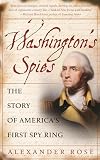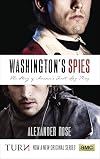
Washington's Spies: The Story of America's First Spy Ring
by Alexander Rose 
On This Page
Description
NEW YORK TIMES BESTSELLER • Turn: Washington’s Spies, now an original series on AMCBased on remarkable new research, acclaimed historian Alexander Rose brings to life the true story of the spy ring that helped America win the Revolutionary War. For the first time, Rose takes us beyond the battlefront and deep into the shadowy underworld of double agents and triple crosses, covert operations and code breaking, and unmasks the courageous, flawed men who inhabited this wilderness of show more mirrors—including the spymaster at the heart of it all.
In the summer of 1778, with the war poised to turn in his favor, General George Washington desperately needed to know where the British would strike next. To that end, he unleashed his secret weapon: an unlikely ring of spies in New York charged with discovering the enemy’s battle plans and military strategy.
Washington’s small band included a young Quaker torn between political principle and family loyalty, a swashbuckling sailor addicted to the perils of espionage, a hard-drinking barkeep, a Yale-educated cavalryman and friend of the doomed Nathan Hale, and a peaceful, sickly farmer who begged Washington to let him retire but who always came through in the end. Personally guiding these imperfect everyday heroes was Washington himself. In an era when officers were gentlemen, and gentlemen didn’ t spy, he possessed an extraordinary talent for deception—and proved an adept spymaster.
The men he mentored were dubbed the Culper Ring. The British secret service tried to hunt them down, but they escaped by the closest of shaves thanks to their ciphers, dead drops, and invisible ink. Rose’s thrilling narrative tells the unknown story of the Revolution–the murderous intelligence war, gunrunning and kidnapping, defectors and executioners—that has never appeared in the history books. But Washington’s Spies is also a spirited, touching account of friendship and trust, fear and betrayal, amid the dark and silent world of the spy. show less
Tags
Recommendations






Member Reviews
Fascinating and well written look at the "behind the scenes" spy activities of mainly the American Revolutionary forces, but also of the British efforts, (including the shameful case of Major Andre, and Benedict Arnold!) Oddly, the book begins with a chapter or two about the doomed Nathan Hale, early patriot turned captured spy, who is quickly hung, and then there is no more about him. The main portion of the book then shifts to the development & usefulness of the "Culpepper Ring", Gen. Washington's ultra secret group of civilian rebels who risked their very lives for several years to bring Washington and his military leaders current status of the British troops, ships, deployment of supplies, etc. in the New York/New Jersey area. Their show more military handler, Benjamin Tallmadge, definitely emerges as a hero, both in his military actions and his careful dedication to his spy ring, with Townsend and Woodhull being two of the key civilian spies we follow. Luckily for those of us who always wonder, "What happened to them after all the fighting ended?" the author includes a lengthy "Epilogue", providing details of each man and woman's post war careers, family life, illnesses and ultimate fates.
While enjoying the dramatic moments of danger and interaction between Loyalists and Rebels, and the "background story" on so many key figures of the Revolutionary period, this account definitely reads as a history more than an episodic story, often interspersed with letter excerpts, geographical references, political asides, etc.
However, apparently the 2014 AMC television series "TURN" is based off of this book, so I am very interested now in watching an episode or two of that show, just to see how the producers took the historical account and created a story.
Not for the casual reader, but definitely a good addition for those interested in the Revolutionary War era. show less
While enjoying the dramatic moments of danger and interaction between Loyalists and Rebels, and the "background story" on so many key figures of the Revolutionary period, this account definitely reads as a history more than an episodic story, often interspersed with letter excerpts, geographical references, political asides, etc.
However, apparently the 2014 AMC television series "TURN" is based off of this book, so I am very interested now in watching an episode or two of that show, just to see how the producers took the historical account and created a story.
Not for the casual reader, but definitely a good addition for those interested in the Revolutionary War era. show less
Summary: In the summer of 1778, the revolutionary war was going badly for George Washington and the colonial forces. They'd been forced to abandon New York City, leaving it in British hands, and knowledge of British strength and movements was crucial to plan their own tactics successfully, yet hard to come by when the city was occupied by the British and the surrounding countryside was full of loyalists. But even on the mostly-Tory Long Island, there were some who were willing to work for the rebel cause… and so was born the Culper Ring, a cell of spies and couriers that carried information from the city, across Long Island, across the sound to Connecticut, and ultimately into the hands of Washington himself.
Review: I want to be show more totally upfront here: The only reason I picked this book up is that I am totally hooked on the TV show Turn, and I wanted to find out how much of it is based on fact, and how much of it is dramatized for the sake of television. And I got a good answer to the first part of that, but less of a clear sense of the answer to the second.
To explain: this book is remarkably well-researched and thorough. I think it's amazing that we have access to the actual documents written by the Culper Ring to Washington, and copies of those he wrote back (despite the fact that it probably would have horrified Abraham Woodhull, the center of the Ring, to know that Washington was keeping copies). Rose makes extensive use of these primary sources, and allows him to present a picture of the intelligence that was being passed by the Culper Ring on an extraordinarily detailed and documented scale. So I feel pretty confident in saying that a lot of the facts of the show are largely true. The characters are mostly all real, although the relationships between them are not necessarily so - the largest fictionalization is that Woodhull didn't marry until after the war, and Anna Strong was 10 years older than Woodhull, although she did participate indirectly in the Ring (by occasionally posing as Woodhull's wife when he traveled, to make him less likely to be stopped and searched.) Also, both of Woodhull's parents were still alive, and there's no indication that his father was a magistrate - something that surely would have been mentioned had it been true. But in terms of other things from the show, it's entirely possible that some of it happened, but it's not something that would have been documented in any way that survives, so it's not something that is featured in this book, leaving us to speculate.
My issue was that the primary focus of this book - namely, the information that was passed by the Ring - is not the most exciting part of the story. When I think about spies and secret agents, I want drama. I want stories of spies being caught, or almost caught, and narrow misses, and double agents, and dead drops and secret codes and sneaking around. The lives of the spies are (to me) more interesting than the contents of their letters, but it seemed at times that Rose focused on the latter to the exclusion of the former. The best parts of the books were the parts where he was telling a clear story - of the capture and execution of Nathan Hale or the betrayal of Benedict Arnold. (I also quite enjoyed the chapter on secret codes, the state of codebreaking at the time, and invisible ink.) However, I felt like a lot of the rest of the book, despite having many sections in their own words, didn't always capture the personalities of its main characters. I can see how this came about - Rose is very careful about extrapolating from limited (or nonexistant) data, and a lot of the drama I was looking for likely never made it into the Ring's letters in any detail, if at all. And I'm not saying that I wanted Rose to make things up for the sake of narrative flow. But the end result was that, for someone who doesn't read a lot of history as a rule, while this book was quite clear and informative, it wasn't always super-lively, and there were some sections that I found a little dry and slow going. 3 out of 5 stars.
Recommendation: This book is clearly written by an expert, but not necessarily for experts; Rose does a nice job of explaining the context of things to someone like me, who knows relatively little about the American Revolution. If you like history and are interested in the time period, it's very well done. If you're like me and think you like history but what you actually like is historical fiction, then this book might still be worth your time, but go in knowing that it doesn't always tell a story like you might want it to. show less
Review: I want to be show more totally upfront here: The only reason I picked this book up is that I am totally hooked on the TV show Turn, and I wanted to find out how much of it is based on fact, and how much of it is dramatized for the sake of television. And I got a good answer to the first part of that, but less of a clear sense of the answer to the second.
To explain: this book is remarkably well-researched and thorough. I think it's amazing that we have access to the actual documents written by the Culper Ring to Washington, and copies of those he wrote back (despite the fact that it probably would have horrified Abraham Woodhull, the center of the Ring, to know that Washington was keeping copies). Rose makes extensive use of these primary sources, and allows him to present a picture of the intelligence that was being passed by the Culper Ring on an extraordinarily detailed and documented scale. So I feel pretty confident in saying that a lot of the facts of the show are largely true. The characters are mostly all real, although the relationships between them are not necessarily so - the largest fictionalization is that Woodhull didn't marry until after the war, and Anna Strong was 10 years older than Woodhull, although she did participate indirectly in the Ring (by occasionally posing as Woodhull's wife when he traveled, to make him less likely to be stopped and searched.) Also, both of Woodhull's parents were still alive, and there's no indication that his father was a magistrate - something that surely would have been mentioned had it been true. But in terms of other things from the show, it's entirely possible that some of it happened, but it's not something that would have been documented in any way that survives, so it's not something that is featured in this book, leaving us to speculate.
My issue was that the primary focus of this book - namely, the information that was passed by the Ring - is not the most exciting part of the story. When I think about spies and secret agents, I want drama. I want stories of spies being caught, or almost caught, and narrow misses, and double agents, and dead drops and secret codes and sneaking around. The lives of the spies are (to me) more interesting than the contents of their letters, but it seemed at times that Rose focused on the latter to the exclusion of the former. The best parts of the books were the parts where he was telling a clear story - of the capture and execution of Nathan Hale or the betrayal of Benedict Arnold. (I also quite enjoyed the chapter on secret codes, the state of codebreaking at the time, and invisible ink.) However, I felt like a lot of the rest of the book, despite having many sections in their own words, didn't always capture the personalities of its main characters. I can see how this came about - Rose is very careful about extrapolating from limited (or nonexistant) data, and a lot of the drama I was looking for likely never made it into the Ring's letters in any detail, if at all. And I'm not saying that I wanted Rose to make things up for the sake of narrative flow. But the end result was that, for someone who doesn't read a lot of history as a rule, while this book was quite clear and informative, it wasn't always super-lively, and there were some sections that I found a little dry and slow going. 3 out of 5 stars.
Recommendation: This book is clearly written by an expert, but not necessarily for experts; Rose does a nice job of explaining the context of things to someone like me, who knows relatively little about the American Revolution. If you like history and are interested in the time period, it's very well done. If you're like me and think you like history but what you actually like is historical fiction, then this book might still be worth your time, but go in knowing that it doesn't always tell a story like you might want it to. show less
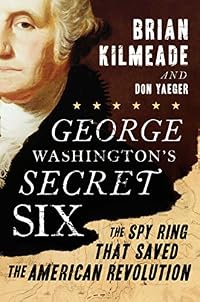
I didn't really care for this book. The author is very dismissive of the contribution Agent 355 -- who he declares is Anna Strong, even though most Culper Ring scholars disagree. The book is sensational, crammed with "ambiance," and takes liberties with the evidence (in the form of "modernizing" the spelling a grammar of letters, ledgers, etc) that are unnecessary and unwarranted. Rose also jumps between time periods and historical figures in a way that makes me dizzy and confused. I may have liked it more if I hadn't read the newer book by Kilmeade & Yaeger.
I read this 3 to 10 pages at a time, right before bed, for several months. Don't get me wrong. It is an interesting enough tale of Revolutionary War spying, and conveys all sorts of fascinating detail about the politics, religious and cultural dimensions of colonial life, as well as General Washington's challenges in running and maintaining specific famous spies behind British lines, in New York. Some of the tales told here give us a new appreciation for the raw brutality of the guerrilla warfare that was waged outside of the familiar big battles of the Revolution. Yet, it is the kind of interesting that both grabs one for awhile, and then lulls one off to sleep. I suspect that it was a doctoral dissertation originally. It was really a show more perfect bed-time book. Simultaneously interesting, and even gripping, and yet arousing no desperate curiosity about what would happen next at all, and thus nicely sleep inducing too.
In the end, following the war, the spies were mostly paid off for their services, and went on to live their ordinary lives. The new nation went racing on its way. And the records of the letters and betrayals, secret inks and codes, networks and payments were tucked away in archives, until modern researchers like Alexander Rose came along to tell their story. At the time, it was all desperately important. Today, we can well imagine that very similar dramas are being enacted in new ways all around the world. The game of spying and betrayal is probably eternal, though it finds new expressions in every generation. show less
In the end, following the war, the spies were mostly paid off for their services, and went on to live their ordinary lives. The new nation went racing on its way. And the records of the letters and betrayals, secret inks and codes, networks and payments were tucked away in archives, until modern researchers like Alexander Rose came along to tell their story. At the time, it was all desperately important. Today, we can well imagine that very similar dramas are being enacted in new ways all around the world. The game of spying and betrayal is probably eternal, though it finds new expressions in every generation. show less
Amazing. I've studied the war for sometime but the story always had holes. Things that made no sense or seemed to good to be true. This book, and the insight into the men and women who worked behind the scenes and helped Washington stay that two steps ahead of the British, filled in those holes. A must read for anyone who really wants to understand how the war was fought.
I found this book sometimes suspenseful and always informative. The time period and its dangers were well described, and the members of the Culper ring were fleshed out well. I appreciated learning about their flaws as well as their acts of heroism. Also, the plot to kidnap Benedict Arnold was fascinatingly retold. I really enjoyed this book.
I feel like this took me far longer to read than it should have. That isn't necessarily a comment on my interest in the book as I have been extremely busy at work recently so I've had less time to read. I have been interested in reading this book since the tv show Turn first premiered. I have yet to ever watch an episode of Turn but now I can say I have at least read this.
I can't really say that the Revolutionary War knocks my socks off. However, I do enjoy reading about spying during wars so I felt like this would be something of interest to me. This was a very informative, at times a bit dry, look at spying during the Revolutionary War. While it mainly focuses on American spying it does also cover spying by Britain.
I really enjoyed show more that the author introduced the main players in the Culper spy ring and manages to follow them during the war and show all they managed to do. I especially enjoyed the discussion regarding the code they used to communicate. I did feel that this could be especially dry at times and that sometimes made it a bit hard for me to motivate myself pick this up.
I would definitely recommend this to someone who is really fascinated with the Revolutionary War and would like to know more about spying during that time. show less
I can't really say that the Revolutionary War knocks my socks off. However, I do enjoy reading about spying during wars so I felt like this would be something of interest to me. This was a very informative, at times a bit dry, look at spying during the Revolutionary War. While it mainly focuses on American spying it does also cover spying by Britain.
I really enjoyed show more that the author introduced the main players in the Culper spy ring and manages to follow them during the war and show all they managed to do. I especially enjoyed the discussion regarding the code they used to communicate. I did feel that this could be especially dry at times and that sometimes made it a bit hard for me to motivate myself pick this up.
I would definitely recommend this to someone who is really fascinated with the Revolutionary War and would like to know more about spying during that time. show less
Members
- Recently Added By
Author Information

9+ Works 1,475 Members
Alexander Rose is an American author and historian. He was born in the United States in 1971, and raised in Australia and Britain. He was educated at Cambridge University, where he was awarded a doctorate for his thesis, Radar Strategy: The Air Dilemma and British Politics, 1932-1937. As a journalist, Rose's writing has appeared in, among other show more places, The Wall Street Journal, The New York Times, The Washington Post, and the CIA journal Studies in Intelligence. He is a member of the United States Commission on Military History, the Society for Military History, and the Royal Historical Society. He has authored several historical works, including Washington's Spies (which is the basis for AMC series Turn) American Rifle and Kings in the North. (Bowker Author Biography) show less
Alexander Rose is a LibraryThing Author, an author who lists their personal library on LibraryThing.
Some Editions
Work Relationships
Common Knowledge
- Canonical title
- Washington's Spies: The Story of America's First Spy Ring
- Original title
- Washington's Spies: The Story of America's First Spy Ring
- Original publication date
- 2006-05
- People/Characters
- George Washington; Nathan Hale; Benjamin Tallmadge; Nathaniel Greene; Caleb Brewster; Benedict Arnold (show all 10); Abraham Woodhull; Robert Townsend; Anna Strong; Selah Strong
- Important places
- New York, New York, USA; Setauket, New York, U.S.A.
- Important events
- American Revolution (1775 | 1783); Culper Spy Ring
- Related movies
- Turn (2013 | IMDb)
- Dedication
- To My Family
- First words
- The Yankee soldier, flinty once but now wizened and gnarled, flashed in and out of lucidity.
- Last words
- (Click to show. Warning: May contain spoilers.)He could not abide to see villains profiting while good and faithful men languished unheeded, untrumpeted, and unknown.
- Original language
- English
Classifications
Statistics
- Members
- 946
- Popularity
- 27,910
- Reviews
- 19
- Rating
- (3.77)
- Languages
- English
- Media
- Paper, Audiobook, Ebook
- ISBNs
- 7
- ASINs
- 6